US job growth in August is expected to be subdued, with only about 75,000 jobs added and the unemployment rate rising to 4.3%, signaling a sluggish labor market that will influence the Federal Reserve's upcoming interest rate decisions amid concerns about inflation and economic growth.
US job growth slowed sharply in July with only 73,000 new jobs, revised down from previous estimates, and the unemployment rate increased to 4.2%, indicating a weakening labor market that could influence the Federal Reserve's interest rate decisions in September.
US job growth unexpectedly surged in January, with 353,000 new positions added, surpassing forecasts. The unemployment rate held steady at 3.7%, while wage growth accelerated, rising 0.6% and 4.5% annually. The report suggests a resilient labor market despite high interest rates and inflation, leading to diminished odds of an imminent rate cut. The Federal Reserve is closely monitoring the labor market for signs of softening as it navigates unwinding tighter monetary policy. Stock futures fell after the report, casting doubt on the prospect of a rate cut. Job gains were broad-based, with notable increases in professional and business services, health care, retail trade, government, and manufacturing.
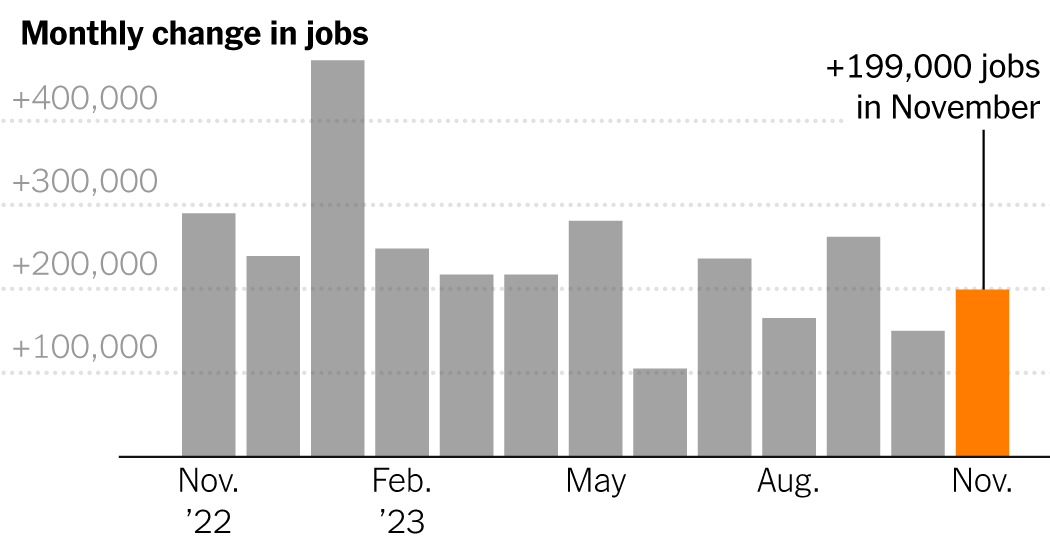
US job growth accelerated in November, with nonfarm payrolls increasing by 199,000 and the unemployment rate falling to 3.7%. The drop in the jobless rate alleviated fears of an impending recession and suggested that expectations of an interest rate cut by the Federal Reserve were premature. While the labor market is cooling, payroll gains remain above the level needed to keep up with population growth. The healthcare sector led the increase in payrolls, while retail employment declined. Average hourly earnings rose by 0.4%, maintaining an annual increase of 4.0%. The rise in labor supply could help control wage inflation, but wages are still rising too fast to meet the Fed's 2% inflation target.
The US economy added 199,000 jobs in November, with the unemployment rate dropping to 3.7%. Despite a year and a half of interest rate increases, the economy remains far from recession territory. Wages rose more than expected, and consumer confidence jumped sharply in December. While employment growth has narrowed, service industries and the public sector continue to show strength, while businesses dependent on selling physical goods have struggled. Temporary help services have seen a decline in jobs, indicating that employers can handle customer requests with their regular staff. Most forecasters expect a continued weakening in job growth in early 2024 as consumers run through their savings, but the likelihood of a recession within the next year is considered low.
US job growth is expected to have picked up in November as striking workers returned, but the underlying trend suggests a cooling labor market. The Federal Reserve is likely to keep interest rates unchanged, as employment gains remain above the necessary level to keep up with population growth. However, financial market expectations of rate cuts in early 2024 may be dampened. Nonfarm payrolls are forecast to have increased by 180,000 jobs, lower than the monthly average this year. Demand for workers is moderating due to rate hikes, and there is anecdotal evidence of slowing hiring. The unemployment rate is expected to remain unchanged at 3.9%, and average hourly earnings are forecast to rise moderately by 0.3%.
US job growth surged in September, with nonfarm payrolls increasing by 336,000, the largest increase in eight months. The unemployment rate remained unchanged at 3.8%, while average hourly earnings rose by 0.2%, resulting in a year-on-year increase of 4.2%. The strong labor market suggests that the Federal Reserve may have room to raise interest rates again, although wage growth is slowing. However, financial markets and most economists believe that the Fed is unlikely to hike rates due to a recent surge in long-term US Treasury yields.
U.S. job growth slowed more than expected in August, with private employers adding only 177,000 jobs, well below the revised total of 371,000 jobs added in July, according to ADP. The report suggests that the resilient U.S. economy may be starting to ease under pressure from higher interest rates. Pay growth also slowed for workers who changed jobs and those who stayed in their current positions. The weaker-than-expected report comes as investors and economists are divided on whether inflation can continue to trend down without a significant economic slowdown. The Department of Labor's jobs report is due out on Friday.
The US economy added fewer jobs than expected in July, with nonfarm payrolls increasing by 187,000, but wage gains remained strong and the unemployment rate fell to 3.5%. Job gains in May and June were revised lower, potentially indicating a slowdown in labor demand. However, the moderation in hiring may also be due to companies struggling to find workers. Economists believe the Federal Reserve could achieve a "soft landing" for the economy, but inflation and the direction of the labor market will play a crucial role. Despite the slower job growth, wages continue to rise, outpacing inflation and supporting consumer spending.
US job growth slowed in June, with nonfarm payrolls increasing by 209,000 jobs, below economists' expectations. However, the unemployment rate fell to 3.6% and wage gains remained fairly strong. Despite the slowdown, the labor market remains tight, defying predictions of a recession. The Federal Reserve is expected to resume raising interest rates later this month. Some economists argue that worker hoarding is masking weakness in the economy, and there are concerns that the slowdown in wage growth could impact consumer spending.
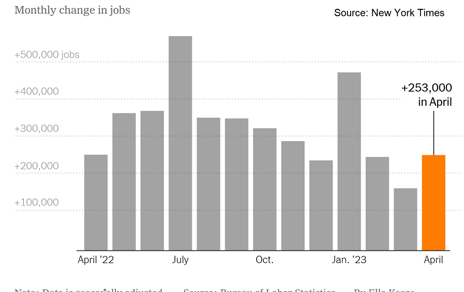
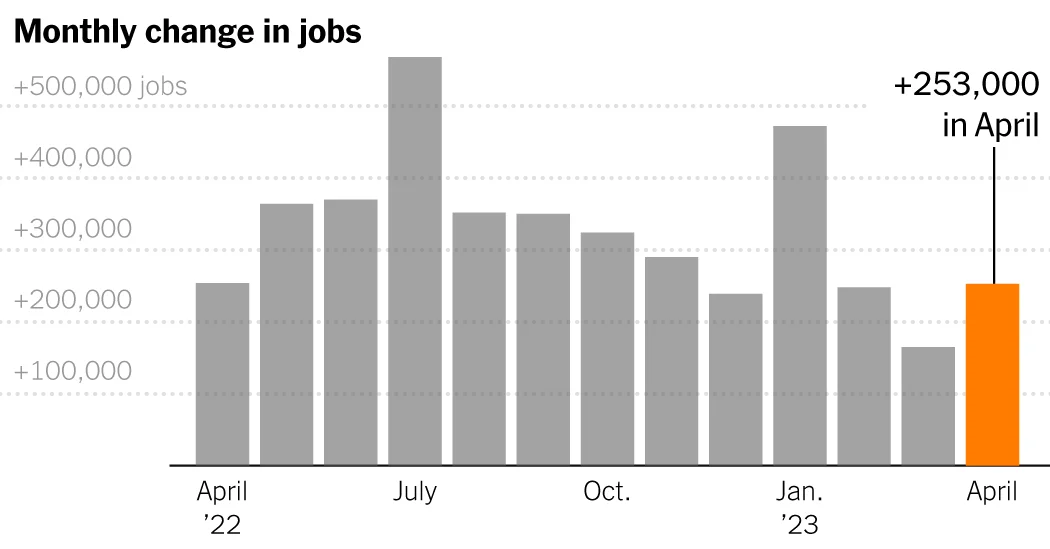
The US Labor Department's nonfarm payroll jobs report showed that the labor market is robust and resilient, with 253,000 new jobs added last month and a decrease in the unemployment rate to 3.4%. Market participants used the report to engage in US equities, taking all three major indices higher. Gold investors and traders pulled profits from recent gains in gold due to the report. However, the major fundamental factors that have moved gold substantially higher are still unresolved and worrisome, and today's strong decline in gold prices could present an opportunity to buy the dip.
US employers added 253,000 jobs in April, and the unemployment rate fell to 3.4%, matching the level in January, which was the lowest since 1969. Wages grew 4.4% over the past year, and job growth was broad-based, even if less vigorous than the eye-popping numbers of 2022. The higher-than-forecast job gain complicates the Federal Reserve’s potential shift toward a pause in interest rate increases. Despite the strong showing in April, the labor market continues to gently descend from blistering highs.
US Treasury yields fell after the release of nonfarm payroll data for March, which showed a slowdown in job growth. The 10-year Treasury note yield slipped to 3.363%, while the 30-year Treasury bond yield dipped to 3.584%. Investors are also focused on the inflation outlook and the Federal Open Market Committee's upcoming monetary policy meeting.