US Job Growth Slows to 50,000 in December Amid Unemployment Drop
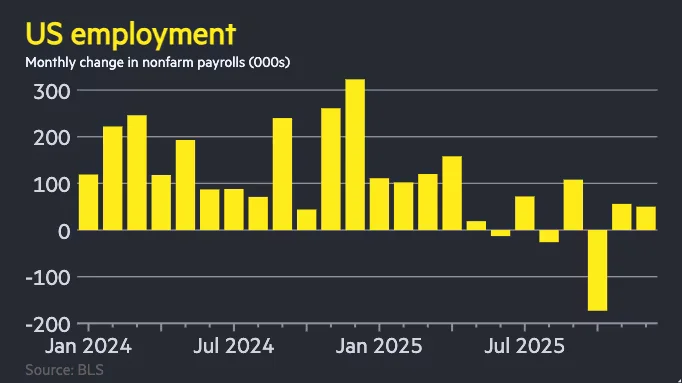
The US economy added only 50,000 jobs in December, significantly below expectations, indicating a slowdown in employment growth.
All articles tagged with #employment data

The US economy added only 50,000 jobs in December, significantly below expectations, indicating a slowdown in employment growth.

The 10-year Treasury yield slightly decreased to 4.165% following a mixed December jobs report showing weaker-than-expected job growth but a lower unemployment rate, which may influence the Federal Reserve's interest rate decisions. The report indicates a cautious labor market, with potential for rate cuts in the spring, amid ongoing economic and political developments.

The upcoming release of October and November US employment data aims to clarify the labor market's direction after months of uncertainty, with expectations of job losses in October due to government shutdown effects and a potential rebound in November, though some data may be distorted or revised.

Despite job growth in Minnesota, unemployment is rising and job seekers face longer search times, with many attending more job fairs and experiencing challenges, especially older workers, amid economic uncertainties and cautious hiring practices.

The upcoming US jobs report for November, delayed due to a 43-day government shutdown, is expected to show modest job growth with around 40,000 new jobs and a steady unemployment rate of 4.4%, but the data may be muddled and affected by the shutdown's disruptions, with broader economic indicators also being released this week.

The US job market remains uncertain due to the ongoing government shutdown, which has delayed official employment reports. Private sector data shows mixed signals, with some companies hiring and others announcing layoffs, especially in tech and warehousing. Worker confidence has declined amid fears of layoffs, and certain demographic groups face higher unemployment rates, indicating a potentially uneven economic recovery.

Federal Reserve Governor Stephen Miran views the recent increase in US private-sector jobs as a positive surprise and advocates for lower interest rates, citing the current restrictive policy as risky, amid moderating wages and labor demand.

In October, private companies in the U.S. added only 42,000 jobs, indicating continued labor market tightness amid a government shutdown that has delayed official employment data. The ADP report shows modest job growth, with notable declines in leisure and hospitality, and highlights concerns about small business employment and consumer resilience. Major companies are also reducing jobs, and the lack of official data complicates economic assessment.

The suspension of ADP's access to employment data highlights the importance of government-produced economic data, as private sector sources, despite their value, cannot fully replace the comprehensive and reliable information provided by government agencies, especially during times of data collection disruptions like government shutdowns.

Due to the federal government shutdown, the September US jobs report was not released, but estimates suggest a modest increase of 50,000 jobs with the unemployment rate steady at 4.3%. The labor market shows signs of weakness with slower job growth, declining construction jobs, and challenges for unemployed workers, though certain sectors like healthcare continue to add jobs. Overall, the data indicates a sluggish recovery with ongoing economic uncertainties.
Despite signs of economic pain such as slow job growth and rising unemployment, U.S. stocks are reaching record highs, supported by lower interest rates and investor optimism. A key chart shows that stocks perform well during weeks when Treasury yields fall, indicating a shift in market behavior. Experts believe the market will broaden next year with continued rate cuts, and high valuations are justified by record profit margins, with concerns about oil prices being the main risk.

The Department of Labor's internal watchdog is investigating the Bureau of Labor Statistics' methods for collecting and reporting economic data, including employment and inflation figures, amid recent revisions and political controversies involving former BLS officials and the Trump administration.

New data from the Bureau of Labor Statistics shows that U.S. employers added 911,000 fewer jobs than initially reported, indicating a slower job growth than previously thought.

New preliminary data reveals the US job market was significantly weaker in 2024 and early 2025 than previously reported, with substantial downward revisions in employment figures across key sectors, raising concerns about economic health and increasing pressure on the Federal Reserve to cut interest rates.

The upcoming revision of the U.S. jobs report is expected to show a significant downward adjustment, indicating the labor market has been weaker than initially reported, which could influence Federal Reserve rate decisions and reflect broader economic slowdown.