Despite being over 170 years since the California Gold Rush, locals are still finding gold in rivers, with some making significant earnings, especially as gold prices have surged over the past year. Gold remains a valuable store of wealth, and financial experts like Ray Dalio emphasize its importance as a diversification tool in investment portfolios.
Rising gold prices in India, driven by global safe-haven demand and a weaker dollar, are shifting consumer preferences from traditional jewellery to gold coins and bars, with investment gold demand increasing and overall jewellery consumption declining.
Gold prices have surged past $4,500 per ounce, reaching new highs and boosting the profitability prospects of miners like Agnico Eagle Mines and Barrick Mining, which are well-positioned to capitalize on the rising gold market due to their stable operations and cost structures.
Gold prices experienced the largest single-day decline since 2011, falling over 5% after reaching record highs, due to factors like easing trade tensions, a stronger dollar, and market overbought conditions, despite remaining up significantly for the year. The volatility highlights the risks and benefits of gold as an investment, amid broader economic and environmental concerns.
Gold prices hit a wall after soaring over 50% this year due to economic concerns and trade tensions, with recent sharp declines raising questions about the sustainability of the rally and prompting analysts to advise caution and consider alternative safe-haven assets like Treasuries.
Gold prices experienced a significant decline, with a 5.7% drop marking its largest in over 12 years, driven by profit-taking after a strong rally despite declining bond yields. While some see the pullback as a correction, gold remains on track for its best year since 1979, supported by central bank buying and expectations of lower interest rates, though traders anticipate continued volatility.
Gold mining stocks experienced a sharp decline after a recent surge, driven by a significant drop in spot gold prices and increased market volatility, prompting concerns about a potential correction or prolonged downturn in the sector.
Gold prices fell over 5% in a single day, the largest decline since 2013, as investors pulled back from recent record rallies in gold, silver, and platinum, citing a market correction and profit-taking after strong gains amid economic uncertainty and a strengthening dollar.
Gold prices experienced their worst daily decline in 12 years, dropping over 6% after reaching a record high, with related ETFs and miners plunging around 10%, amid a strengthening US dollar and easing US-China trade tensions, despite gold's year-to-date gain of 55%.
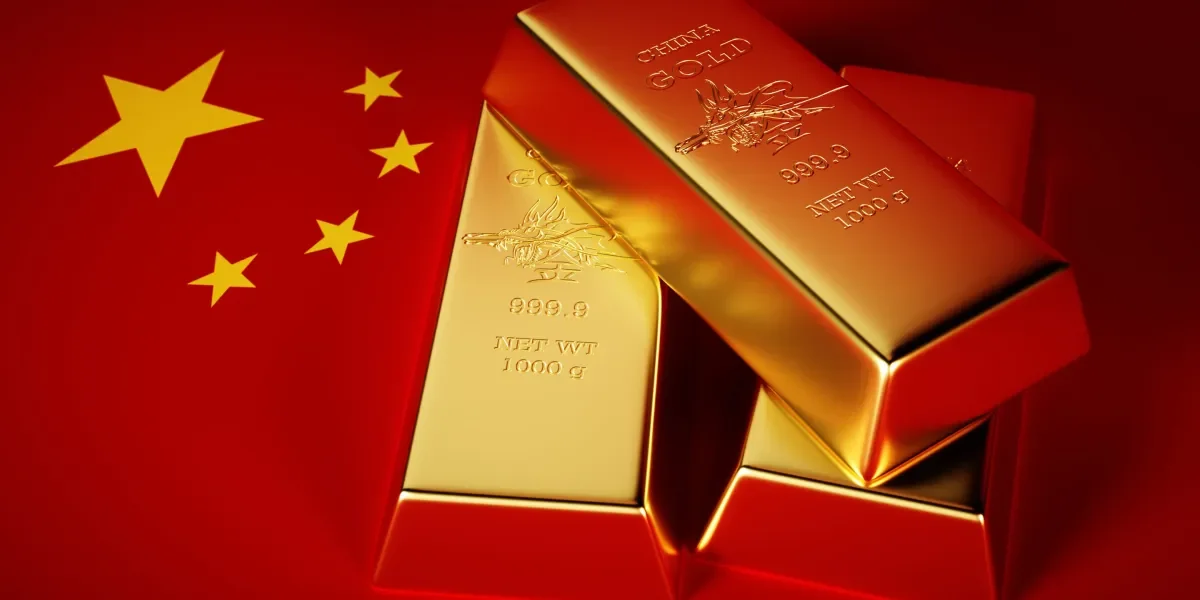
China is playing a key role in driving gold prices to record highs in 2025 through central bank purchases, household demand, and arbitrage trading, with global economic uncertainty further fueling the rally, leading analysts to predict even higher prices in the coming years.
Gold prices declined from record highs due to profit-taking and easing U.S.-China trade tensions, which reduced demand for safe-haven assets. The rally may be overextended, with some experts warning of a bubble, while other metals also fell as the dollar strengthened.
Markets experienced a mixed start to the week with gains driven by trade optimism and hopes for ending the US government shutdown, while concerns remain over corporate earnings, regional bank jitters, and global supply chain dependencies, especially related to China and critical minerals.
U.S. stock futures are higher amid hopes for easing trade tensions between the U.S. and China. Apple’s iPhone 17 outperformed its predecessor by 14% in the first 10 days, driven by strong sales in China and the U.S. The luxury brands Kering and L’Oreal announced a 4-billion euro deal, with L’Oreal acquiring parts of Kering’s beauty business. China’s economy grew 4.8% in Q3, the slowest in a year, while gold prices steadied near recent highs as markets responded to trade optimism.
Gold prices reached record levels this week, marking their biggest weekly gain since 2020, driven by global trade tensions, rate-cut expectations, and economic uncertainty, with analysts warning of potential bubbles or continued rises depending on future economic policies.
Central banks worldwide are increasing their gold reserves despite record-high prices, viewing gold as a strategic, liquid asset to diversify holdings and hedge against geopolitical and economic uncertainties, including concerns over the U.S. dollar and fiat currencies.