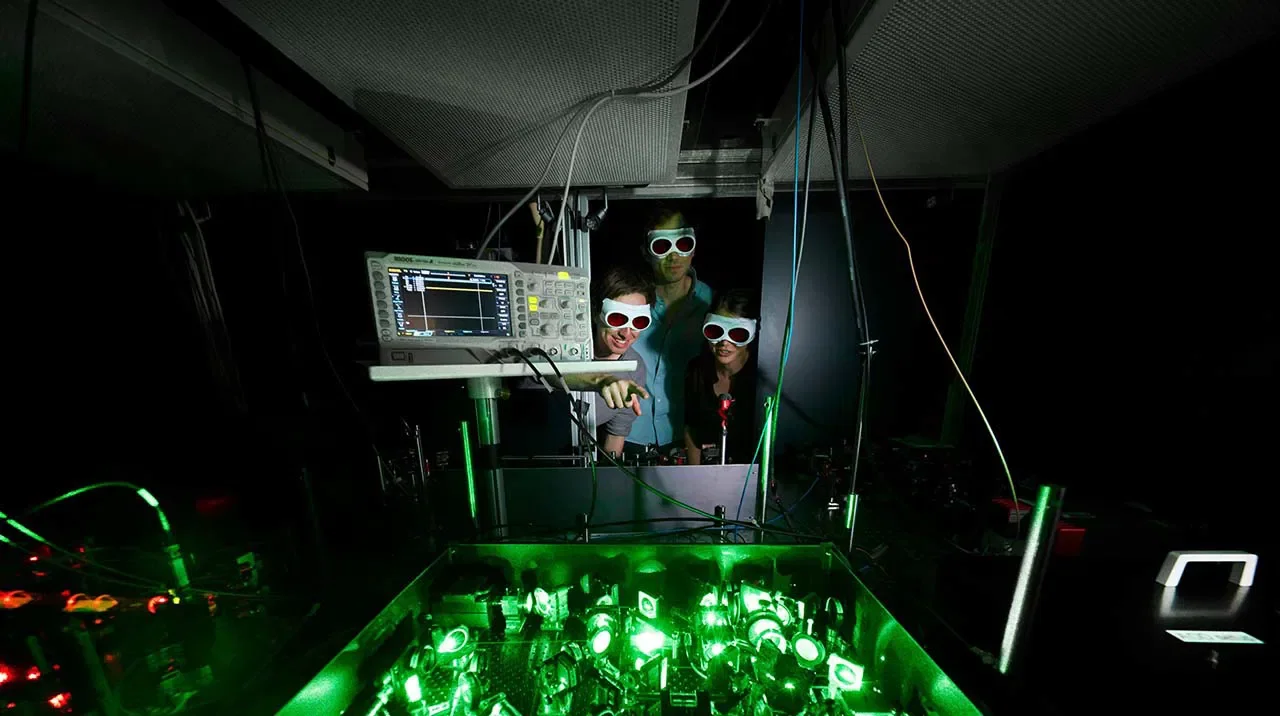
Researchers have experimentally extended Landauer's principle to quantum many-body systems using ultracold atoms and quantum field simulations, providing new insights into the relationship between information erasure and heat dissipation in quantum regimes.
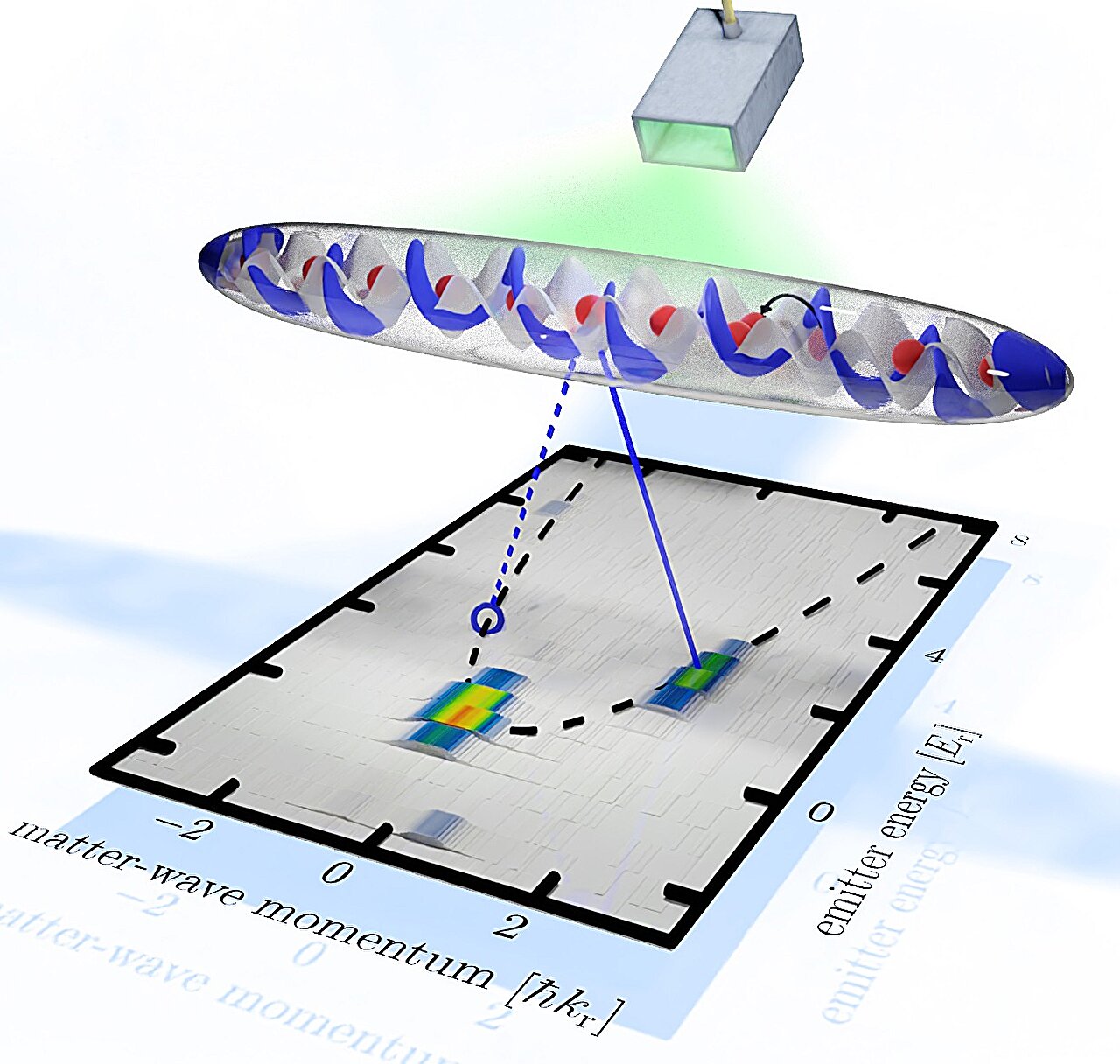
Researchers led by Dominik Schneble have discovered new collective behaviors in quantum optics using matter waves, revealing novel cooperative radiative phenomena in synthetic atom arrays. Their work, published in Nature Physics, explores super- and subradiant dynamics by manipulating ultracold atoms in an optical lattice, offering insights into quantum information science. This study challenges traditional assumptions about photon behavior in quantum systems, demonstrating unprecedented control over subradiant states and highlighting the potential of ultracold matter waves in quantum optics research.
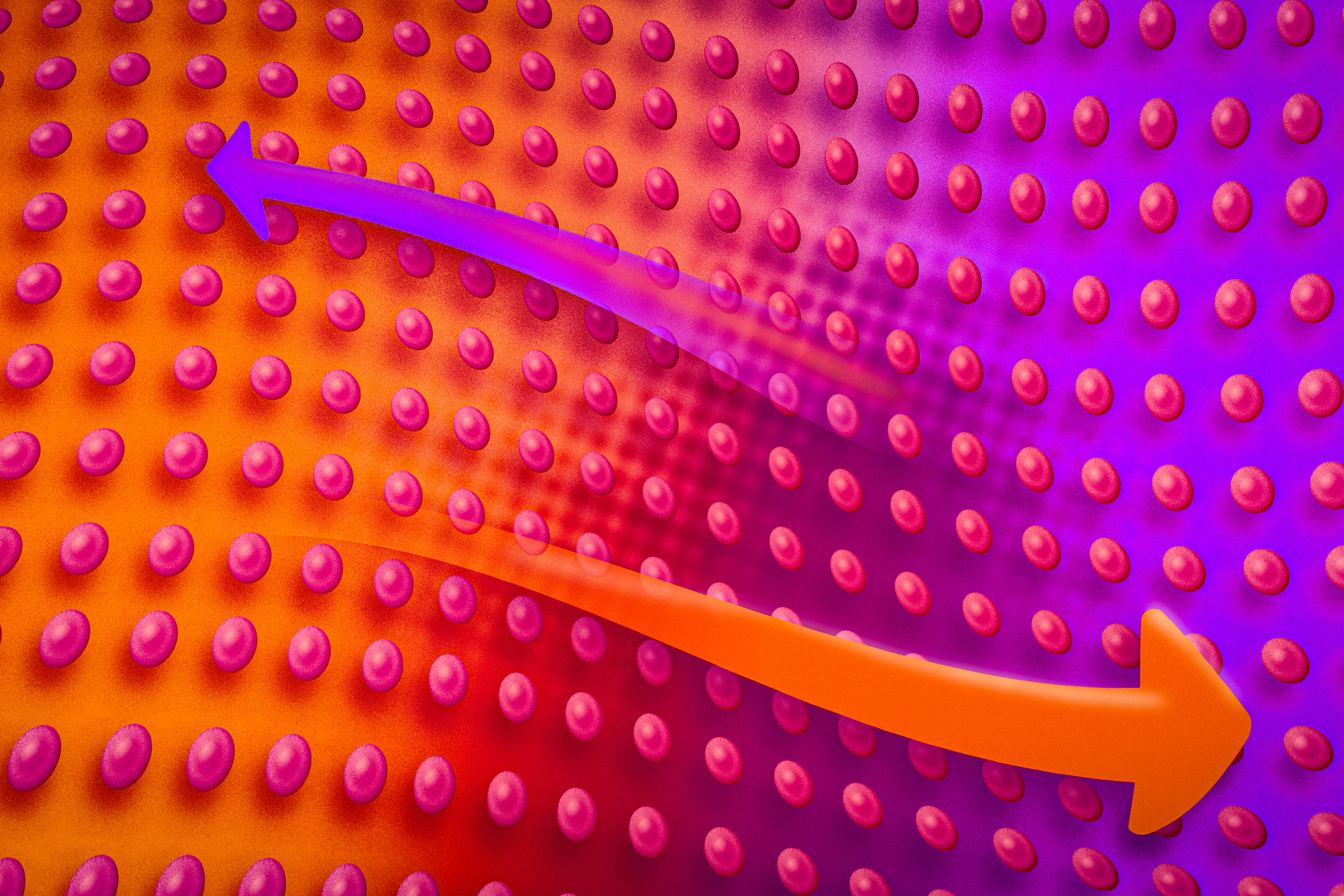
MIT physicists have captured direct images of "second sound," the movement of heat sloshing back and forth within a superfluid, for the first time. This breakthrough will expand scientists' understanding of heat flow in superconductors and neutron stars, and could lead to better-designed systems. The team visualized second sound in a superfluid by developing a new method of thermography using radio frequency to track heat's pure motion, independent of the physical motion of fermions. The findings will help physicists get a more complete picture of how heat moves through superfluids and other related materials.
MIT physicists have captured direct images of second sound, the movement of heat in a superfluid, for the first time. Using a new method of thermography, they were able to observe heat moving like a wave, independent of the physical motion of fermions in the superfluid. This breakthrough will help physicists gain a better understanding of how heat moves through superfluids and related materials, with potential applications in high-temperature superconductors and neutron stars.
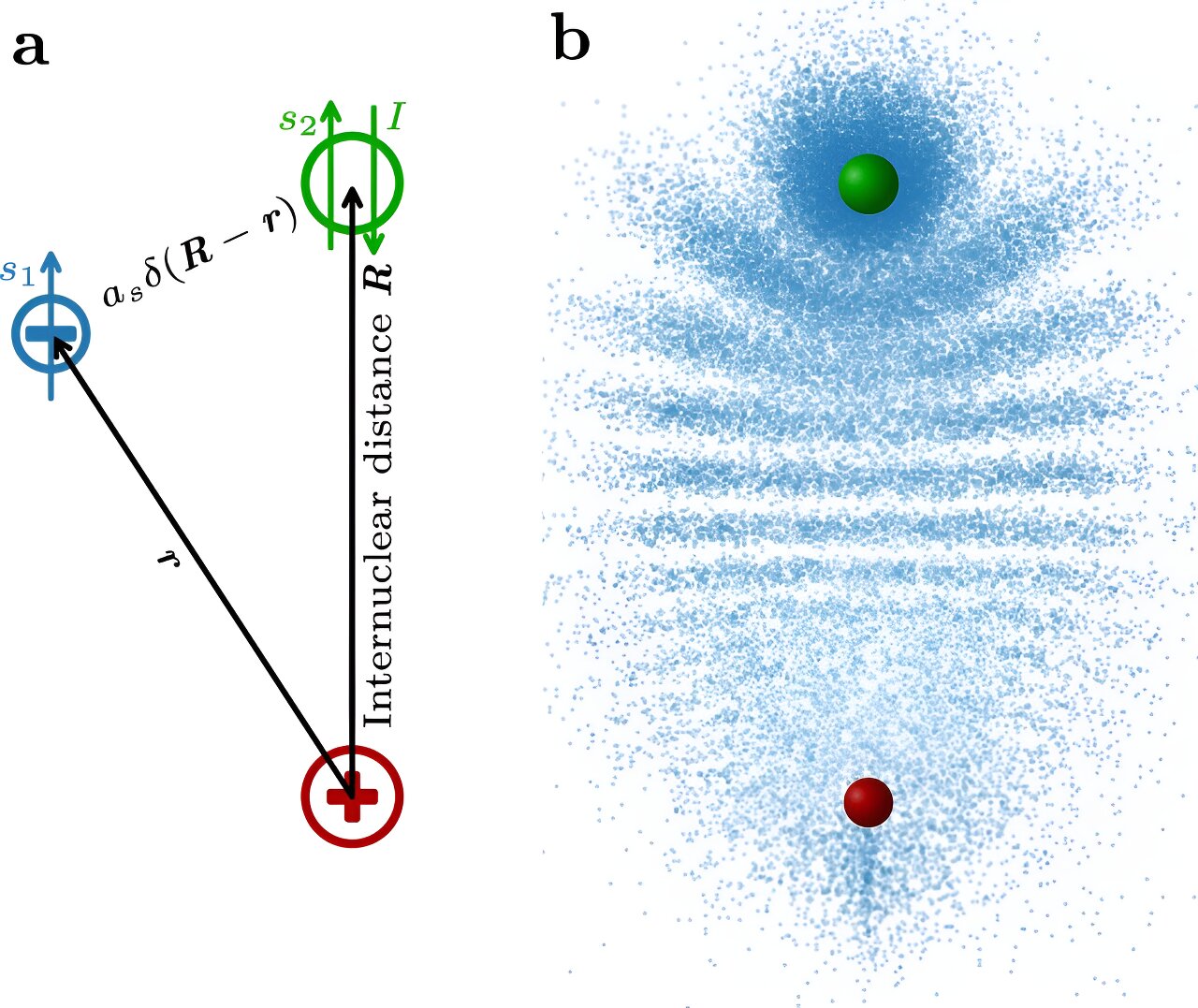
Physicists at the University of Kaiserslautern have successfully observed trilobite Rydberg molecules, which have a unique shape resembling trilobite fossils and the largest electric dipole moments of any known molecule. Using a specialized apparatus, the researchers prepared these molecules at ultralow temperatures and discovered their distinct chemical binding mechanisms. The molecules are formed through the quantum mechanical scattering of a Rydberg electron from a ground state atom, resulting in an effective attraction. The properties of these molecules, including their interference pattern and large bond length, provide insights into fundamental binding mechanisms and their potential applications in quantum computing.
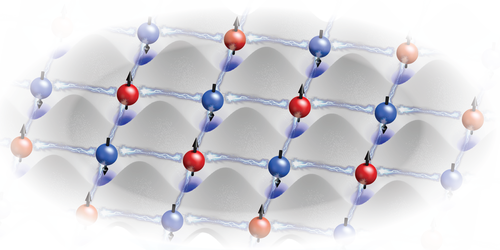
Researchers at the University of Science and Technology of China have achieved a milestone in optical-lattice-based quantum processing by successfully entangling groups of eight and ten ultracold atoms. This breakthrough demonstrates the scalability and reliability of using ultracold atoms trapped in an optical lattice for quantum computations. The team also demonstrated control and imaging of the states of the atoms with single-atom resolution, a crucial requirement for quantum computers.
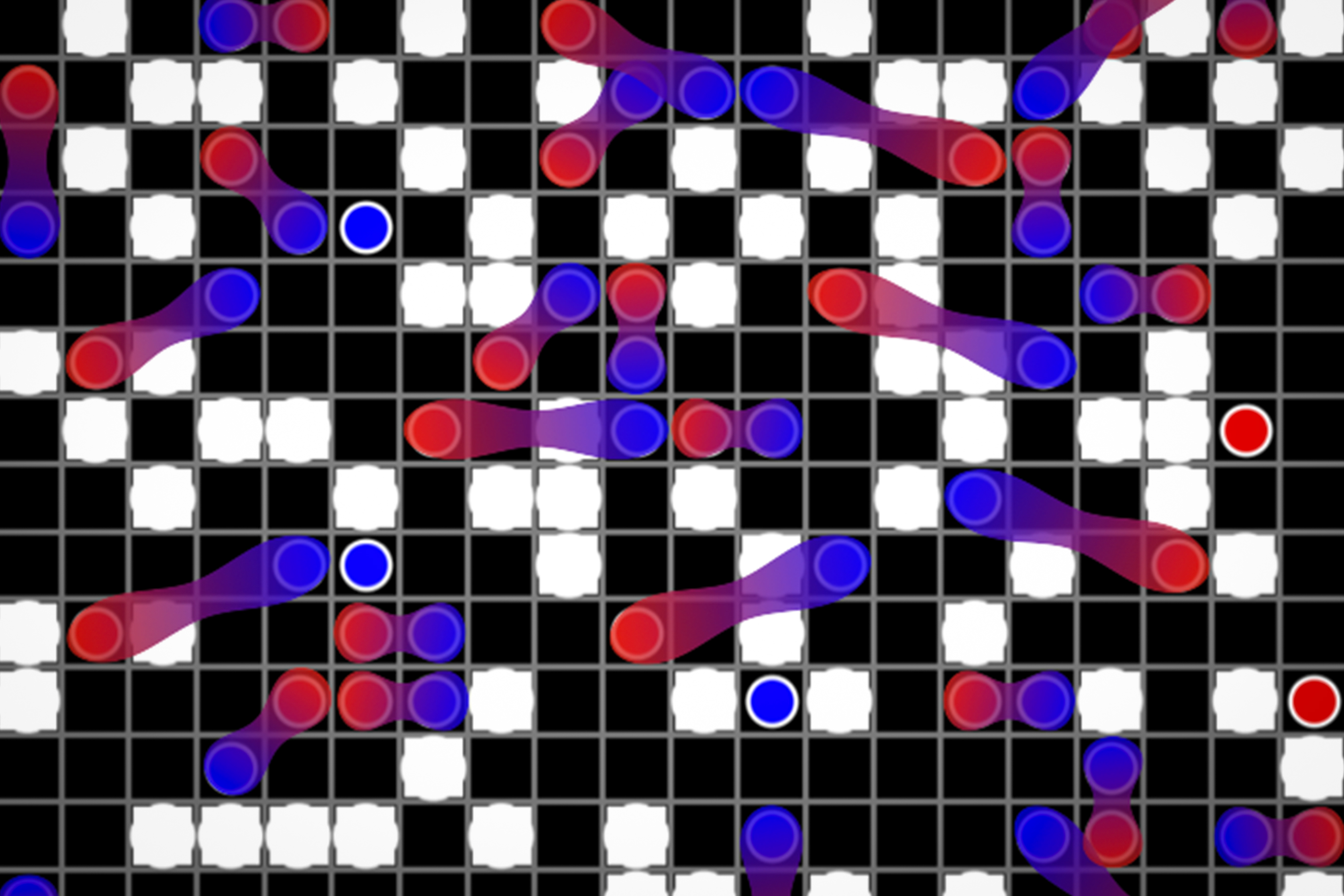
MIT physicists have captured the first images of fermion pairs, including electrons, protons, neutrons, and certain types of atoms, providing insights into how electrons pair up in superconducting materials. By studying a cloud of potassium-40 atoms under ultracold conditions, the researchers observed the pairing behavior and interesting patterns, such as checkerboards formed by the pairs. The findings could help advance the understanding of superconductivity and potentially lead to the development of room-temperature superconductors.
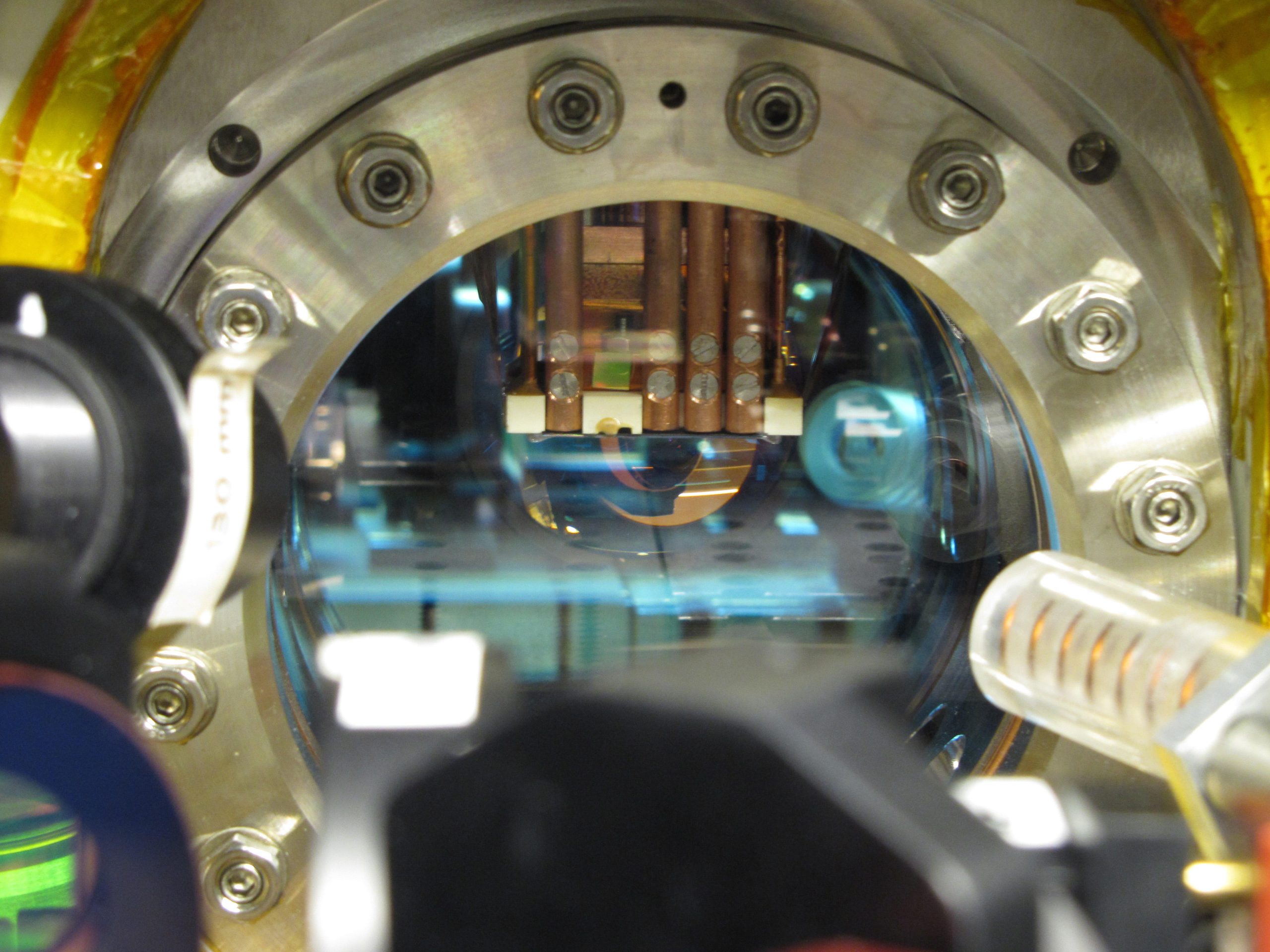
Scientists at Harvard have achieved a major breakthrough by successfully realizing a Laughlin state, an exotic quantum liquid, using ultracold neutral atoms manipulated by lasers. The Laughlin state, characterized by electrons dancing around each other while avoiding collisions, is associated with the existence of fractional charge-carrying particles called anyons. By imaging the atoms individually through a quantum-gas microscope, the researchers were able to observe the unique properties of the Laughlin state, opening up new avenues for exploring and manipulating anyons in quantum simulators.
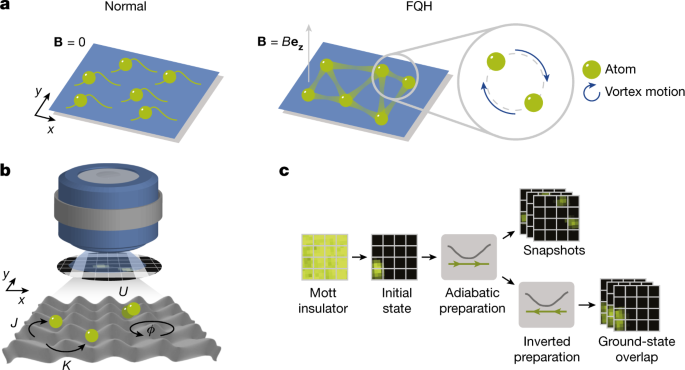
An international team led by Markus Greiner at Harvard has realized a Laughlin state using ultracold neutral atoms manipulated by lasers. The experiment involves trapping a few atoms in an optical box and implementing the ingredients required for the creation of this exotic state: a strong synthetic magnetic field and strong repulsive interactions among the atoms. The researchers imaged the atoms one by one through a powerful quantum-gas microscope and demonstrated the peculiar "dance" of the particles, which orbit around each other, as well as the fractional nature of the realized atomic Laughlin state. This milestone opens the door to a wide new field of exploration of Laughlin states and their cousins in quantum simulators.
Researchers have realized a fractional quantum Hall state with ultracold atoms in an optical lattice, which is a lattice version of a bosonic ν = 1/2 Laughlin state with two particles on 16 sites. The state exhibits many hallmark features of Laughlin-type FQH states, including a suppression of two-body interactions, a distinctive vortex structure in the density correlations, and a fractional Hall conductivity of σH/σ0 = 0.6(2) by means of the bulk response to a magnetic perturbation. This work provides a starting point for exploring highly entangled topological matter with ultracold atoms.
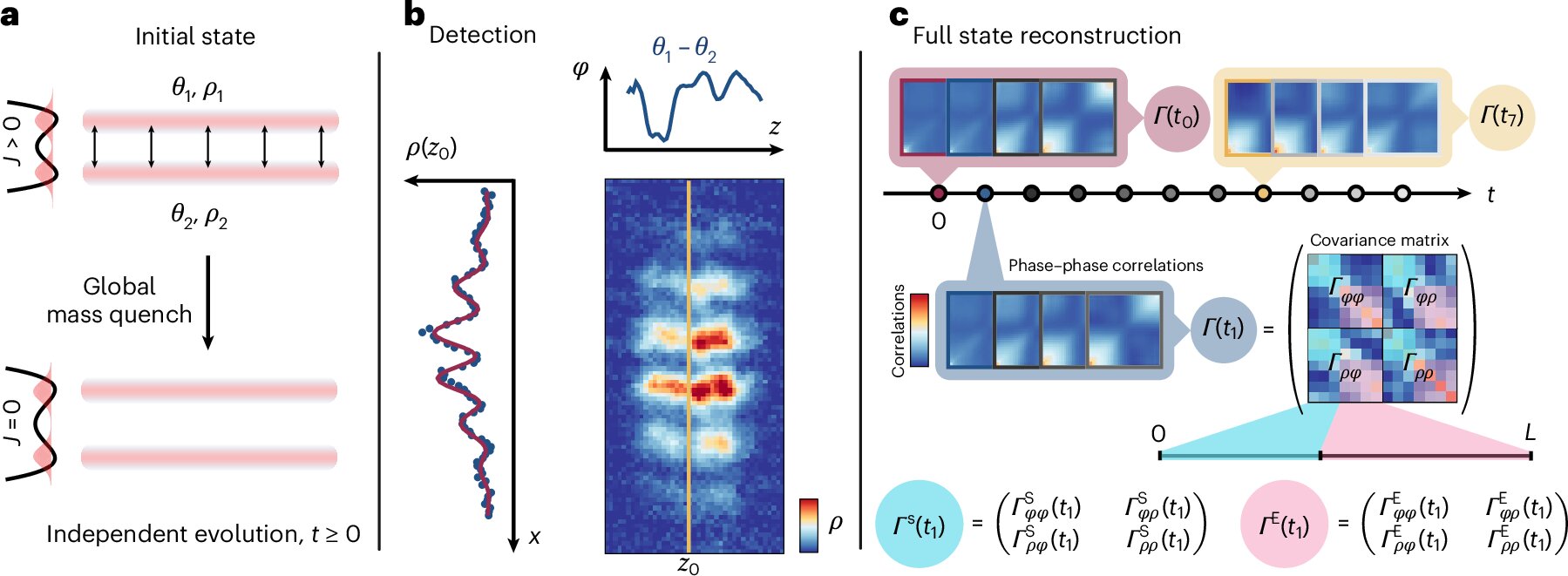
Researchers at TU Wien have experimentally verified a theoretical prediction that mutual information in a many-body quantum system scales with the surface area rather than the volume. The team studied a cloud of ultracold atoms held in place by an atom chip and developed a special tomography technique to obtain complete information about the quantum system. The results are relevant to various research areas, from solid-state physics to the quantum physical study of gravity.
Physicists have reconstructed the full state of a quantum liquid, consisting of ultracold atoms trapped on an atom chip, by observing how their fluctuations spread over time. The breakthrough offers promise for technological advancement in quantum computing and quantum sensors. The research team performed a tomography of a quantum system, creating two "copies" of the system and revealing the two copies' correlations to infer the initial quantum state of the system and extract its properties.