Tag

Treasury Securities

All articles tagged with #treasury securities

economy6 months ago

US Debt Dynamics: Who Holds the Debt as the Fed Sheds Securities?

The article analyzes who holds the US government debt at the end of Q1, revealing that foreign entities, especially European financial centers and Canada, are significant buyers, while US entities like mutual funds, the Fed, and households also hold substantial portions. Despite the Fed shedding Treasuries, foreign and US holders continue to buy, with market values fluctuating due to interest rate changes, highlighting an uncertain debt landscape.

finance1 year ago

"Treasury Department Plans Record Debt Auction Amid Upbeat Economic Outlook"

The U.S. Department of the Treasury is offering $121 billion of Treasury securities to refund approximately $105.1 billion of privately-held Treasury notes maturing on February 15, 2024, with plans to gradually increase coupon auction sizes and conduct small-value buyback operations in April as part of its debt management strategy. The issuance includes a 3-year note, a 10-year note, and a 30-year bond, with auctions scheduled for February 6th, 7th, and 8th, respectively. Additionally, Treasury intends to maintain bill auction sizes at current levels into late March and evaluate the potential change of the regular 6-week CMB to benchmark status.

finance2 years ago

US Treasury Announces Plans to Increase Bond Sales Amid Rising Debt and Rates

The U.S. Department of the Treasury plans to offer $112 billion of Treasury securities to refund maturing notes and raise new cash from private investors. The securities include a 3-year note, a 10-year note, and a 30-year bond, which will be auctioned on specific dates in November. The Treasury intends to gradually increase coupon auction sizes in the upcoming quarter and continue evaluating adjustments based on borrowing needs. They also plan to increase auction sizes for 2-year, 5-year, 7-year, 10-year, and 30-year securities. Additionally, the Treasury plans to maintain TIPS auction sizes and implement modest reductions to short-dated bill auction sizes. They are actively evaluating the implementation of a regular buyback program in 2024.

finance2 years ago

"Unlocking the Potential: How High Yields Boost Bond Investments"

Despite not reaching the same levels as in 1994, rising interest rates have made fixed-income investments, such as bonds, more attractive compared to the ultralow rates of previous years. Bond investors can expect relief from disappointing returns in the years ahead, with short-term Treasury rates above 5 percent and investment-grade corporate bonds above 6 percent. However, rising rates can also increase the cost of borrowing for mortgages, credit cards, and car loans. Safer alternatives include money-market funds, bank certificates of deposit, and high-yield savings accounts. Buying Treasuries that you hold until maturity or investing in low-cost, diversified short-term bond funds are also options. While there may be uncertainties about the future direction of interest rates, the current environment presents a good time to buy bonds.

finance2 years ago

US Treasury Bond Sales Surge as Traders Brace for Record-Breaking $102 Billion Issuance

The U.S. Department of the Treasury plans to offer $103 billion of Treasury securities to refund maturing notes and bonds, raising approximately $19 billion in new cash. Auctions for a 3-year note, 10-year note, and 30-year bond will take place in August, settling on August 15. The Treasury intends to gradually increase coupon auction sizes over the next quarter to align with borrowing needs. They also plan to increase auction sizes for 2-year, 5-year, 7-year, 10-year, and 30-year securities. Additionally, the Treasury plans to increase TIPS auction sizes and implement a regular buyback program in 2024. A small-value test auction will be conducted to test contingency auction infrastructure.

economy2 years ago

US National Debt Soars to $32.3 Trillion as Fiscal Hole Threatens America's Growth

The US national debt has surged by $851 billion in just one month, reaching a staggering $32.32 trillion, according to the Treasury Department. This increase is due to a combination of marketable and nonmarketable Treasury securities. The Treasury Department has been selling large amounts of Treasury bills and Cash Management bills to refill its checking account, known as the Treasury General Account (TGA). However, this process drains liquidity from the markets, which is further compounded by the Federal Reserve's quantitative tightening (QT) measures. The Treasury expects to borrow an additional $733 billion in marketable securities in the coming months to reach a TGA balance of $600 billion by the end of September. Despite this flood of new issuance, the Treasury market has remained relatively calm, with short-term yields reflecting expectations of rate hikes and long-term yields indicating anticipation of rate cuts and a return to 2% inflation.

economy2 years ago

US National Debt Surpasses $32 Trillion Mark.

The US national debt has surpassed $32 trillion, increasing by $572 billion since the debt ceiling was suspended two weeks ago. The Treasury Department is now selling a flood of Treasury securities to replenish its checking account that had been drawn down to near-nothing during the debt-ceiling standoff. The Treasury General Account at the New York Fed had fallen to a closing balance of $23 billion just before the debt ceiling was suspended. The TGA has jumped by $227 billion since the debt ceiling was suspended, including the June 15 tax receipts, to a balance of $250 billion. The Fed's QT is running for the first time simultaneously with the TGA being refilled, and both are draining liquidity from the markets simultaneously.

finance2 years ago

The Global Impact of a US Debt Default on Social Security and Veterans Benefits.

The possibility of a US debt crisis is causing concern in financial markets, with the potential consequences being described as "frightful." The US government's ability to pay its creditors on time is crucial to the smooth functioning of the global financial system, and any default could cause havoc across a range of markets. While negotiations to increase the amount the US government can borrow are ongoing, a default could lead to a deep recession in the US and sink the global economy. The dollar and US Treasuries may enjoy some protection due to their outsized role in international trade and finance, but the fallout from a US default would still be severe.

personal-finance2 years ago

"Maximizing Savings with Apple: A Financial Analysis"

Americans are realizing they can earn more on their cash than what big banks are paying, with savers flocking to better-paying alternatives such as money market funds, high-yield savings accounts, Treasury bills, and inflation-linked savings bonds. Some online and lesser-known banks and credit unions are offering high-yield savings accounts, with at least 30 yielding more than Apple's 4.15%. Other options include certificates of deposit and Treasury securities, with the latter being exempt from state tax. Building a CD or Treasury ladder is also a good strategy for those unsure of where rates are going.

finance2 years ago

US Treasury Implements New Measures to Boost Liquidity and Manage Debt

The US Department of the Treasury is offering $96bn of Treasury securities to refund approximately $75.2bn of privately-held Treasury notes maturing on May 15, 2023. The balance of Treasury financing requirements over the quarter will be met with regular weekly bill auctions, cash management bills (CMBs), and monthly note, bond, Treasury Inflation-Protected Securities (TIPS), and 2-year Floating Rate Note (FRN) auctions. Treasury believes that current issuance sizes leave it well-positioned for its near-term borrowing needs, and as such, intends to keep nominal coupon and FRN new issue and reopening auction sizes unchanged during the May 2023 – July 2023 quarter.

finance2 years ago

Money-Market Funds: A Safe Haven Amid Economic Uncertainty

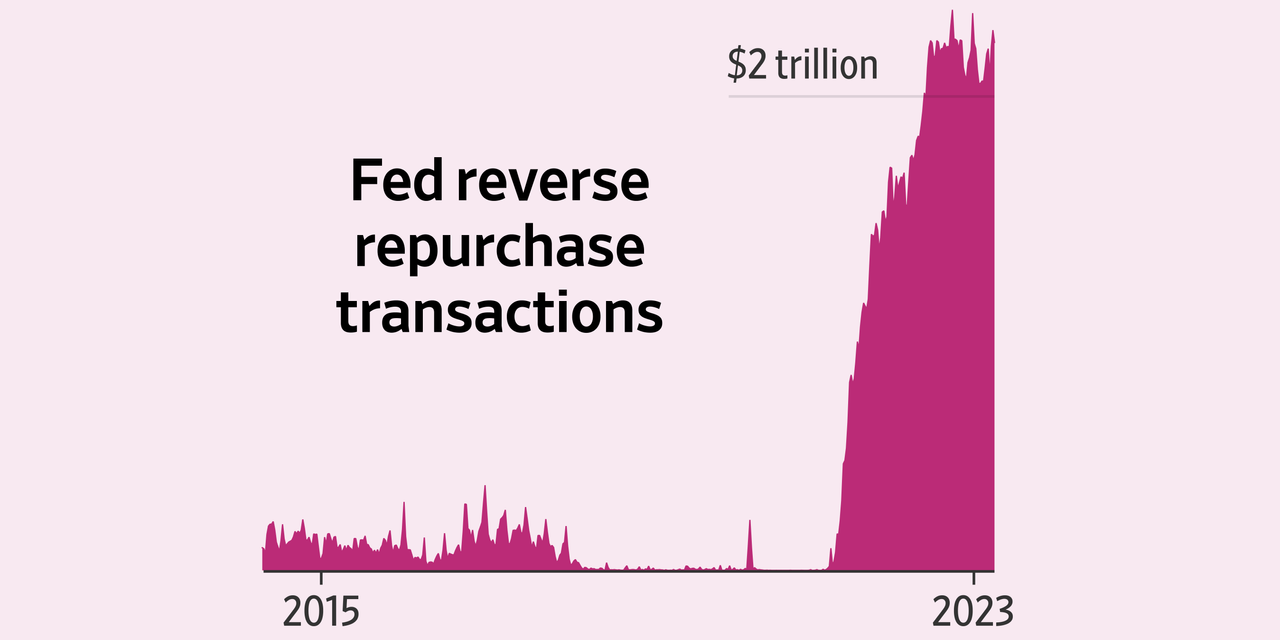
Deposit outflows from banks to money-market funds are putting pressure on the Federal Reserve's overnight reverse repurchase facility, which borrows from money funds and other firms in exchange for securities such as Treasurys and then returns the money the next day. The facility offers interest on firms' cash balances, but some analysts say the flows add to bank-system stress. Money-market fund assets are increasing at a record clip, with much of that cash making its way to the Fed's program.