Goldman Sachs and BNY Mellon have launched digital tokens representing shares of money market funds, utilizing blockchain technology to modernize financial infrastructure, potentially enabling faster transactions and broader access for investors.
U.S. money market funds saw their largest weekly inflows since December 2024, totaling $66.24 billion, driven by investor caution over tariffs and trade uncertainties, while riskier equity funds experienced significant outflows.
Wall Street is preparing for potential stress in money markets ahead of the U.S. tax day on April 15, as tax-related outflows could impact market liquidity. Analysts anticipate significant outflows due to high capital gains from last year's stock market boom, potentially leading to a surge in short-term interest rates. The Federal Reserve and investors will closely monitor any signs of stress, as it could impact the availability of cash in the financial sector. The level of bank reserves and the Fed's balance sheet shrinkage will be key factors in managing potential liquidity challenges.
Janus Henderson Investors believe that the U.S. bond market's recent rally still has room to grow, even if the Federal Reserve delays interest rate cuts. Falling benchmark rates have boosted the bond market, with the Bloomberg US Aggregate Bond Index gaining 5.5% after a 13% drop in 2022. Investors in cash-like investments may miss out on attractive yields in bonds, as historical data shows that the average return on Treasurys after the first interest-rate cut is 3.65%. Despite recent market volatility, assets in money-market funds remain high, but Janus Henderson advises that time in the market is more important than timing the market.
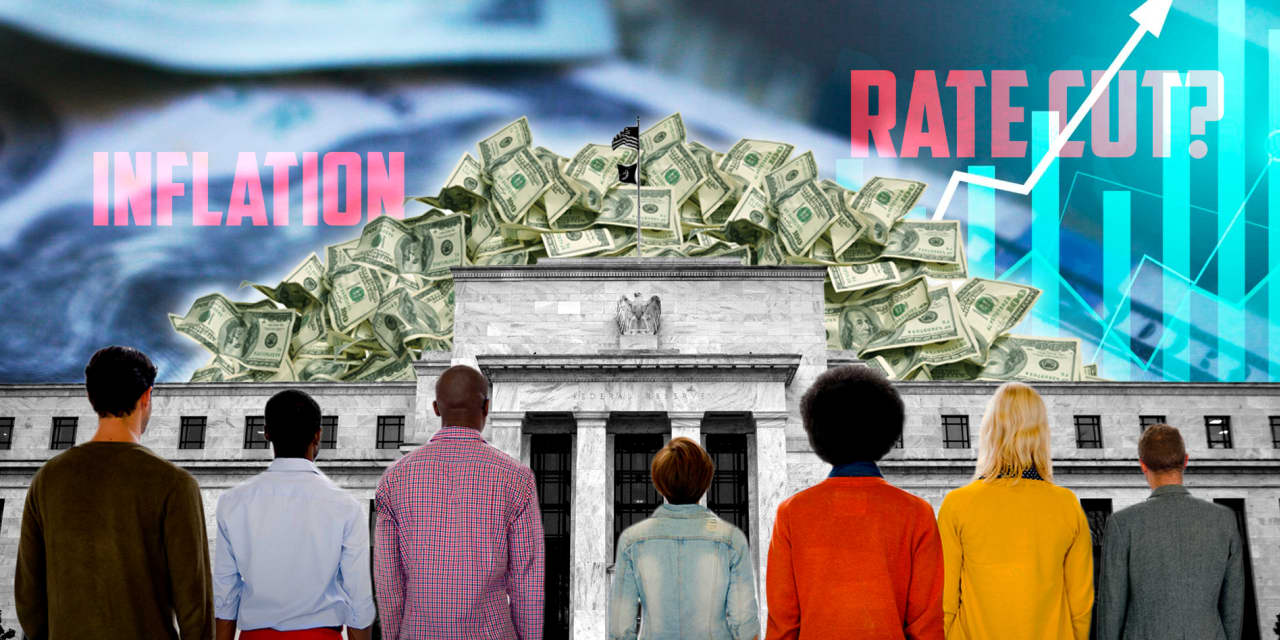
Investors with $6.5 trillion in cash are closely watching inflation data and piling more cash into money-market funds after the Federal Reserve pushed back on expectations for interest-rate cuts. Fed Chairman Jerome Powell's cautious stance on rate cuts has led to a surge in cash parked in money-market funds, with investors seeking higher yields. While the bond market is reacting to Powell's comments, U.S. stocks have been on a record-setting spree. Some experts caution against staying in cash for too long, advocating for a traditional 60:40 allocation to stocks and bonds to offset potential equity turmoil.
Retail investors are flocking to money market funds and CDs with yields above 5% as interest rates remain high, but these options may not provide substantial income or financial independence. Instead, the article recommends investing in high-quality preferred stocks from leading financial institutions like JPMorgan Chase, Bank of America, and Wells Fargo, which offer yields up to 5.9% and potential capital upside. The author emphasizes the importance of building a portfolio that delivers a lifestyle-sustaining income stream through dividends and suggests seizing the opportunity to acquire income-producing assets before potential rate cuts by the Fed.
Ned Davis Research's chief global macro strategist, Joseph Kalish, argues that the $6 trillion in money-market funds won't necessarily boost the stock market, citing historical data showing declines in money-market assets coinciding with Federal Reserve moves to ease monetary policy and bolster the economy. Despite a surge in money-market fund assets over the past year, Kalish points out that previous declines in such assets were followed by bear-market moves in equities, which is not the case currently with equities near record highs. While there are reasons to be bullish on equities and credit, Kalish believes the pile of cash in money-market funds is a weak factor in this scenario.
Money-market fund assets have reached a new record high, with total assets increasing to $5.965 trillion, driven by a significant inflow of $78.6 billion into government funds in the week leading up to January 3. This surge reflects investors' preference for safer investments to protect their cash at the year's end.
The Federal Reserve's accommodative stance and indication of potential rate cuts have fueled a market rally, with the Dow Jones hitting record highs, gold surpassing $2,000 an ounce, and bitcoin rising. While stocks are pricing in a Goldilocks scenario for 2024, where growth slows but avoids a recession, bonds are embracing the prospect of significant rate cuts. However, concerns arise as 150 basis points of cuts may be ambitious given the robust labor market and healthy consumer spending. Additionally, there is a significant amount of cash parked in money market funds that will eventually seek investment opportunities. The S&P 500 is up 23% this year, largely driven by tech megacap stocks, while the equal-weighted S&P has underperformed. The mood in the market remains positive, with futures pointing to an upbeat start on Wall Street.
A nearly $6 trillion cash hoard sitting on the sidelines could potentially fuel further gains in U.S. stocks as the Federal Reserve shifts its stance. Soaring yields have attracted cash into money market funds, but the Fed's recent dovish pivot may prompt investors to deploy cash into riskier assets like stocks. Historically, cash has returned an average of 4.5% following the last rate hike, while U.S. equities have surged by 24.3%. However, not all the cash in money market funds may be available for investment, and the size of money market assets relative to the stock market is smaller than in previous peaks.
BlackRock suggests that the period between the Federal Reserve's hiking and cutting cycles, known as the "pause" period, is an opportune time for investors to own stocks rather than keeping their cash in money market funds. Research shows that equities tend to deliver their highest average annual returns during this pause period. While cash may seem less risky, it misses out on potential opportunities in the stock market. BlackRock recommends investing in quality stocks with low leverage, stable earnings growth, and healthy balance sheets.
Investors who have poured cash into money market mutual funds may face higher tax bills in 2023 due to rising interest rates. Money market fund yields are currently higher than any year since the Great Recession, resulting in taxable income for most investors. However, there are other investment options that can help minimize the tax burden. Tax-friendly options for cash include Treasury bills, which offer no state or local taxes on earnings, and tax-exempt municipal money market funds, which allow investors to avoid federal income taxes on earnings. The best option ultimately depends on an individual's risk tolerance and goals.
Investors are holding record cash sums in money-market funds as stocks and bonds continue to surge in November. Analysts are optimistic that there is more room for growth, with various assets such as technology stocks and junk-rated company debt rising. The encouraging inflation report has reinforced bets that the Federal Reserve can achieve a soft landing for the economy without pushing it into a deep recession.
Money market funds in the US have been paying over 5% since April 2023, prompting Americans to flock to them. In response, banks are now competing for deposits by offering attractive interest rates on certificates of deposit (CDs). Large CDs of $100,000 or more have surged by 60% since the Federal Reserve began its rate hikes, reaching $2.1 trillion at the end of October. Small CDs of less than $100,000 have also seen a significant increase, rising from $36 billion in May 2022 to nearly $1 trillion by the end of September. Banks are also offering higher interest rates on savings accounts to compete with money market funds.
Cash is becoming more attractive for investors as interest rates reach near 22-year highs. Online banks are offering high-yield savings accounts paying interest around 5%, while rates on one-year certificates of deposit can go up to 5.67%. However, experts advise against loading up on cash, as there is a significant opportunity cost in terms of long-term growth. Cash should be used appropriately for emergency funds and short-term spending goals. Different options for holding cash include high-yield savings accounts, certificates of deposit, money market funds, and Treasurys. The amount of cash to hold and the vehicle to use depend on personal circumstances and financial goals.