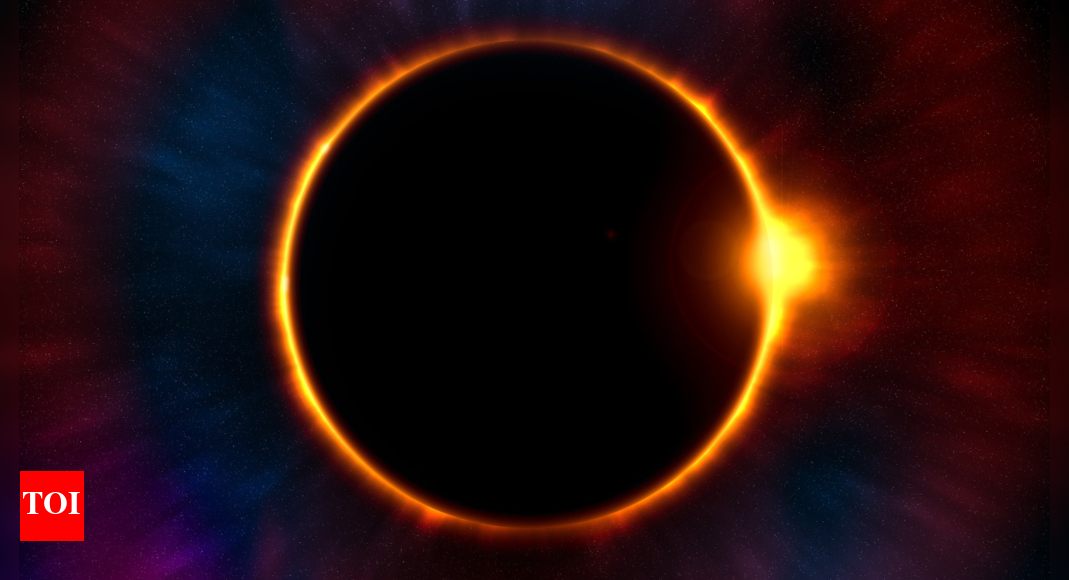
A viral claim about a worldwide blackout on August 2, 2025, is false; NASA confirms a significant total solar eclipse will occur on August 2, 2027, lasting up to 6 minutes and 22 seconds, visible across parts of Europe, North Africa, and the Middle East, but only affecting a narrow path on Earth.

The 2024 solar eclipse at SUNY Potsdam served as a unique college orientation experience, attracting prospective students and eclipse chasers alike. The university canceled classes for the celestial event, offering dorm rooms for rent and organizing an eclipse festival with live music and demonstrations. The eclipse, which lasted 3 minutes and 14 seconds, left spectators in awe as the moon blocked the sun, causing animals to react and temperatures to drop briefly. The event was a memorable and educational experience for all involved.
NASA astronaut Loral O'Hara, who recently conducted the fourth all-woman spacewalk at the International Space Station, described the experience as "moving" and "immersive." She missed witnessing a total solar eclipse from space due to a delay in her return to Earth, but enjoyed seeing auroras sparked by high solar activity. O'Hara, a submersible engineer by training, also had a poignant moment when she received a video of a baby octopus hatching on the sea floor and later found herself flying over the same water zone from space.
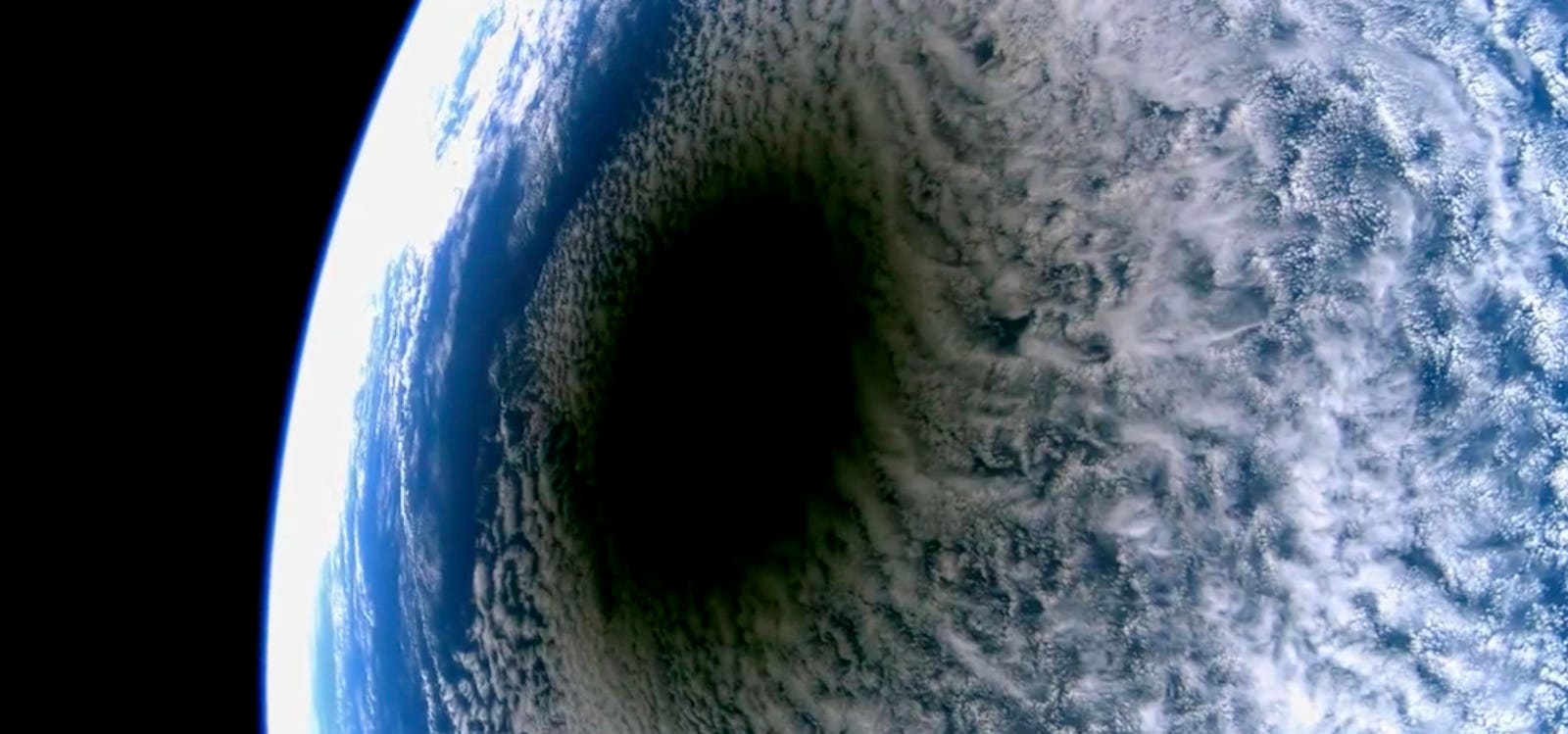
A British satellite orbiting Earth has captured stunning 4K images and videos of the total solar eclipse on April 8, showcasing the moon's shadow and the sun's corona. Sen's ETV-A1 satellite, in low-Earth orbit, plans to provide live-streaming views of Earth from the International Space Station with its 4K camera, and is expected to launch more satellites in the future. The next total solar eclipse is set for August 12, 2026, in Europe.
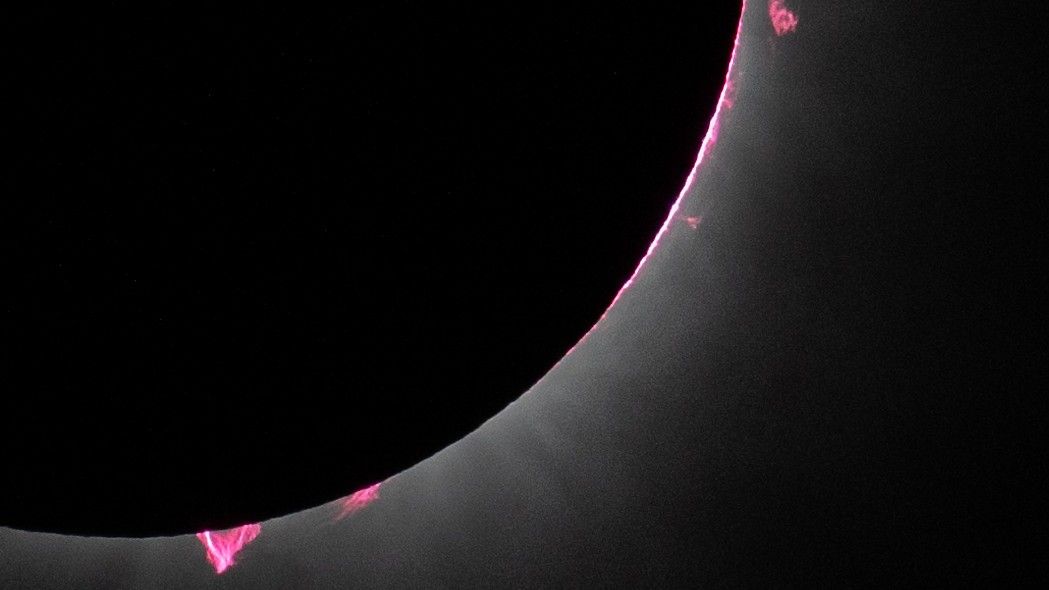
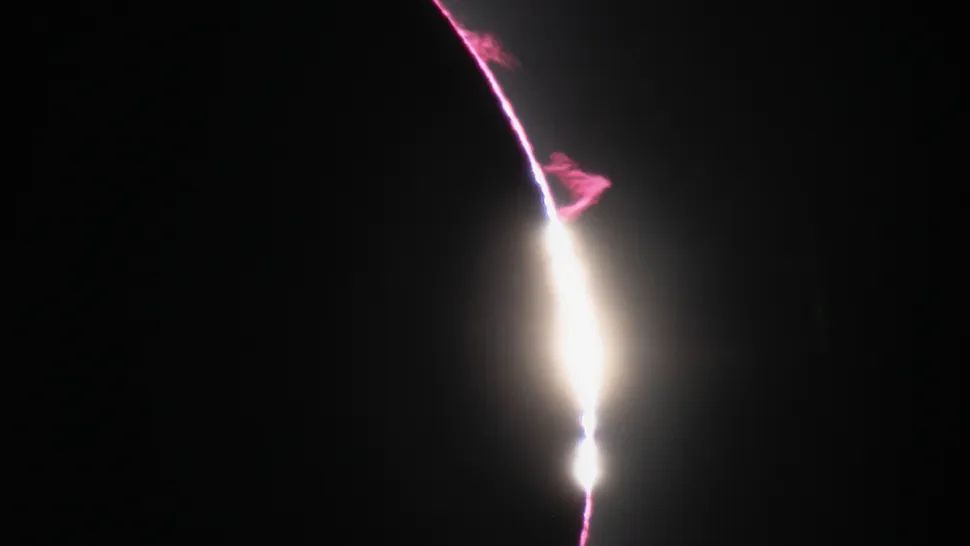
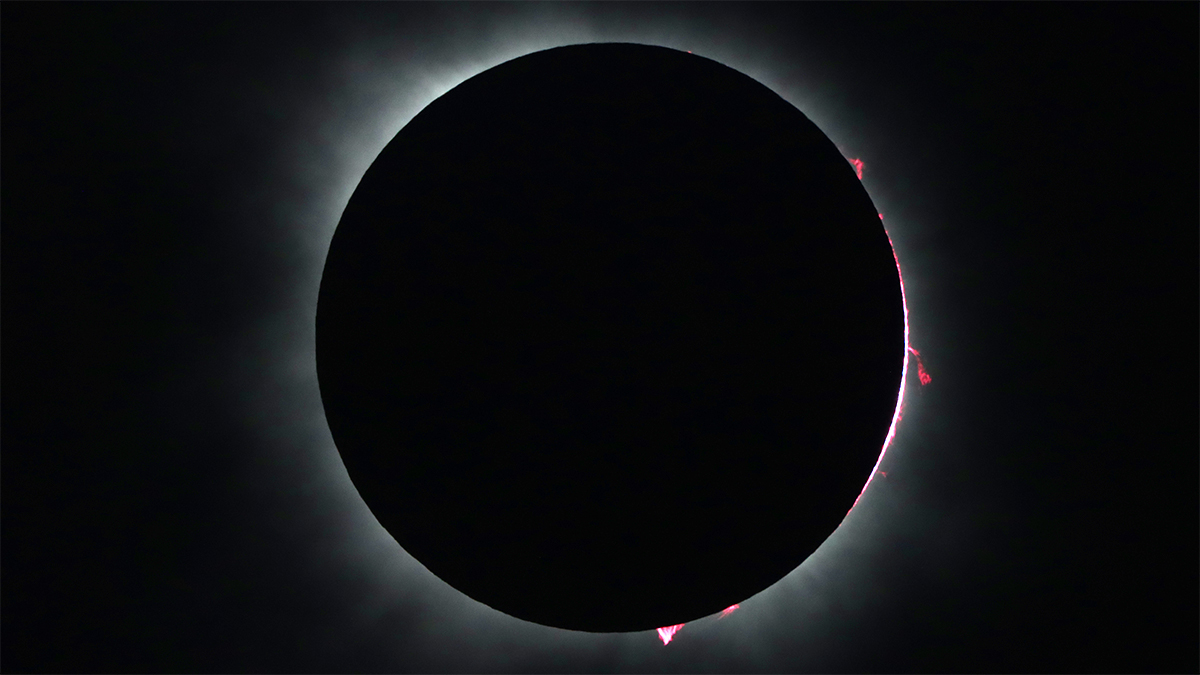
During the total solar eclipse on April 8, 2024, NASA captured a rare image showing pink towers of plasma, known as solar prominences, erupting from the sun's surface. These structures, which are not solar flares, are large and often looping towers of plasma that stand anchored on the sun's surface for weeks or months. The pinkish hue of the prominences comes from the sun's hydrogen emitting a reddish light at high temperatures, and their visibility from nearly 93 million miles away highlights their incredible size. This phenomenon is just one of the many beautiful and elusive occurrences visible during a total solar eclipse.
The Austin-Bergstrom International Airport broke two of its busiest day records following the total solar eclipse, with 37,147 travelers on Tuesday and 39,967 travelers on Thursday, surpassing its previous projections and leading to an increase in checked bags as eclipse tourists continued to use the airport. The airport had initially expected to break the record for only one of its busiest days, but the influx of travelers before, during, and after the eclipse resulted in record-breaking numbers.
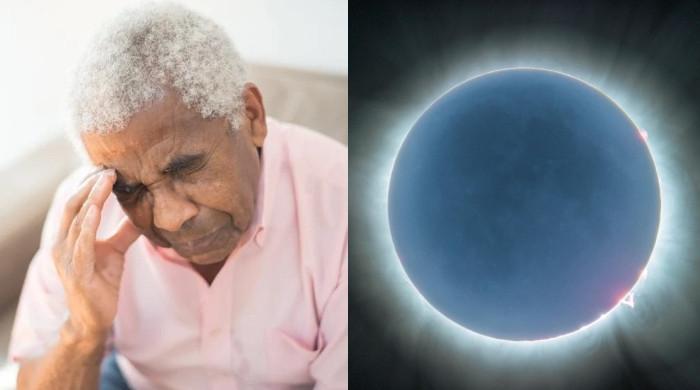
Doctors have reported a surge in eye-related injuries following the recent Total Solar Eclipse, with patients experiencing eye pain and fear of going blind after viewing the eclipse without proper protection. Despite continuous warnings from doctors and eye specialists, some individuals disregarded the advice and looked at the sun without adequate eye protection, leading to potential damage to the retina and macula. While most people took safety precautions, there is concern that some may have used fake solar eclipse glasses, emphasizing the importance of heeding health warnings during astronomical events.
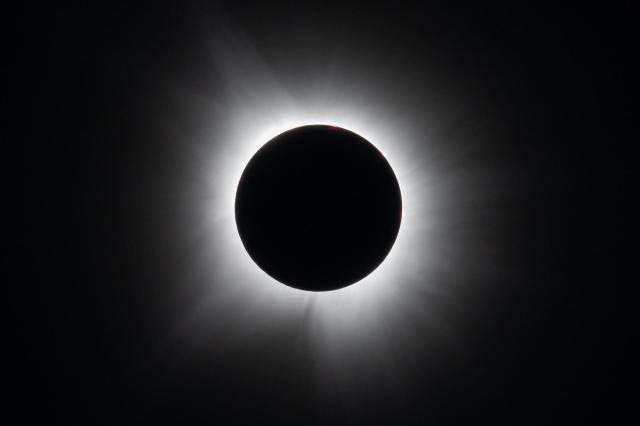
On April 8, 2024, a total solar eclipse swept across North America, providing a breathtaking celestial event for millions of people. NASA captured stunning images and data from various vantage points, including the ground, space, and Earth's atmosphere. The eclipse not only showcased the Sun's corona and bright pink prominences but also led to observations of changes in animal behavior. The event served as a powerful reminder of humanity's place in the universe and brought communities together to witness the rare spectacle.
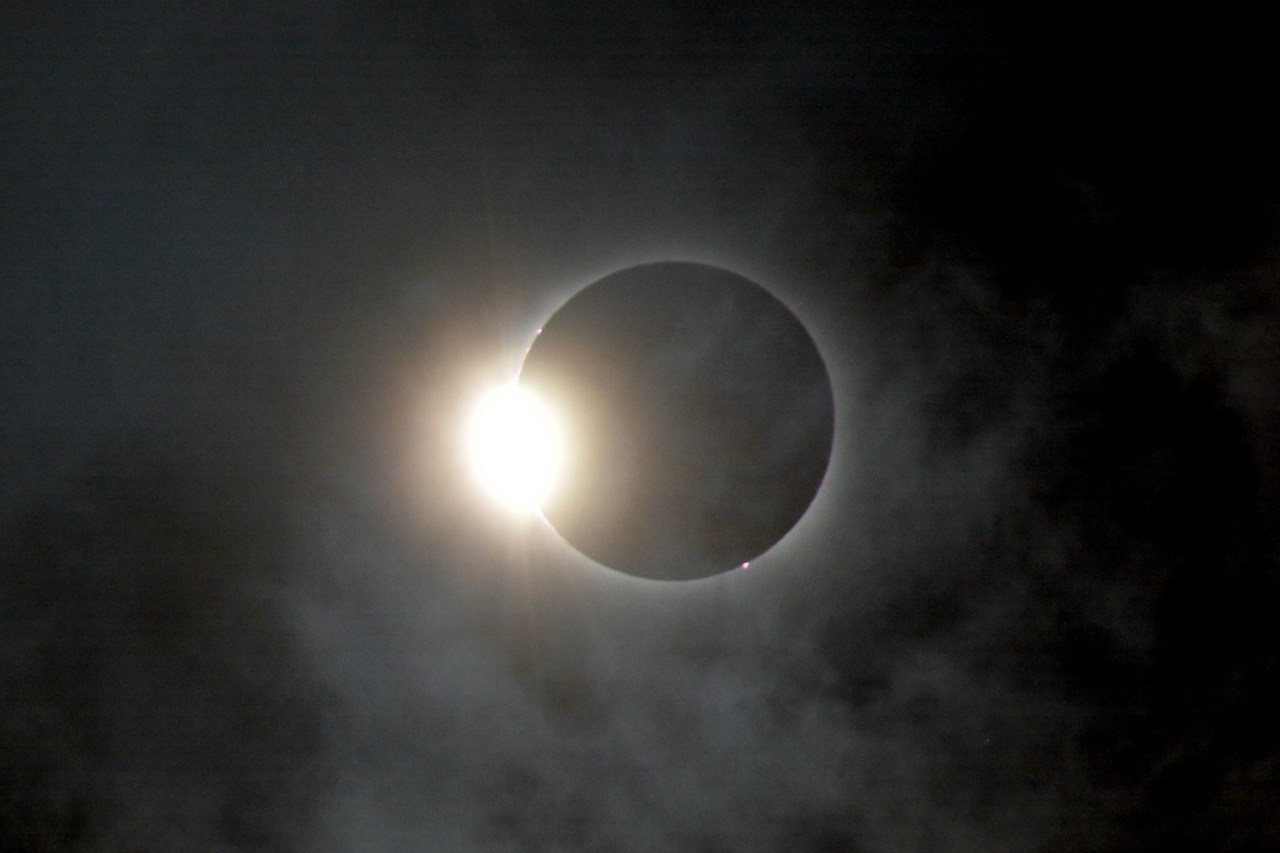
During the recent total solar eclipse, observers saw what appeared to be explosive solar flares, but experts clarified that these were actually plasma prominences, not caused by solar flares. The event was particularly special due to the lengthy period of totality, during which some observers saw red dots around the obscured sun. Solar activity data confirmed the absence of solar flares during the eclipse, attributed to the sun's current low activity despite being near the peak of its solar cycle.
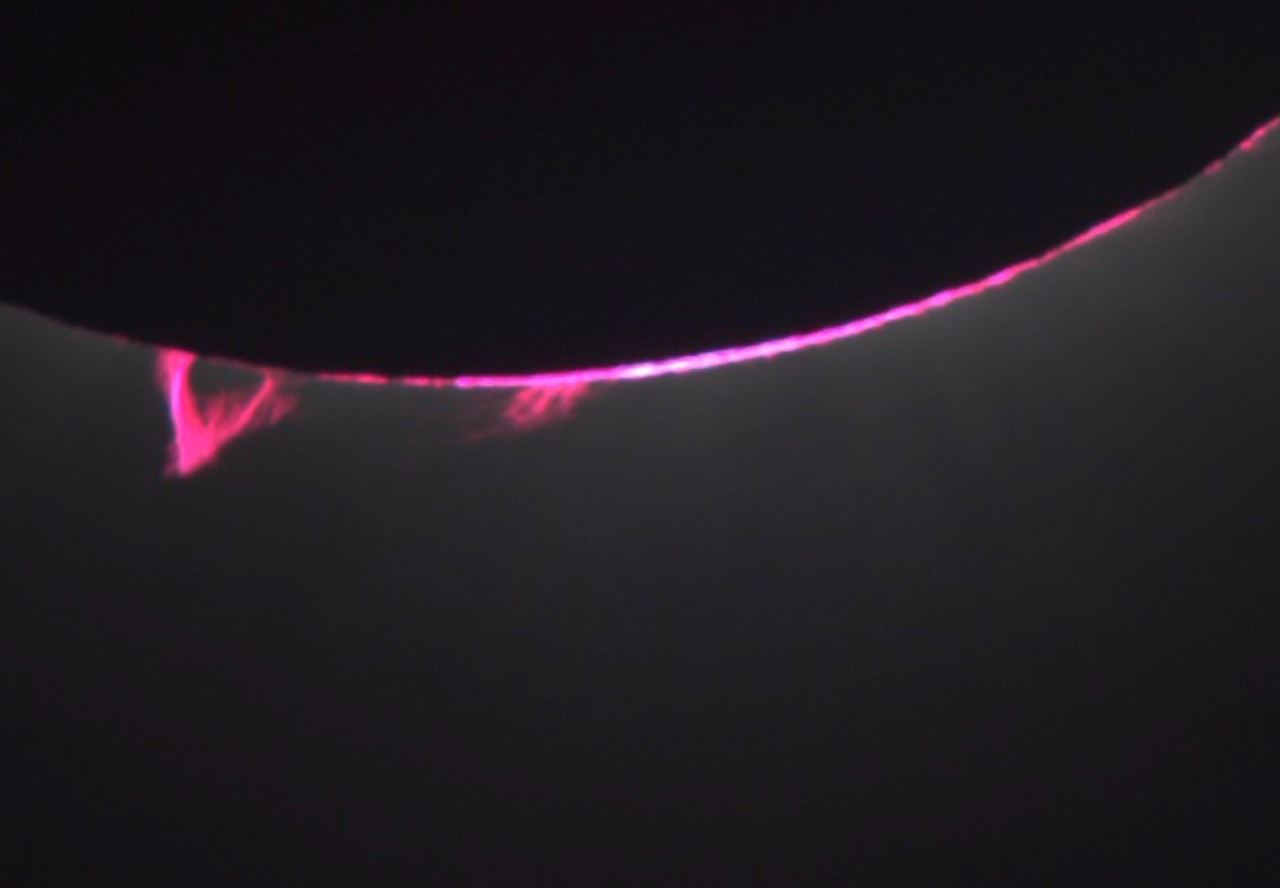
The red blotchy areas around the sun during the recent total solar eclipse were solar prominences, which are eruptions of plasma extending from the sun's surface along its magnetic field. Unlike solar flares and CMEs, prominences are anchored to the sun and have no impact on Earth. Solar flares are bursts of X-rays and energy that can cause disruptions to satellites and communications, while CMEs are slower and can lead to auroras when their charged particles interact with the Earth's atmosphere.
Delta Air Lines and United Airlines organized special commemorative flights to allow passengers to experience the solar eclipse from the sky, providing glasses and other swag to mark the occasion. Several regularly scheduled United flights also fell within the path of the eclipse. The next total solar eclipse will occur on August 12, 2026, visible in Greenland, Iceland, Spain, and parts of Portugal and Russia.
The next total solar eclipse in Austin, Texas is not expected until 2343, with the path of totality crossing through the United States from Mexico to Greenland. However, the next total solar eclipse in the United States will occur in 2044, and in Texas in 2045, with other upcoming eclipses in 2026 in Greenland, Iceland, Spain, Russia, and Portugal.
Watertown officials and first responders successfully managed the "Total Eclipse of the Park" event in Thompson Park, ensuring public safety with a turnout of around 6,000 eclipse enthusiasts. Despite lower-than-expected attendance during the total solar eclipse, the event was deemed a total success, with minimal incidents and no major traffic issues in the city. Emergency services were on standby, and although a few ambulances experienced delays due to heavy traffic, overall, the event went smoothly with lower call volumes than usual.
Burlington and other northern Vermont towns experienced darkness as the total solar eclipse passed over the region, with a video capturing the changing light over the city, Lake Champlain, Mount Mansfield, and Camel’s Hump during the event.
During Monday's total solar eclipse, a reddish-pink prominence, resembling an upside-down wishbone, was observed extending from the bottom of the moon, captured by Cleveland State physics professor Andy Resnick. This phenomenon is known as a prominence and was a notable feature of the eclipse.