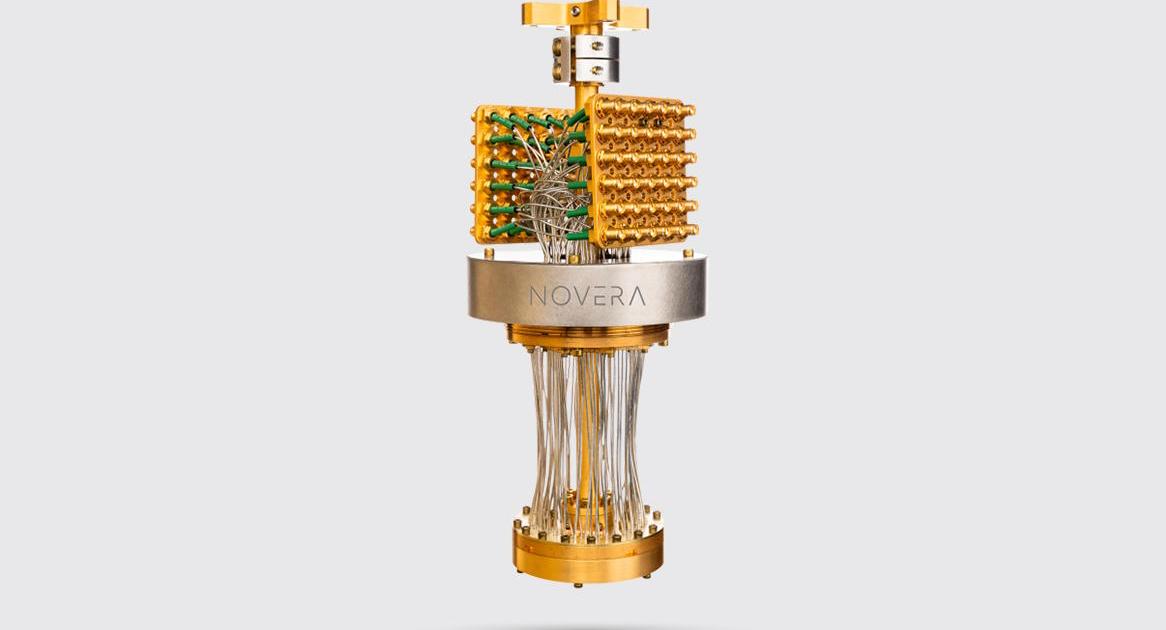
Scientists at Caltech have set a new record by synchronizing 6,100 neutral atom qubits in a quantum array that operates at room temperature, with extended superposition coherence of 12.6 seconds, marking a significant step toward scalable, fault-tolerant quantum computers capable of surpassing classical supercomputers.
Researchers in China created a quantum superposition state lasting over 23 minutes, a record-breaking duration that could advance high-precision measurements and quantum computing, by trapping ytterbium atoms in a superposed state, opening new possibilities in quantum physics and technology.
The article explores some of the enduring mysteries in science, such as the placebo effect, quantum entanglement, and superposition, highlighting the limitations of scientific understanding and the importance of curiosity and wonder in scientific pursuit.
A team of scientists led by Zheng-Tian Lu has achieved a groundbreaking feat by maintaining a quantum superposition, or "cat state," for 23 minutes, a significant leap from the usual fleeting existence of such states. Using ytterbium atoms cooled to near absolute zero and precisely tuned lasers, the researchers managed to stabilize these states, which are highly sensitive to environmental changes. This advancement could revolutionize quantum information processing and enhance the sensitivity of probes for detecting subtle magnetic forces, pushing the boundaries of quantum technology.
Quantum physicists are exploring the concept of quantum reference frames, where observers' frames of reference can exist in multiple locations simultaneously, affecting phenomena like superposition and entanglement. This approach could help resolve paradoxes in quantum thought experiments and provide insights into quantum gravity, potentially bridging the gap between quantum mechanics and general relativity. However, challenges remain in defining and translating between quantum reference frames.
Scientists have proposed a new test to explore the quantum nature of gravity, which remains the only major force not fitting into the quantum framework. The test involves placing a tiny crystal in a state of superposition and observing its interaction with another crystal to detect quantum effects. If successful, this experiment could provide evidence that gravity has a quantum nature, marking a significant step towards a unified theory of physics.
The Starts With A Bang podcast episode 101 features Dr. Riccardo Manenti, an expert in quantum computing, who discusses the realities and misconceptions of quantum computers. Quantum computers differ from classical ones by allowing bits to exist in superposition states, not just as 0s or 1s. The episode aims to cut through the hype surrounding quantum computing, such as the notions of "quantum supremacy" and "quantum advantage," and provide a clearer understanding of the technology's actual progress and challenges. Manenti, with his extensive background, including a PhD from Oxford and experience at Rigetti, offers insights into the current state and future potential of quantum computing.
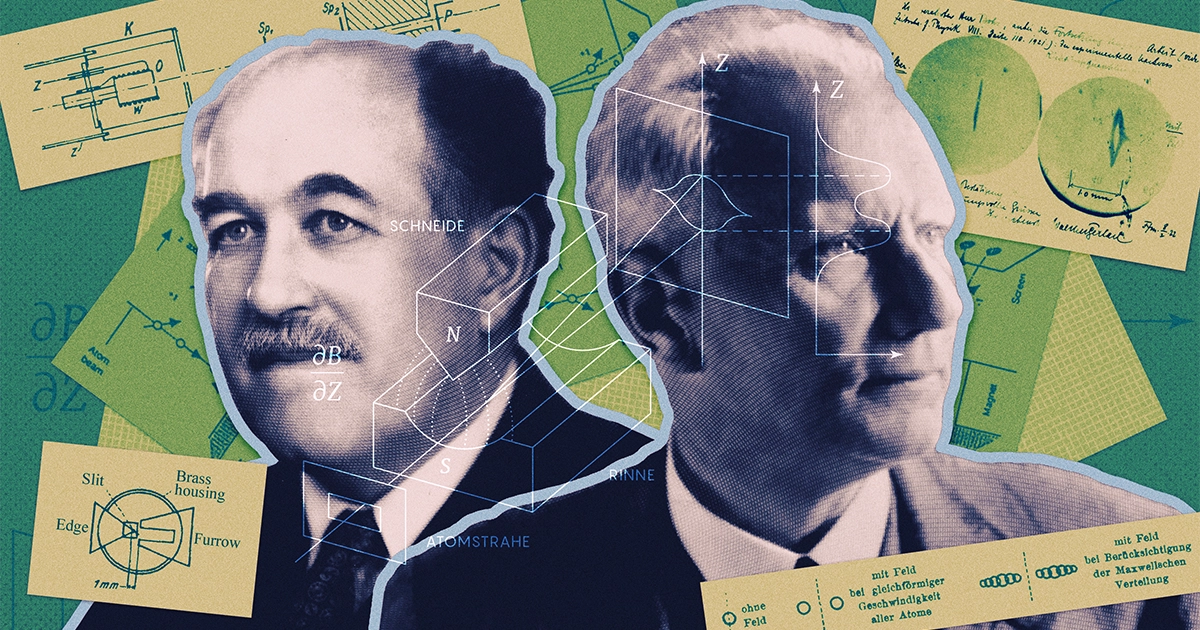
The Stern-Gerlach experiment, conducted in 1922, confirmed the existence of quantum phenomena and played a crucial role in the development of quantum theory. The experiment involved shooting silver atoms at a detector and observing the splitting of the silver deposit. While the scientists initially attributed the splitting to the orbit of the atom's outermost electron, it was later discovered that it was actually due to the quantization of the electron's internal angular momentum, known as spin. This unexpected result led to a deeper understanding of quantum mechanics and challenged previous interpretations of the experiment.
Quantum physicists from Hiroshima University have challenged traditional views of fixed physical properties by revealing that the results of quantum measurements are fundamentally tied to the interaction dynamics between the measuring device and the system. Their findings suggest that reality is shaped by the context of these interactions, providing evidence against the belief that our world can be reduced to a mere configuration of material building blocks. The study highlights the importance of understanding the dynamics of measurement interactions in interpreting quantum experimental data and calls for a revision of our understanding of the meaning of experimental data in quantum mechanics.
Researchers at the University of Chicago are exploring the quantum properties of sound waves, known as phonons, by using acoustic mirrors and beam splitters. They have demonstrated that phonons can exhibit superposition and entanglement, similar to photons. This research could pave the way for the development of a new type of quantum computer called a mechanical quantum computer, which would be compact and self-contained, potentially integrating with electronic quantum computers in the future.
Scientists have successfully placed a phonon, a particle of sound, into superposition, allowing it to exist in two places at once. This achievement paves the way for the use of phonons in quantum computers, which rely on the principles of quantum physics to perform calculations. This feat is similar to what has been observed in electrons and photons, which are quanta of matter and light, respectively.
Physicists at the Swiss Federal Institute of Technology in Zurich have created the largest-ever Schrodinger's Cat by putting a sapphire crystal weighing 16 micrograms in a quantum-mechanical superposition of two vibrational states. The crystal was excited into vibrations such that its atoms oscillated back and forth simultaneously and in two opposite directions, putting the entire crystal in a state of quantum superposition. The findings have pushed the envelope on what can be considered quantum mechanical in an actual lab experiment, demonstrating that something as massive as 16 micrograms can exist in this state.
Physicists at the Swiss Federal Institute of Technology (ETH) Zurich have set a new quantum record by creating the heaviest object ever to be recorded in a superposition of locations. They coupled a mechanical resonator to a type of superconducting circuit commonly used in quantum computing to effectively replicate Erwin Schrödinger's famous thought experiment on an unprecedented scale. The experiment used a high-overtone bulk acoustic-wave resonator, or HBAR, which served as a 16.2 microgram cat. The team used a transmon, a superconducting circuit that served as the experiment's power source, sensor, and superposition.
Schrödinger's Cat is a famous thought experiment that highlights the apparent consequence of quantum theory that before you open the box, the cat is both alive and dead at the same time. This comes down to the principle of uncertainty in quantum mechanics, where there seems to be a fundamental uncertainty built into the nature of reality. Superposition is a real phenomenon in quantum mechanics, and sometimes we can even use it to our advantage. Whether this conclusion is actually absurd is an open question, but applications of quantum theory are already bringing us incredible technological advances, like quantum computers.
Physicists have used a device that includes a vibrating sapphire crystal to demonstrate that even objects larger than atoms can be in a superposition, confirming the famous Schrödinger's cat thought experiment. The experiment shows that an object can be in two simultaneous vibrating states, just like the cat that is both dead and alive in the thought experiment.