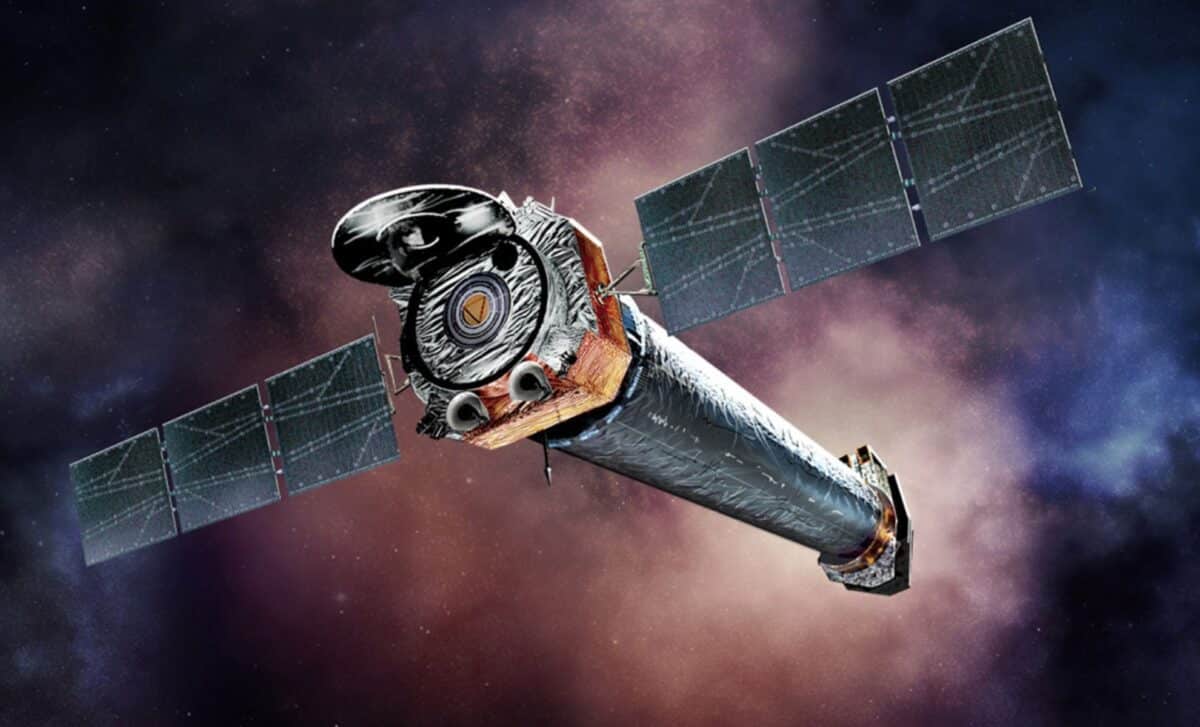
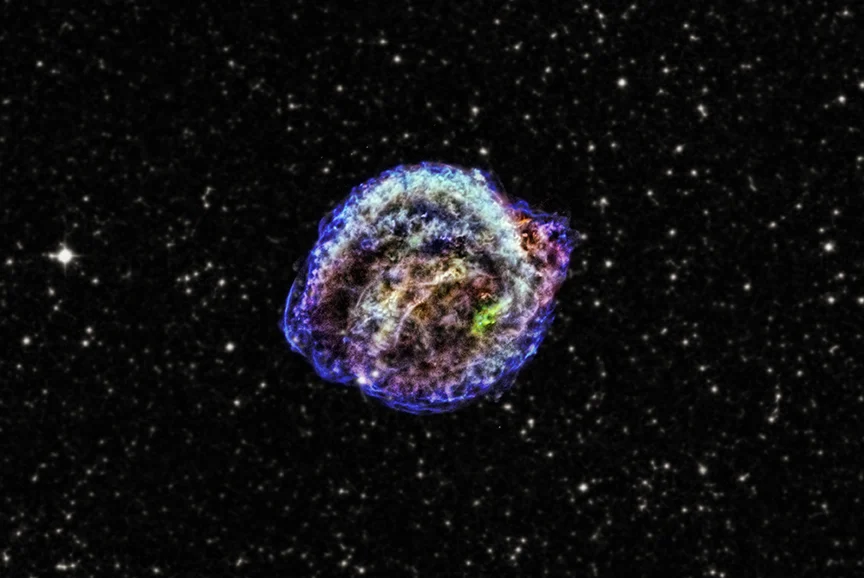
NASA's Chandra X-ray Observatory has released a 25-year time-lapse video showing the expansion of Kepler’s Supernova Remnant, providing valuable insights into the aftermath of a Type Ia supernova and its interaction with the surrounding environment, highlighting the importance of supernovae in cosmic evolution.
NASA released a detailed video of Kepler's Supernova remnant, created from 25 years of Chandra X-ray data, showcasing the explosion's debris moving at different speeds and providing insights into the supernova's environment and its role in cosmic evolution.
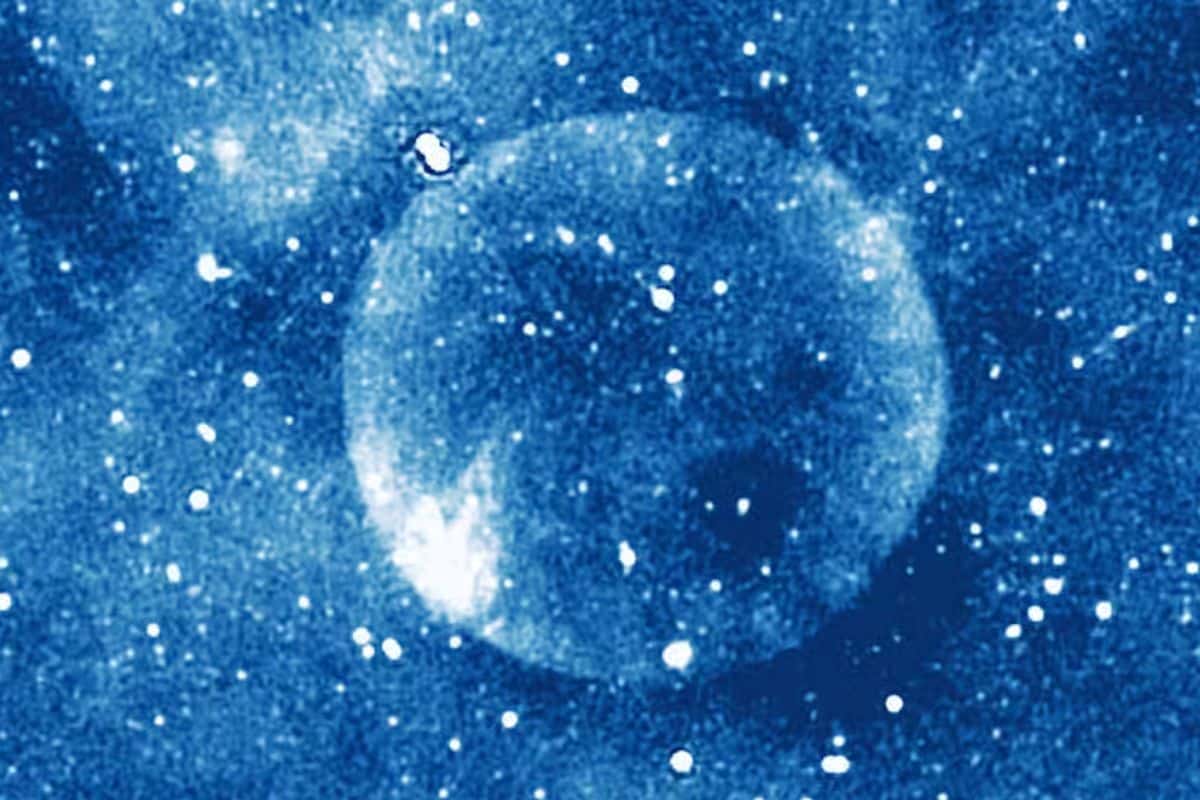
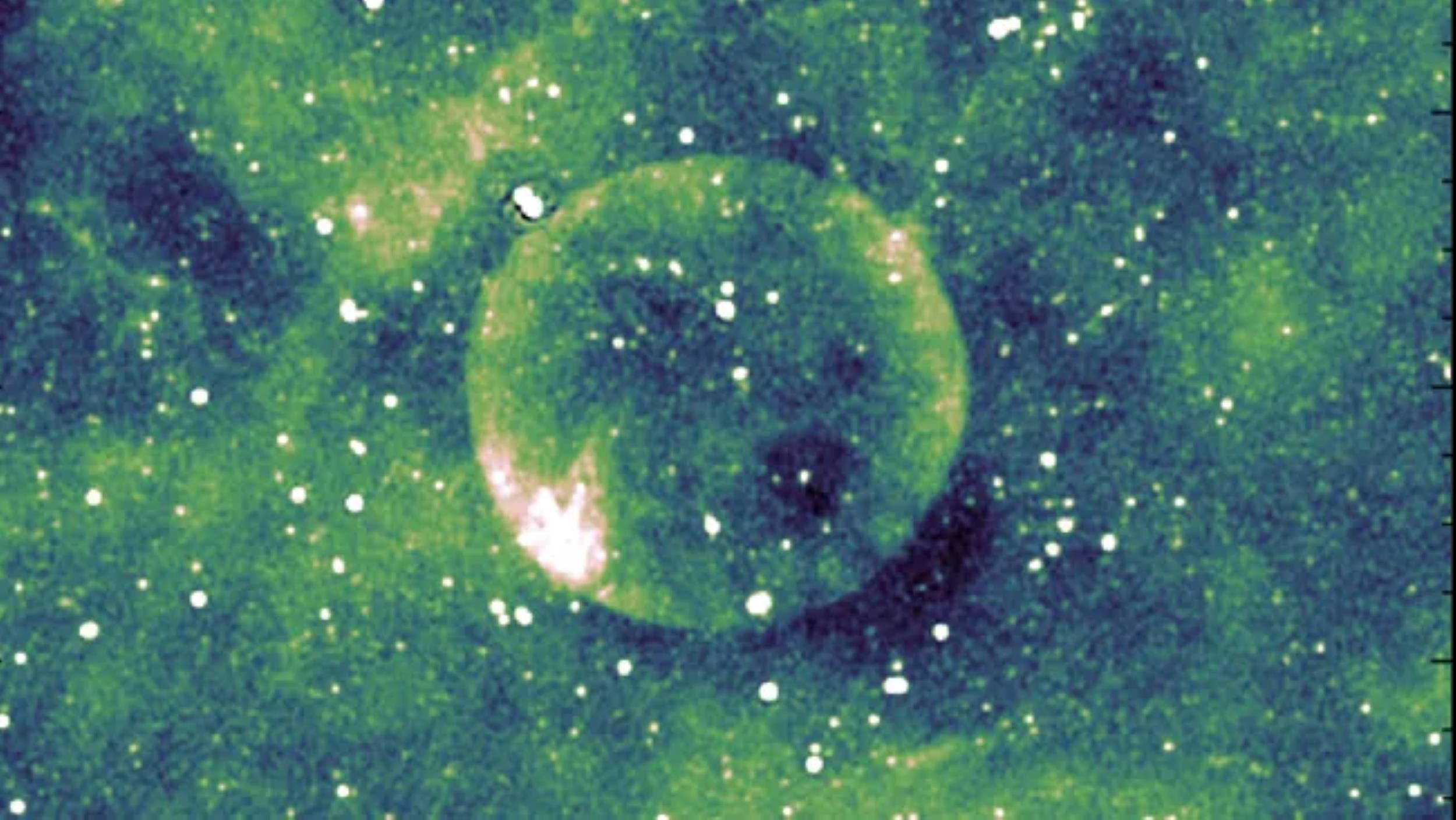
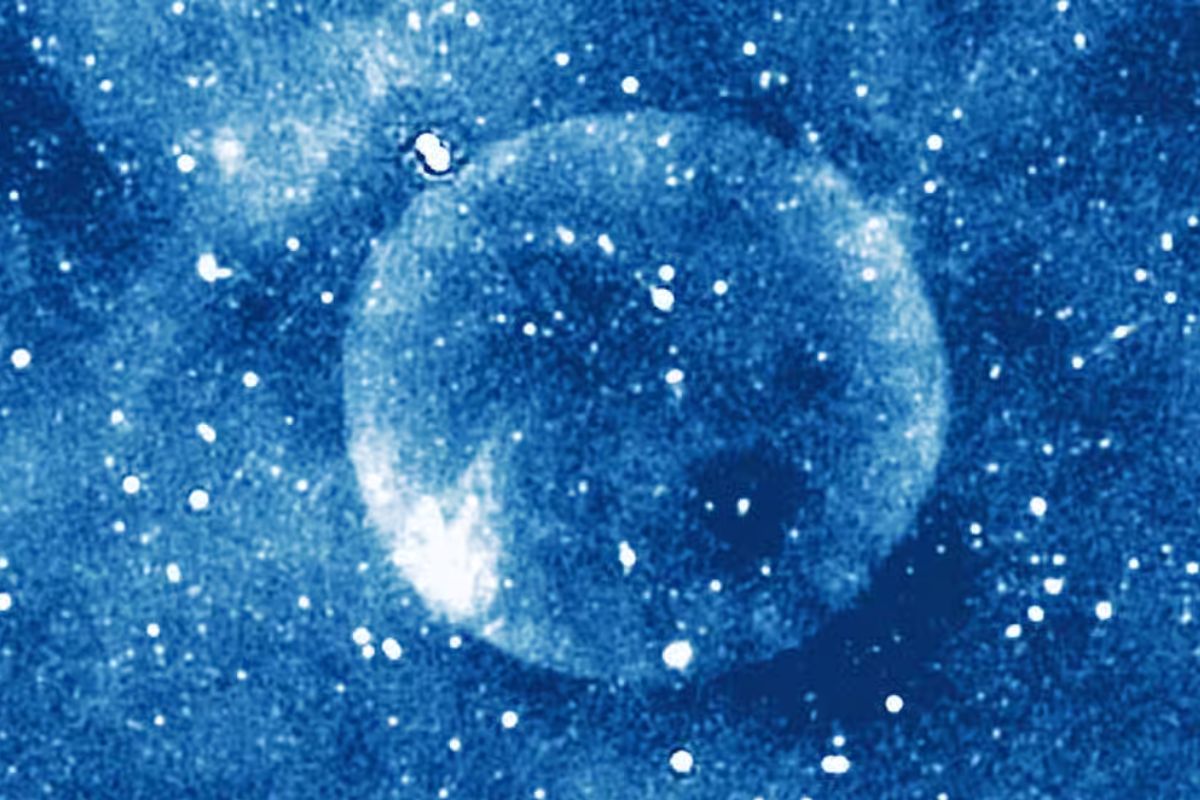
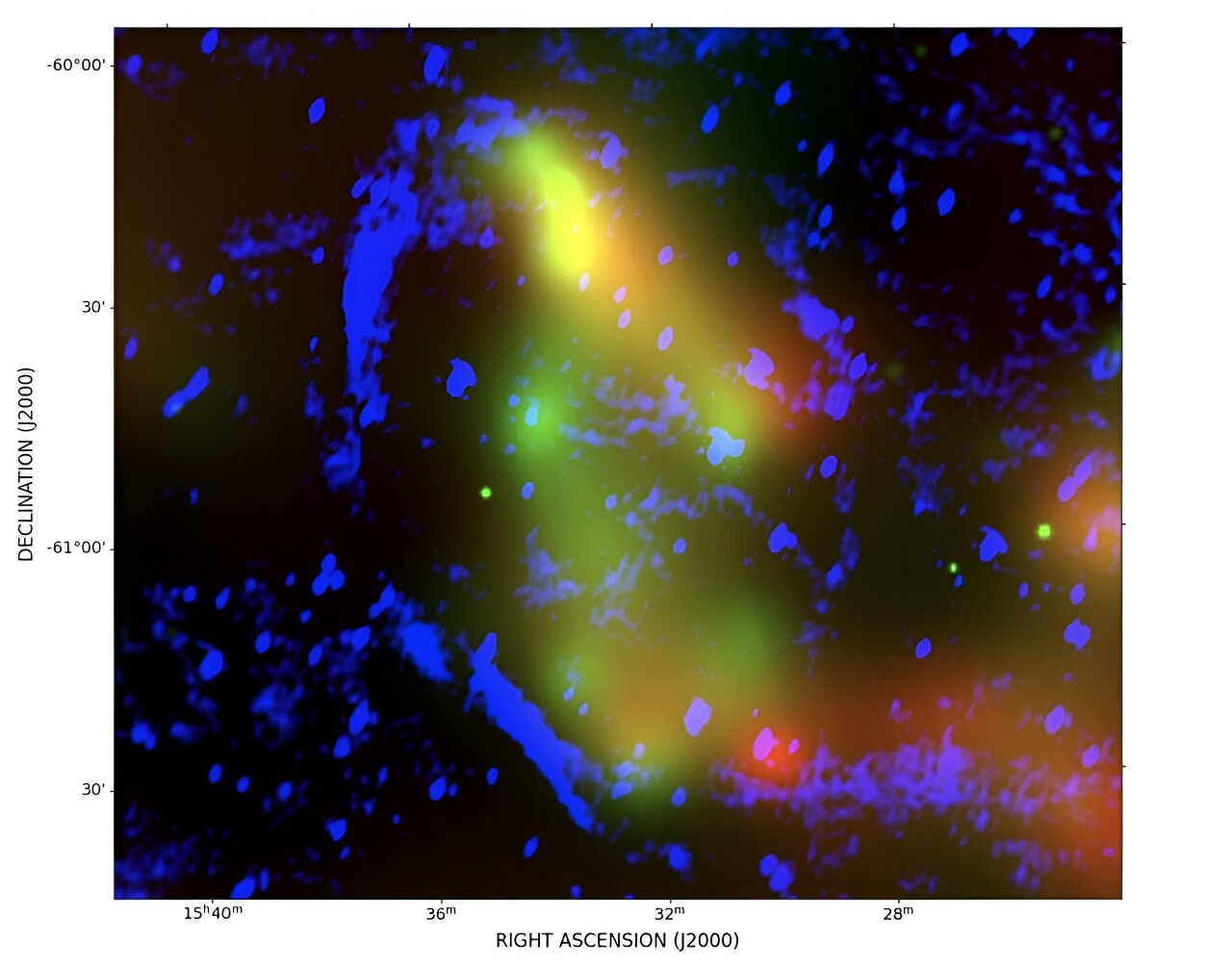
Astronomers have discovered a nearly perfect spherical object in the Milky Way, named Teleios, which is likely a supernova remnant from a Type Ia supernova, but its exact distance and age remain uncertain, prompting further observations.
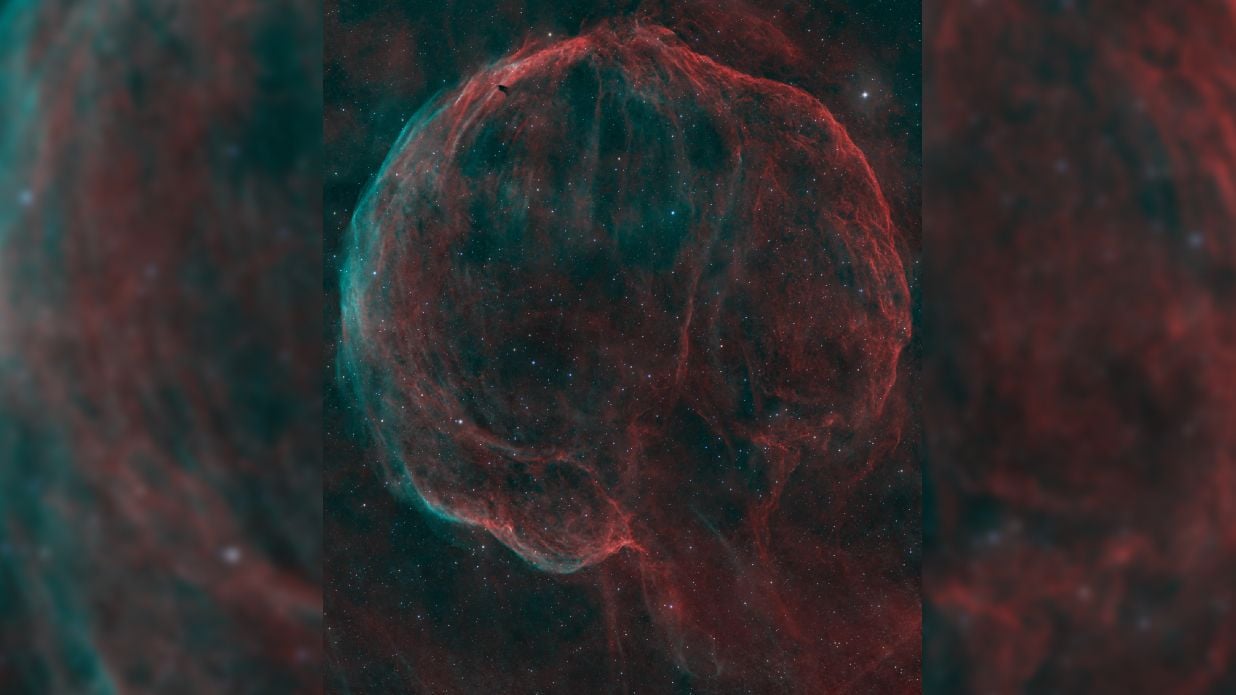
Kentucky astrophotographer David Joyce captured a detailed image of the Medulla Nebula (CTB 1), a supernova remnant from a star explosion 10,000 years ago, using an 8-inch telescope over seven nights, revealing its colorful and complex structure.
Scientists have discovered a mysterious, perfectly spherical object named Teleios in the Milky Way that emits only radio signals and lacks visible or X-ray emissions, challenging existing theories about celestial structures and possibly representing a unique stellar remnant or cosmic bubble. Its precise nature remains uncertain, prompting further observations and research.
Astronomers discovered a nearly perfect spherical supernova remnant named Teleios deep in the Milky Way, notable for its symmetry and unique radio emissions, likely formed by a supernova explosion in a sparse region of space, offering new insights into stellar death processes.
Astronomers discovered a nearly perfect spherical supernova remnant named Teleios deep in the Milky Way, notable for its symmetry and unique radio emissions, likely due to its location in a sparse region of space that allowed undisturbed expansion, though its exact origin remains uncertain.
Astronomers have discovered a perfectly circular radio object in the Milky Way, dubbed Teleios, which is likely a supernova remnant resulting from a Type Ia supernova. Its precise shape challenges existing theories and offers new insights into cosmic phenomena, with ongoing research needed to determine its exact distance, size, and age.
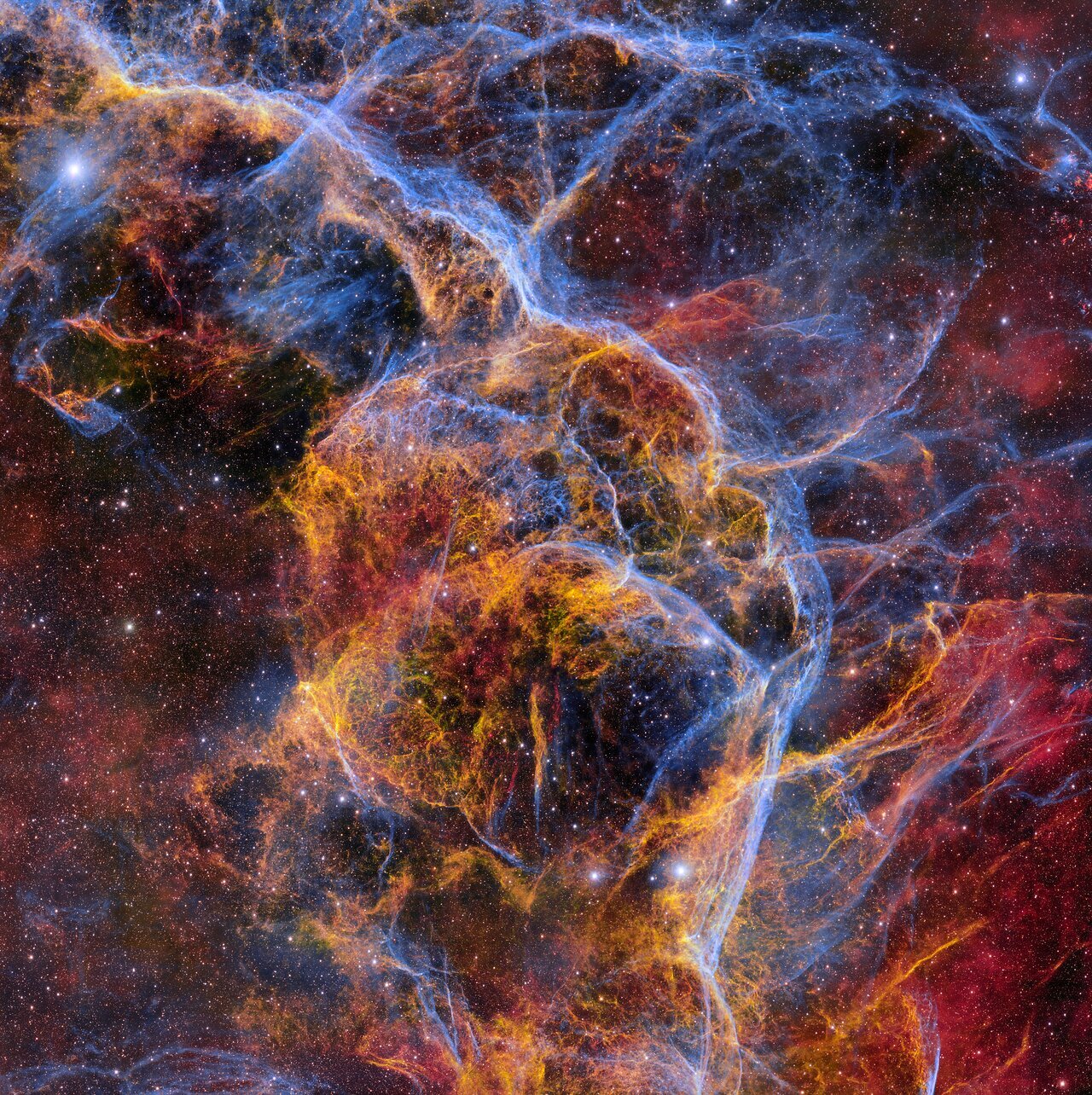
The Dark Energy Camera (DECam) has captured a 1.3-gigapixel image of the Vela Supernova Remnant, showcasing the remains of a massive star that exploded nearly 11,000 years ago. This colorful image, taken with state-of-the-art technology, reveals the intricate web-like filaments of the expanding nebula, which spans almost 100 light-years. The image also features the Vela Pulsar, the collapsed core of the star, now an ultra-condensed neutron star. DECam's capabilities allow for the creation of mesmerizing images of faint astronomical objects, offering a limitless starscape to explore.
Astronomers from Curtin University and other institutions have discovered a new supernova remnant (SNR) named G321.3-3.9, located 3,300 light years away. The elliptical SNR is estimated to be a few thousand years old and was confirmed using radio and X-ray data. The SNR's distance, diameter, and age were estimated, but uncertainties remain due to limited data. Further observations are planned to search for a pulsar association, which could provide more accurate measurements of the SNR's properties.
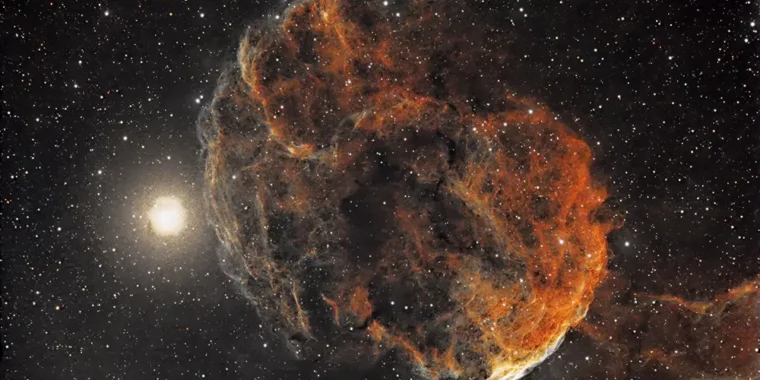
The Daily Telescope features an image of the Jellyfish Nebula, a supernova remnant located about 5,000 light-years from Earth. The nebula, known as IC 443, has an uncertain age, estimated to be between 3,000 and 30,000 years old. The image was captured by Hamza Syed in Coudersport, Pennsylvania, using 50 exposures to compose the stunning photograph.
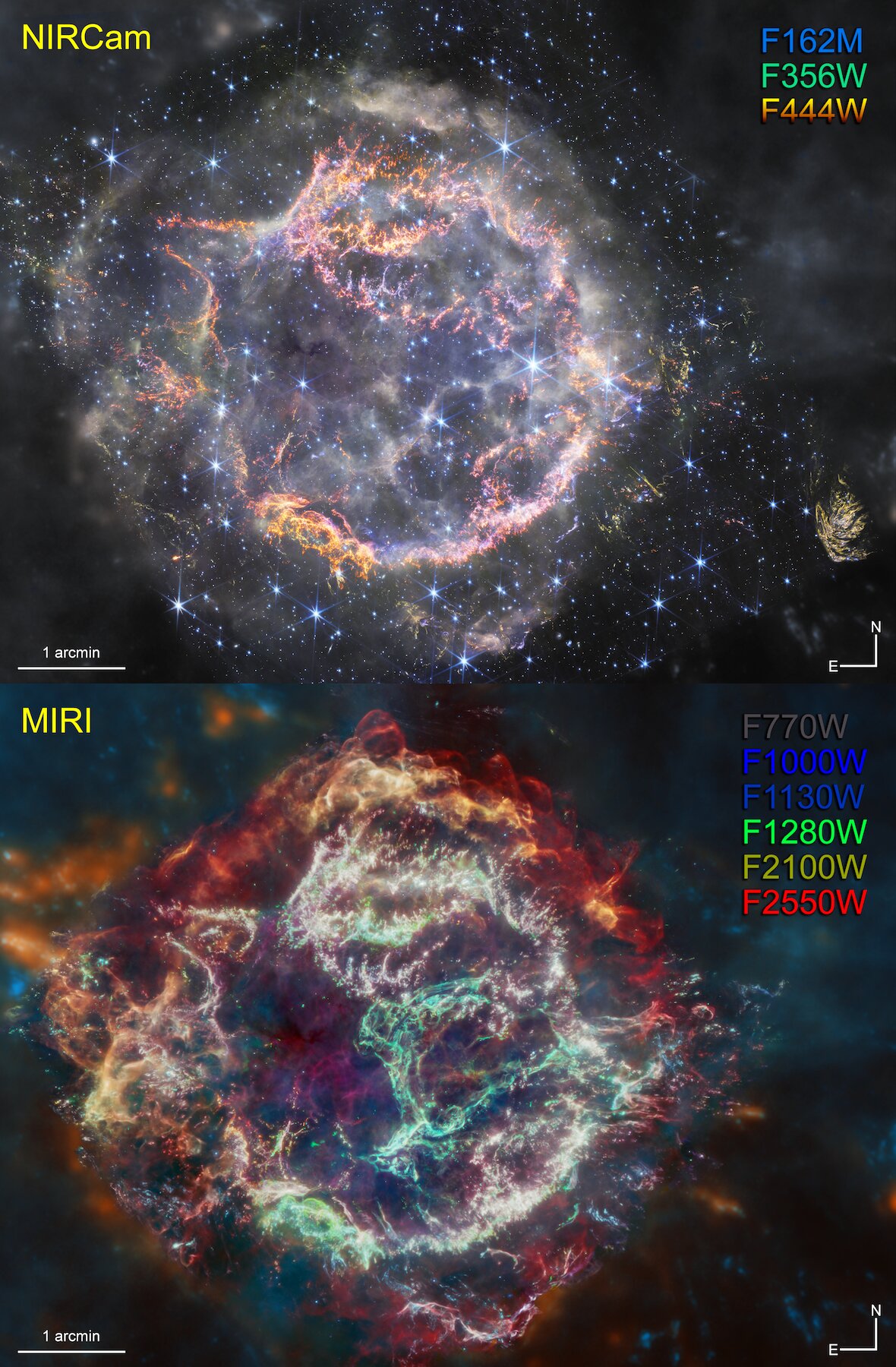
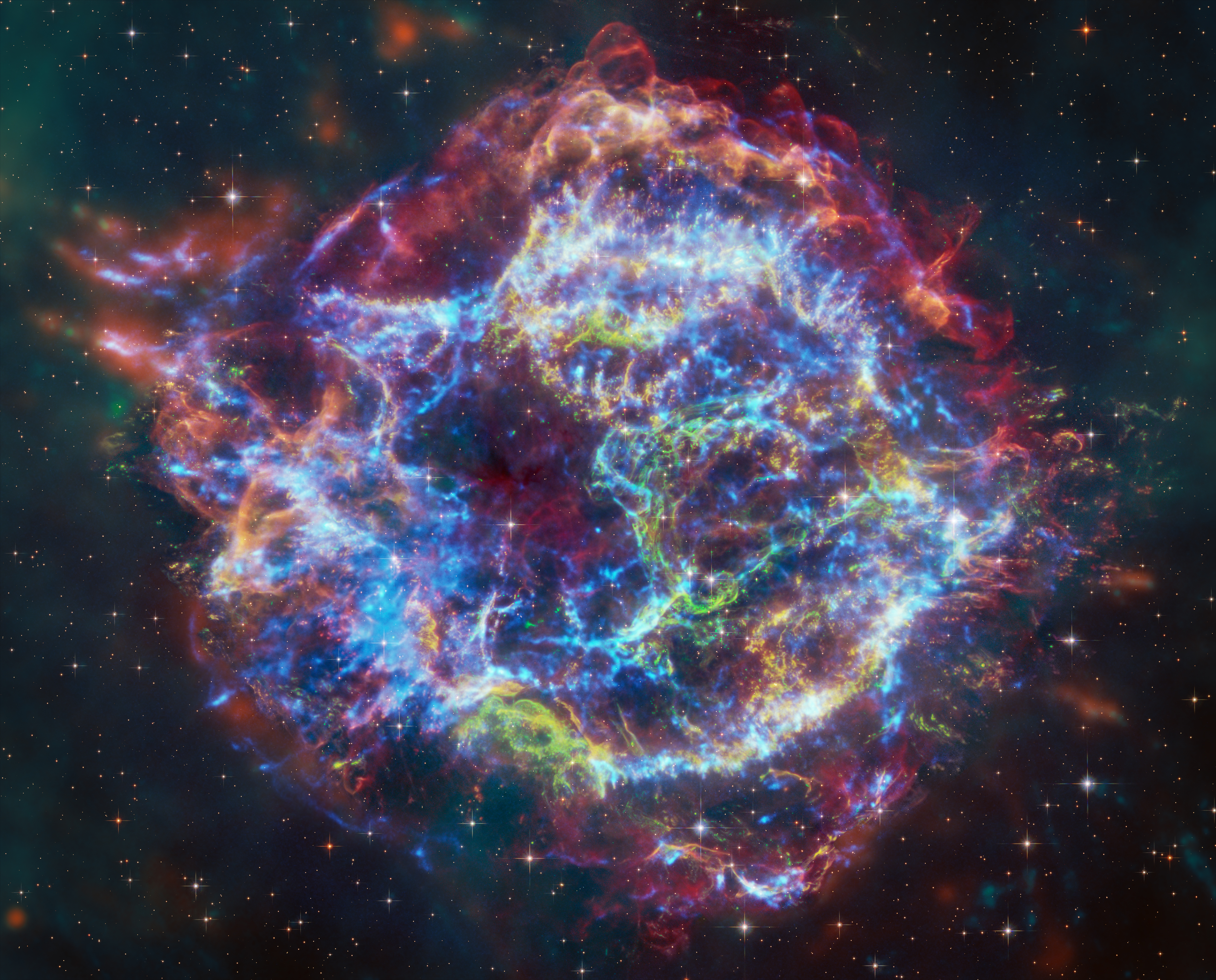
NASA astronomers have used data from the Chandra X-ray Observatory and James Webb Space Telescope to investigate a peculiar structure, dubbed the "Green Monster," within the debris field of the Cassiopeia A supernova remnant. By combining infrared data from Webb with X-rays from Chandra, researchers have identified the source of the Green Monster as a blast wave from the exploded star colliding with surrounding material. This discovery sheds light on the star's remains and the explosion itself, providing new insights into the formation of dust and the history of mass loss before the supernova. The study also presents the first combined image of Cas A using data from both telescopes, offering a comprehensive view of the debris from the exploded star.
NASA's Chandra X-ray Observatory and James Webb Space Telescope have combined data to study the supernova remnant Cassiopeia A, uncovering new details about the explosion that created it 340 years ago. The study explains an unusual structure in the debris called the "Green Monster" and reveals that it was created by a blast wave from the exploded star slamming into surrounding material. The research also compares pristine debris seen by Webb with X-ray maps of radioactive elements created in the supernova, shedding light on the explosion's details. These findings were presented at the American Astronomical Society meeting and are detailed in two papers submitted to Astrophysical Journal Letters.
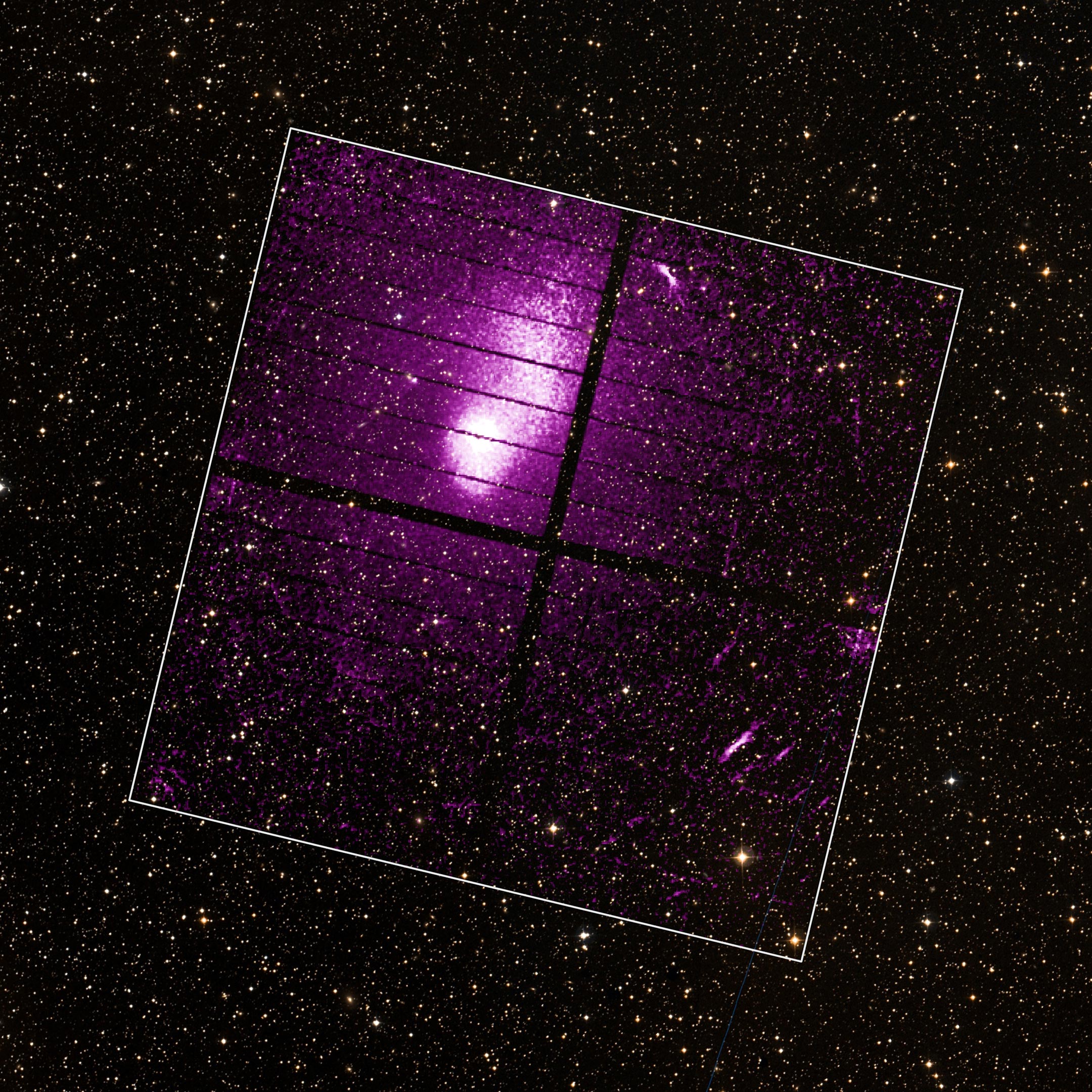
The XRISM mission, a collaboration between Japan, NASA, and ESA, is set to revolutionize X-ray astronomy with its advanced instruments, Resolve and Xtend, offering unprecedented insights into the universe’s hottest and most massive structures. The Resolve instrument captured the most detailed X-ray spectrum of supernova remnant N132D in the Large Magellanic Cloud, revealing peaks associated with silicon, sulfur, argon, calcium, and iron. Despite technical challenges with the aperture door, Resolve is already exceeding expectations, achieving a spectral resolution of 5 electron volts instead of the planned 7. The Xtend instrument also captured an X-ray image of galaxy cluster Abell 2319, showcasing its wide field of view. NASA’s XRISM General Observer Facility is accepting proposals for observations, with Cycle 1 investigations set to begin in the summer of 2024.
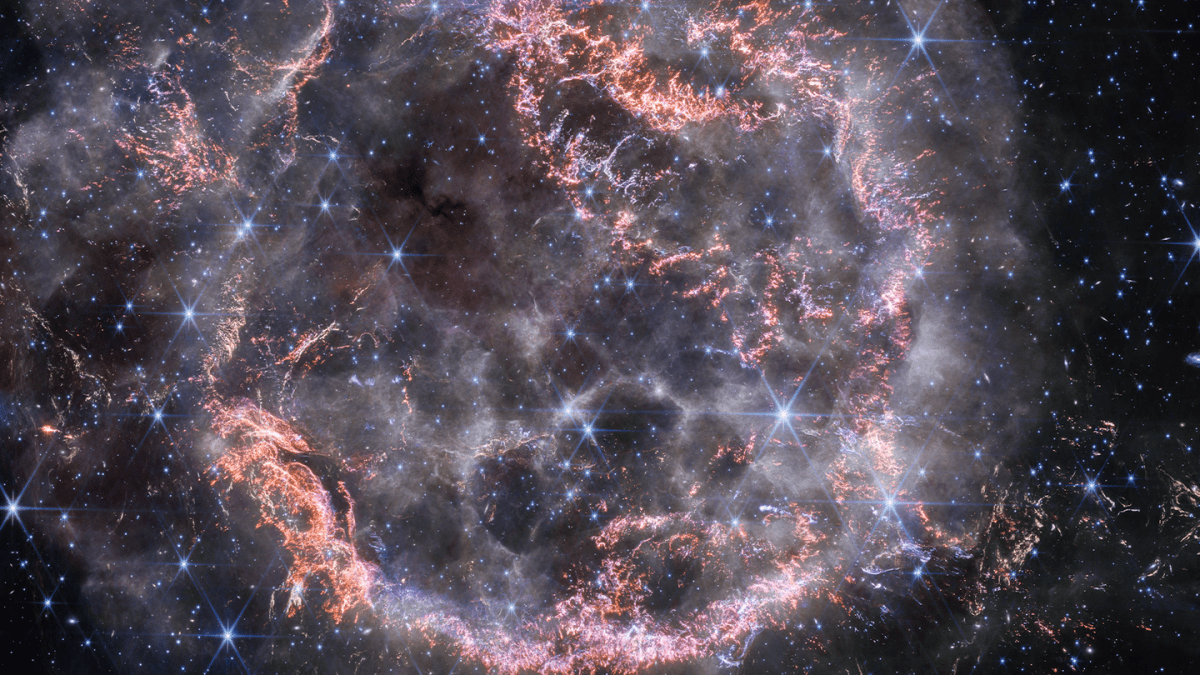
The Webb Space Telescope has captured a high-resolution image of the supernova remnant Cassiopeia A, revealing intricate details of the expanding shell of material from the star's explosion. The image shows clumps of gas in bright orange and light pink, composed of sulfur, oxygen, argon, and neon. The debris includes tiny filaments comparable to shards of glass, providing new insights into the star's explosion. This is the second image of Cassiopeia A taken by Webb, with the invisible wavelengths of light captured by the telescope shifted into the visible spectrum.