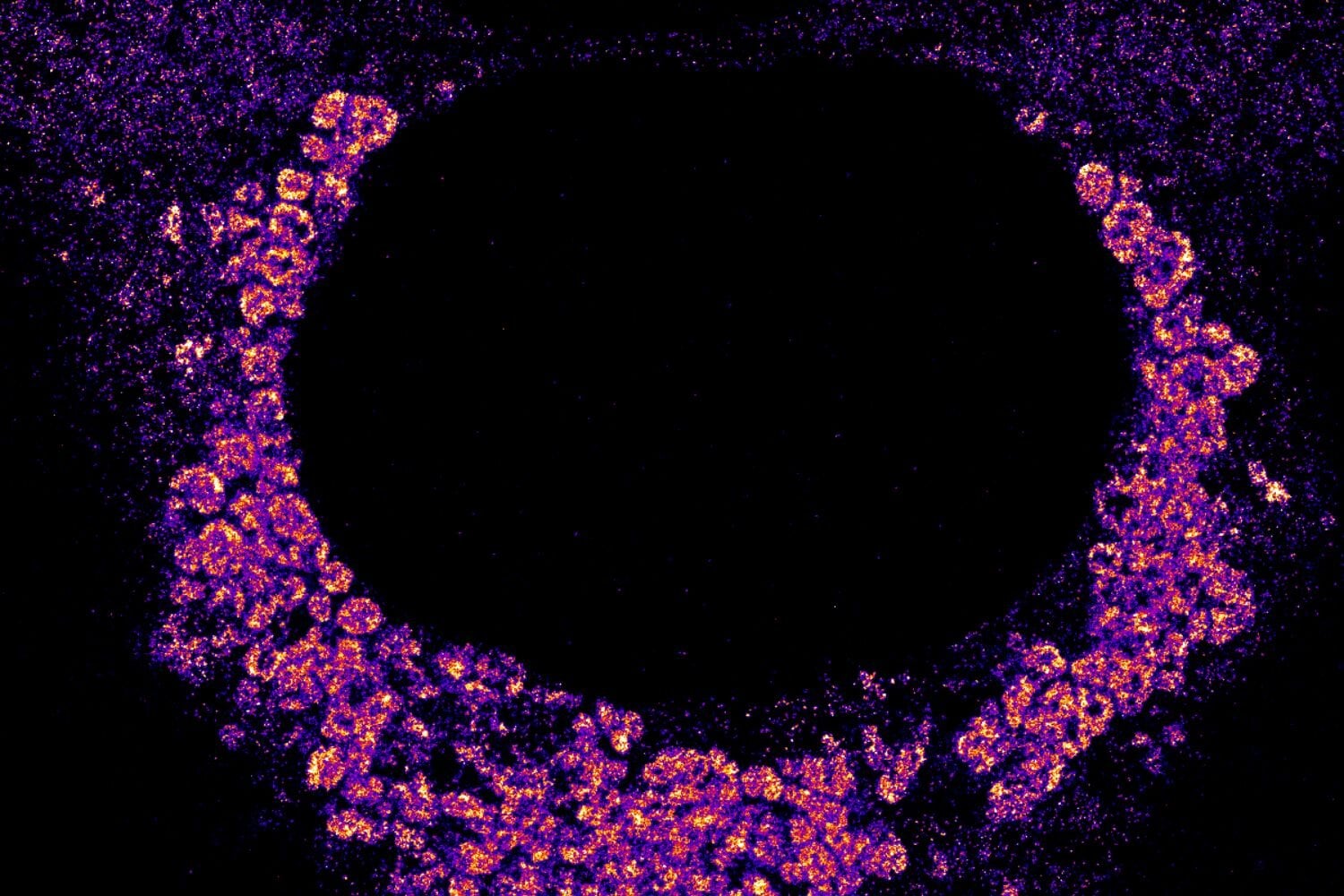
Stanford University researchers have used super-resolution microscopy to capture highly detailed images of SARS-CoV-2 viral RNA and replication structures within infected cells. This breakthrough could enhance antiviral drug development by providing precise insights into the virus's replication process and how it evades cellular defenses.
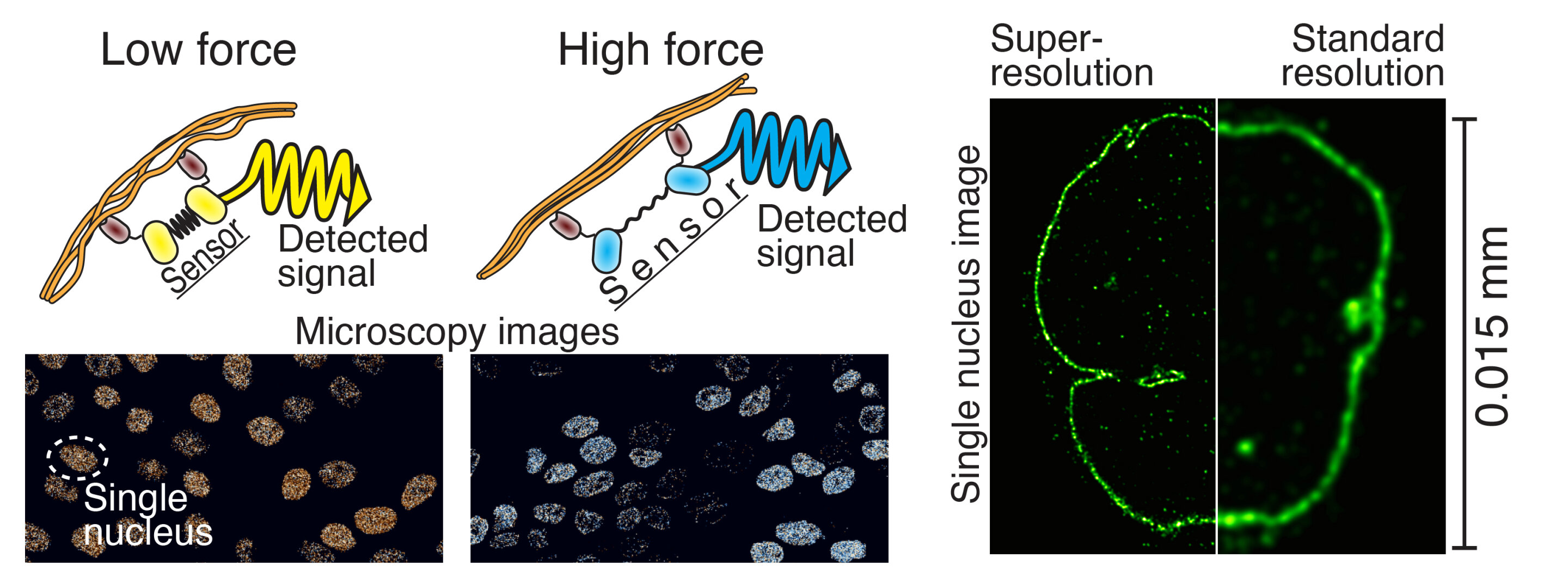
Researchers from Tampere University and The Ohio State University have developed a nano-sized force sensor that can be attached to proteins within cells to measure intracellular forces and mechanical strains. The sensor, which is about twenty nanometers in size, utilizes a rubber band-like component that changes color when stretched, allowing the detection of protein elongation under a microscope. This technology has potential applications in various areas of cell biology research, including studying the mechanics of cancer. Additionally, another study from Tampere University has refined expansion microscopy, a technique that allows for the visualization of small details in cells. By repeatedly fluorescently labeling target proteins, the researchers were able to improve the resolution and contrast of the images, making it easier to study nanoscopic structures.
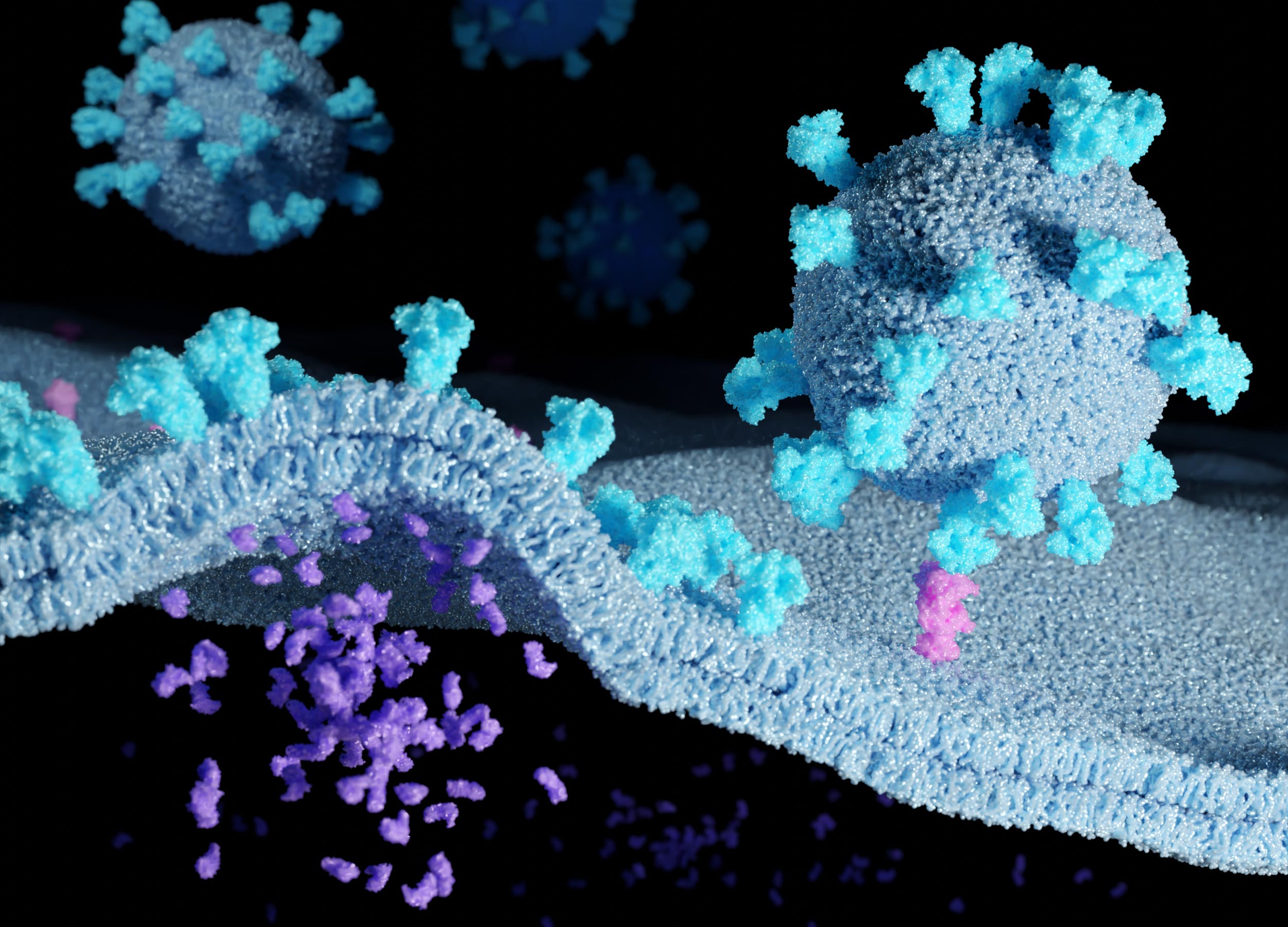
Super-resolution microscopy has revealed that the SARS-CoV-2 virus infects cells by binding a single virus to a single ACE2 receptor, contrary to previous theories. The low density of ACE2 receptors on cell membranes challenges the possibility of a virus particle binding to multiple receptors simultaneously. This new understanding could help in devising improved COVID-19 prevention and treatment methods.
Researchers at the University of Queensland have adapted a tracking algorithm from video games to study the behavior of molecules within live brain cells. The algorithm, optimized for tracking bullets in combat games, enables scientists to observe how molecules cluster together to perform specific functions in space and time within the brain cells. The team is currently applying this technology to study proteins essential for communication within brain cells, potentially accelerating scientific discoveries in neuroscience.