
Advancements in Nano Force Sensing and High-Precision Microscopy
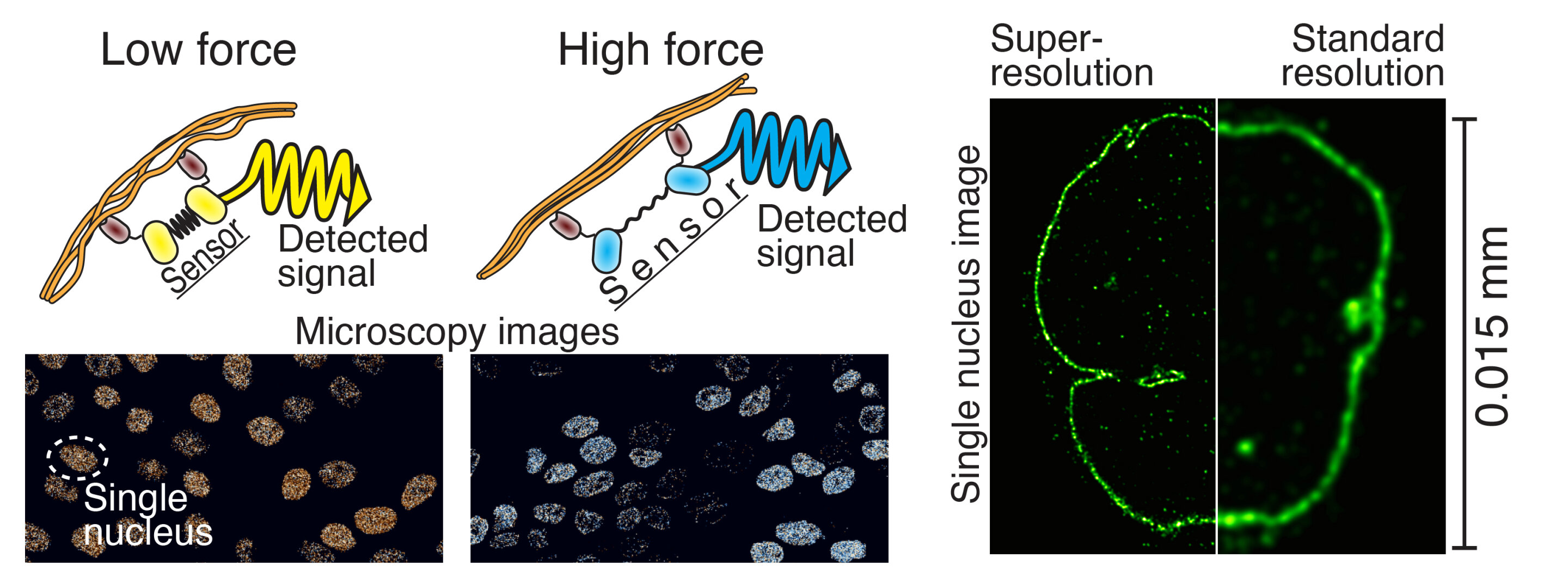
Researchers from Tampere University and The Ohio State University have developed a nano-sized force sensor that can be attached to proteins within cells to measure intracellular forces and mechanical strains. The sensor, which is about twenty nanometers in size, utilizes a rubber band-like component that changes color when stretched, allowing the detection of protein elongation under a microscope. This technology has potential applications in various areas of cell biology research, including studying the mechanics of cancer. Additionally, another study from Tampere University has refined expansion microscopy, a technique that allows for the visualization of small details in cells. By repeatedly fluorescently labeling target proteins, the researchers were able to improve the resolution and contrast of the images, making it easier to study nanoscopic structures.
Reading Insights
0
1
5 min
vs 6 min read
88%
1,024 → 124 words
Want the full story? Read the original article
Read on Phys.org