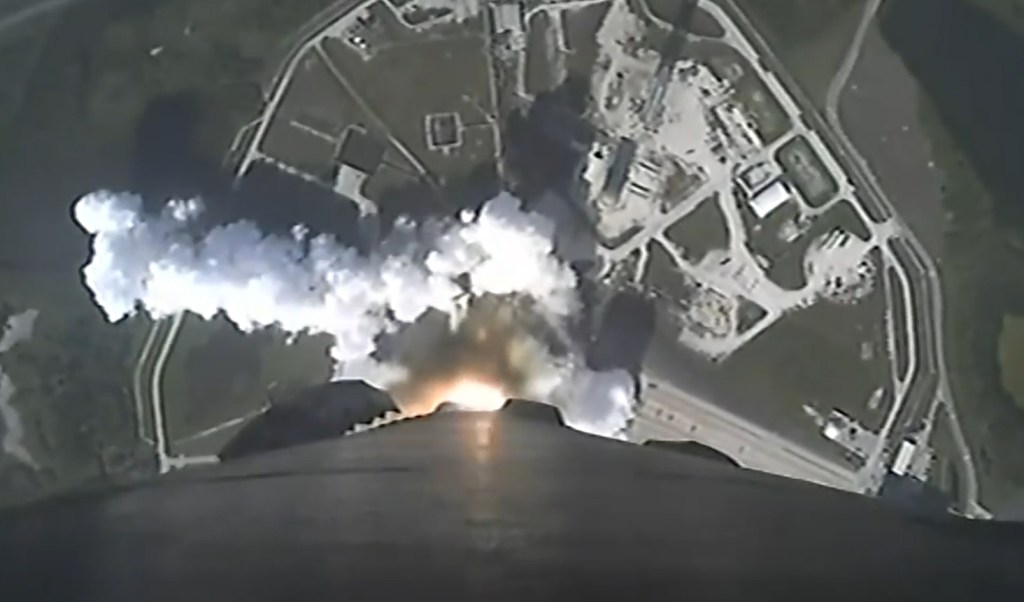
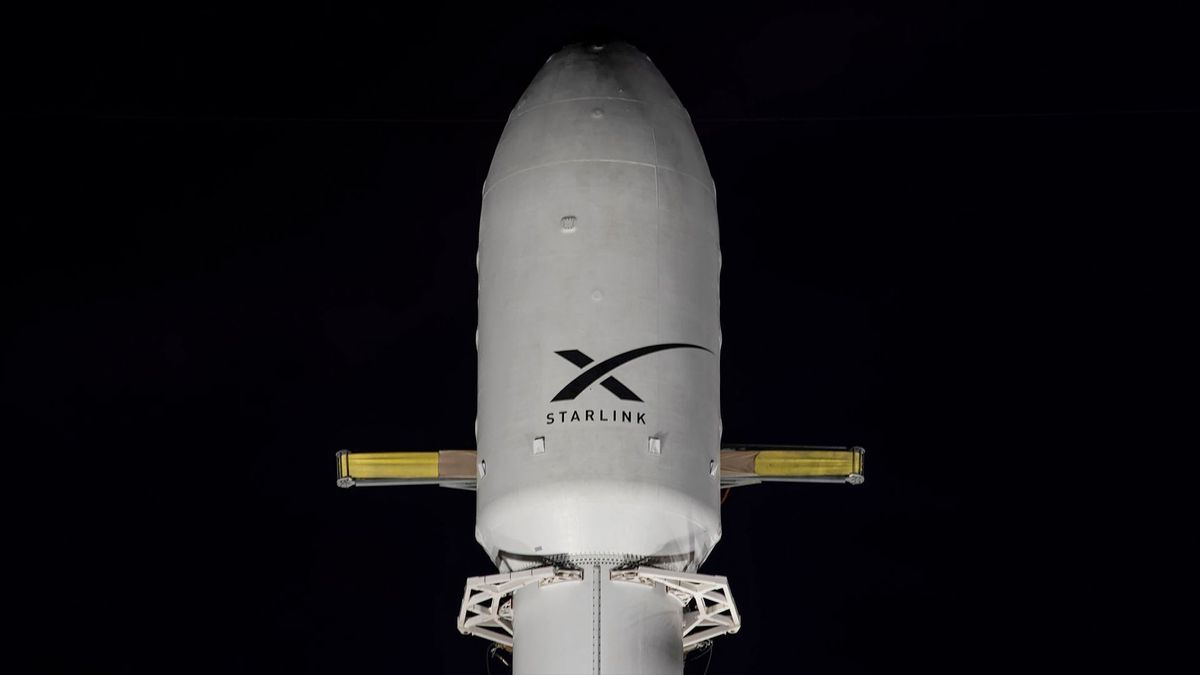
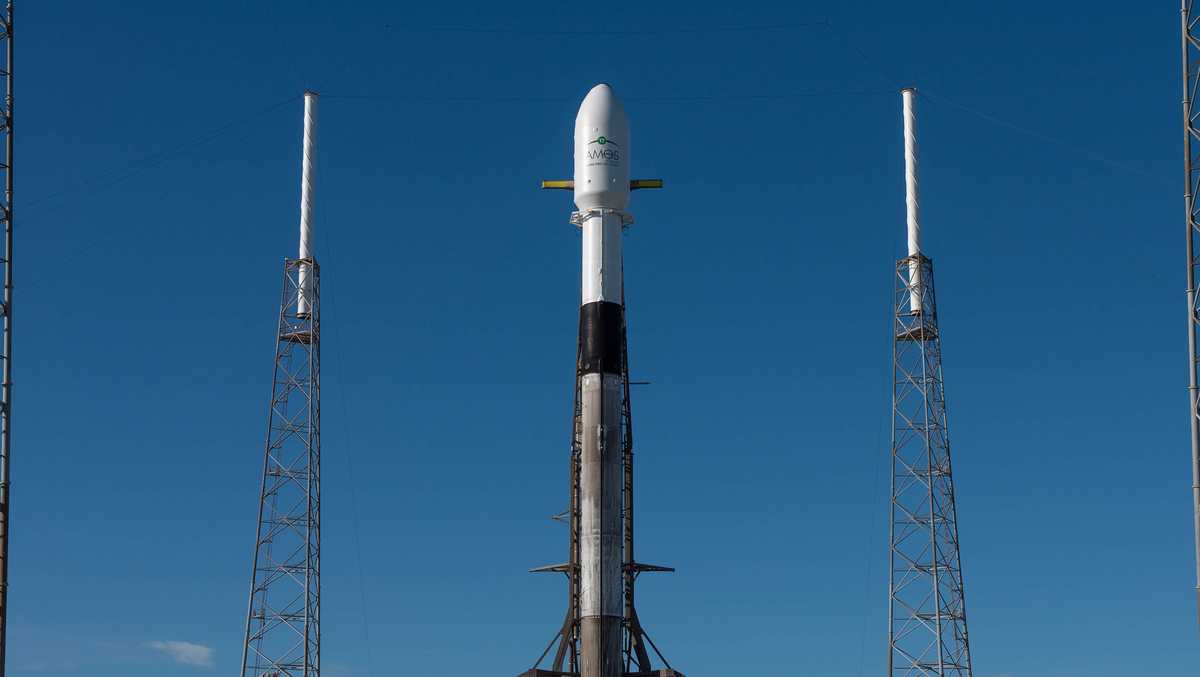
SpaceX's Falcon 9 launch of 29 Starlink V2 Mini satellites from Kennedy Space Center has been delayed from Monday to Tuesday due to weather concerns, with liftoff now scheduled for no earlier than 7:45 a.m. EST. The mission will use booster B1094 for its sixth flight, aiming for an autonomous landing on a drone ship in the Atlantic.
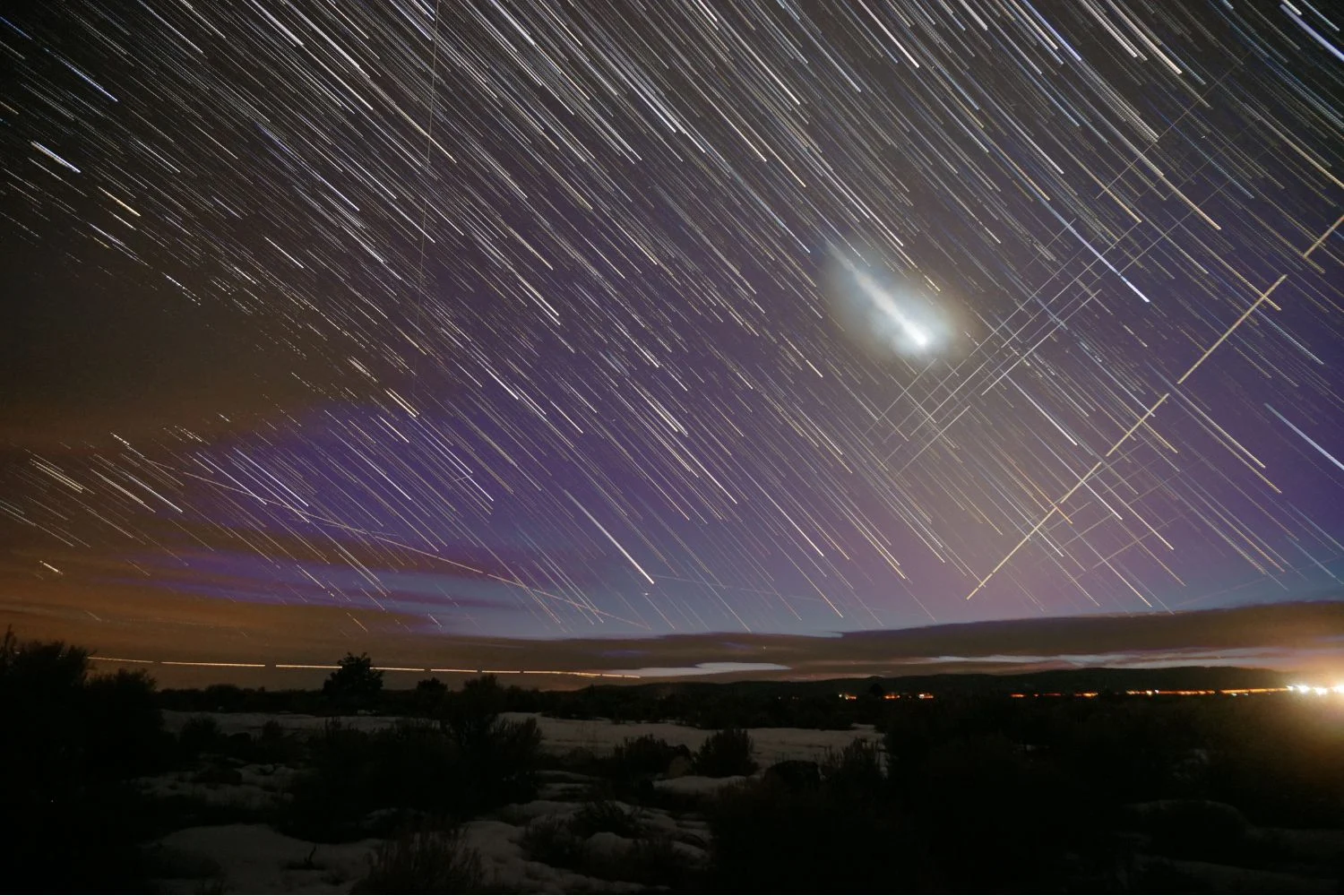
Research indicates that increased solar activity shortens the lifespan of SpaceX's Starlink satellites and may cause them to reenter Earth's atmosphere at higher velocities, potentially increasing debris risks. The study highlights the impact of geomagnetic storms on satellite orbit and reentry, emphasizing the growing challenges of managing the increasing number of satellites in Earth's orbit.
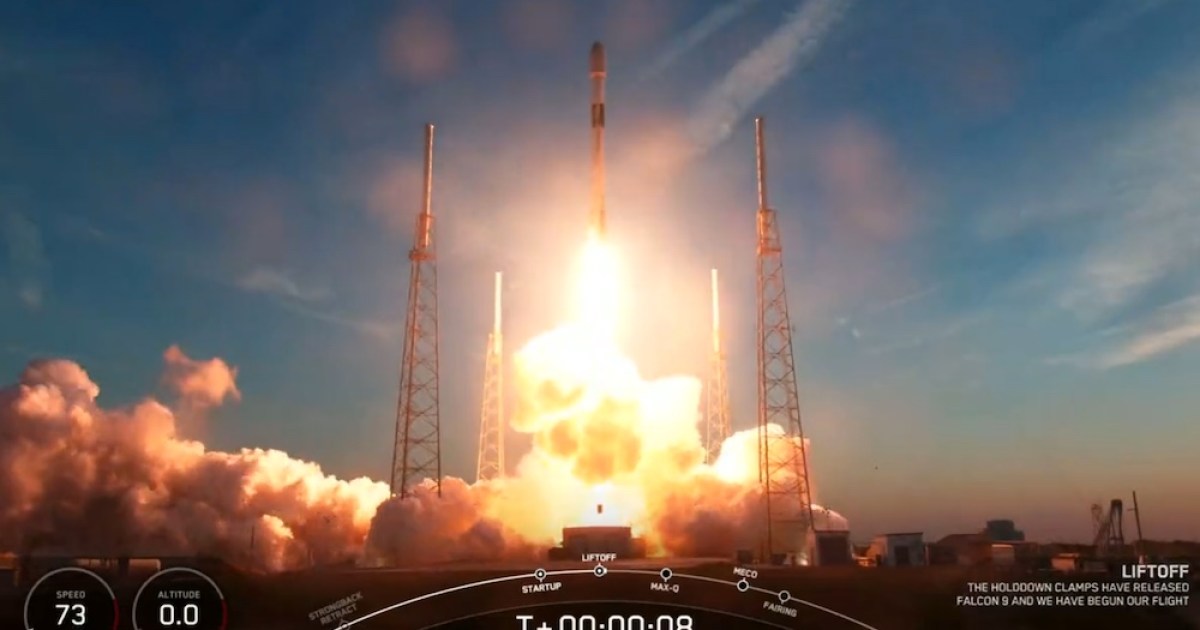
SpaceX successfully launched the first of two rockets carrying Starlink satellites from the Space Coast, with another launch scheduled for the following day. The company's Falcon 9 rocket lifted off from Kennedy Space Center, marking the 28th launch from the Space Coast in 2024. With plans for more Starlink launches and a potential record-breaking number of orbital missions, SpaceX continues to expand its satellite constellation and maintain a busy launch schedule.
SpaceX is set to launch a Falcon 9 rocket for the 20th time, breaking its own reusability record, to deploy 23 Starlink internet satellites. The launch is scheduled from Florida's Cape Canaveral Space Force Station and will mark the 43rd anniversary of NASA's first space shuttle launch. The mission aims to further SpaceX's goal of reducing the cost of spaceflight and increasing its frequency, with the live webcast available for viewing.
SpaceX is set to launch its Falcon 9 booster for a record 20th time on Friday, deploying 23 Starlink satellites to low-Earth orbit from Cape Canaveral Space Force Station in Florida. The live webcast will showcase the rocket's ascent, stage separation, and satellite deployment, as well as the first-stage booster landing on a droneship in the Atlantic Ocean. The booster, which last flew on March 16, has previously launched various missions and holds the record for the fastest turnaround at 21 days. SpaceX's reuse of boosters and other components has significantly reduced the cost of spaceflight and increased access to space.
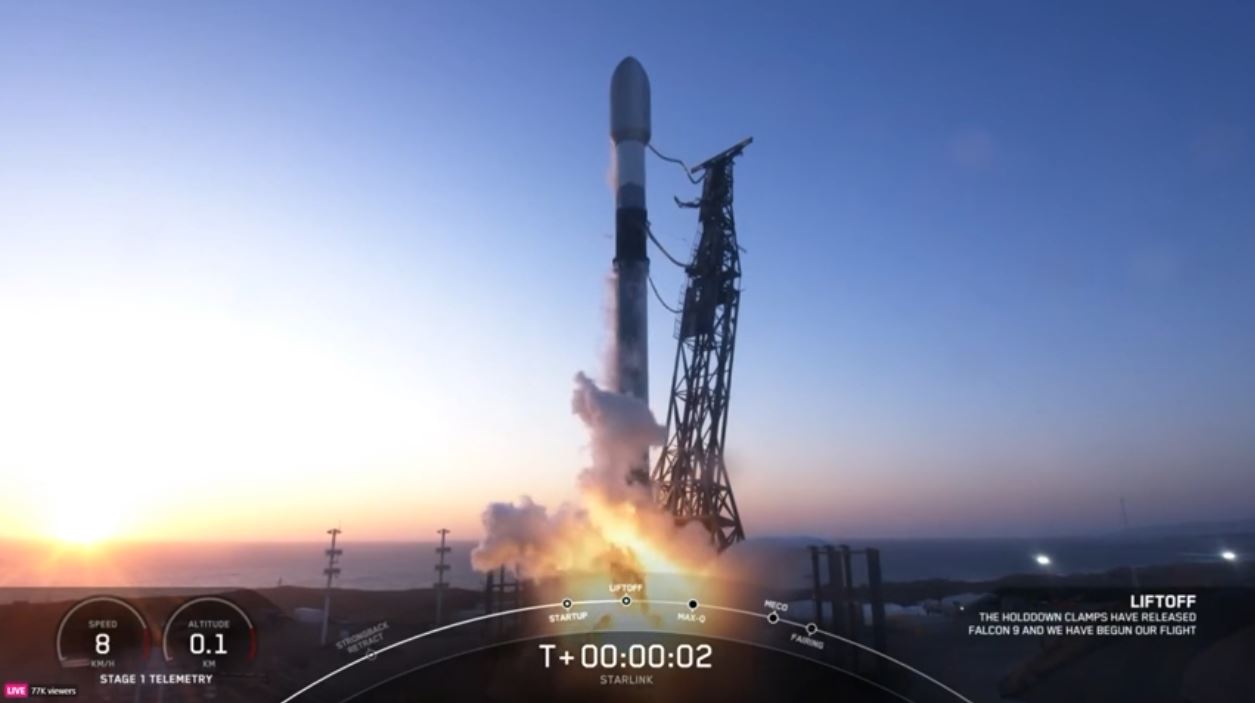
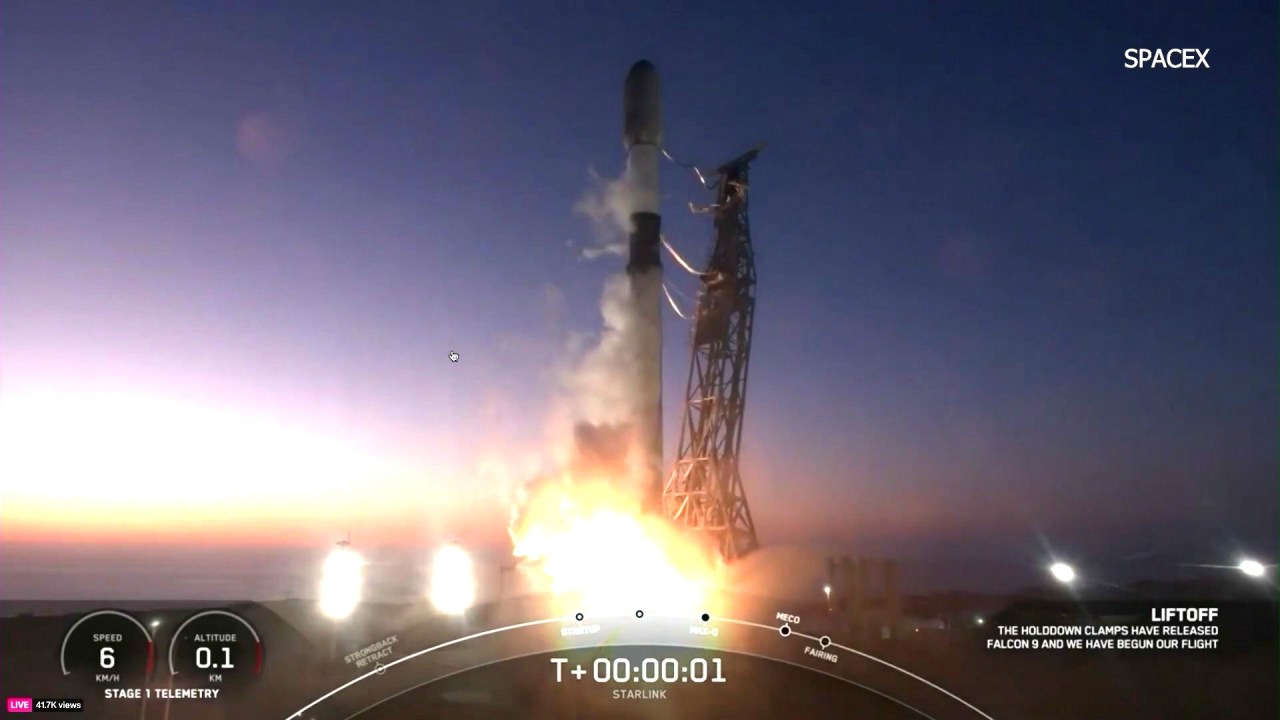
SpaceX successfully launched a Falcon 9 rocket from Vandenberg Space Force Base in California, carrying 21 Starlink satellites into orbit, including six with Direct to Cell capabilities. The rocket's reusable booster made a pinpoint landing back on the spaceport drone ship, marking its sixth successful liftoff. With over 6,000 functional satellites in orbit, SpaceX aims to create a constellation of up to 42,000 satellites to provide low-cost internet service to remote areas.
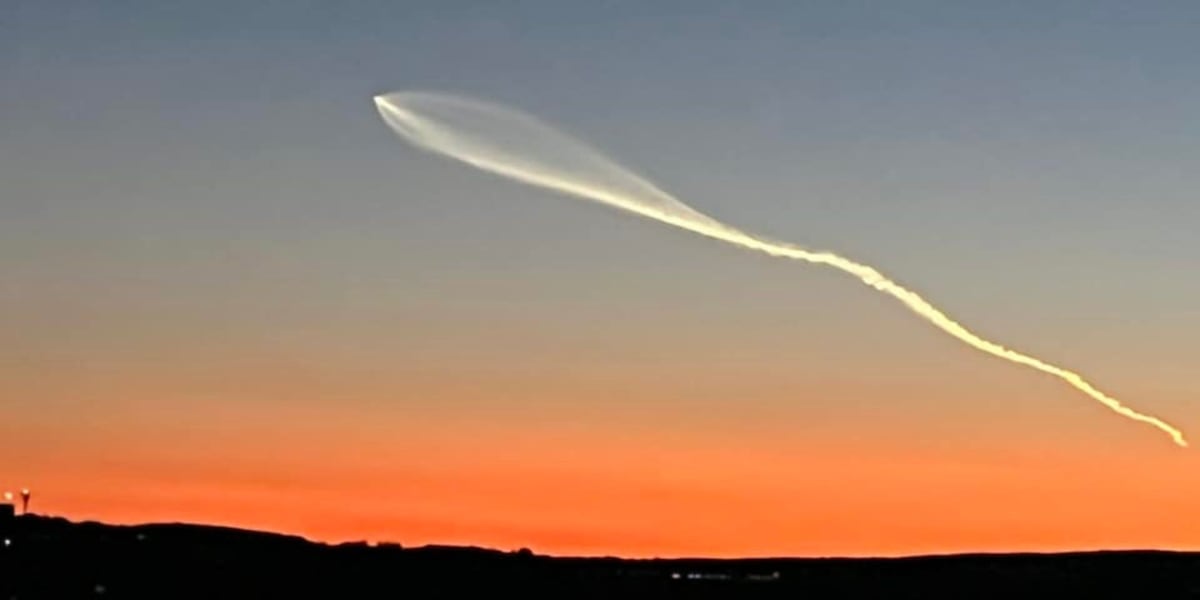
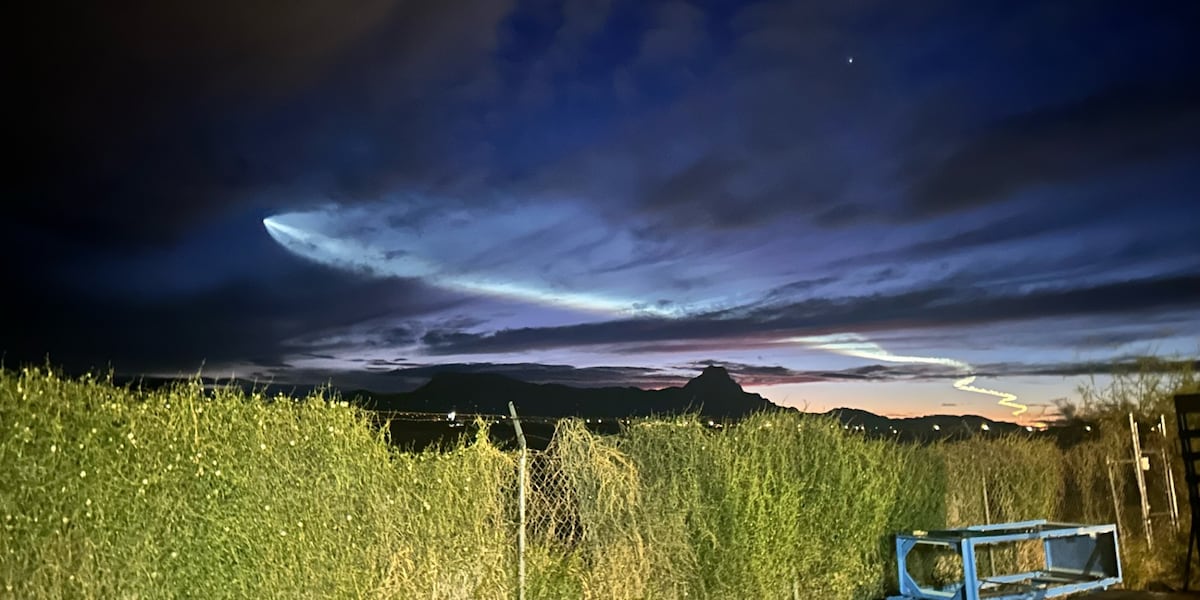
Arizona witnessed its second SpaceX launch of the week as a Falcon 9 rocket carrying 21 Starlink broadband satellites lit up the night sky, visible across cities like Payson, Prescott, Tucson, Phoenix, and Scottsdale. The launch, originally scheduled for Friday, was delayed due to bad weather. If successful, the rocket's first stage will land on the drone ship "Of Course I Still Love You" in the Pacific Ocean, while the satellites will be sent to low Earth orbit.
SpaceX is set to launch a rocket from Vandenberg Space Force Base in California on Saturday, April 6, carrying Starlink satellites. The launch is scheduled for 7:26 p.m. and should be visible in southern Arizona. After launch, residents may see the rocket trail and several dots in the sky, which are the satellites opening their solar panels. This will be the sixth flight for the first-stage booster, and SpaceX plans for the first stage to land on a droneship in the Pacific Ocean.
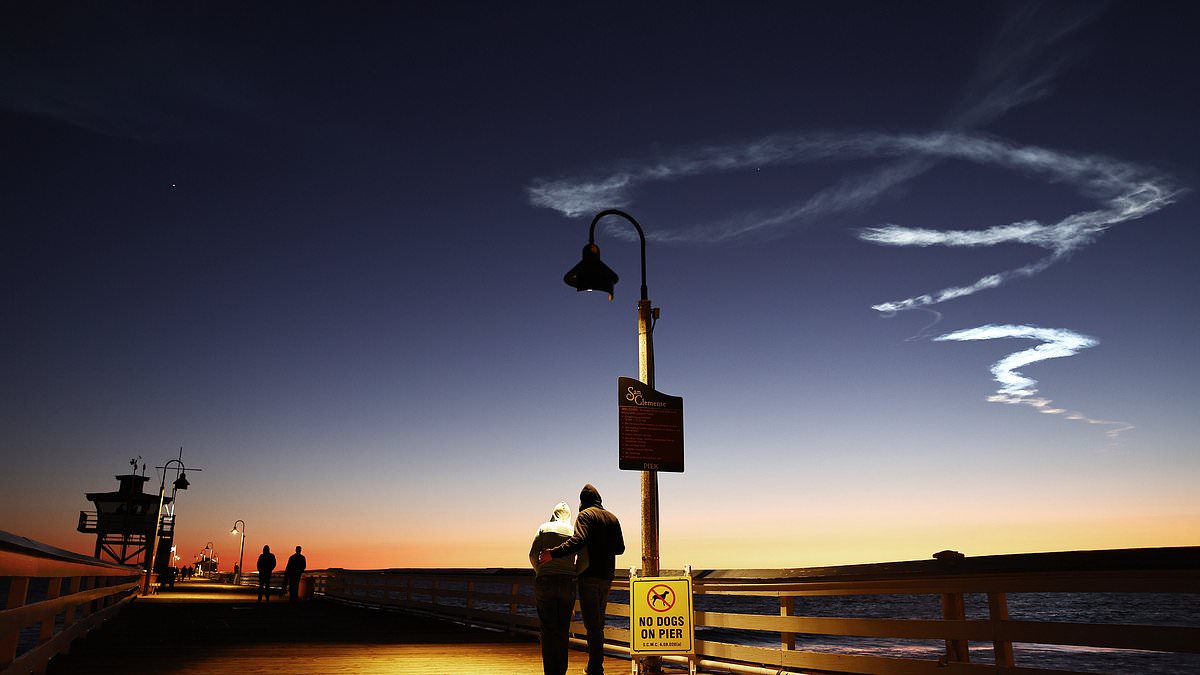
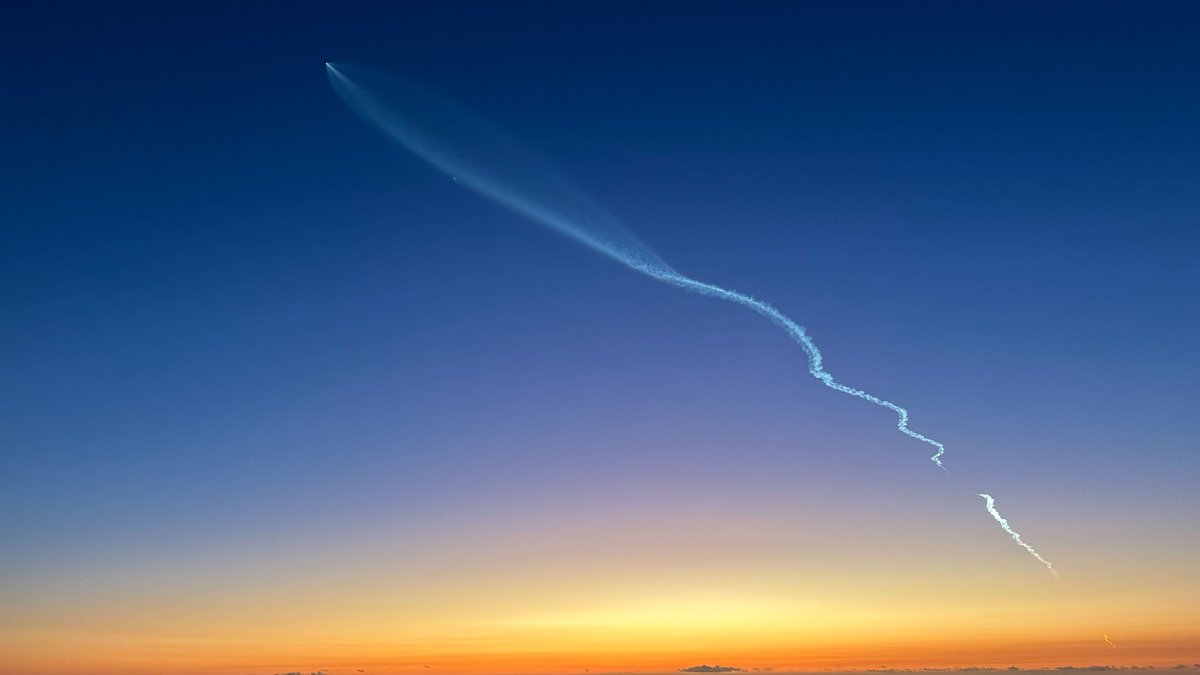
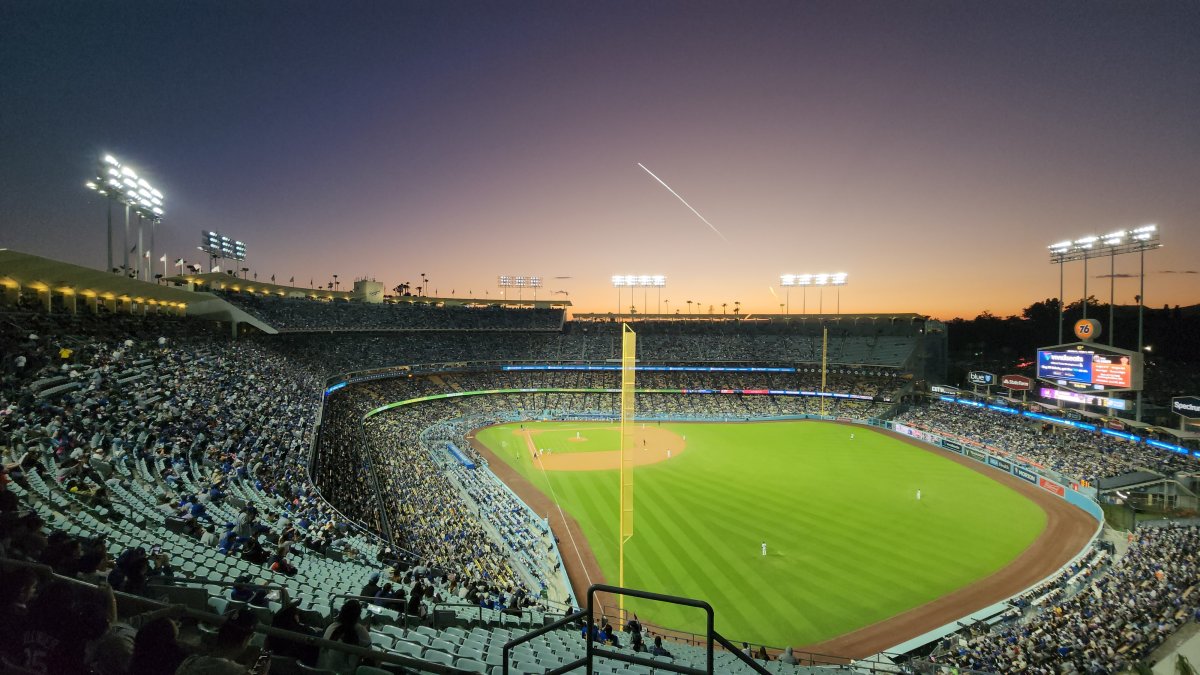
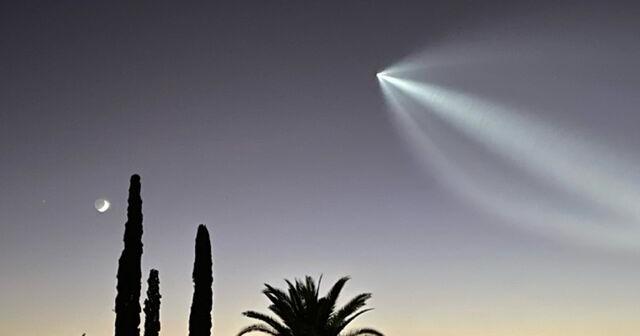
A SpaceX Falcon 9 rocket launched from Vandenberg Space Force Base in California, creating a stunning visual display across Southern California as it carried 22 Starlink satellites into low-Earth orbit. The evening launch, delayed from the weekend due to a storm, illuminated the sky as the sun had only set 15 minutes earlier, providing a breathtaking sight for onlookers. The Starlink megaconstellation aims to deliver broadband internet using a network of thousands of satellites in low Earth orbit, with the latest launch marking the 32nd Falcon 9 launch of 2024.
SpaceX successfully launched a Falcon 9 rocket carrying 22 Starlink internet satellites into low-Earth orbit from Vandenberg Space Force Base, captivating the residents of San Diego with the awe-inspiring sight. The launch, originally scheduled for last Thursday, was postponed due to inclement weather.
SpaceX is set to launch a Falcon 9 rocket from Vandenberg Space Force Base in Southern California tonight, carrying 22 Starlink satellites to low-Earth orbit. This marks the 15th flight for the Falcon 9 first stage booster rocket, with the targeted launch time at 7:30 p.m. People across Southern California may be able to witness the rocket's flight, and the launch can be streamed live on ktla.com if it proceeds as planned.
SpaceX successfully launched a Falcon 9 rocket carrying 22 Starlink internet satellites into low-Earth orbit from Vandenberg Space Force Base in Southern California on Monday evening, creating a stunning sight in the night sky over Los Angeles. The launch, originally scheduled for Thursday, was postponed due to unfavorable weather. The Starlink constellation aims to provide high-speed internet globally, and the satellites can be visible in the night sky under specific lighting conditions.
SpaceX successfully launched the EUTELSAT 36D satellite from Kennedy Space Center, providing TV channels and connectivity services to Africa and Eurasia, and is set to launch a second Falcon 9 rocket carrying Starlink satellites from Cape Canaveral Space Force Station. Additionally, a third Falcon 9 rocket is scheduled to launch from Vandenberg Space Force Base in California, marking a double-header of rocket launches from Florida's Space Coast and the West Coast.
SpaceX is set to launch 22 Starlink satellites into low-Earth orbit from Vandenberg Space Force Base in California on Thursday evening, with liftoff scheduled for 7:30 p.m. The launch will be visible in the western Arizona sky, and it marks the 15th flight of the initial stage booster backing this mission. After separation, the initial stage is expected to land on the Of Course I Still Love You droneship in the Pacific Ocean.
SpaceX is targeting Thursday night for the launch of a Falcon 9 rocket from Vandenberg Space Force Base, carrying 22 Starlink satellites to low-Earth orbit. The live webcast will begin on SpaceX's website prior to liftoff, and this mission marks the 15th flight for the first stage booster. Following stage separation, the first stage will attempt to land on the Of Course I Still Love You droneship in the Pacific Ocean, with backup opportunities available until 11:24 p.m. and additional opportunities on Friday if needed.