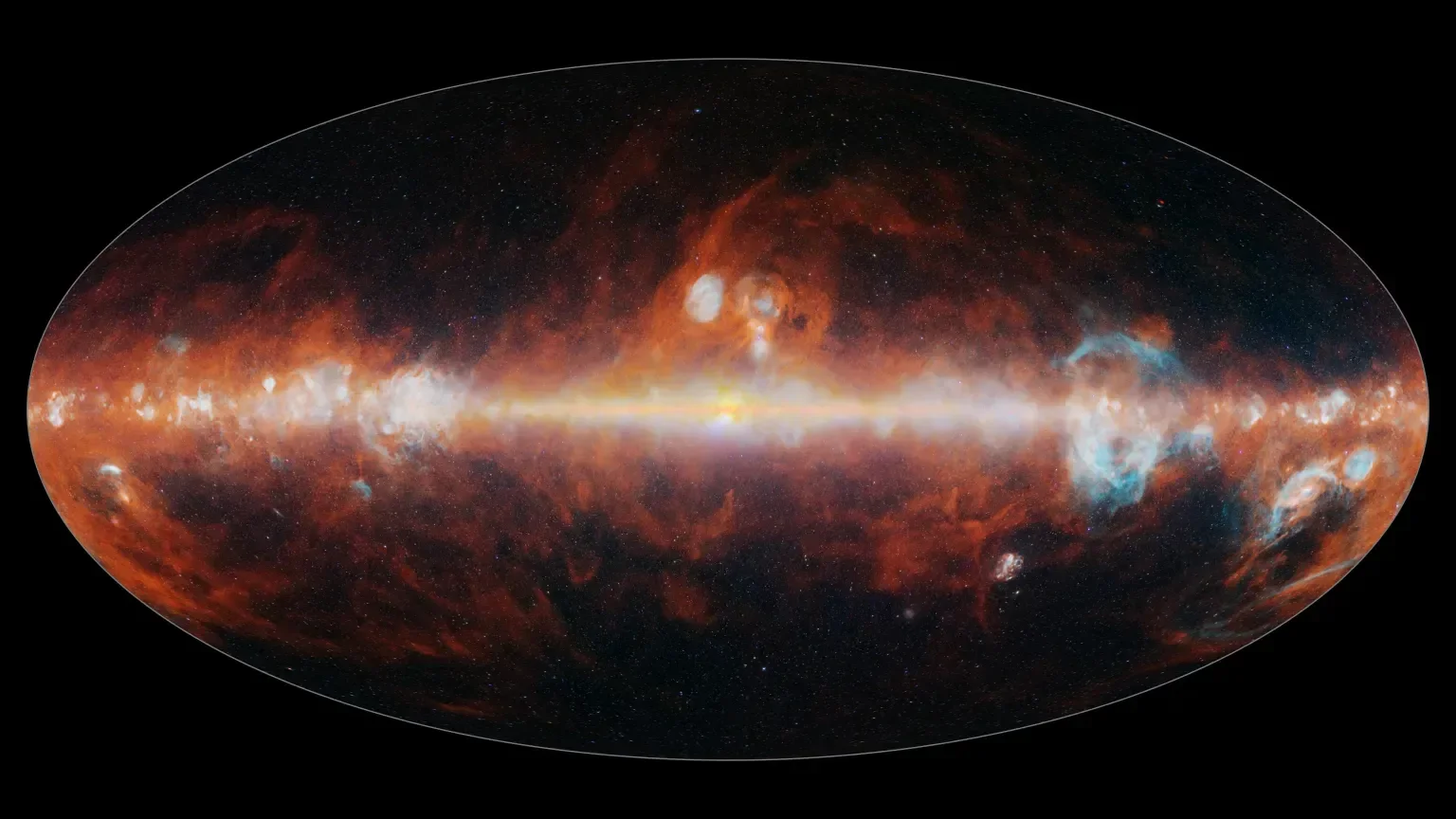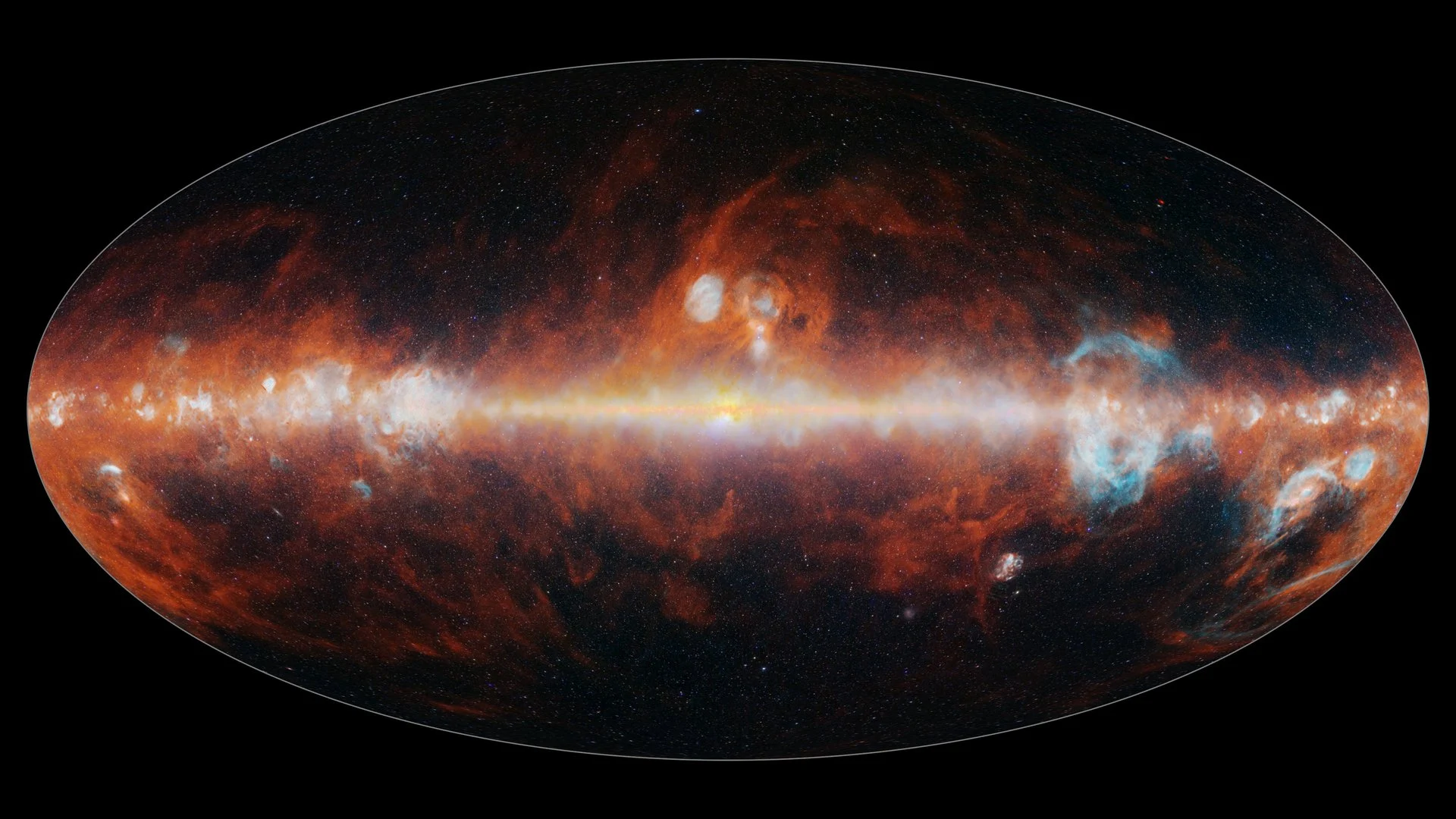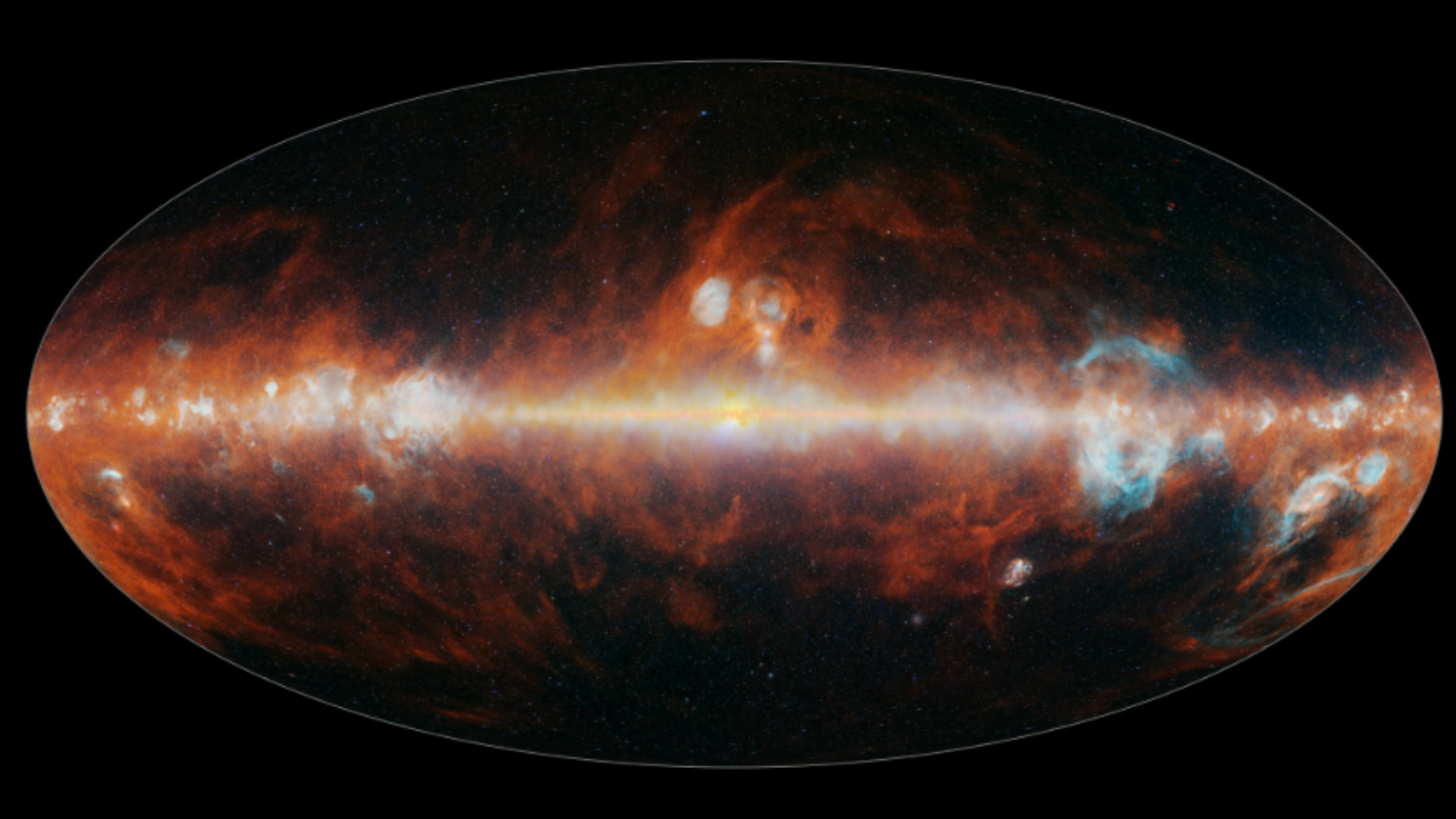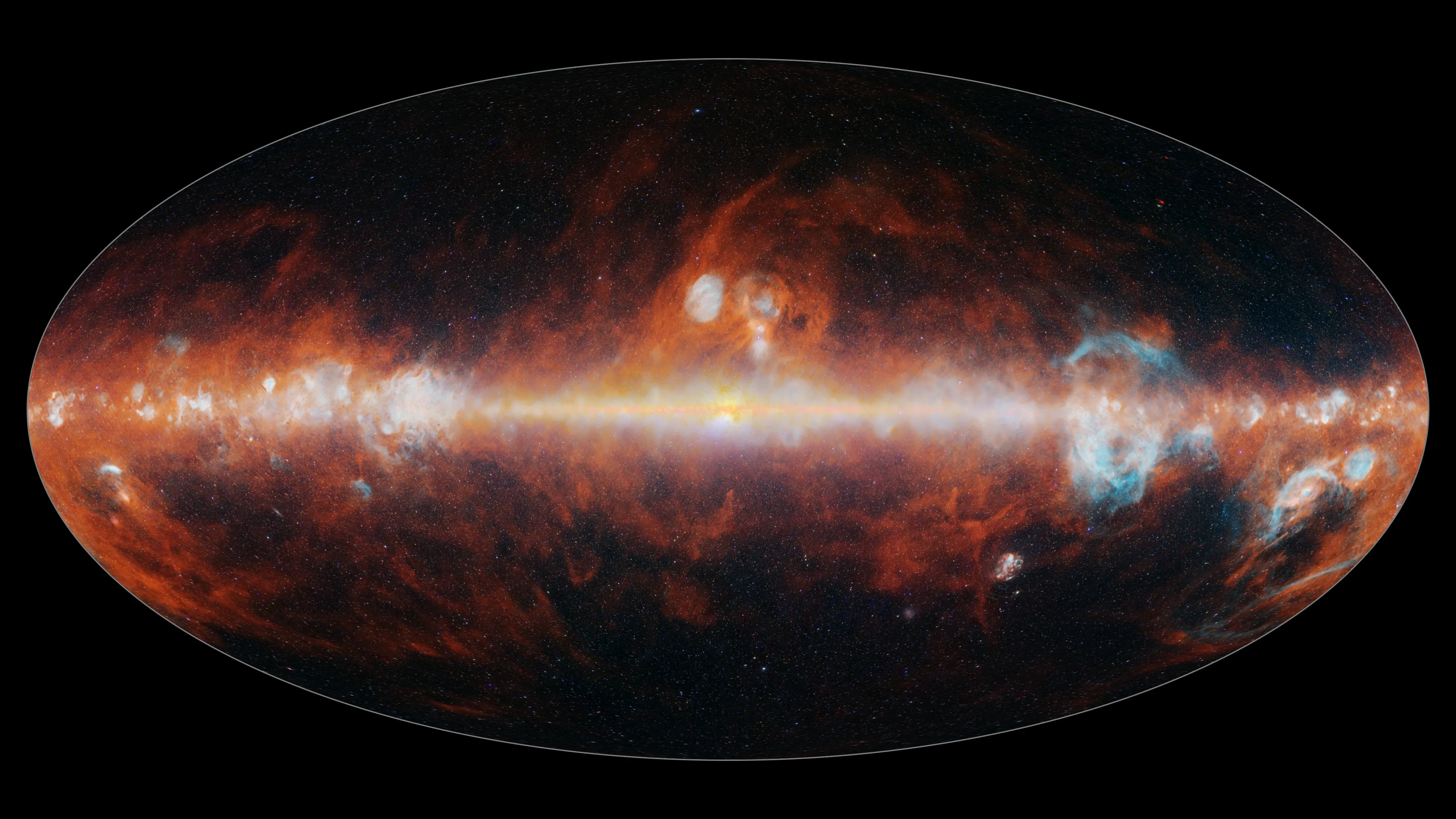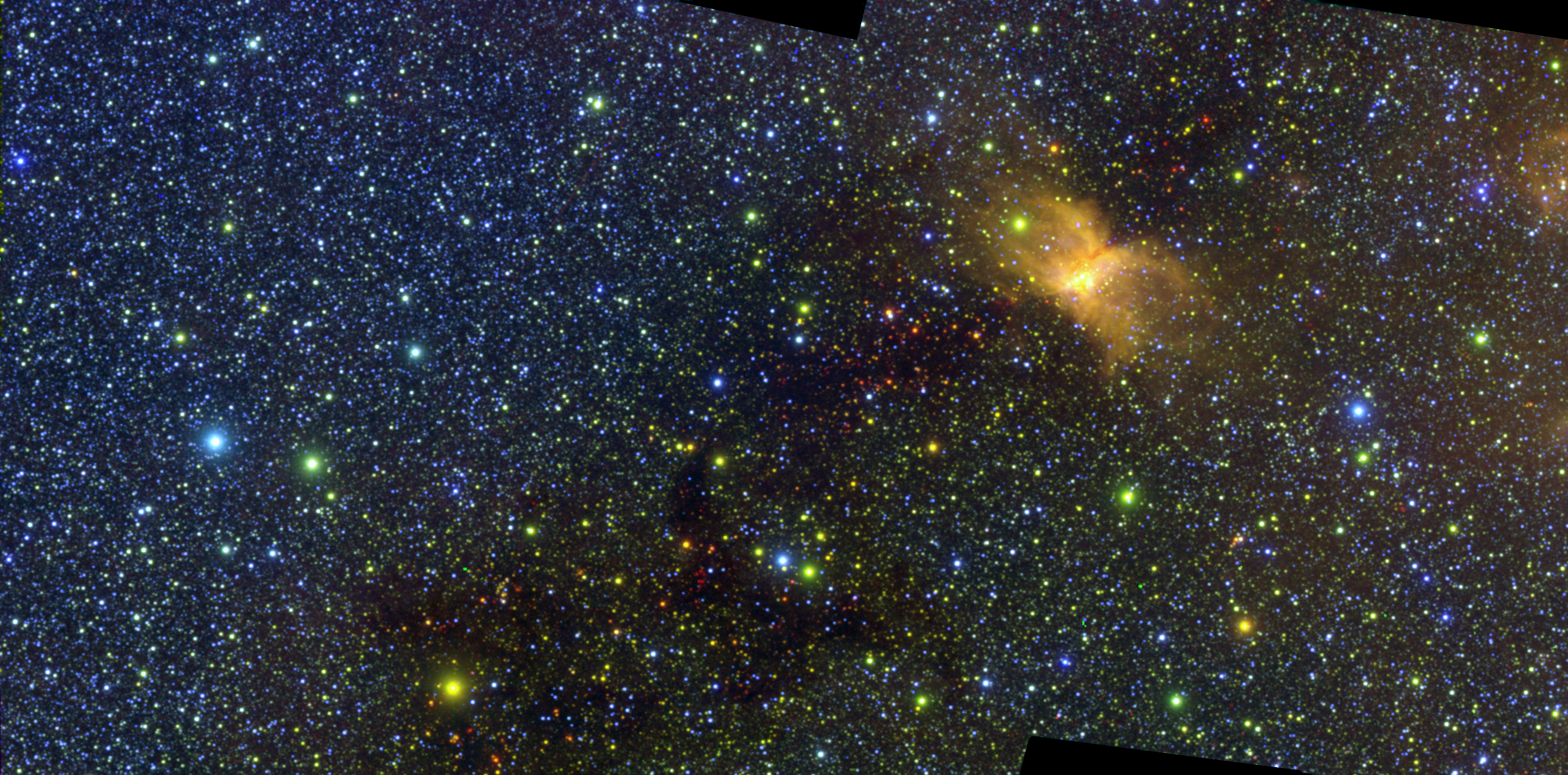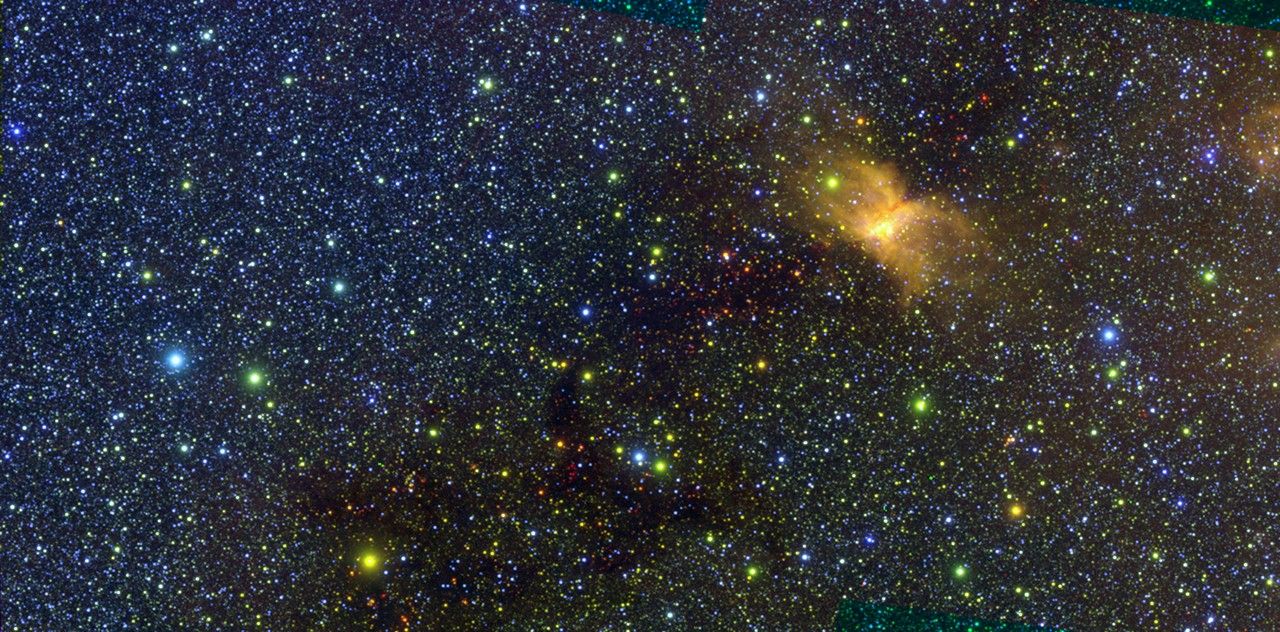
NASA's SPHEREx spacecraft has released its first comprehensive all-sky map, combining over 100 exposures in 102 infrared colors to provide unprecedented details of the universe, aiding in understanding cosmic origins, galaxy distribution, and interstellar materials, despite challenges from satellite debris.
NASA's SPHEREx observatory has completed its first full-sky infrared map in 102 wavelengths, capturing data on over 450 million galaxies and providing new insights into the universe's origins, galaxy evolution, and cosmic structure. The mission's extensive multi-wavelength data will help address fundamental cosmological questions and is now publicly available.
NASA's SPHEREx telescope has completed its first comprehensive infrared map of the entire sky, capturing 102 different wavelength images that provide valuable data for understanding the universe's origins and evolution, with more scans planned during its primary two-year mission.
NASA's SPHEREx space telescope has completed its first all-sky infrared map in 102 colors, providing unique data to study the universe's early moments, galaxy evolution, and the distribution of life ingredients, with the dataset freely available for scientific research.
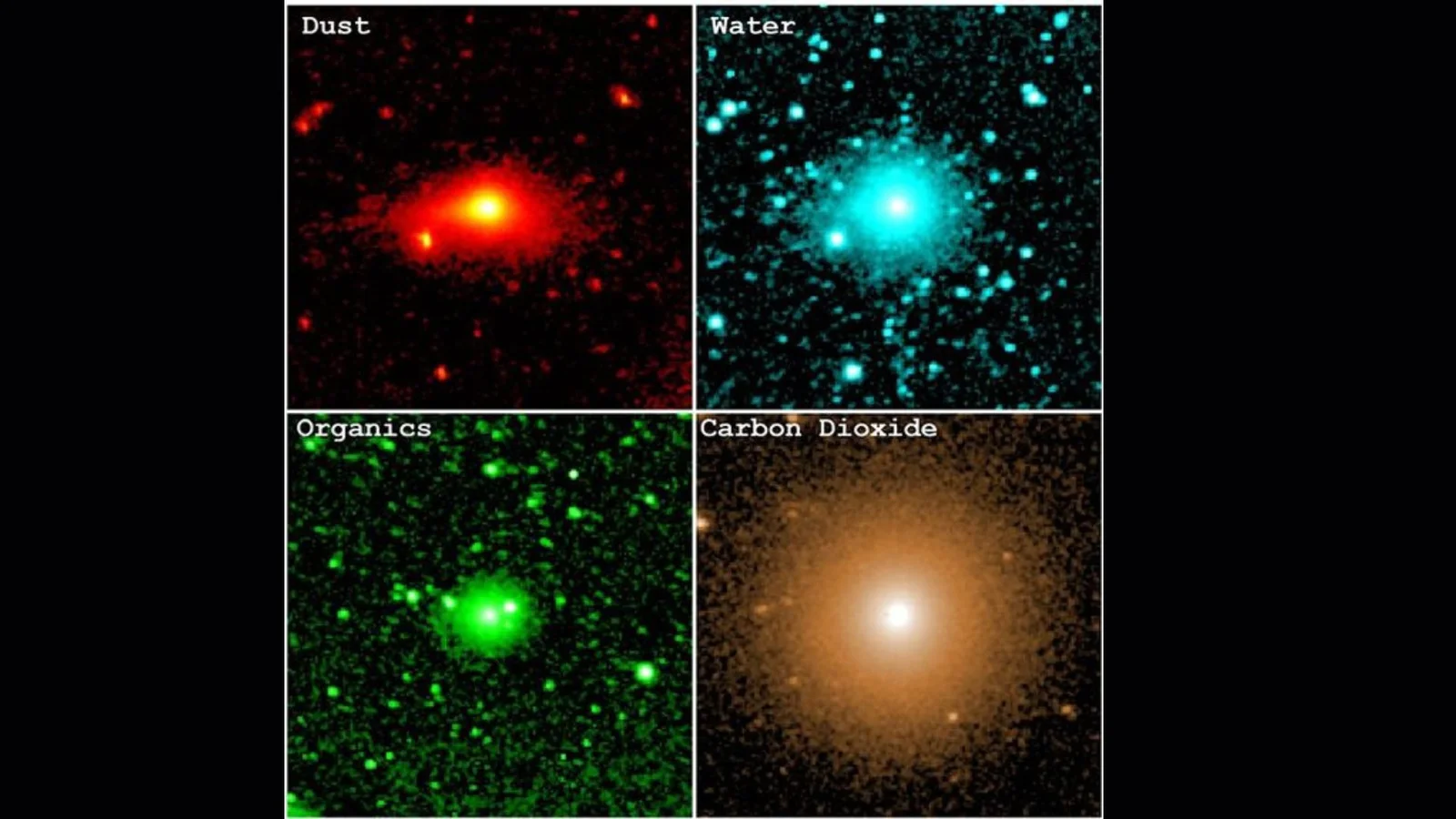
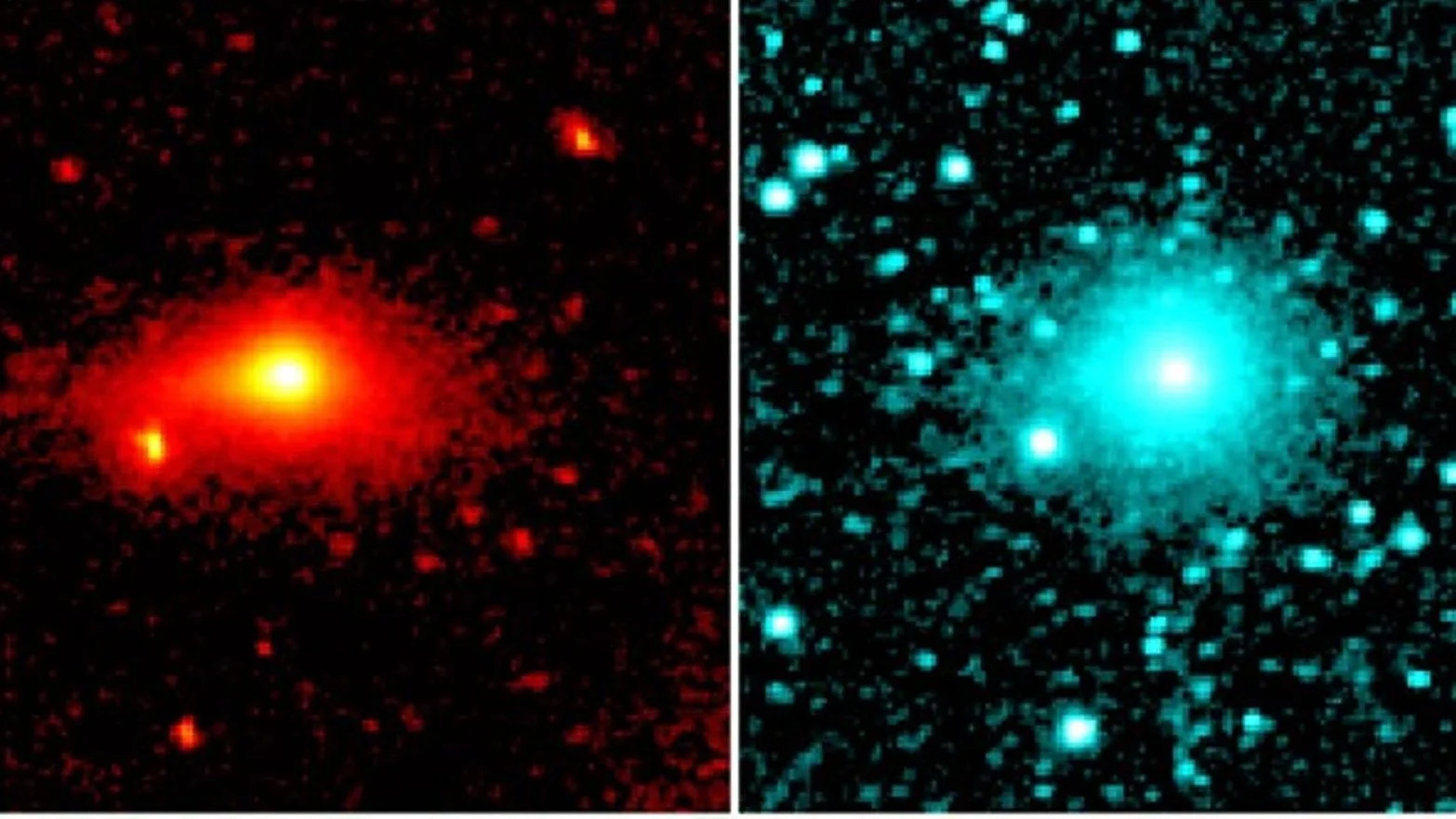
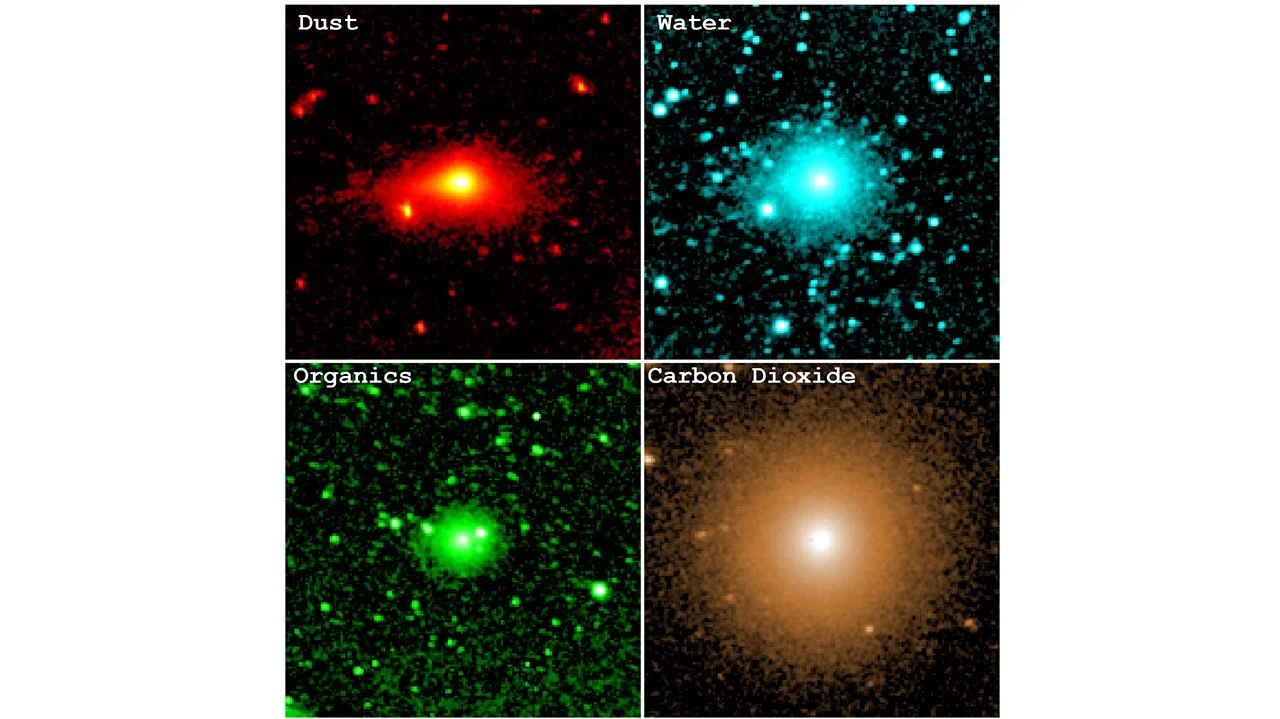
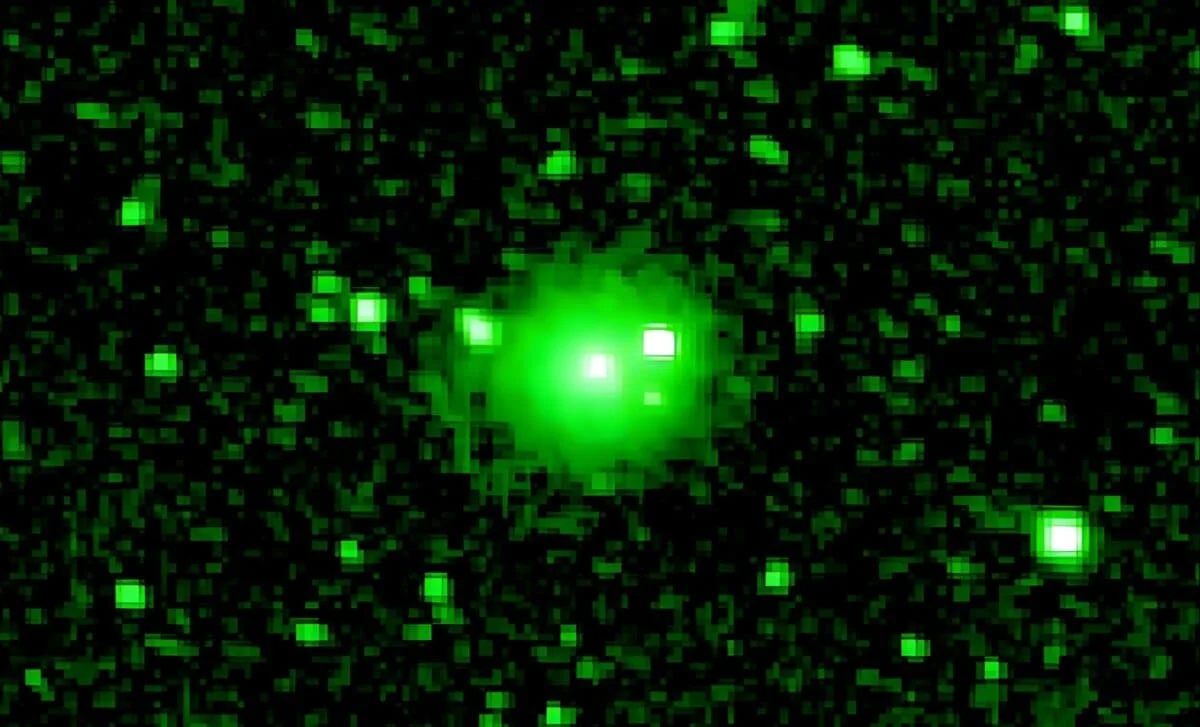
NASA's SPHEREx telescope has revealed that the interstellar comet 3I/ATLAS is wrapped in carbon dioxide fog and water ice, indicating it was well-processed before ejection from its parent system, likely originating from far away in the Milky Way's thick disk. This discovery provides insights into the composition of interstellar objects and demonstrates SPHEREx's advanced capabilities in sky mapping and chemical analysis.
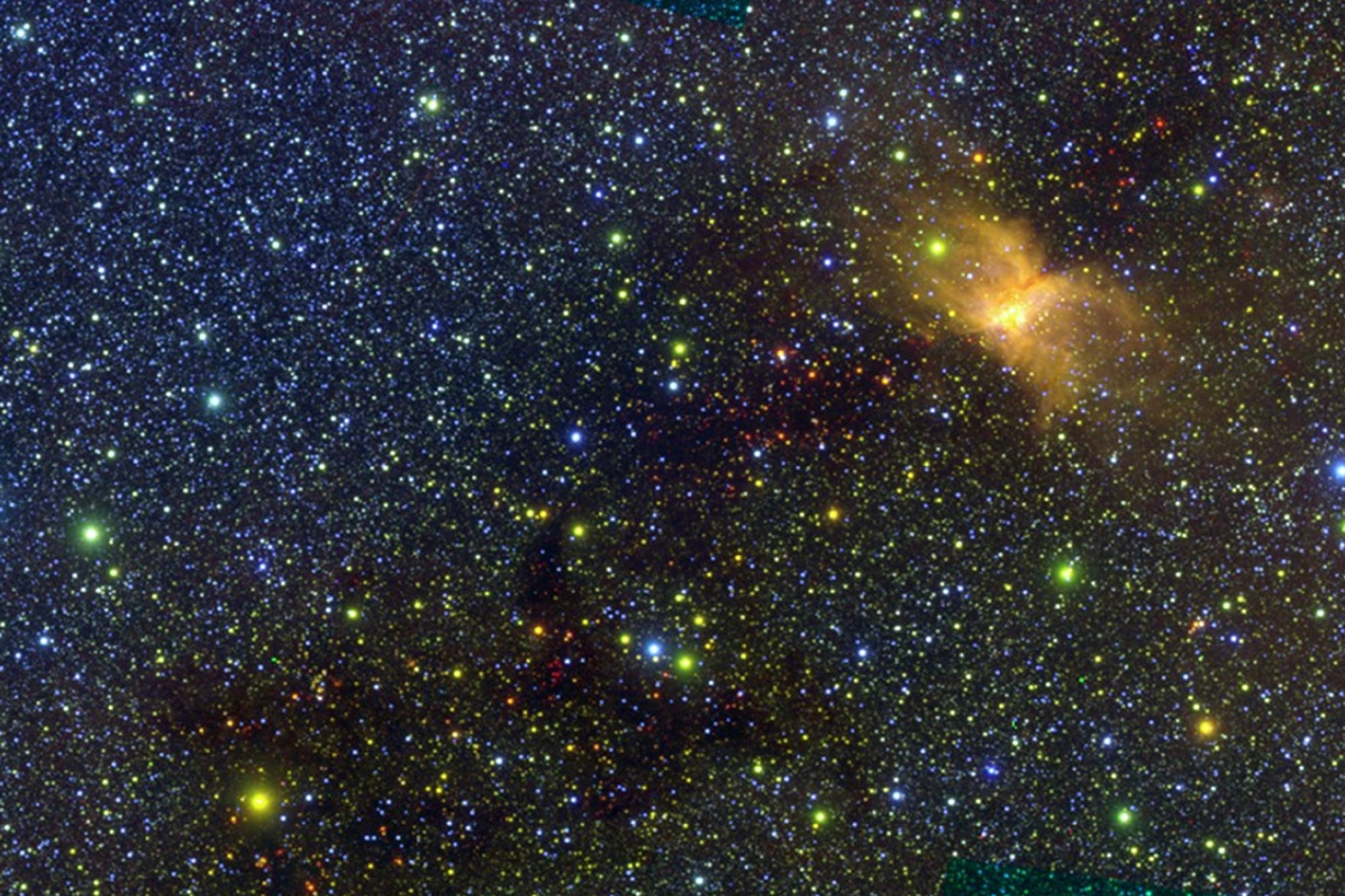
NASA's newest space telescope, SPHEREx, launched from Vandenberg and now in orbit, has begun capturing and publicly releasing images of the universe, using 102 wavelengths of infrared light to study cosmic phenomena, including water and organic molecules in the Milky Way, with plans to complete multiple sky surveys over its 25-month mission.
NASA's SPHEREx space telescope has begun delivering its all-sky survey data to a public archive, enabling global access to its detailed infrared observations of the universe, which will support a wide range of astronomical research over its two-year mission.
NASA's SPHEREx mission has launched a space telescope that is creating an all-sky map in 102 infrared wavelengths, with data being publicly released weekly to enable widespread scientific research on the universe's structure, composition, and history, including the study of water, organic molecules, and cosmic expansion.
NASA's $488 million SPHEREx mission aims to map the universe in 3D, analyze over 450 million galaxies and 100 million stars, study cosmic inflation, and detect molecules essential for life, potentially revolutionizing our understanding of the cosmos.
NASA's $488 million SPHEREx telescope was launched to create a detailed 3D map of the universe, studying galaxies, stars, and interstellar molecules to understand cosmic inflation, galaxy formation, and the origins of life-building elements, potentially transforming our understanding of the cosmos.
NASA's SPHEREx space observatory, designed to map the sky in 3D, is set to launch in February 2025 aboard a SpaceX Falcon 9 rocket from Vandenberg Space Force Base. The mission aims to study cosmic inflation, the collective glow of distant galaxies, and search for life-sustaining elements in the Milky Way. Developed by NASA's Jet Propulsion Laboratory, SPHEREx will operate for two years, producing two sky maps annually. The launch will also carry NASA's PUNCH mission to study the sun's corona.
NASA is inviting digital content creators to attend the launch of its SPHEREx and PUNCH missions, scheduled for February 2025 from Vandenberg Space Force Base in California. The SPHEREx mission will conduct an all-sky spectral survey to explore the universe's origins, while PUNCH will study the Sun's corona. Up to 50 social media users will be selected to attend, offering them access similar to news media, including viewing the launch, touring facilities, and interacting with experts. Registration is open to U.S. citizens until December 23, 2023.
NASA plans to launch the SPHEREx mission in February 2025 aboard a SpaceX Falcon 9 rocket. SPHEREx will map the entire sky in 3D, capturing images in 102 colors to study cosmic inflation, the glow from galaxies, and icy compounds in the Milky Way. The mission aims to enhance understanding of the universe's history and the building blocks of life. The launch will also include NASA's PUNCH mission, which will study the Sun's corona and solar wind.
NASA's upcoming SPHEREx space telescope, set to launch by April 2025, will conduct a two-year all-sky survey in optical and infrared light, with a main focus on gathering data on galaxies and stars, while also contributing to the detection and characterization of Potentially Hazardous Objects (PHOs). The telescope's capabilities will aid in planetary defense efforts by cataloguing hundreds of thousands of solar system objects, providing crucial information to prepare for potential asteroid impacts and develop effective mitigation strategies.
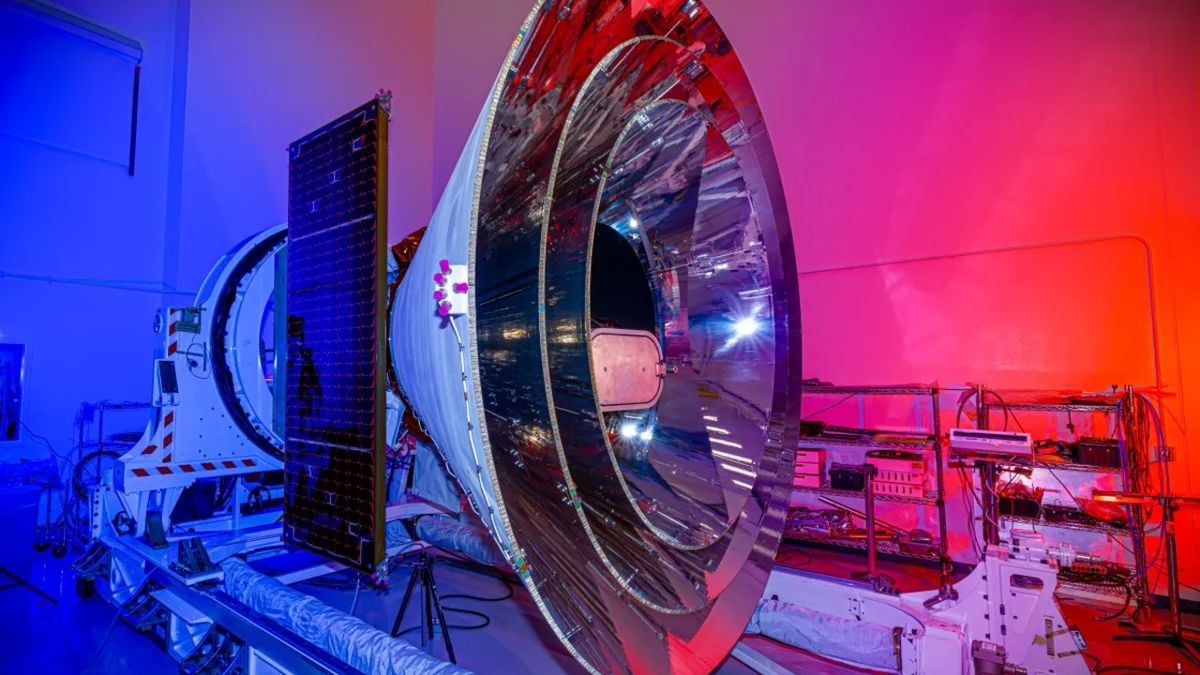
NASA's SPHEREx space telescope, set to launch by April 2025, is in its final stages of preparation. The telescope, resembling a bullhorn, will map the entire sky and study the origins of water and elements essential for life, galaxy formation, and the universe's early expansion. Equipped with infrared detectors, SPHEREx will create a map of the universe by measuring the abundance of water ice, studying the cosmic history of galaxies, and mapping the location of millions of galaxies relative to one another. The data will be analyzed by a global team and made publicly available.