Tag

Infrared Wavelengths

All articles tagged with #infrared wavelengths

science-and-astronomy2 years ago

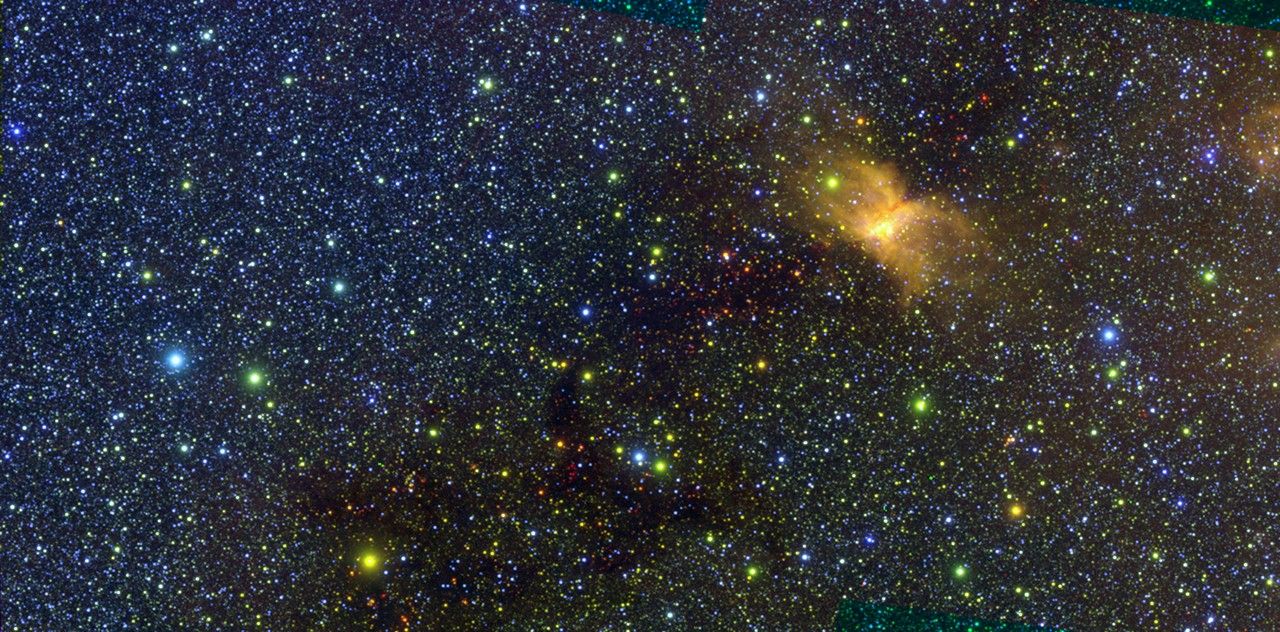
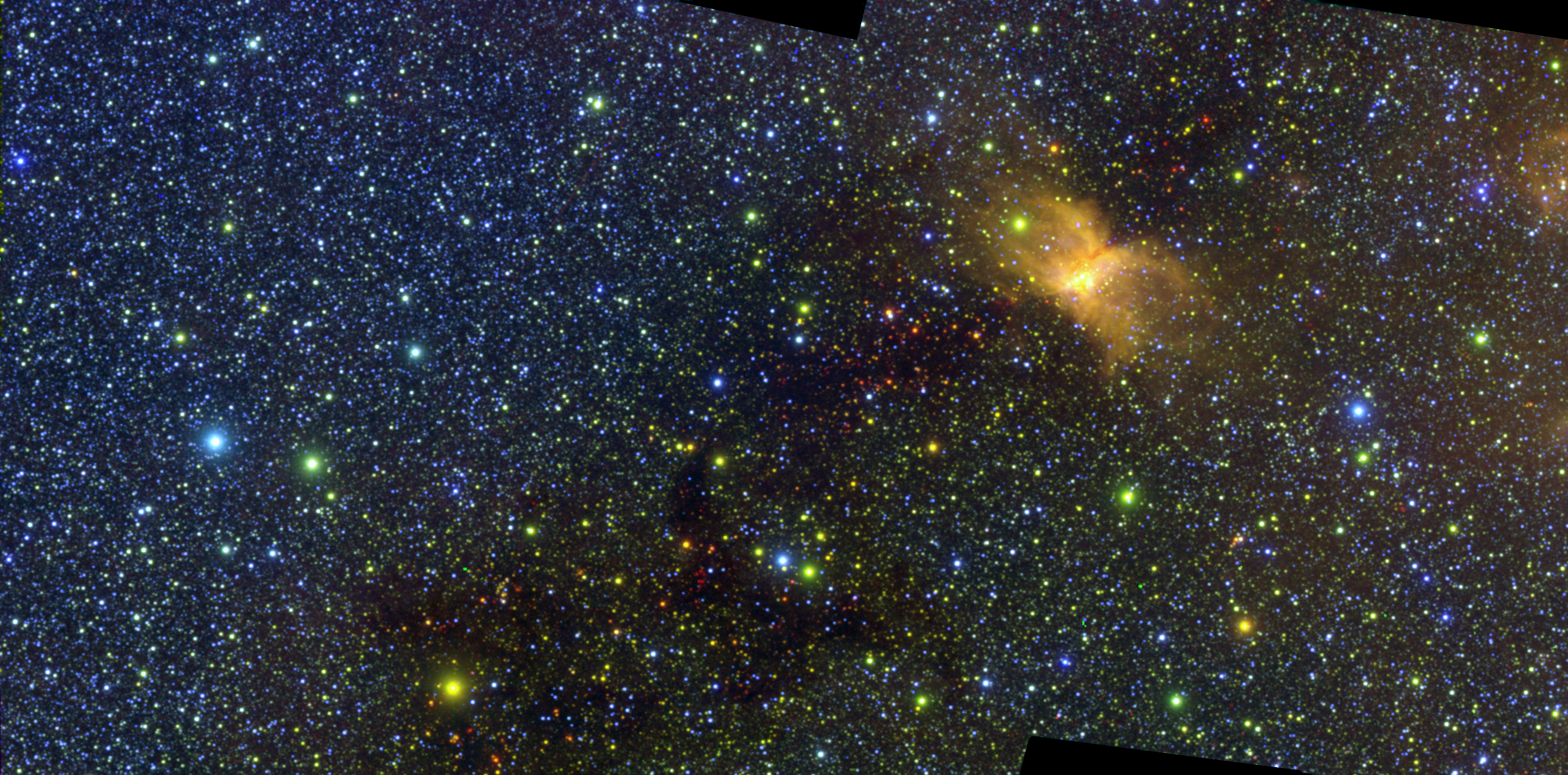
Unveiling the Secrets of a Dying Star: Astronomers Analyze 'Jewel Bug Nebula'

Astronomers using the new IGRINS-2 spectrograph on the Gemini North Telescope have obtained the first spectrum of the Jewel Bug Nebula, a planetary nebula located 3,000 light years away. The spectrograph operates at near-infrared wavelengths, allowing it to penetrate cosmic dust and reveal details of the expanding cloud of gas and dust ejected by a dying star. IGRINS-2 identified elements such as bromine, helium, iron, krypton, and selenium, as well as molecular hydrogen. The instrument will be used to study star-birth, star-death, exoplanets, brown dwarfs, and distant galaxies.

astronomy2 years ago

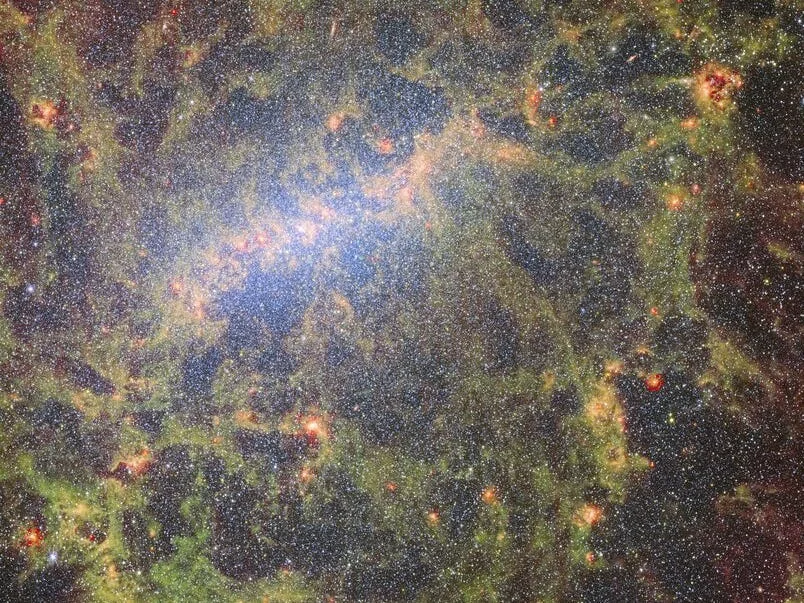
"James Webb Telescope Captures Stunning View of Distant Galaxy"

The James Webb Space Telescope has captured a new image of the galaxy NGC 5068, located 17 million light-years away, revealing thousands of stars concentrated in the galaxy's heart. The telescope is observing many galaxies to help scientists better understand star formation, especially in the turbulent environments of galactic cores. The James Webb Space Telescope sees objects in infrared wavelengths, which allows it to peer past obstructive light that would otherwise block our ability to see into the hearts of galaxies.

science-and-astronomy2 years ago

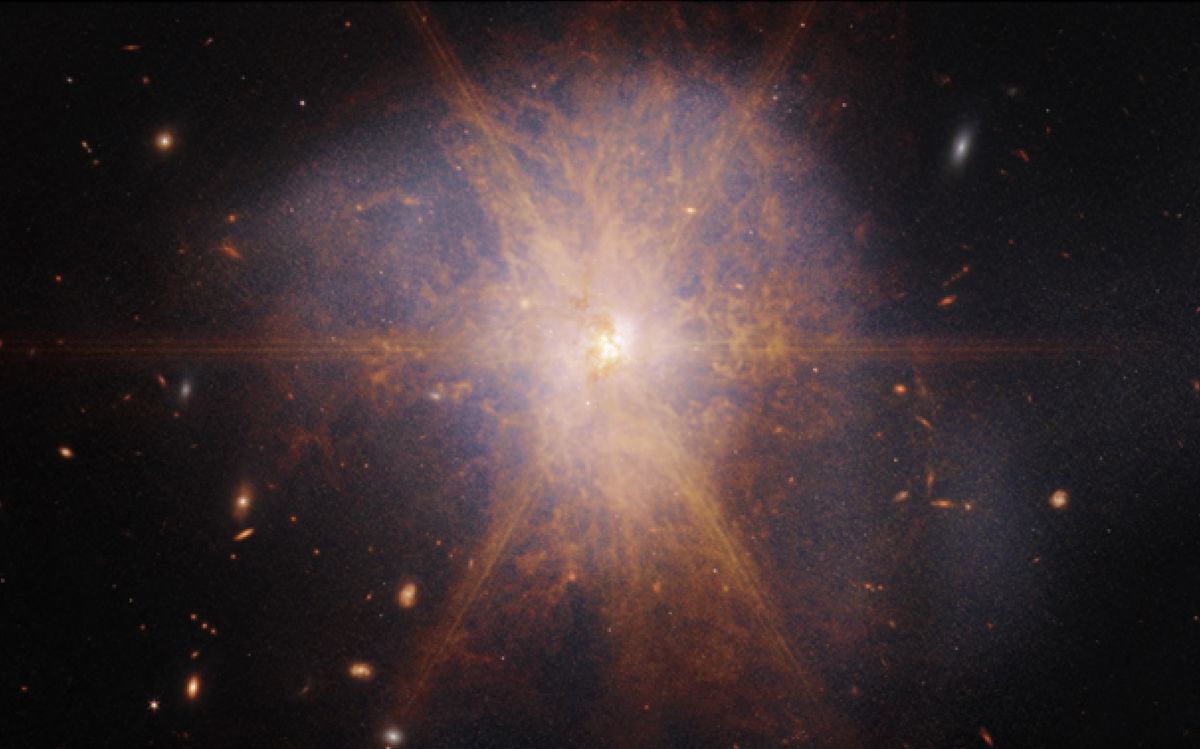
James Webb Telescope captures stunning image of trillion-sun merging galaxies.

NASA's James Webb Space Telescope has captured a stunning image of the merging galaxies known as Arp 220, which are spirals like the Milky Way and have similar tails swirling in their outskirts. The galaxies began merging 700 million years ago, triggering intense star formation, and most of it was concentrated in their dusty central regions. Over 200 star clusters are packed in an area just 5,000 light-years across, and Arp 220's central star-forming ring shines brilliantly, its light seen as six spikes ejecting out in Webb's image. The object's light is equivalent to "more than a trillion suns," according to the image description.