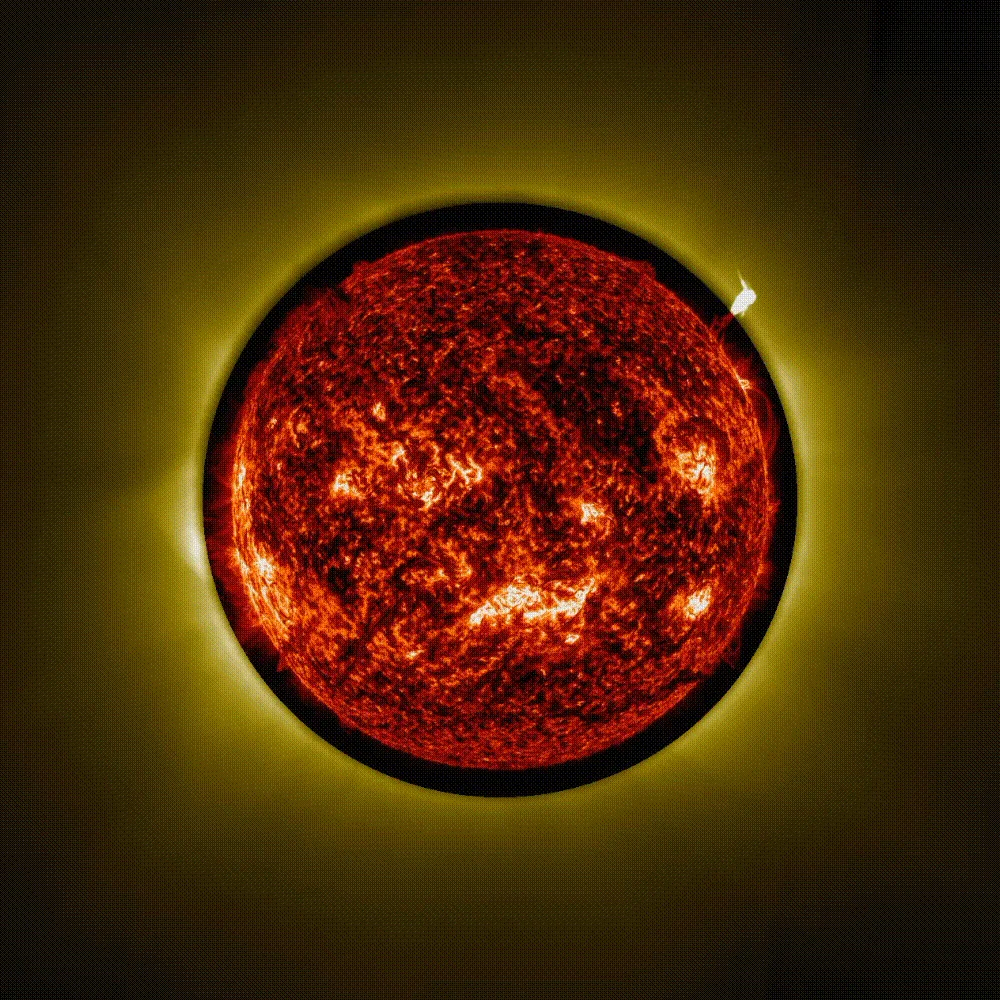
NASA's Parker Solar Probe captured unprecedented close-up images of the Sun's magnetic activity during its 22nd flyby, revealing new details about magnetic 'tadpoles', the tearing of the heliospheric current sheet, and the formation of magnetic in/out pairs, advancing our understanding of solar phenomena.
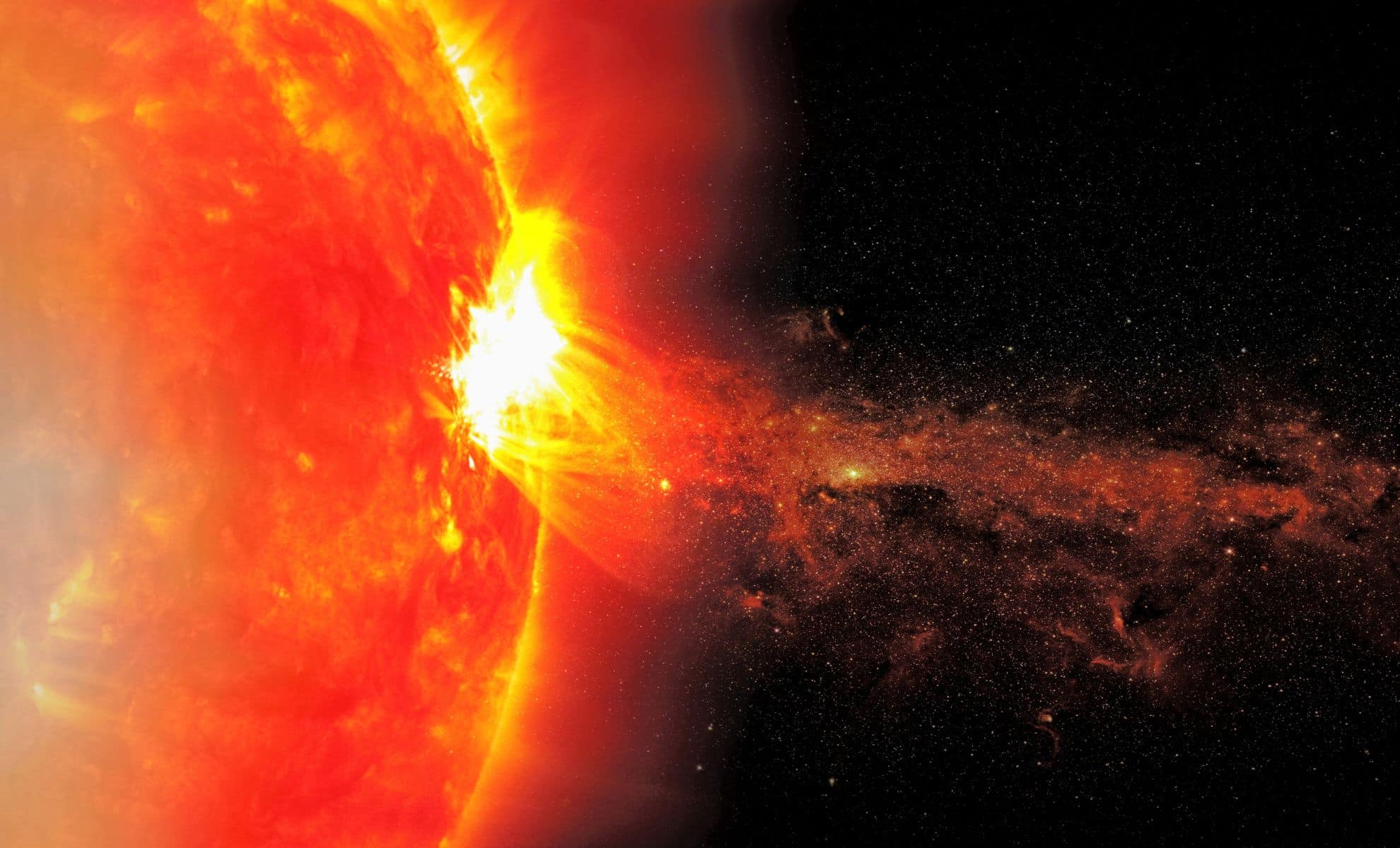
Scientists have released the closest and most detailed images of solar eruptions captured by NASA’s Parker Solar Probe, providing new insights into how superhot particles travel through space and aiding in better forecasting of solar storms impacting Earth.
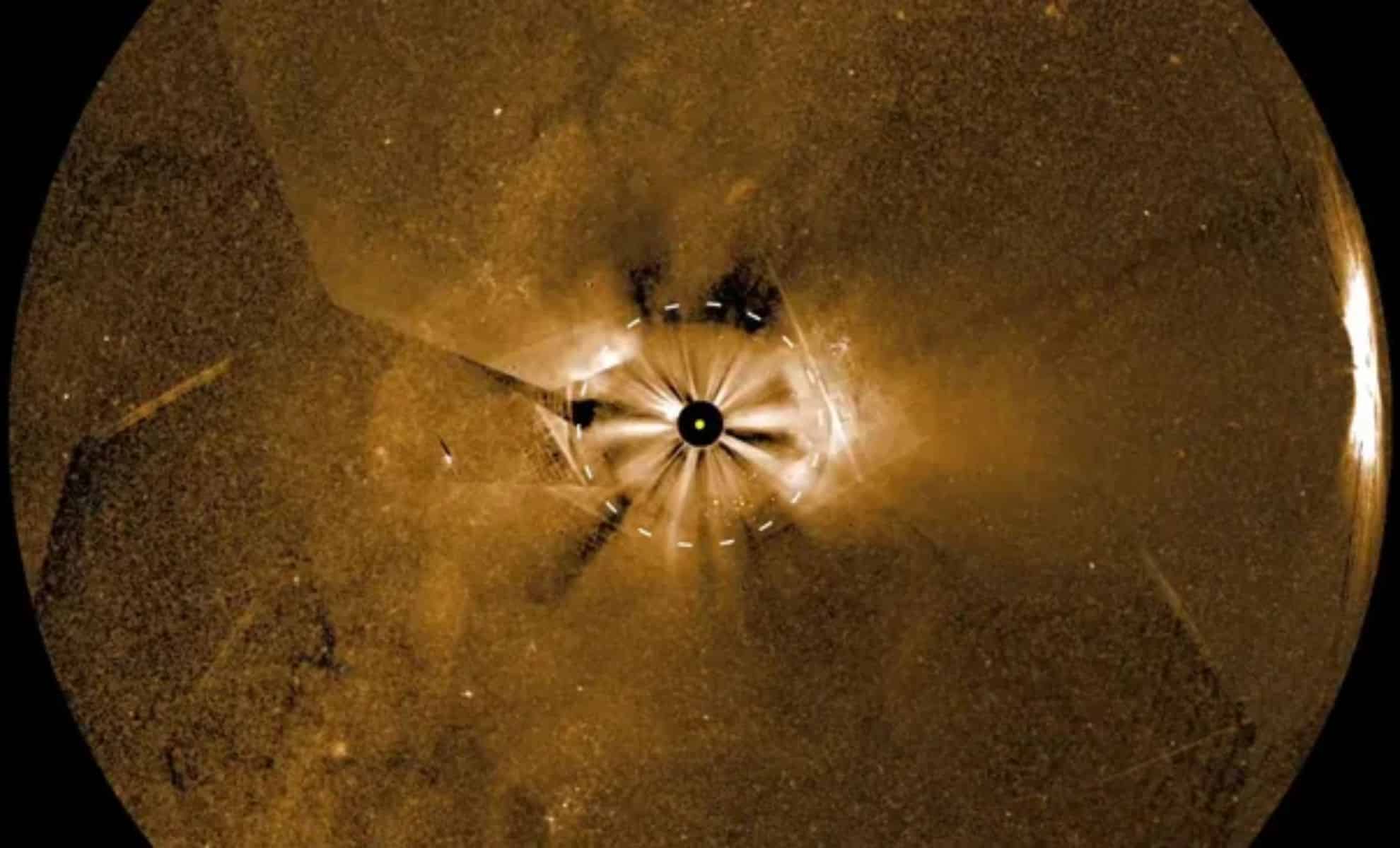
NASA's PUNCH mission has released stunning new images of coronal mass ejections, providing unprecedented detail on solar eruptions and their journey through the inner solar system. These observations enhance understanding of space weather and improve predictions to protect Earth's technological infrastructure.
Solar storms are causing auroras to be potentially visible in the US and UK on Monday night, with the northern lights possibly seen as far south as the midwest and in Scotland. In the southern hemisphere, the aurora australis could be visible in southern Australia. The spectacle coincides with a penumbral lunar eclipse visible around the world. The storms are caused by coronal mass ejections from the sun, and severe storms can disrupt power networks and satellites. The solar cycle is likely nearing its peak this year, with the potential for increased solar activity over the next few years.
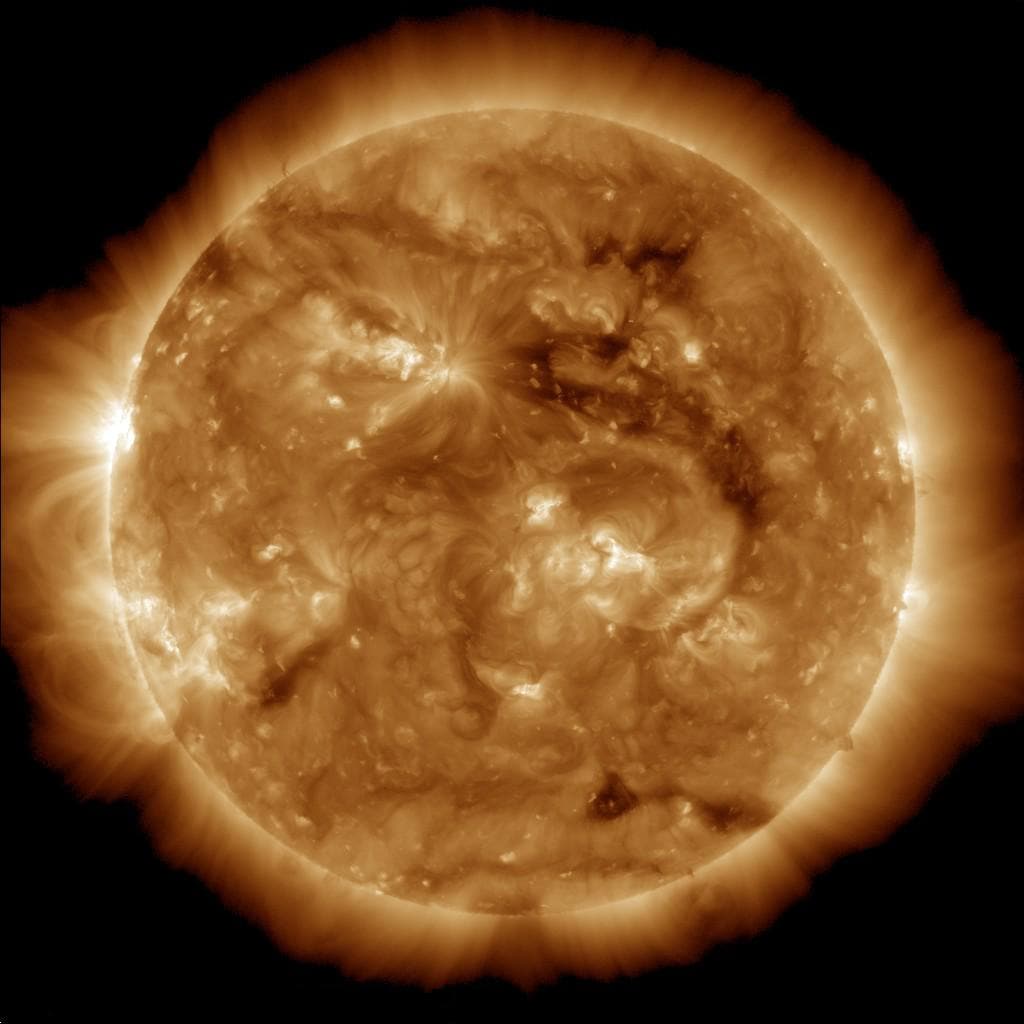
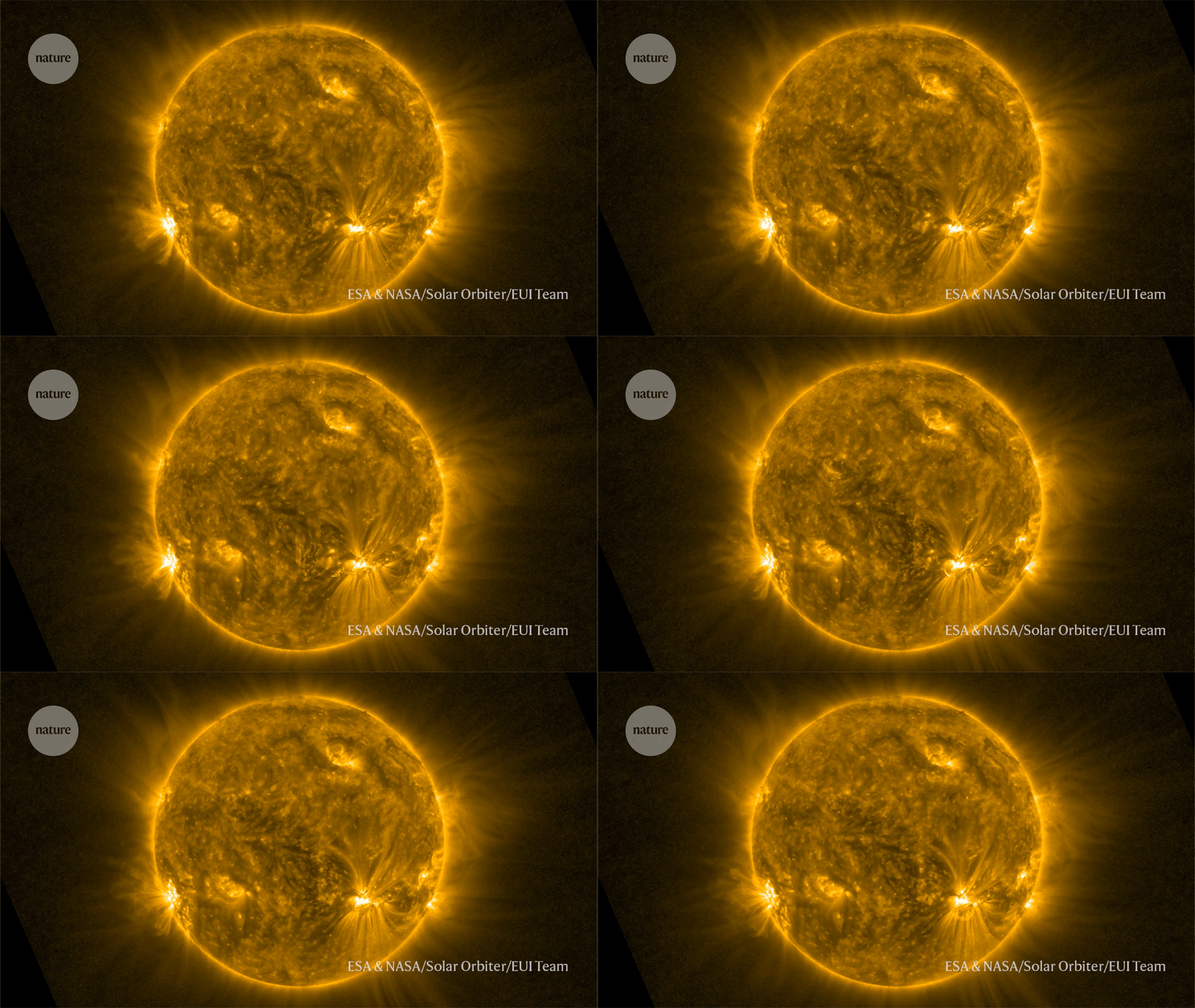
NASA's Parker Solar Probe and the European Space Agency's Solar Orbiter have provided unprecedented close-up views of the Sun, capturing massive solar eruptions, magnetic disturbances, and heat and energy rippling through the Sun's atmosphere. These observations are rewriting scientists' understanding of the Sun and its activity. The two spacecraft, working in tandem, have revealed new insights into the earliest phases of solar eruptions and the behavior of coronal mass ejections. The data collected will help researchers better understand the Sun's activity and predict its effects on Earth, such as solar storms that can disrupt communications and power grids. The combination of instruments on each spacecraft and their unique geometry enable this groundbreaking research.
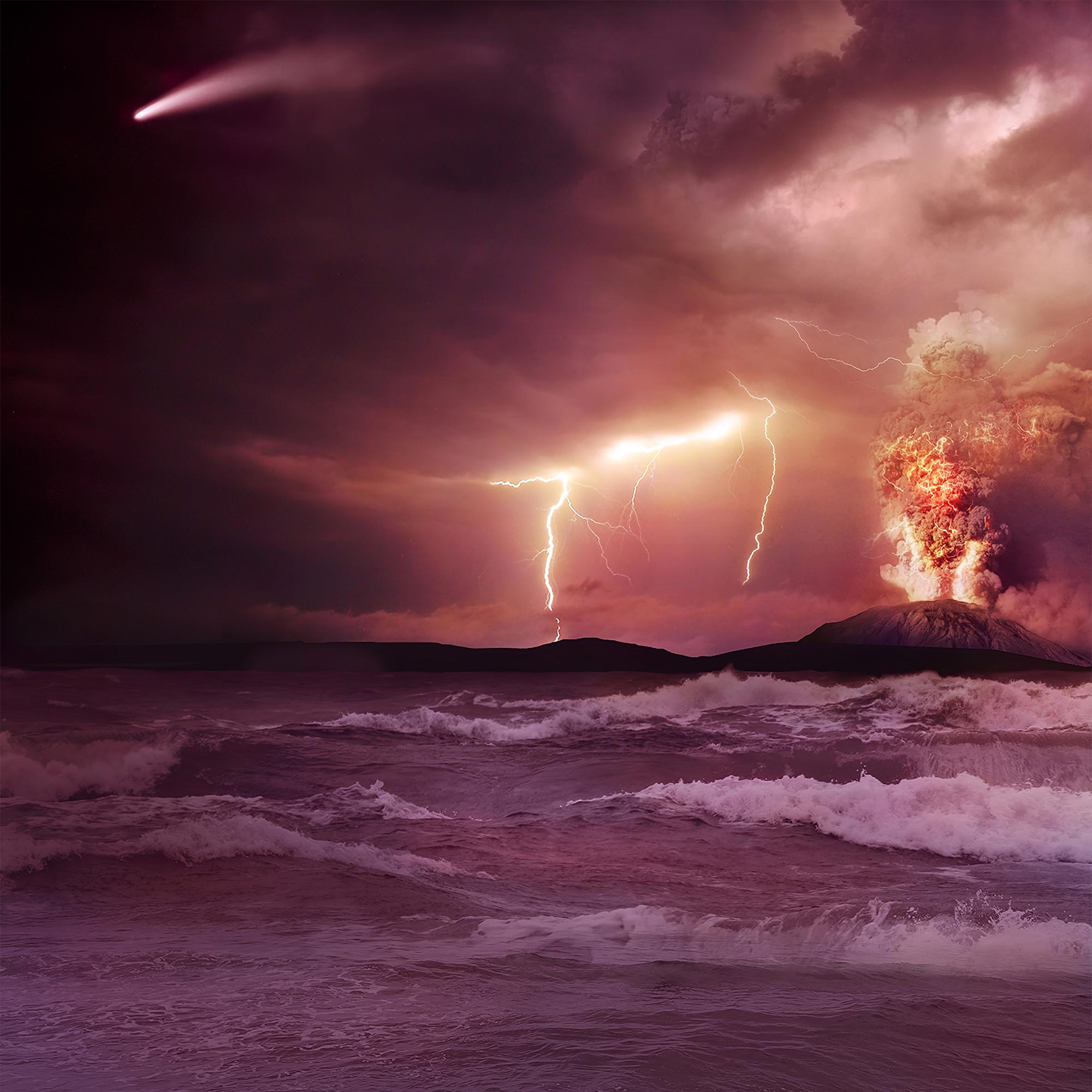
A recent study suggests that solar eruptions may have catalyzed the formation of amino acids and carboxylic acids, the fundamental elements of proteins and organic life, in Earth's primitive atmosphere. The research challenges the traditional "warm little pond" theory and proposes that energetic particles from the sun, during its early superflare stage, would regularly interact with our atmosphere, triggering essential chemical reactions. Experimental replications indicated that solar particles appear to be a more efficient energy source than lightning for the formation of amino acids and carboxylic acids.