Researchers at the City University of New York have achieved a breakthrough in creating light-based time reflections using a metamaterial with adjustable optical properties. By dynamically adding or removing material along a waveguide, they were able to alter the waveguide's effective properties and manipulate light's temporal components. This breakthrough has revealed counterintuitive effects, such as the beginning of the original signal appearing at the end of the reflected signal and changes in light's frequencies. The researchers also observed that colliding beams of light can behave like colliding billiard balls when a time reflection occurs. These findings hold promise for advancements in signal processing, communications, and energy conversion applications.
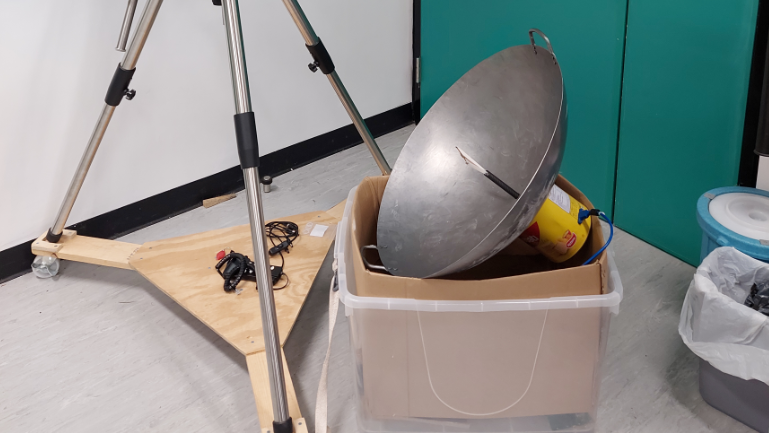
Researchers have discovered that a round-bottomed wok can be repurposed into a functional radio telescope for capturing radio waves emitted by the heart of our galaxy. By adding a dipole antenna, balun, and plastic tubing to support the antenna at the focal point of the wok, along with a preamp and filter, the wok telescope was able to measure the recession velocity of neutral hydrogen with impressive accuracy. This DIY project offers an accessible and cost-effective way for enthusiasts to explore radio astronomy.
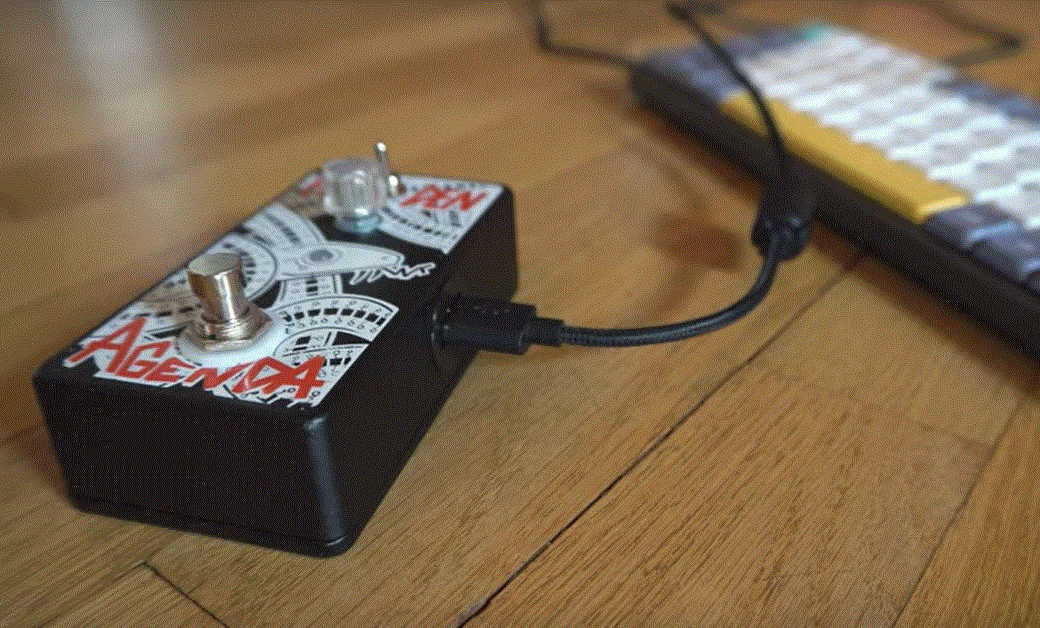
A creative project has developed an effects pedal, typically used for musical instruments, to apply various effects to computer keyboards and mice. The pedal includes effects such as reverb, distortion, looper, tremolo, echo, and pitch-shift, allowing users to modify the behavior of their input devices. While the practical applications may be limited, it could be useful for smoothing mouse inputs for individuals with neuromuscular disorders or as a mouse jiggler for those with micromanaging employers. The device is reprogrammable and utilizes a RP2040 microcontroller for signal processing.
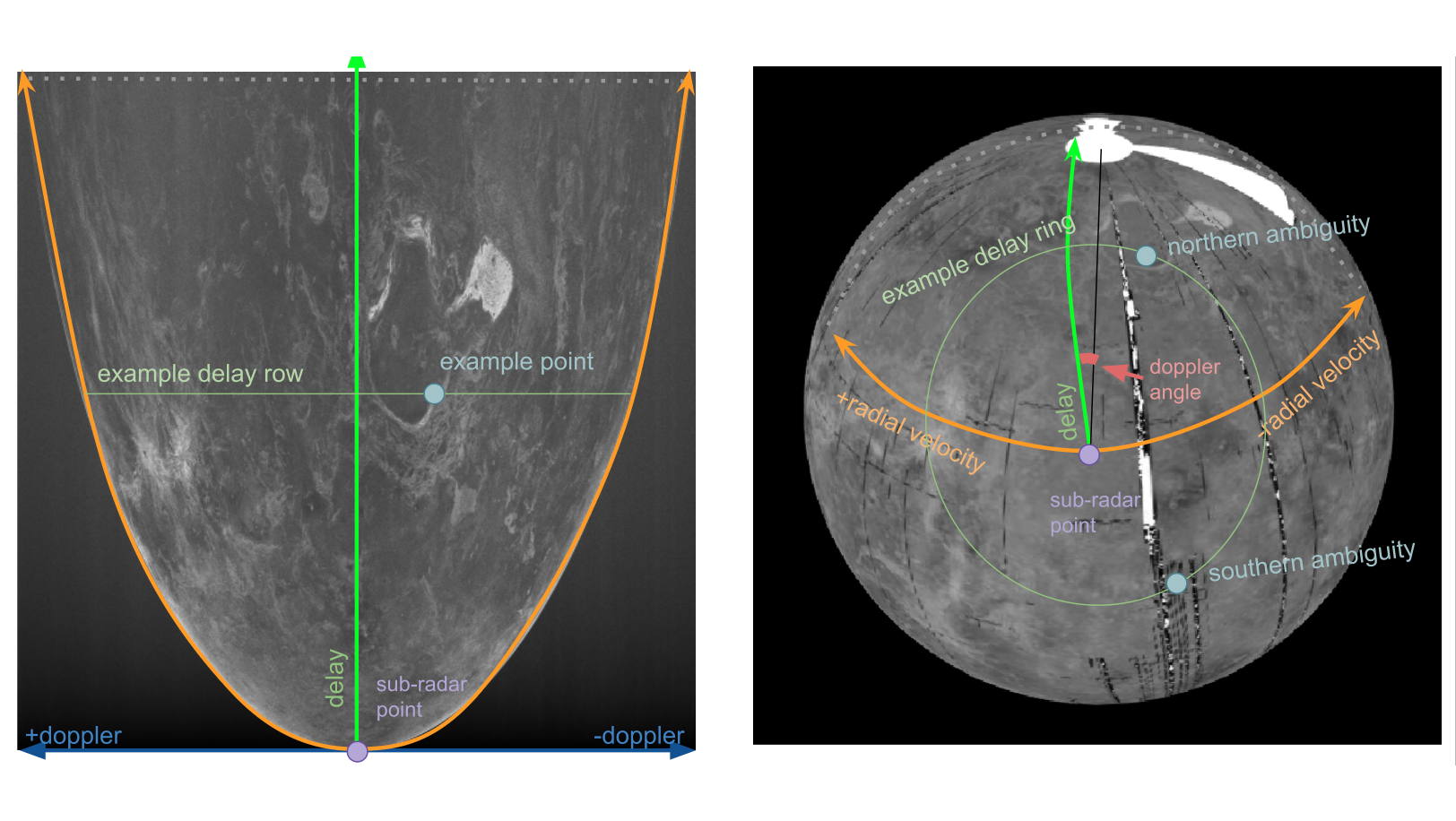
Nathaniel Fairfield, also known as thandal, used publicly available uncalibrated delay-doppler images of Venus collected by the Arecibo Observatory to estimate the planet's rotation and axis tilt. By aligning and calibrating the raw data, Fairfield found that Venus's revolution appears to be slightly speeding up and his estimates of the orbital axis were within 0.01 degrees of the International Astronomical Union's values. The complex signal processing involved mapping the data onto the Venus geoid and using surface features to estimate rotational speed and tilt. This research is important for better planning future missions.
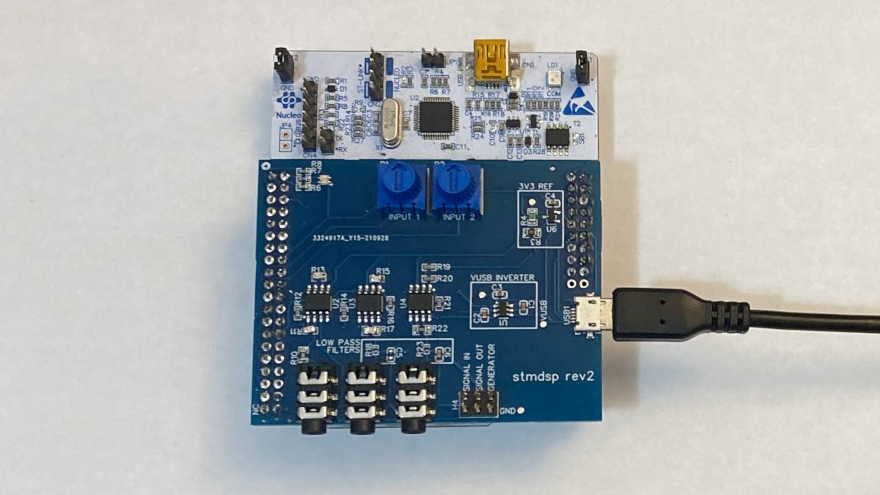
The DSP PAW (Portable All-in-one Workstation) is a custom board that plugs onto an STM32 NUCLEO Development Board from STMicroelectronics, providing a complete learning environment for DSP algorithms that can be entered as C++ code through an Arduino-like IDE. The hardware can interface with audio signals and lab equipment or it can generate and capture signals in stand-alone operation. The firmware leverages the ChibiOS open-source, embedded real-time operating system, and the IDE provides an interface for writing, compiling, uploading, executing, analyzing, and debugging DSP algorithms.