Tag

Salk Institute

All articles tagged with #salk institute

health1 year ago

Beyond Cholesterol: Unveiling Other Lipids in Trans Fat-Related Heart Disease

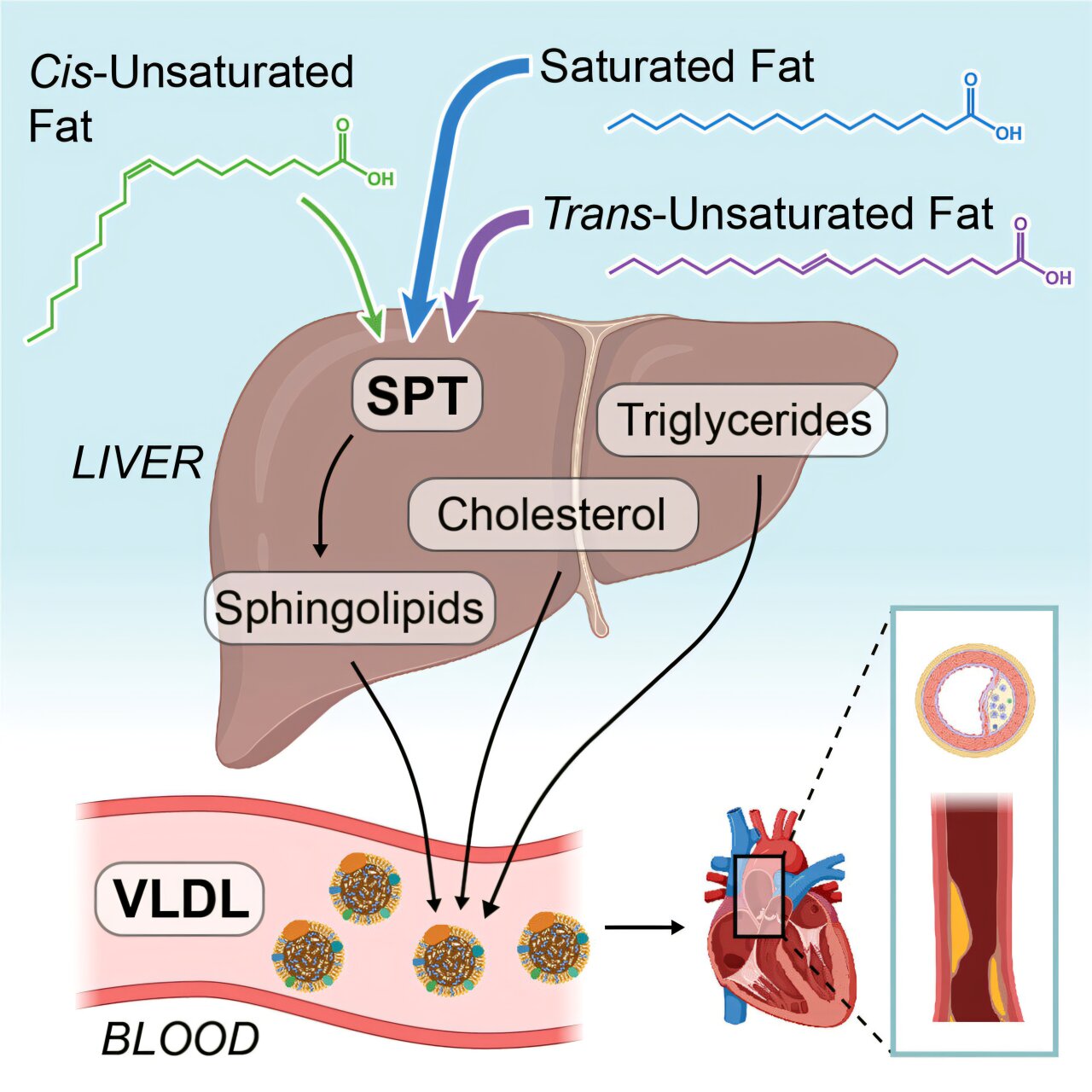
New research from the Salk Institute suggests that sphingolipids, not just cholesterol, play a significant role in trans fat-driven cardiovascular disease. The study found that trans fats are incorporated into sphingolipids, promoting the secretion of lipoproteins that contribute to atherosclerotic plaque formation. This discovery opens new avenues for potential drug targets beyond cholesterol-lowering statins, focusing on the enzyme SPT involved in sphingolipid synthesis. The findings highlight the need for further exploration of dietary fats' impact on cardiovascular health.

neuroscience1 year ago

"Brain's Storage Capacity Far Greater Than Previously Believed"

Researchers at the Salk Institute have discovered that synapses in the brain can store 10 times more information than previously thought, using a new method based on information theory. This breakthrough enhances understanding of learning, memory, and brain disorders, potentially advancing research on conditions like Alzheimer's disease.

science1 year ago

"Deciphering RNA's Ancient Code: Unveiling Life's Secrets"

Scientists at the Salk Institute have discovered an RNA enzyme that can accurately replicate and evolve RNA strands, providing strong evidence for the RNA World hypothesis and shedding light on the origins and complexity of life. This breakthrough brings researchers closer to synthesizing RNA-based life in the laboratory, offering insights into early evolution and the potential for autonomous RNA life. The study underscores the critical role of replication fidelity in enabling evolution and paves the way for future experiments testing other ideas about the origins of life.

science1 year ago

"Advancements in Understanding the Origins of Life: From RNA World to Artificial Life"

Scientists at the Salk Institute have created a lab-made RNA molecule that can accurately copy others, bringing them closer to replicating the conditions for early Earth life in a lab. While the molecule isn't yet self-replicating, it represents a significant step towards creating artificial life. This breakthrough has the potential to revolutionize the study of the earliest evolutionary stages of life and raises ethical questions about synthetic lifeforms.

science1 year ago

"Unveiling the 'RNA World': Clues to Earth's Life Origins"

Scientists at the Salk Institute have made a significant advance in supporting the RNA World theory, a hypothesis about the origins of life on Earth. They developed an RNA molecule capable of making accurate copies of a different type of RNA, a crucial step in the process of life's emergence. This experiment provides key evidence for the plausibility of the RNA World theory and could lead to further understanding of how life evolved.

science1 year ago

"Uncovering the RNA World: Modeling the Origins of Life"

New research at the Salk Institute provides compelling evidence supporting the RNA World hypothesis, suggesting that the origins of life may have involved molecular-scale evolution in RNA. The study unveils an RNA enzyme capable of making accurate copies of other functional RNA strands and allowing new variants to emerge over time, bringing scientists closer to re-creating RNA-based life in the laboratory. The findings highlight the critical importance of replication fidelity in making evolution possible and pave the way for future experiments testing other ideas about the origins of life.

health-and-medicine1 year ago

"Non-Hormonal Male Birth Control: A Promising, Side-Effect-Free Breakthrough"

The Salk Institute has developed a non-hormonal and reversible male contraceptive method using HDAC inhibitors to block sperm production without affecting libido, offering a significant advancement in male birth control. Administering an HDAC inhibitor orally stopped sperm production and fertility in mice without impacting their libido, and the effects were fully reversible. This novel approach targets the regulation of gene expression in sperm production, providing a promising therapeutic approach for human clinical trials.