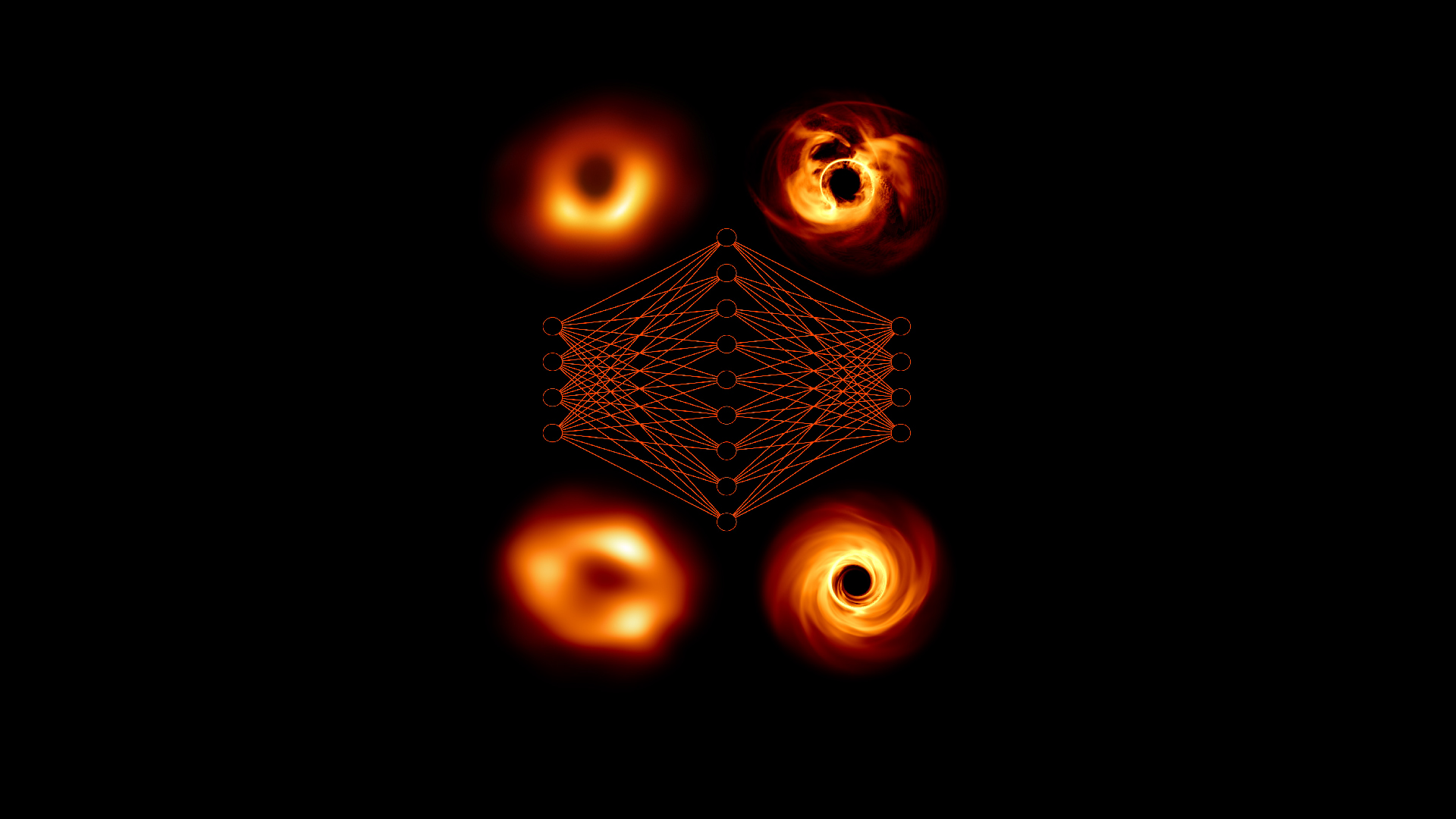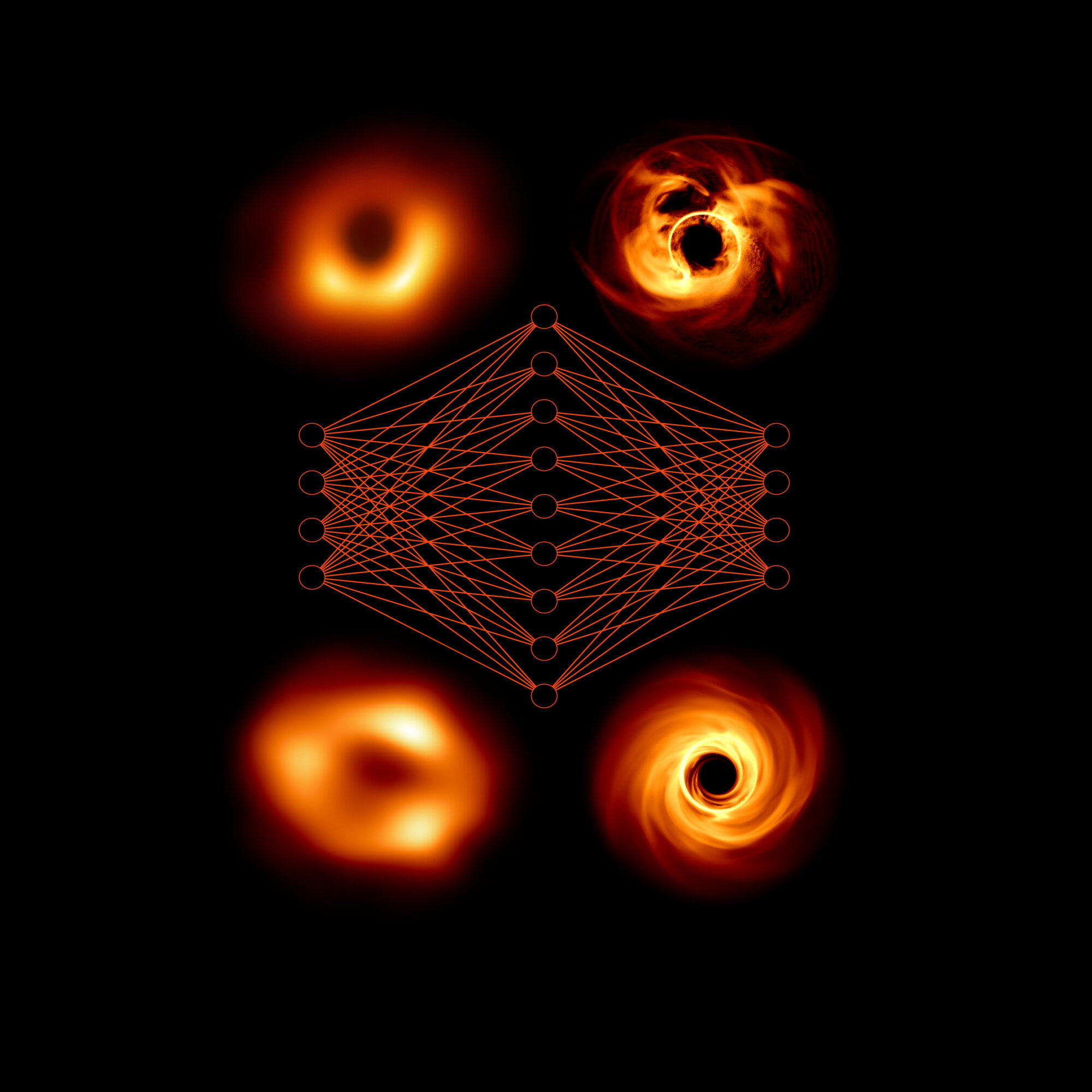
AI analysis of the Milky Way's central black hole, Sagittarius A*, suggests it spins rapidly with a high spin parameter and a slight tilt, providing new insights into its behavior and structure, aided by advanced machine learning techniques and upcoming telescope upgrades.
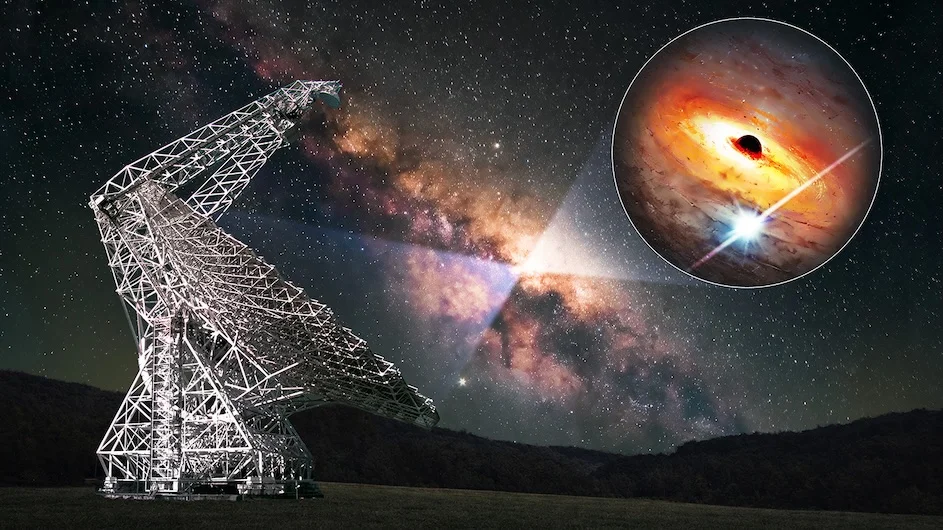
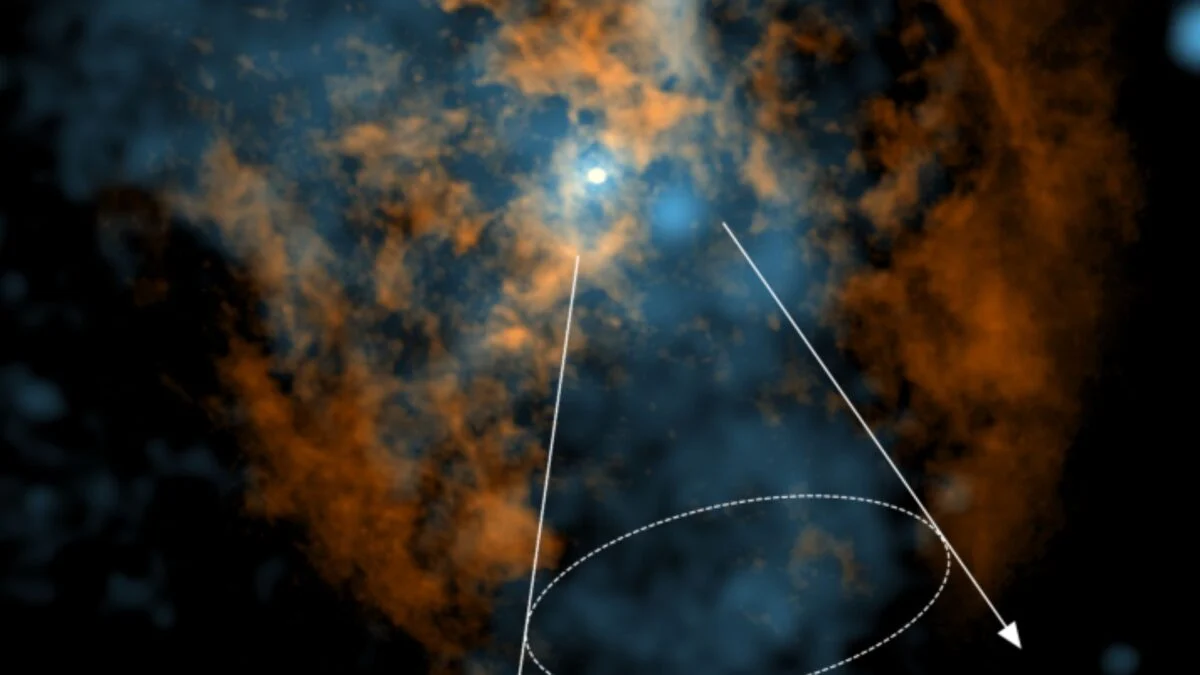
Scientists have made a significant breakthrough in detecting winds from the Milky Way's central black hole, Sagittarius A*, by observing a cone-shaped region of cold gas being blown away, which aligns with hot plasma emissions, providing new insights into the black hole's influence on galaxy evolution.
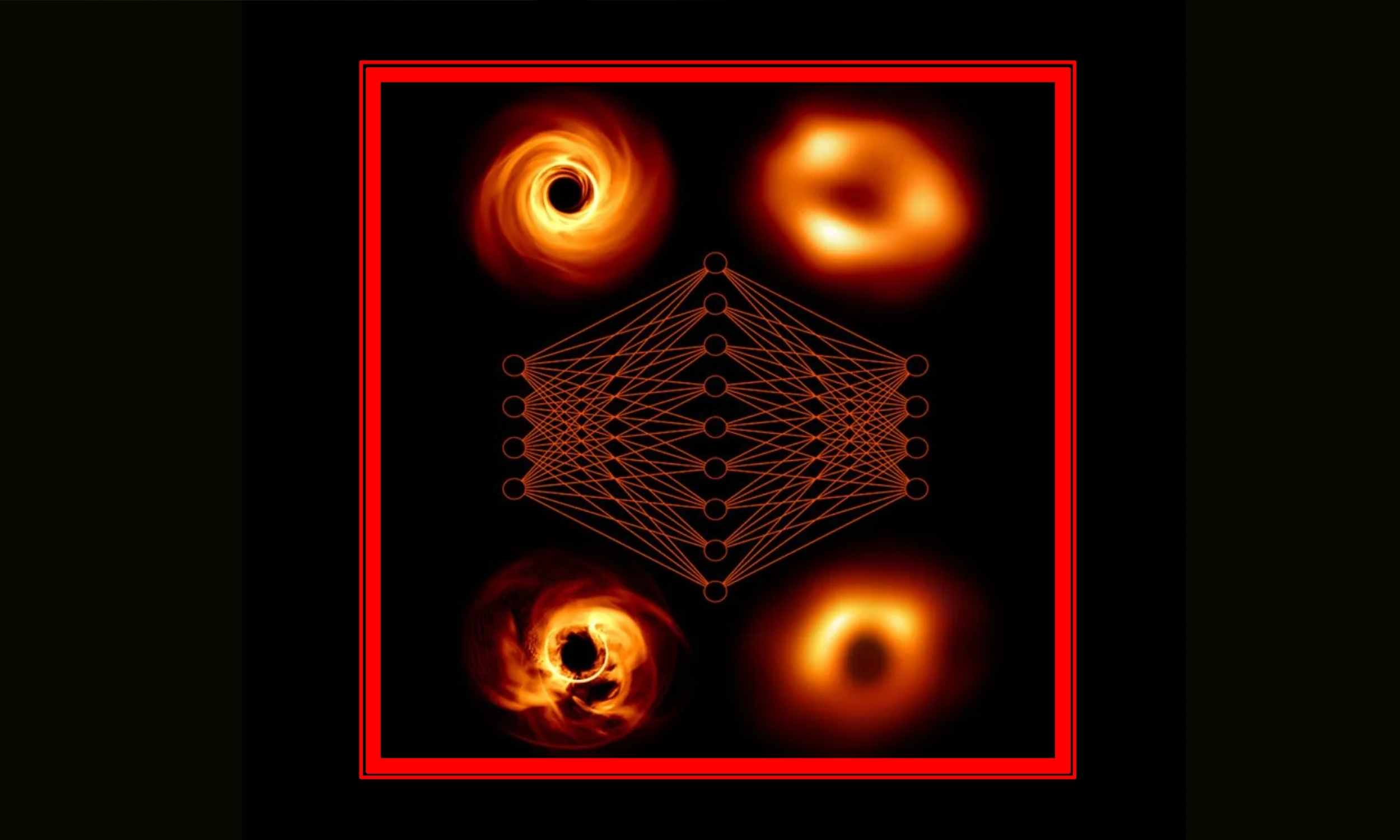
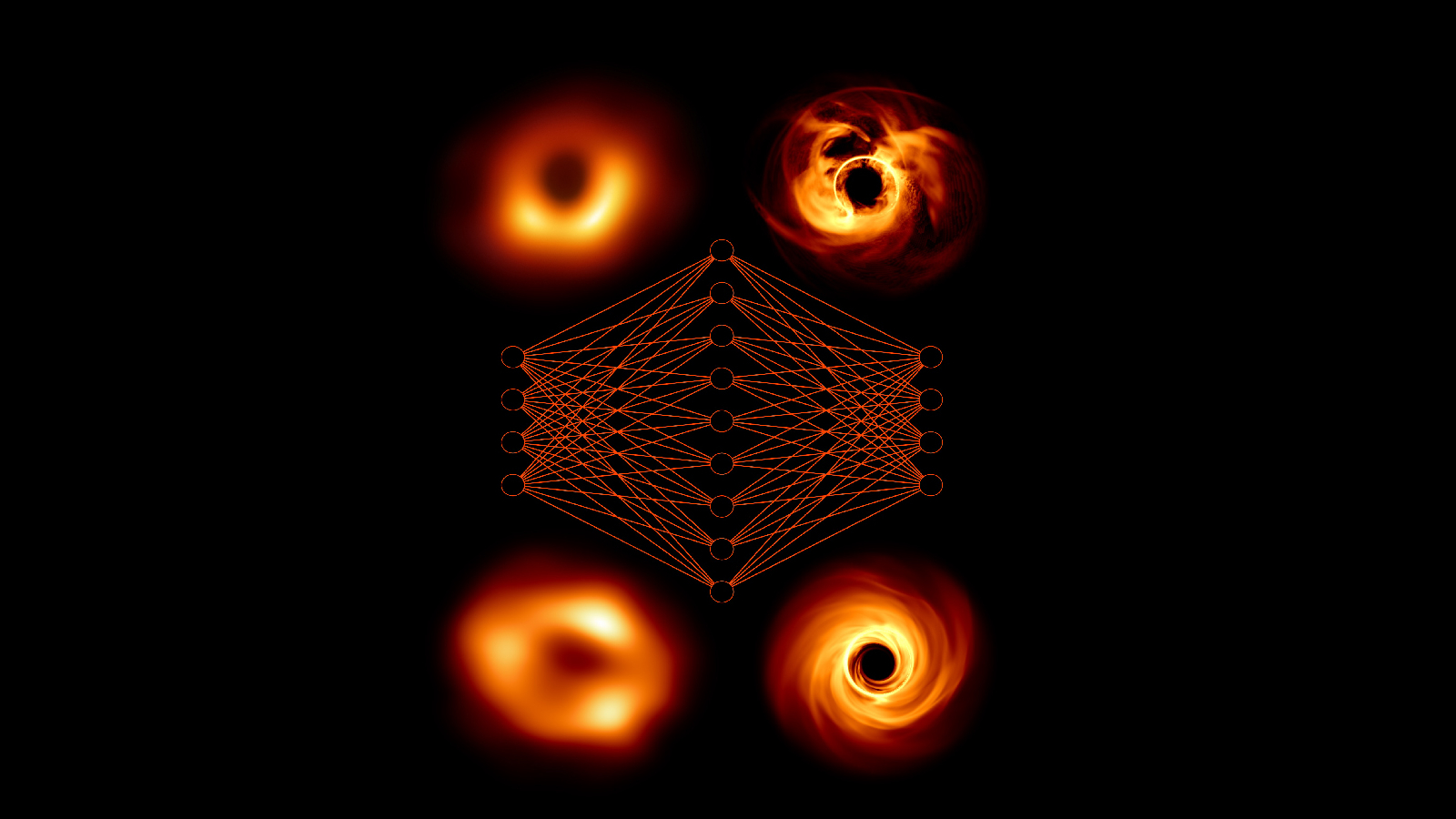
A new study using machine learning on Event Horizon Telescope data suggests that the Milky Way's central black hole, Sagittarius A*, is spinning at near maximum speed with its axis almost directly pointing at Earth, providing insights into its orientation and activity.
A new AI model trained on noisy telescope data suggests the supermassive black hole at our galaxy's center, Sagittarius A*, is spinning at nearly top speed and its rotational axis points toward Earth, but experts caution that the data quality may affect the accuracy of these findings.
A new AI model has been used to enhance images of the black hole Sagittarius A* at the center of our galaxy, revealing it spins at nearly top speed, but experts caution that the data quality and AI's reliability need further validation before drawing definitive conclusions.
A team of astronomers trained a neural network on millions of synthetic black hole data sets, leading to new insights such as the black hole at the center of our galaxy spinning near its maximum speed and challenging existing theories about accretion disks and magnetic fields, with future data expected to further test the theory of relativity.
Over the past 25 years, black hole research has made significant strides, including capturing the first image of a black hole, measuring the mass of the Milky Way's black hole, detecting gravitational waves from black hole mergers, and discovering intermediate-mass black holes. The James Webb Space Telescope has also found ancient supermassive black holes, challenging existing growth theories. These advancements have transformed our understanding of these cosmic phenomena.
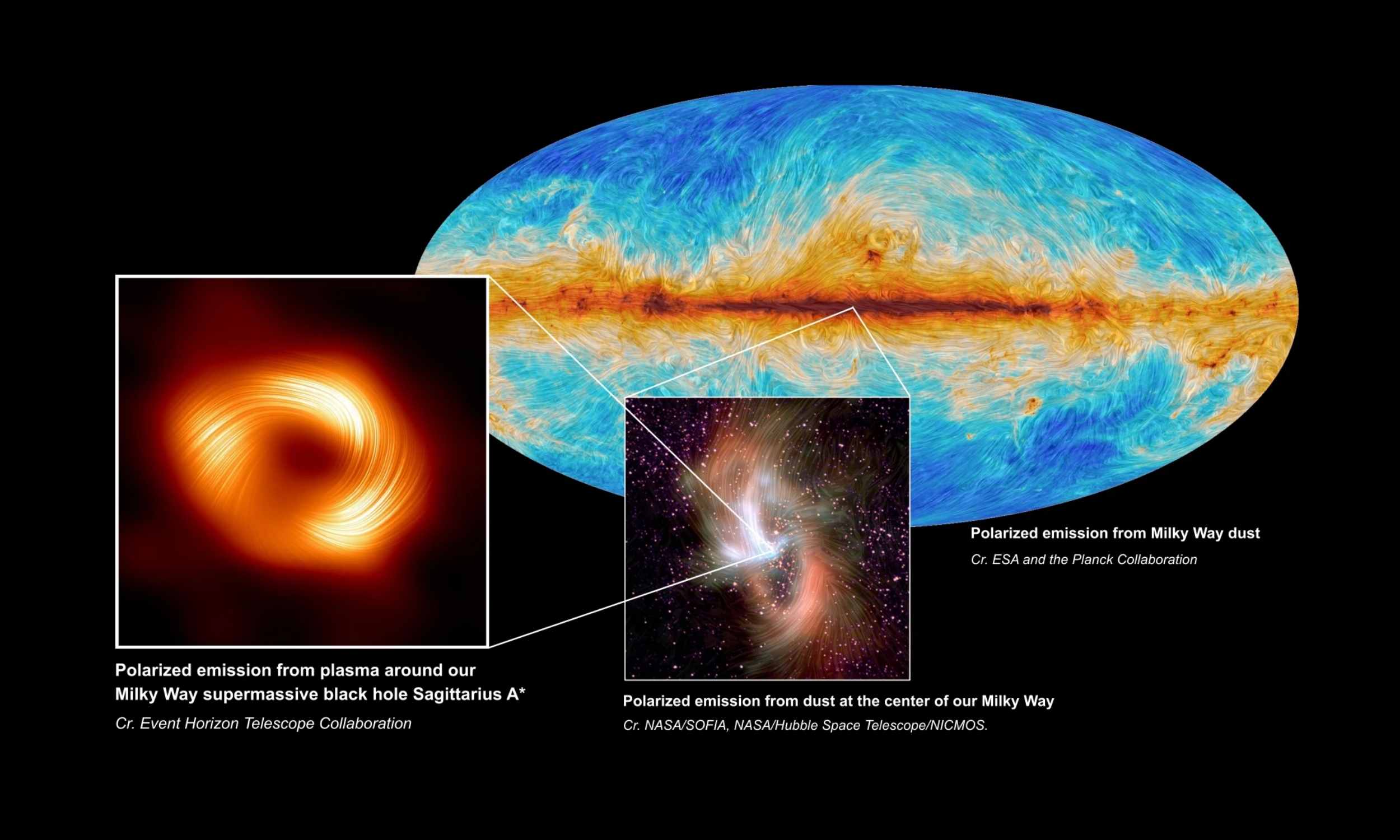
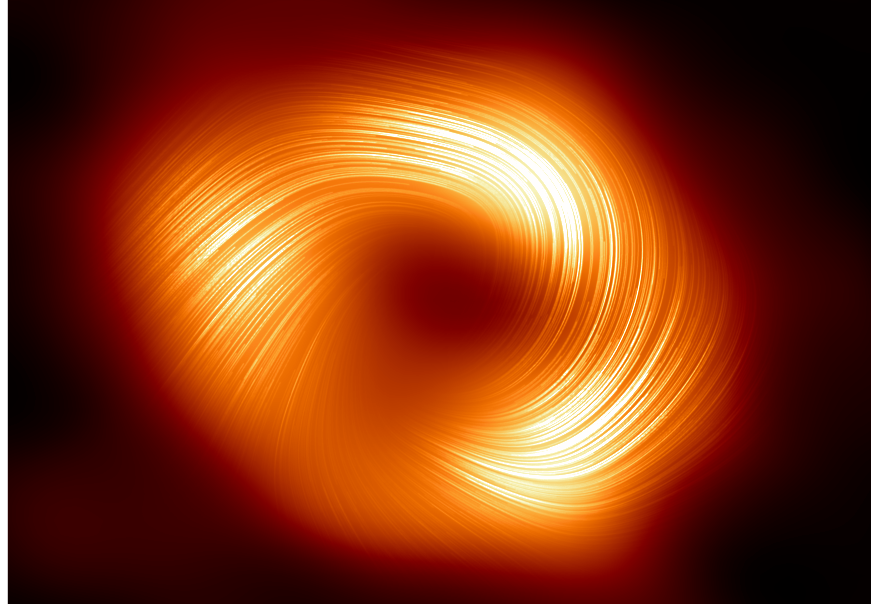
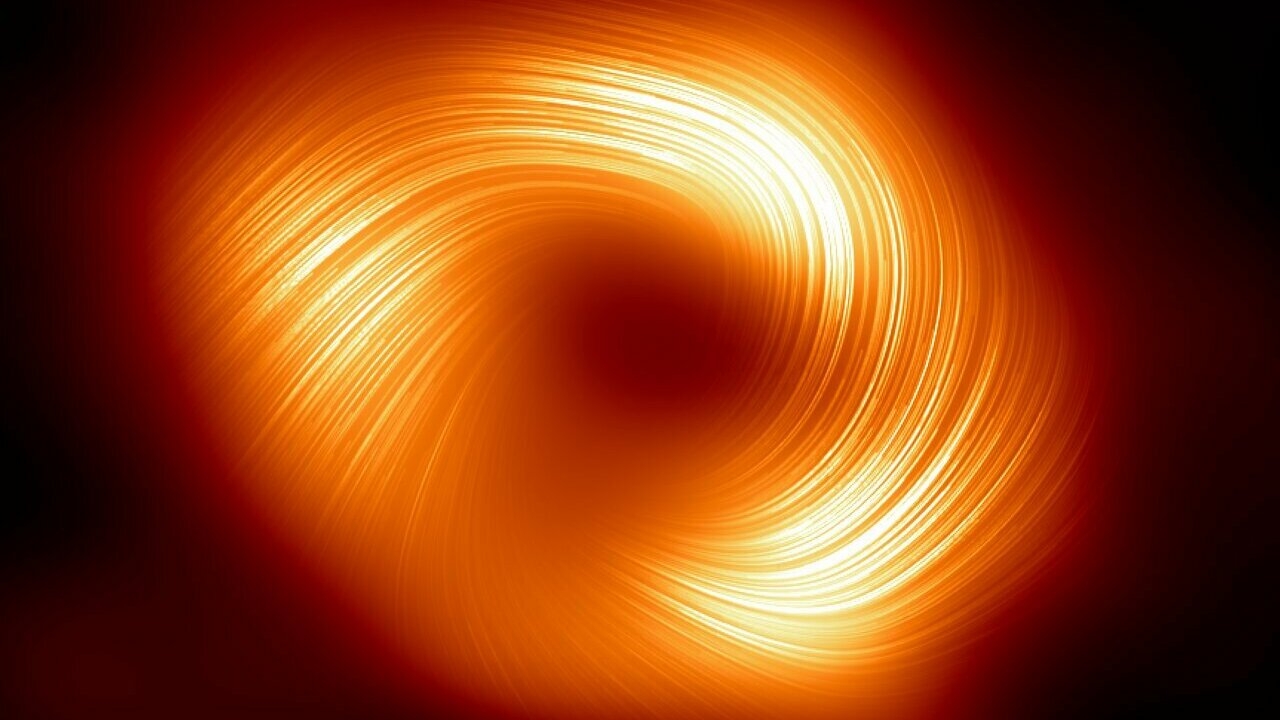
The Event Horizon Telescope (EHT) collaboration has discovered strong magnetic fields spiraling around the supermassive black hole at the center of the Milky Way, named Sagittarius A* (Sgr A*). By studying Sgr A* in polarized light, astronomers have found similarities with the much larger black hole at the center of the Messier 87 galaxy (M87*), suggesting universal processes among supermassive black holes. The findings, reported in two papers, provide insights into the interaction of black holes with surrounding matter and will refine theoretical models. The EHT is scheduled to observe Sgr A* again with more telescopes participating, allowing for observations in more frequencies.
The Event Horizon Telescope collaboration has released a mesmerizing new image of the Sagittarius A* black hole at the center of the Milky Way, showing its strong, twisted, and organized magnetic fields in unprecedented detail. The polarized light image reveals a striking spiral structure, similar to a doughnut with swirls, and offers a new view of the black hole's magnetic field. Comparisons with the M87* black hole suggest that strong and ordered magnetic fields are critical to how black holes interact with the gas and matter around them.
A new image of the supermassive black hole at the center of the Milky Way reveals a spiraling magnetic field, suggesting structural similarities with the black hole at the heart of the M87 galaxy. The image, captured by the Event Horizon Telescope, indicates that strong and organized magnetic fields are critical to how black holes interact with surrounding gas and matter. The findings may hint at the potential for a hidden jet of activity from Sagittarius A*, similar to the one observed in M87.
The Event Horizon Telescope has captured a new polarized image of the supermassive black hole at the center of the Milky Way, revealing powerful magnetic fields spiraling from its edge. This image, detailed in two new papers, resembles the previously captured image of the larger black hole M87*. The EHT uses interferometry to combine light captured at different locations, and technological advancements have enabled the imaging of black holes, including the one at the center of the elliptical galaxy Messier 87. The recent image of Sagittarius A* provides insight into the behavior of black holes and their interaction with matter and magnetic fields.
Scientists have discovered that the supermassive black hole at the center of our galaxy, Sagittarius A*, is spinning at an extremely high rate, influencing its surroundings in significant ways. The rapid spin affects the formation of powerful jets of material and warps the fabric of spacetime around it. This discovery has far-reaching implications for understanding how black holes form, grow, and interact with their surroundings, as well as for testing theories of gravity in extreme environments.
The discovery of Sagittarius A*, the supermassive black hole at the center of the Milky Way, was made by astronomers using radio astronomy in the 1970s. Initially named Sagittarius A, it was later renamed Sagittarius A* due to its exciting nature. Over the years, observations of stars orbiting near Sagittarius A* confirmed its black-hole candidacy, and in 2022, the first image of the black hole was published, revealing a fuzzy reddish-orange accretion disk encircling a central blob of ethereal blackness.
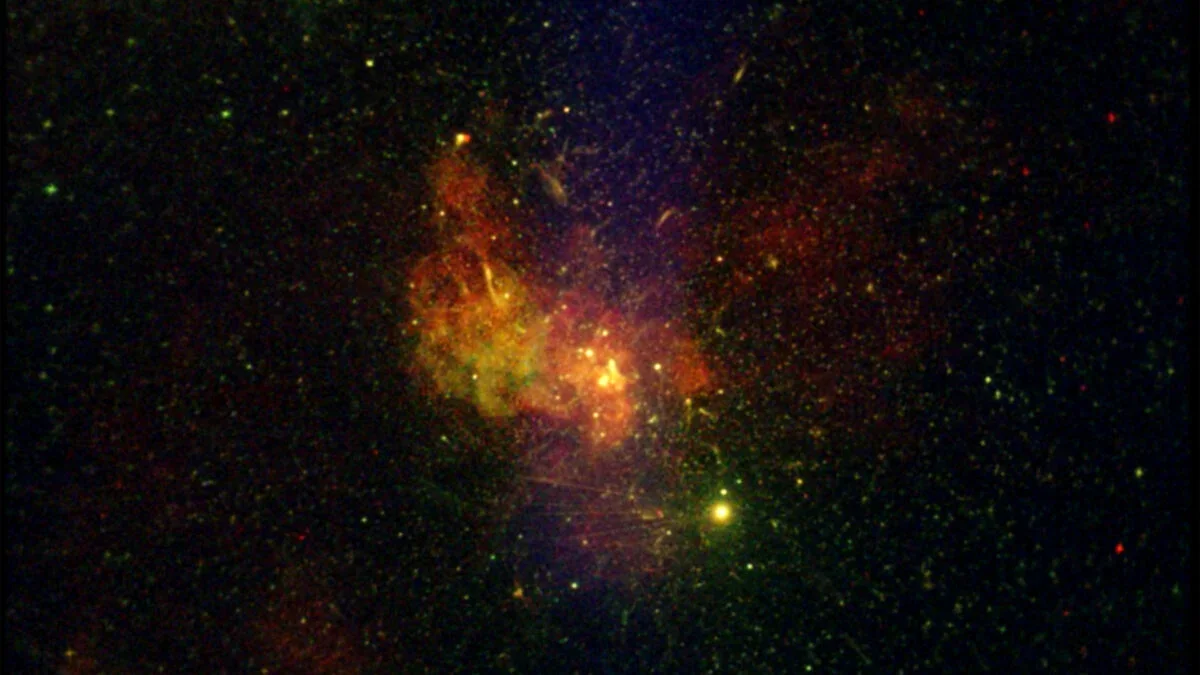
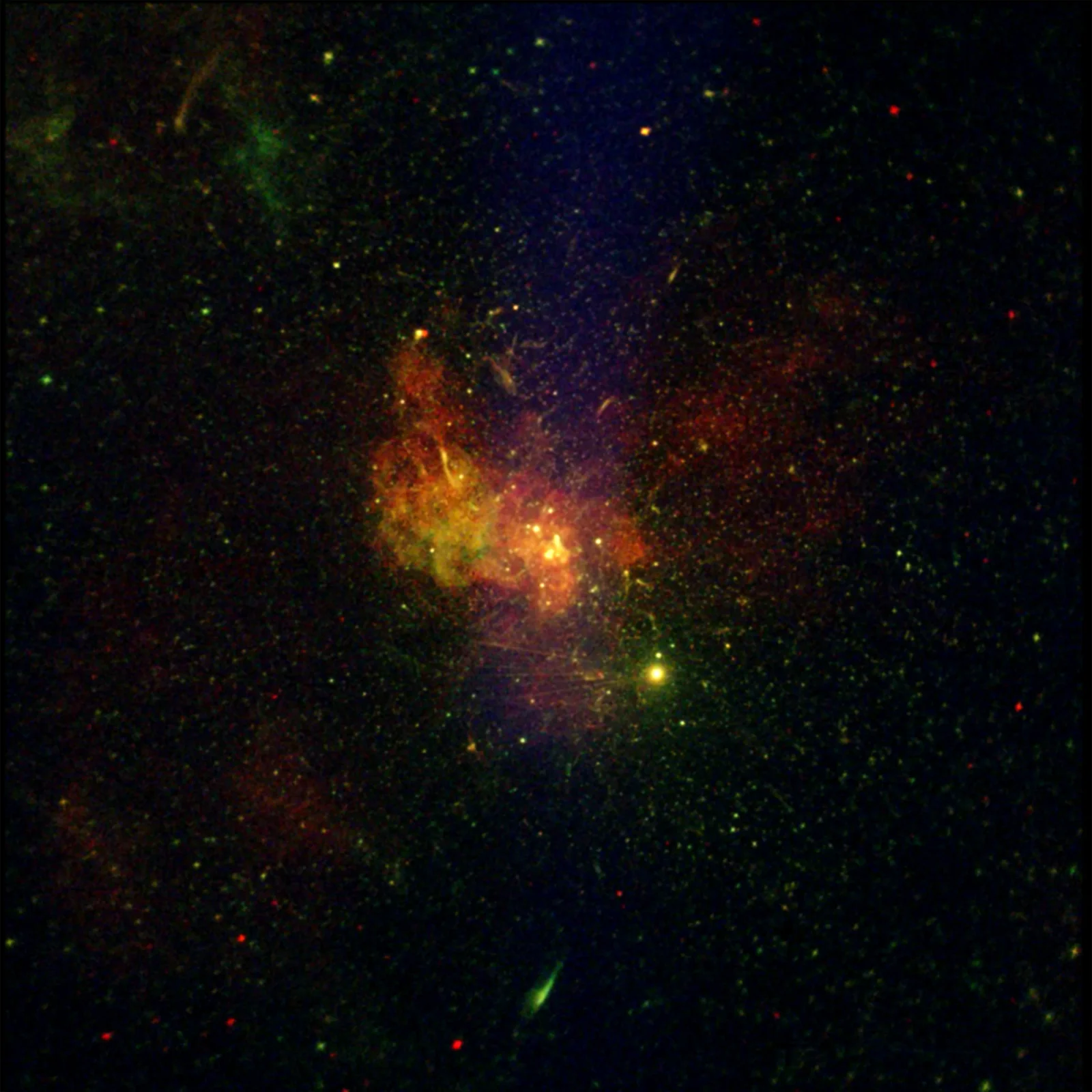
Telescopes have revealed that the supermassive black hole at the center of our galaxy, Sagittarius A*, is spinning rapidly, warping spacetime into the shape of an American football. This discovery was made using NASA’s Chandra X-ray Observatory and NSF’s Very Large Array, and suggests that the black hole is spinning at about 60% of the maximum possible rate. The high spin is causing the spacetime around the black hole to be squashed down, potentially leading to increased activity if more material accumulates near the black hole.
Telescopes have revealed that the supermassive black hole at the center of the Milky Way, known as Sagittarius A*, is spinning so rapidly that it is warping spacetime into a football-like shape. This discovery, made using data from NASA's Chandra X-ray Observatory and the National Science Foundation's Karl G. Jansky Very Large Array, suggests that the black hole is ready to produce more powerful outflows if the amount of material in its vicinity increases, potentially affecting the formation of stars in the galaxy. The study, published in the Monthly Notices of the Royal Astronomical Society, provides new insights into the behavior of supermassive black holes.