Apple researchers have developed UniGen-1.5, a unified AI model capable of understanding, generating, and editing images within a single system, enhancing previous models with new editing capabilities and improved instruction alignment, achieving state-of-the-art performance on various benchmarks, though it still faces challenges with text generation and identity consistency.
Google's new Gemini 3 Flash AI model is faster and more cost-effective than previous models, achieving high reasoning scores and outperforming Gemini 2.5 Pro in speed, with applications in search, customer support, and everyday tasks.
Google removed its AI model Gemma from a developer platform after US Senator Marsha Blackburn accused it of fabricating criminal allegations against her, highlighting concerns over bias and misinformation in AI tools. Google acknowledged hallucinations as a known issue and clarified that Gemma is intended for developers and researchers, not general consumer use.
Google's Gemini 2.5 Computer Use model, now in preview, can interact with web and mobile interfaces for tasks like browsing, clicking, and typing, demonstrating strong performance in web and Android environments, and is used for UI testing and workflow automation.
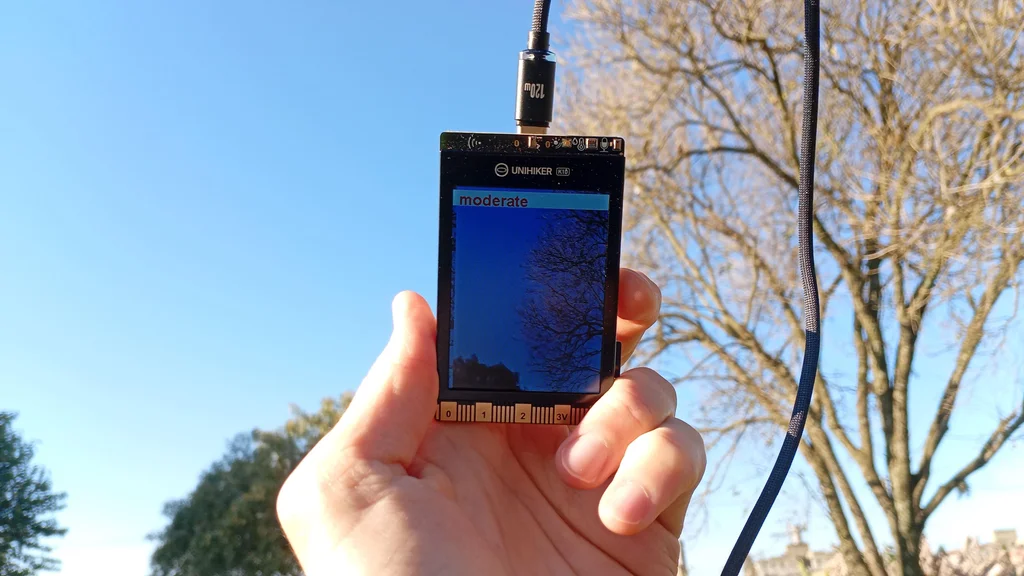
A researcher has developed a low-cost air quality estimation system using a microcontroller with a camera and a trained AI model to analyze sky images, offering a novel approach that complements traditional sensors, though with some limitations in accuracy.
Claude Sonnet 4.5 is a state-of-the-art AI coding model that significantly improves reasoning, math, and computer use capabilities, with extensive safety and alignment enhancements, new features like checkpoints and a SDK for building AI agents, and broad applications across software development, legal, financial, and creative tasks.
DeepSeek's R1 AI model, designed for reasoning tasks like math and coding, was trained cost-effectively at around $294,000 using reinforcement learning without copying from other LLMs, and has undergone peer review, setting a new standard for transparency and innovation in AI development.
A new AI model has been developed that can predict susceptibility to over 1,000 diseases, potentially revolutionizing personalized medicine and early diagnosis.
A new AI-based model suggests that multiple sclerosis (MS) should be viewed as a continuous disease spectrum rather than distinct subtypes, potentially improving disease management and treatment access by focusing on individual disease states rather than traditional categories.
OpenAI has released GPT-5 to all ChatGPT users, claiming it is a significant leap in AI capabilities, being smarter, faster, and more reliable than previous models, with improved coding, reasoning, and safety features, bringing it closer to general intelligence. The model offers customization options and is designed to reduce hallucinations and improve trust, although it still lacks continuous learning.
OpenAI has launched GPT-5, the latest and fastest version of its AI model powering ChatGPT, which is now free for all users and offers improved multimodal capabilities and vibe coding, marking a significant step towards artificial general intelligence (AGI).
OpenAI is nearing the release of GPT-5, a highly capable AI model expected in August that aims to unify its existing model series, enhance reasoning and coding abilities, and will be followed by an open-weights version for broader access after additional safety testing.
Apple-supported research introduces WBM, a model trained on behavioral data from wearables that can predict health conditions with up to 92% accuracy, outperforming traditional sensor-based models in many tasks by focusing on higher-level behavioral metrics rather than raw sensor signals.
Apple released an open-source AI model called DiffuCode-7B-cpGRPO that uses a diffusion-based approach for code generation, allowing faster and more globally coherent code output by generating out of order and refining multiple chunks simultaneously, building on Alibaba's foundation model and recent research in diffusion architectures.
A new AI model trained on noisy telescope data suggests the supermassive black hole at our galaxy's center, Sagittarius A*, is spinning at nearly top speed and its rotational axis points toward Earth, but experts caution that the data quality may affect the accuracy of these findings.