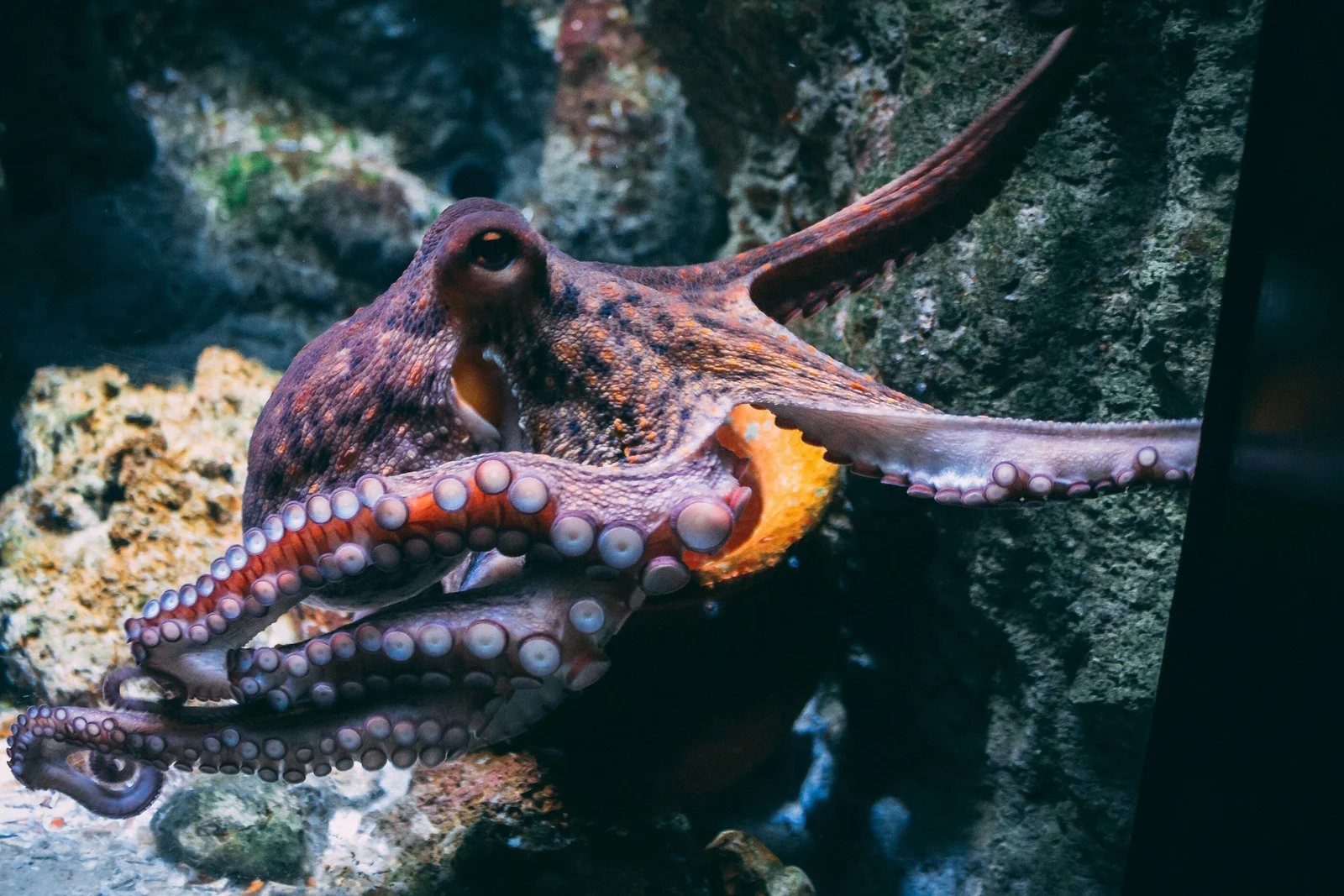
A recent study shows that octopuses, like humans, can be tricked by the rubber hand illusion, suggesting they possess a form of body awareness and self-modeling despite their vastly different neural architecture, challenging assumptions about consciousness in animals.
Research shows that octopuses can experience the rubber hand illusion, indicating they have a sense of body ownership similar to humans, which could provide insights into the evolution of self-perception and have applications in robotics and understanding neurological disorders.
Neurologists have discovered that stimulating the left temporoparietal junction (TPJ) in the brain can produce a strong feeling of a shadow presence, mimicking the movements of the person being stimulated. The TPJ is responsible for processing information on sound, language, body, touch, space, and visual information, and provides a simulation of where we are in space. Disrupting the TPJ's function can cause integration to become disintegration, leading to out-of-body experiences. The rubber hand illusion demonstrates the shakiness of our sense of body ownership, as synchrony of cues from what we see and feel can override everything else we know about where our hand actually is.