Researchers have developed a new method using quantum entanglement and blockchain technology to generate and verify truly random numbers, overcoming the limitations of traditional pseudo-random generators and enhancing security for applications like cryptography and public lotteries.
Researchers at MIT have demonstrated a technique for controlling and biasing the random energy fluctuations present in empty space, known as quantum fluctuations. By applying an external signal to interfere with these fluctuations, the researchers were able to bias the probability of the system settling into a specific state. This technique has potential applications in sensing, random number generation, and probabilistic optical computing. The researchers are also exploring the possibility of using the system's responsiveness to small electric fields for sensor applications.
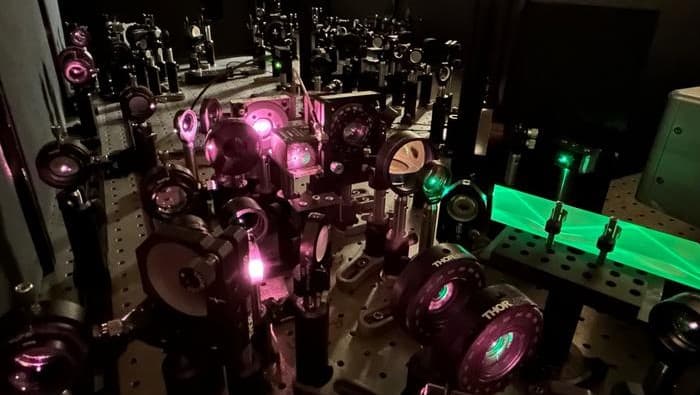
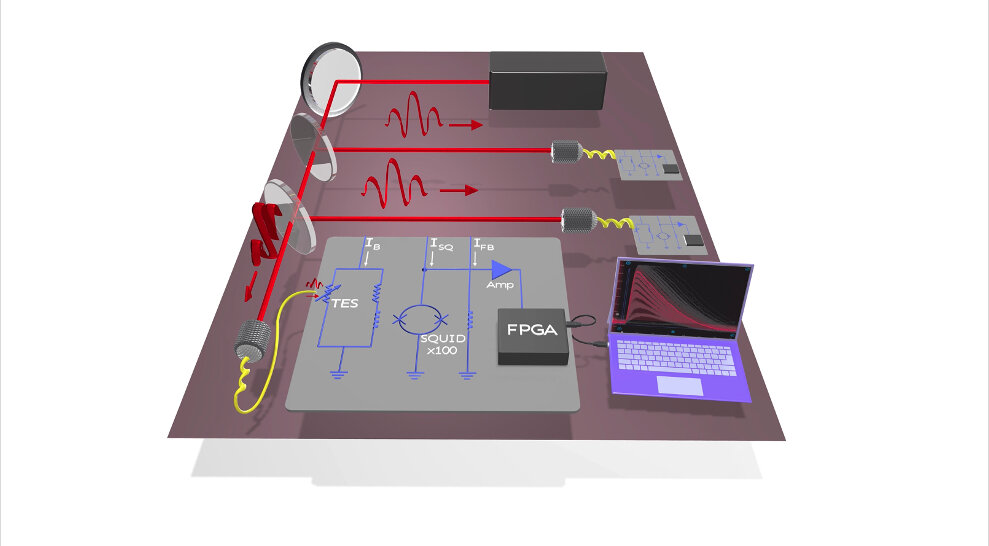
Researchers at the Thomas Jefferson National Accelerator Facility have designed a photon detection system that can accurately resolve more than 100 photons, a major step forward in capability for quantum computing development efforts. The system may also enable quantum generation of truly random numbers, a long-sought goal for developing unbreakable encryption techniques for applications in military communications and financial transactions. The team blew past the record of 16 photons and demonstrated a photon count of about 35 per single detector and reached 100 photons with a three-detector system.