Tag

Optical Computing

All articles tagged with #optical computing

Light-Based Computing Revolutionizes AI Efficiency and Innovation

Originally Published 4 months ago — by SciTechDaily

Featured image for Light-Based Computing Revolutionizes AI Efficiency and Innovation
Source: SciTechDaily

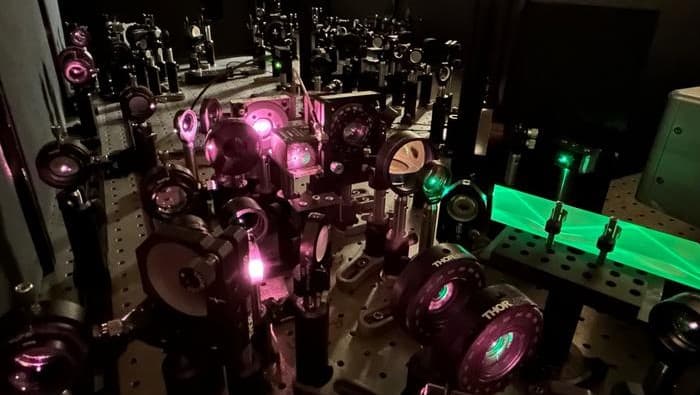
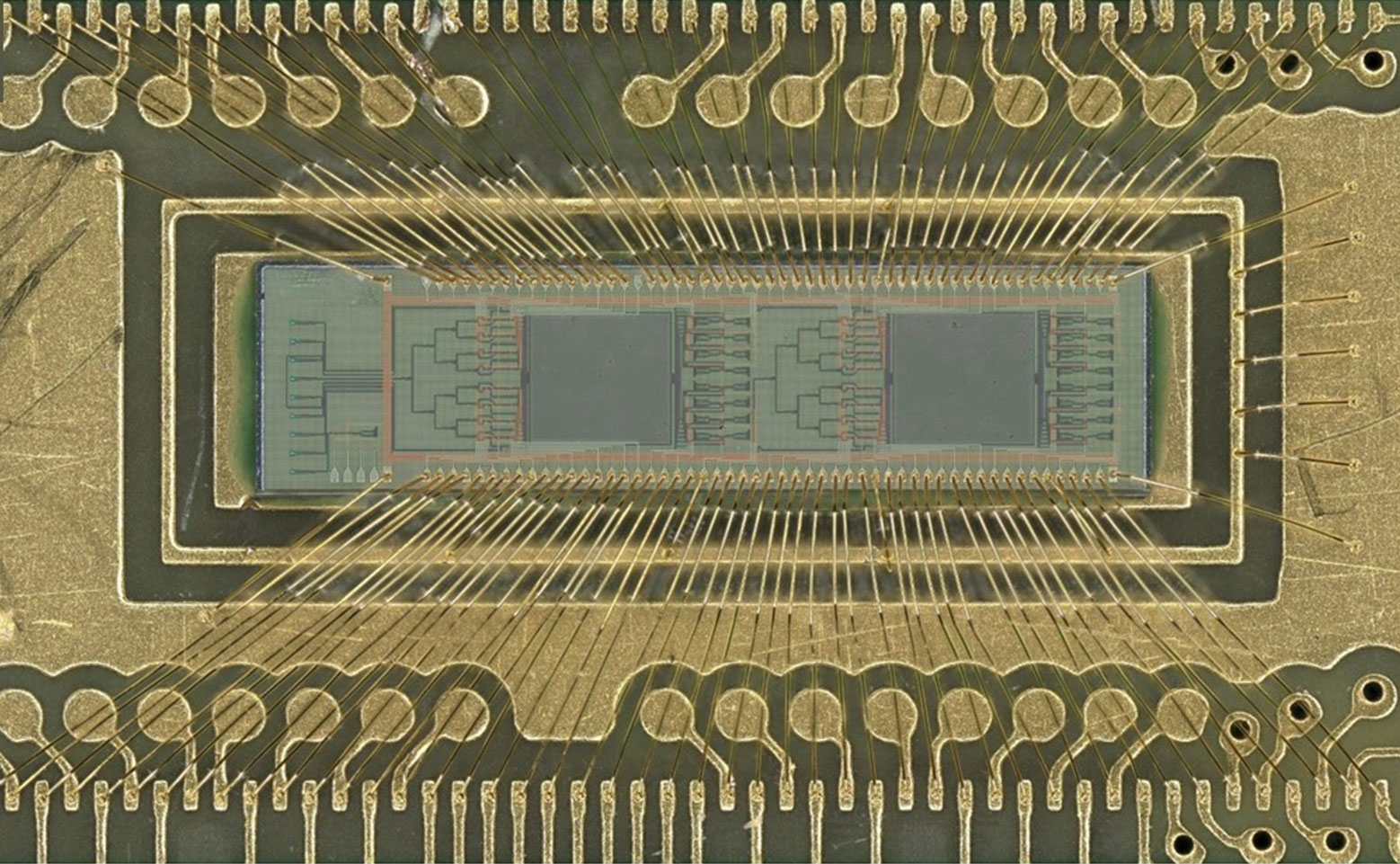
A new light-based AI chip significantly boosts efficiency—by 10 to 100 times—by using integrated lasers and tiny lenses for optical calculations, matching traditional performance while drastically reducing energy consumption, potentially transforming future AI hardware.

Groundbreaking Experiment Reveals Electromagnetic Waves on Collision Course

Originally Published 2 years ago — by SciTechDaily

Featured image for Groundbreaking Experiment Reveals Electromagnetic Waves on Collision Course
Source: SciTechDaily

Researchers at CUNY ASRC have discovered a method to manipulate photons so they can collide and interact using tailored metamaterials, leading to potential advancements in telecommunications, optical computing, and energy applications. By creating time interfaces, the scientists were able to demonstrate strong photon-photon interactions and control the nature of the collision. This breakthrough could pave the way for shaping electromagnetic pulses and bringing benefits to wireless communications, imaging, computing, and energy harvesting technologies.

Electromagnetic Waves Collide in Unprecedented Encounters

Originally Published 2 years ago — by Phys.org

Featured image for Electromagnetic Waves Collide in Unprecedented Encounters
Source: Phys.org

Researchers at the CUNY Graduate Center have discovered a way to manipulate photons so that they can collide and interact with each other, similar to how massive objects collide. By creating time interfaces in tailored metamaterials, the scientists were able to control the nature of the collision and whether the waves exchanged, gained, or lost energy. This breakthrough has significant implications for telecommunications, optical computing, and energy applications, allowing for advancements in wireless communications, imaging, computing, and energy harvesting technologies.

Breakthrough: Controlling Quantum Fluctuations and Unveiling Quantum Superchemistry

Originally Published 2 years ago — by physicsworld.com

Featured image for Breakthrough: Controlling Quantum Fluctuations and Unveiling Quantum Superchemistry
Source: physicsworld.com

Researchers at MIT have demonstrated a technique for controlling and biasing the random energy fluctuations present in empty space, known as quantum fluctuations. By applying an external signal to interfere with these fluctuations, the researchers were able to bias the probability of the system settling into a specific state. This technique has potential applications in sensing, random number generation, and probabilistic optical computing. The researchers are also exploring the possibility of using the system's responsiveness to small electric fields for sensor applications.

"Revolutionary Optical Computing: Unveiling the Invisible"

Originally Published 2 years ago — by SciTechDaily

Featured image for "Revolutionary Optical Computing: Unveiling the Invisible"
Source: SciTechDaily

Researchers have made a breakthrough in decoding the information carried by light passing through a scattering medium like ground glass. By representing the optical input-output response of a nonlinear scattering medium with a third-order tensor, they have opened up possibilities for optical computing and machine learning applications. This discovery enables optical encryption and the implementation of all-optical logic gates, offering enhanced security and potential advantages over traditional silicon-based logic. The research has the potential to revolutionize the fields of optical computing and machine learning.

Quantum light manipulation enables record-breaking optical switching and beam-steering.

Originally Published 2 years ago — by Phys.org

Featured image for Quantum light manipulation enables record-breaking optical switching and beam-steering.
Source: Phys.org

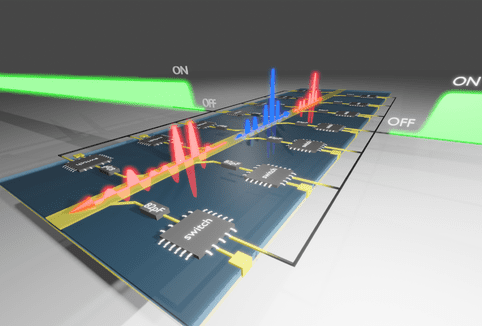
Researchers at the University of Arizona have published an article in Science Advances discussing the use of light-based optical computing to develop ultrafast electronics. The team used all-optical switching of a light signal on and off to reach data transfer speeds exceeding a petahertz, measured at the attosecond time scale. This new advancement would allow the encoding of data on ultrafast laser pulses, increasing the data transfer speed and opening a new realm of information technology.

Physicists demonstrate time reflection in microwaves for the first time.

Originally Published 2 years ago — by physicsworld.com

Featured image for Physicists demonstrate time reflection in microwaves for the first time.
Source: physicsworld.com

Physicists in the US have observed time reflection in an electromagnetic wave for the first time, using a novel type of metamaterial. The result could improve wireless communication and ultimately help bring about long-sought-after optical computing. The analogue nature of this time reversal mechanism could lead to a number of applications, including combating distortion in a wireless data channel and a new generation of analogue optical computers. The research is published in Nature Physics.

Physicists Successfully Demonstrate Time Reflections of Electromagnetic Waves

Originally Published 2 years ago — by SciTechDaily

Featured image for Physicists Successfully Demonstrate Time Reflections of Electromagnetic Waves
Source: SciTechDaily

Scientists have conducted a groundbreaking experiment demonstrating the time reflection of electromagnetic waves, which has potential implications for wireless communications and optical computing. The experiment used a tailored metamaterial to observe time reflections of electromagnetic signals, causing a significant portion of the broadband signals traveling in the metamaterial to be instantaneously time reversed and frequency converted. The researchers also demonstrated that the duration of the time-reflected signals was stretched in time due to broadband frequency conversion. The achievement can pave the way for exciting applications in wireless communications and for the development of small, low-energy, wave-based computers.