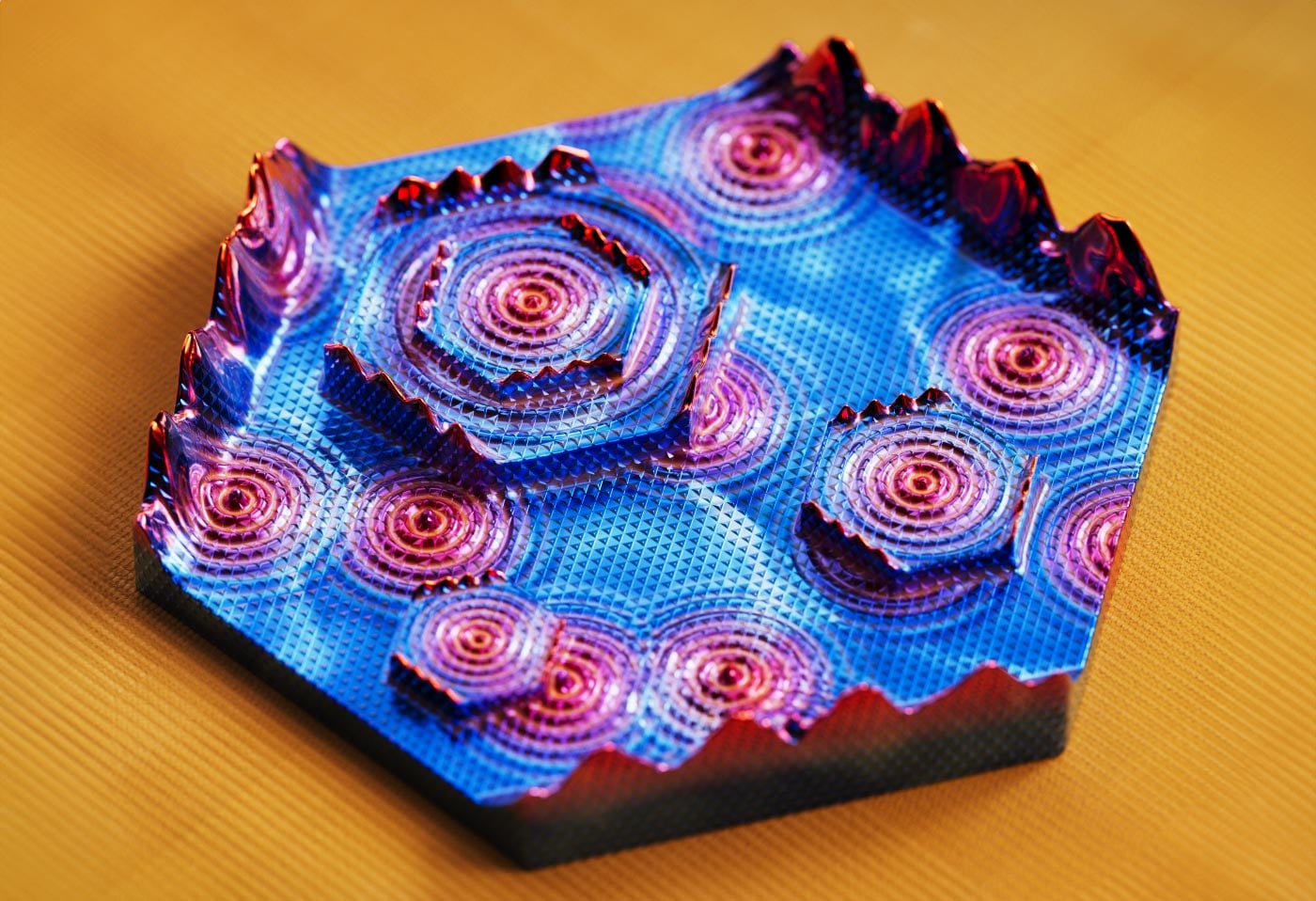
Physicists at Princeton University have discovered a new quantum state, "hybrid topology," in arsenic crystals, merging edge and surface states in a unique quantum behavior. This groundbreaking finding, published in Nature, has significant implications for developing new quantum devices and technologies. The discovery opens up possibilities for engineering new topological electron transport channels and designing future nanodevices and spin-based electronics. The observation of the combined topological edge mode and the surface state may enable the development of quantum information science and quantum computing devices. This finding also paves the way for potential applications in quantum technologies and "green" technologies.
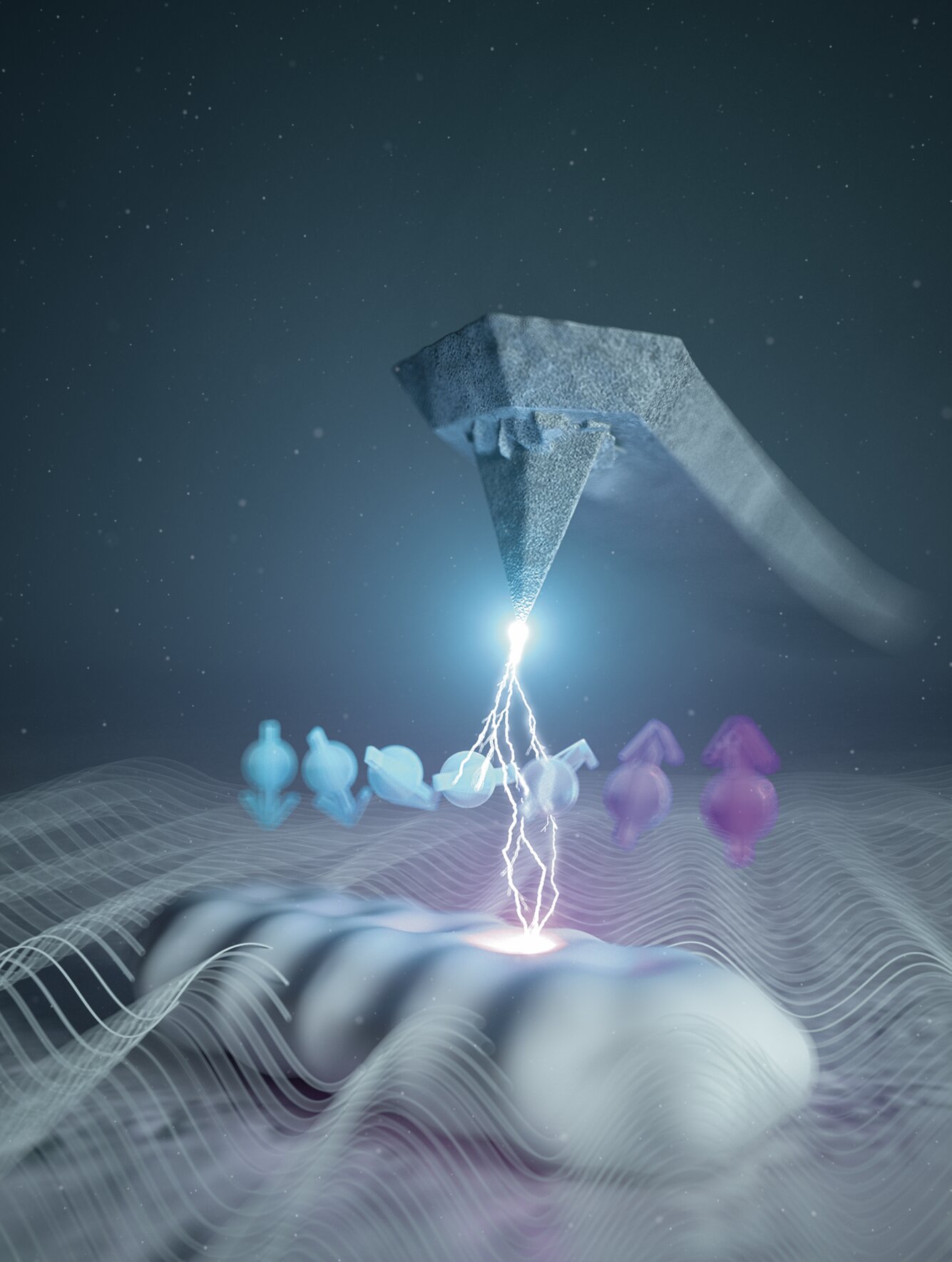
Physicists at the University of Regensburg have developed a novel microscope that can manipulate the quantum state of individual electrons using atomic force microscopy. By integrating electron spin resonance into the microscope, they can detect the quantum state of single molecules, allowing for the determination of their composition and the manipulation of electron spin. This technique has potential applications in quantum computing and understanding decoherence at the atomic scale.
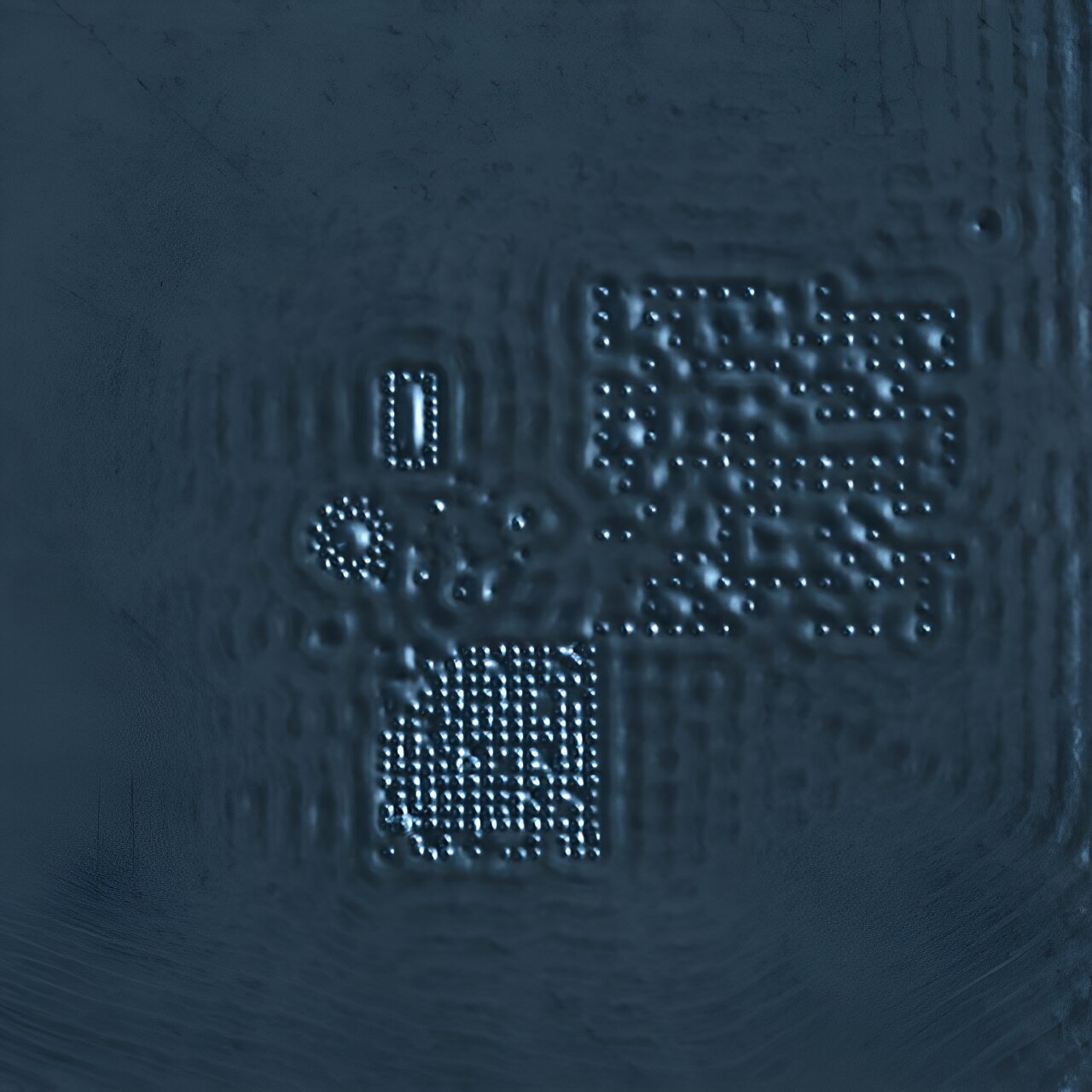
Researchers from the Department of Physics at Universität Hamburg have successfully observed a quantum state predicted over 50 years ago by Japanese theoreticians. By creating an artificial atom on a superconductor surface, the researchers paired electrons in a quantum dot, resulting in the smallest version of a superconductor. This breakthrough has implications for the development of nanoscale electronic devices and quantum computers.
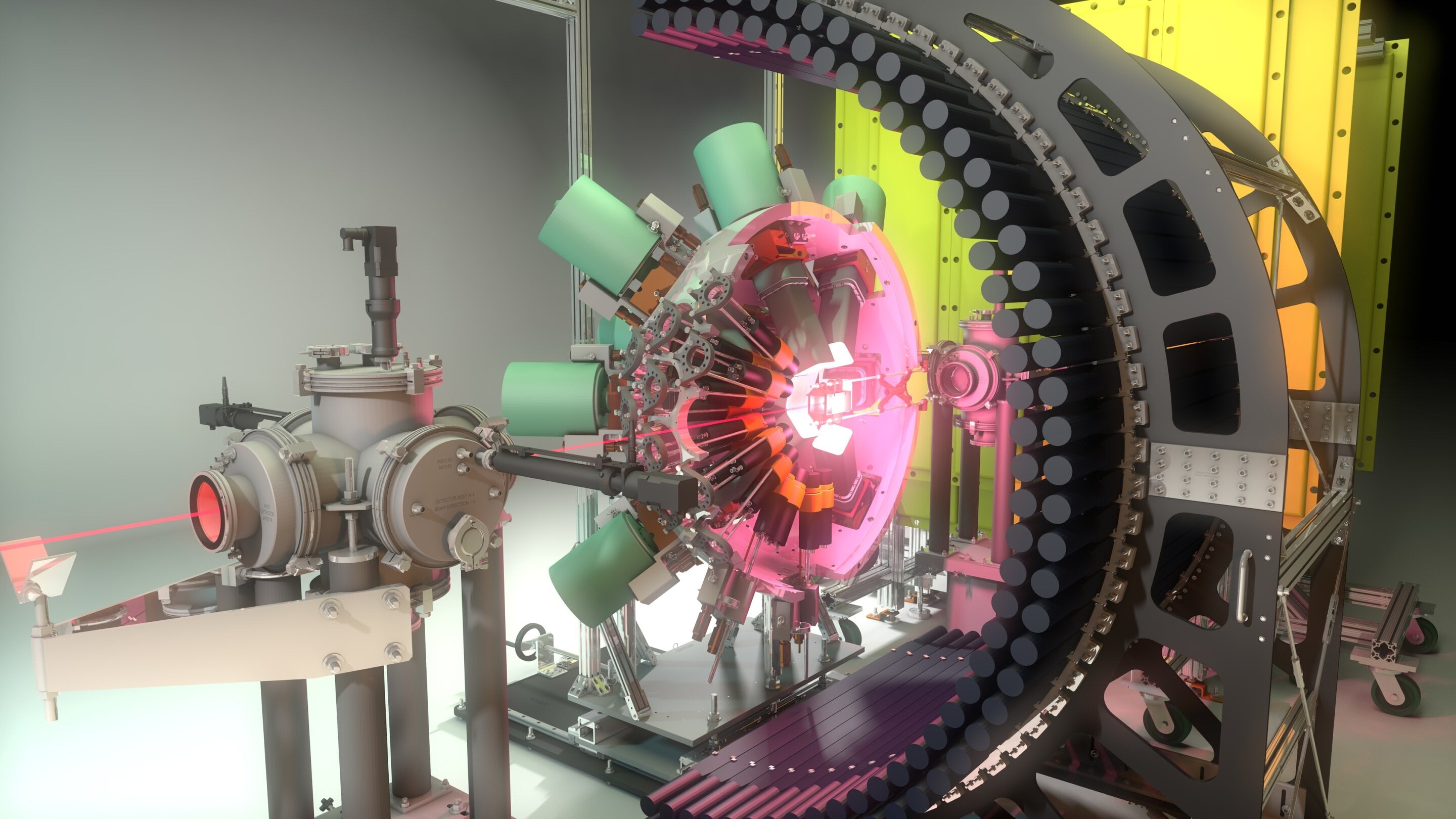
Researchers at Oak Ridge National Laboratory have discovered a long-lived excited state of radioactive sodium-32, which challenges our understanding of nuclear shapes and energy levels. The unexpected finding raises questions about how nuclei evolve and interact, and could have implications for our understanding of nuclear physics and the formation of elements. The discovery was made using data collected from the Facility for Rare Isotope Beams (FRIB) at Michigan State University, and further experiments are planned to determine the shape of the excited state.
Researchers have observed "quantum superchemistry" for the first time, where atoms or molecules in the same quantum state chemically react more rapidly than those in different quantum states. By coaxing entire molecules into the same quantum state, the researchers observed collective chemical reactions that occurred more quickly with a greater density of atoms. This discovery could have applications in quantum chemistry and computing, as molecules in the same quantum state share physical and chemical properties. The next step is to attempt quantum superchemistry with more complex molecules.
Researchers have observed "quantum superchemistry" for the first time, where atoms or molecules in the same quantum state chemically react more rapidly than those in different states. By coaxing entire molecules into the same quantum state, the researchers observed collective chemical reactions that occurred more quickly with greater atom density. This discovery could have applications in quantum chemistry and computing, as molecules in the same quantum state share physical and chemical properties. The next step is to attempt quantum superchemistry with more complex molecules.
Researchers have observed "quantum superchemistry" for the first time, where atoms or molecules in the same quantum state chemically react more rapidly than those in different quantum states. By coaxing entire molecules into the same quantum state, the researchers observed collective chemical reactions that occurred more quickly with a higher density of atoms. This discovery could have applications in quantum chemistry and computing. The next step is to attempt quantum superchemistry with more complex molecules.
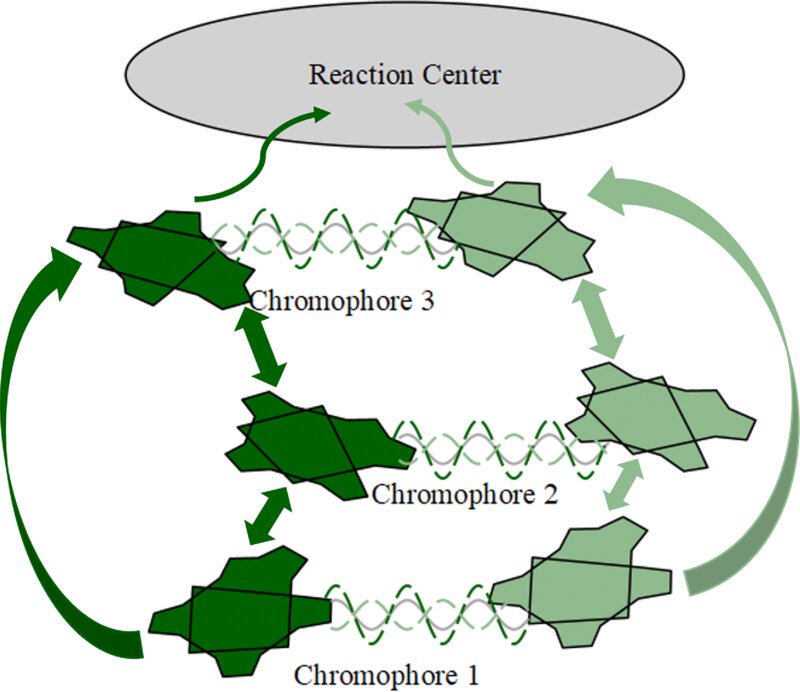
A new study from the University of Chicago has found links at the atomic level between photosynthesis and exciton condensates, a strange state of physics that allows energy to flow frictionlessly through a material. The study suggests that excitons in a leaf can sometimes link up in ways similar to exciton condensate behavior, which can enhance energy transfer in the system and double the efficiency. The findings open up new possibilities for generating synthetic materials for future technology.
Scientists from the University of Chicago have found links between photosynthesis and exciton condensates, a strange state of physics that allows energy to flow frictionlessly through a material. The study suggests that excitons in a leaf can sometimes link up in ways similar to exciton condensate behavior, which can enhance energy transfer in the system and double the efficiency. This finding may suggest new ways to think about designing electronics and generating synthetic materials for future technology.
Physicists at RIKEN Interdisciplinary Theoretical and Mathematical Sciences in Japan have identified a new quantum property called "magic," which measures the weirdness of spacetime and is strongly involved in the emergence of spacetime geometry. The team found that in a chaotic system, almost any state will evolve into one that is "maximally magical," the most difficult to simulate. This discovery could help explain the origin of spacetime and the chaotic characteristic of black holes.