Tag

Atomic Force Microscopy

All articles tagged with #atomic force microscopy

"New Insights Reveal Why Ice Is Incredibly Slippery"

Originally Published 1 year ago — by Phys.org

Featured image for "New Insights Reveal Why Ice Is Incredibly Slippery"
Source: Phys.org

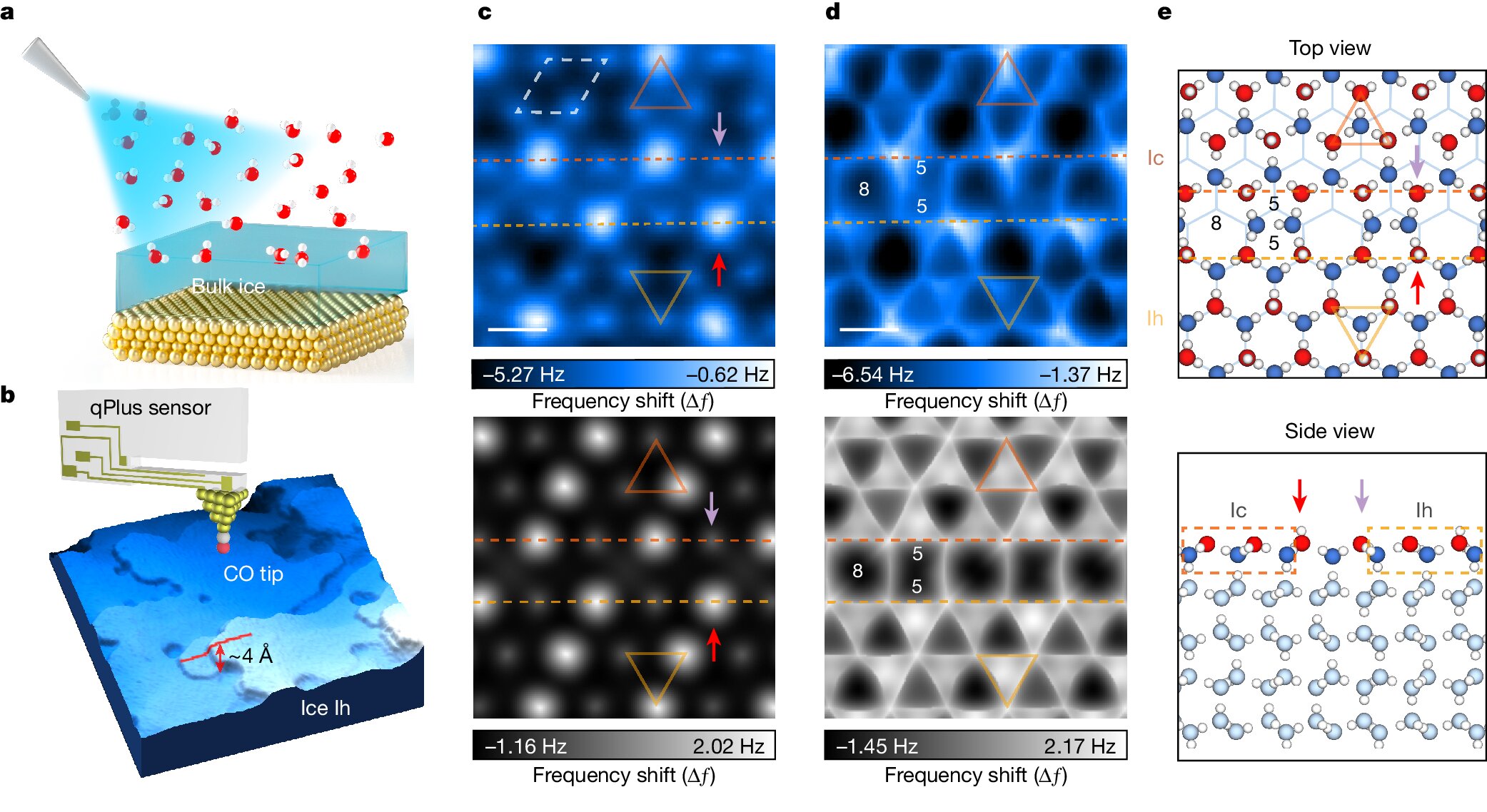
Chinese physicists used atomic force microscopy to reveal that ice's slipperiness is due to a disordered, liquid-like pre-melt coating on its surface, which acts as a lubricant. This discovery was made by examining the atomic structure of ice at extremely low temperatures, showing differences between internal hexagonal ice and the partially hexagonal surface ice.


"Revolutionizing Surface Profiling with AI-Powered Atomic Force Microscopy"

Originally Published 1 year ago — by SciTechDaily

Featured image for "Revolutionizing Surface Profiling with AI-Powered Atomic Force Microscopy"
Source: SciTechDaily

Researchers at the University of Illinois Urbana-Champaign have developed an AI technique that enhances the resolution of Atomic Force Microscopy (AFM), allowing it to visualize material features smaller than the probe’s tip. This breakthrough in nanoscale imaging promises to revolutionize nanoelectronics development and material studies by providing true three-dimensional profiles beyond conventional resolution limits. The deep learning algorithm removes the effects of the probe’s width from AFM microscope images, enabling microscopes to achieve higher resolution in material analysis. This advancement has the potential to significantly improve AFM images and pave the way for further developments in the field.

Advancements in Quantum Microscopy: Probing Single Electron Spins for Novel Applications

Originally Published 2 years ago — by Phys.org

Featured image for Advancements in Quantum Microscopy: Probing Single Electron Spins for Novel Applications
Source: Phys.org

Physicists at the University of Regensburg have developed a novel microscope that can manipulate the quantum state of individual electrons using atomic force microscopy. By integrating electron spin resonance into the microscope, they can detect the quantum state of single molecules, allowing for the determination of their composition and the manipulation of electron spin. This technique has potential applications in quantum computing and understanding decoherence at the atomic scale.

Unveiling Hidden Materials with Nanometrology

Originally Published 2 years ago — by Phys.org

Featured image for Unveiling Hidden Materials with Nanometrology
Source: Phys.org

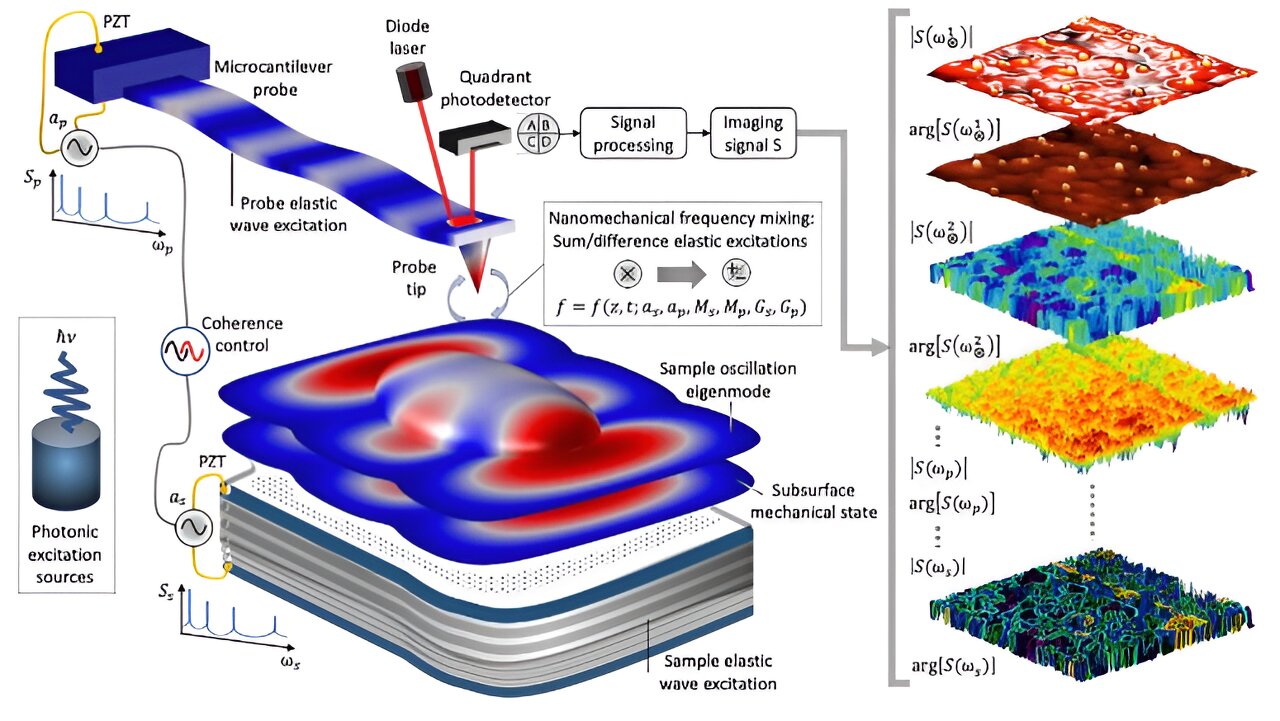
A new study published in Science Advances explores the field of subsurface nanometrology, focusing on internal measurements at the nanoscale level. The researchers suggest that quantum sensing techniques, such as using quantum probes, could revolutionize subsurface exploration. This could have applications in various fields, including targeted drug delivery, quantum computing, and characterizing quantum materials. The study highlights the need for new methods to peer inside materials while leaving them intact and emphasizes the potential of quantum science in achieving greater discoveries and understanding in sensing and imaging science.

Supercomputing Simulations Uncover Electron Orbital Signatures in Iron and Cobalt Atoms.

Originally Published 2 years ago — by Phys.org

Featured image for Supercomputing Simulations Uncover Electron Orbital Signatures in Iron and Cobalt Atoms.
Source: Phys.org

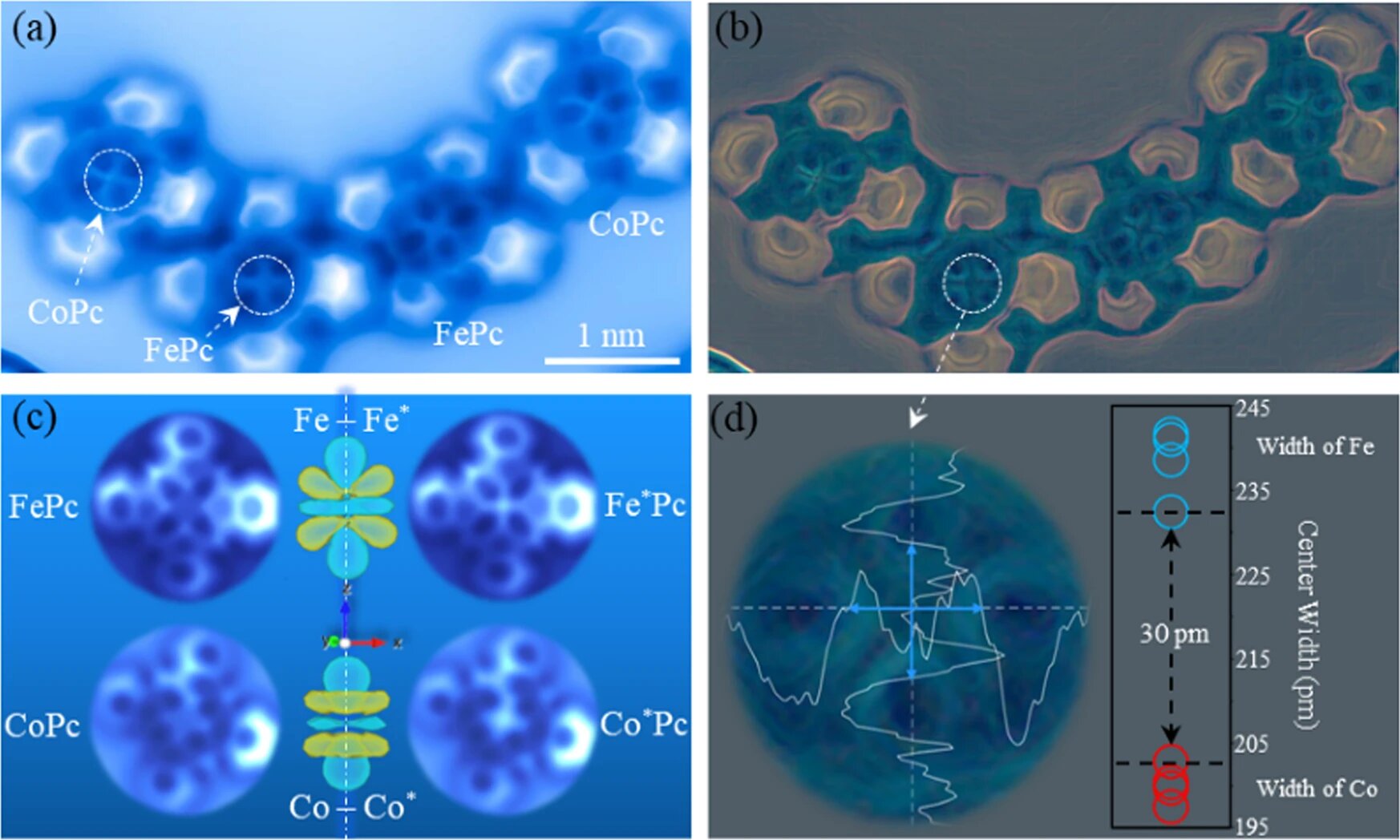
Scientists have used supercomputer simulations and atomic resolution microscopes to directly observe the signatures of electron orbitals in two different transition-metal atoms, iron (Fe) and cobalt (Co) present in metal-phthalocyanines. The signatures are apparent in the forces measured by atomic force microscopes, which often reflect the underlying orbitals and can be so interpreted. The study could help design and engineer new materials with specific properties, especially in fields such as materials science, nanotechnology, and catalysis.