Tag

Pulsar Wind Nebula

All articles tagged with #pulsar wind nebula

astronomy1 year ago

"Unveiling the Enigma: Probing the Nature of a Newly Found Very-High-Energy Source"

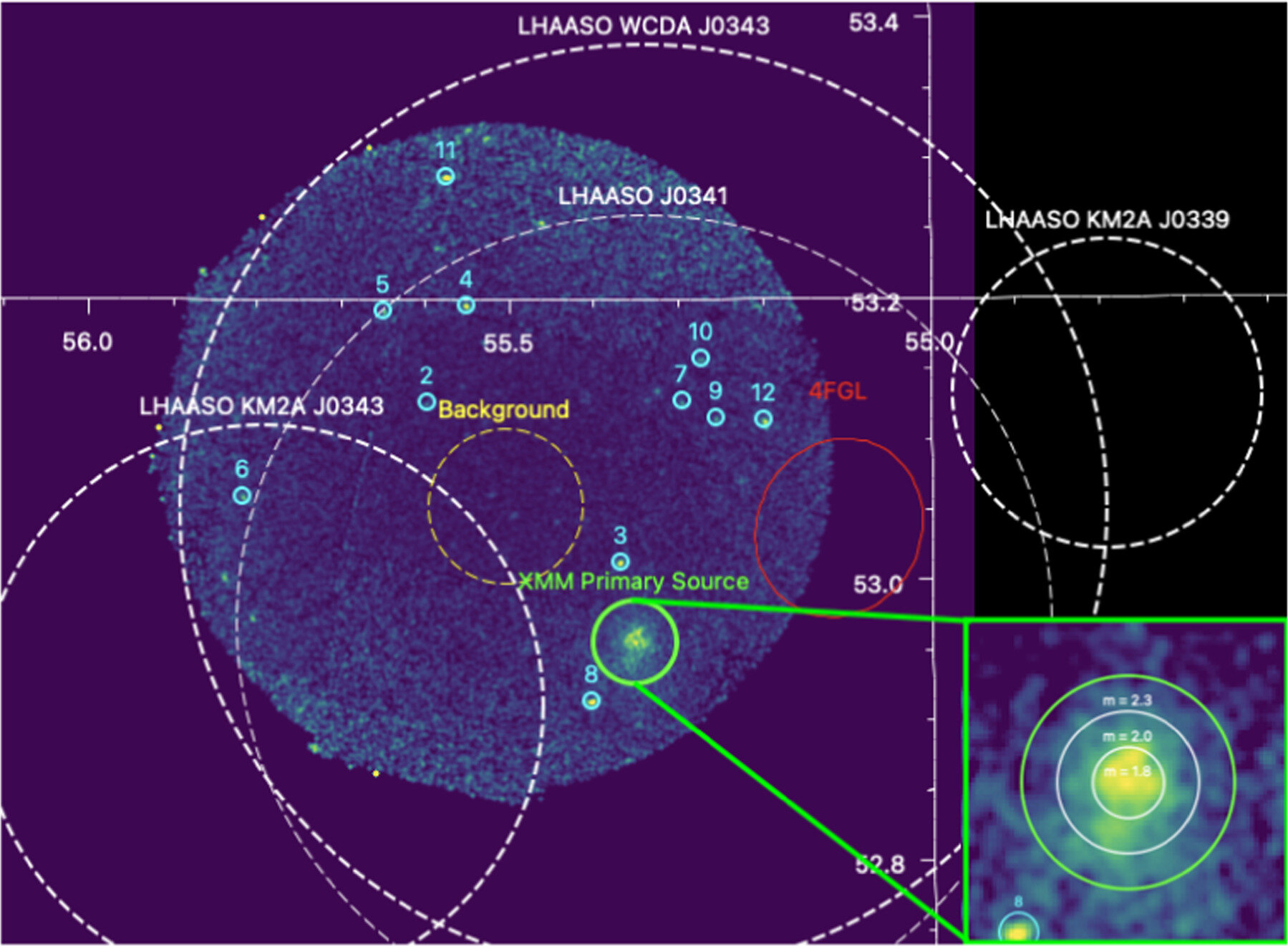
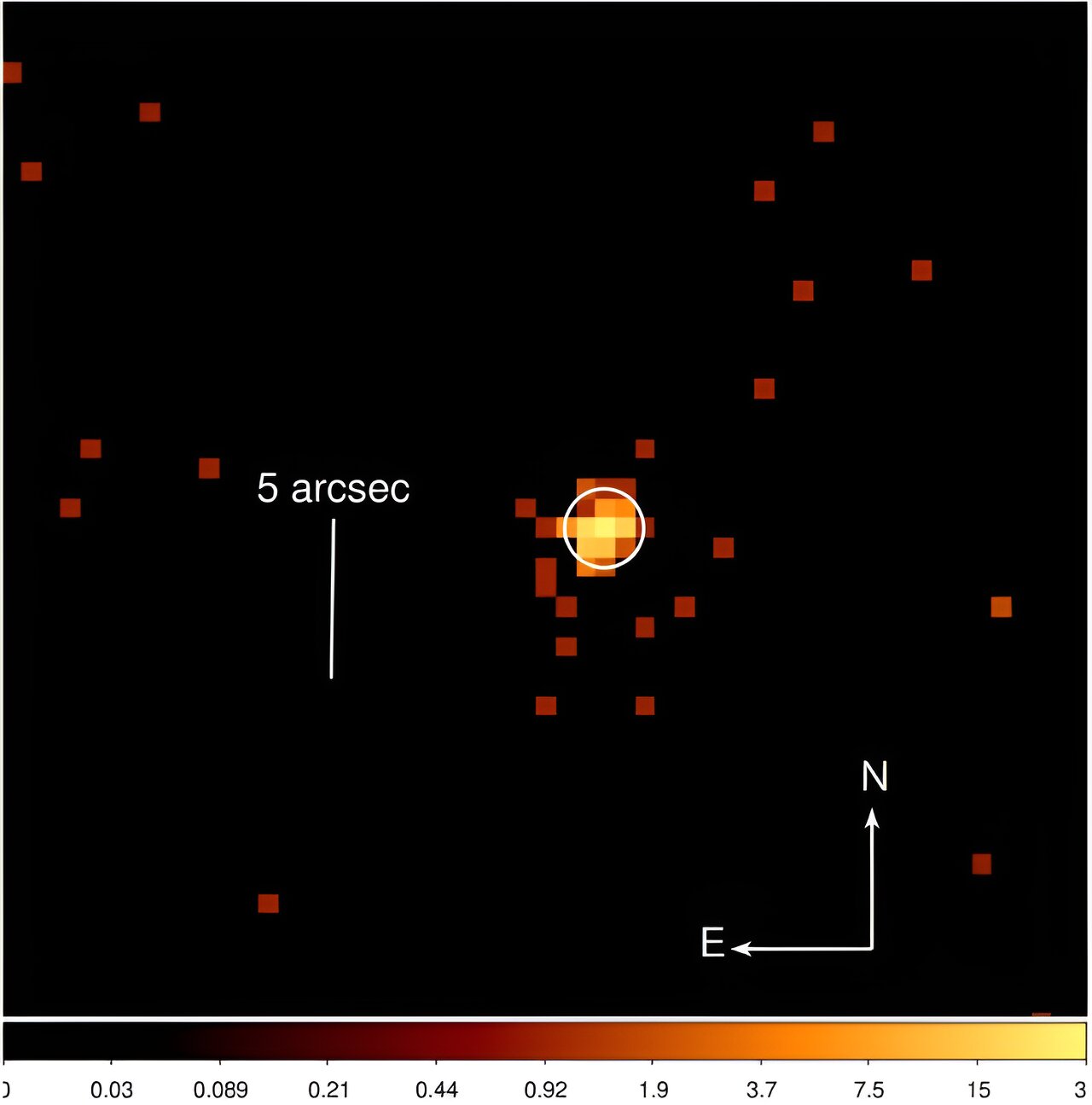
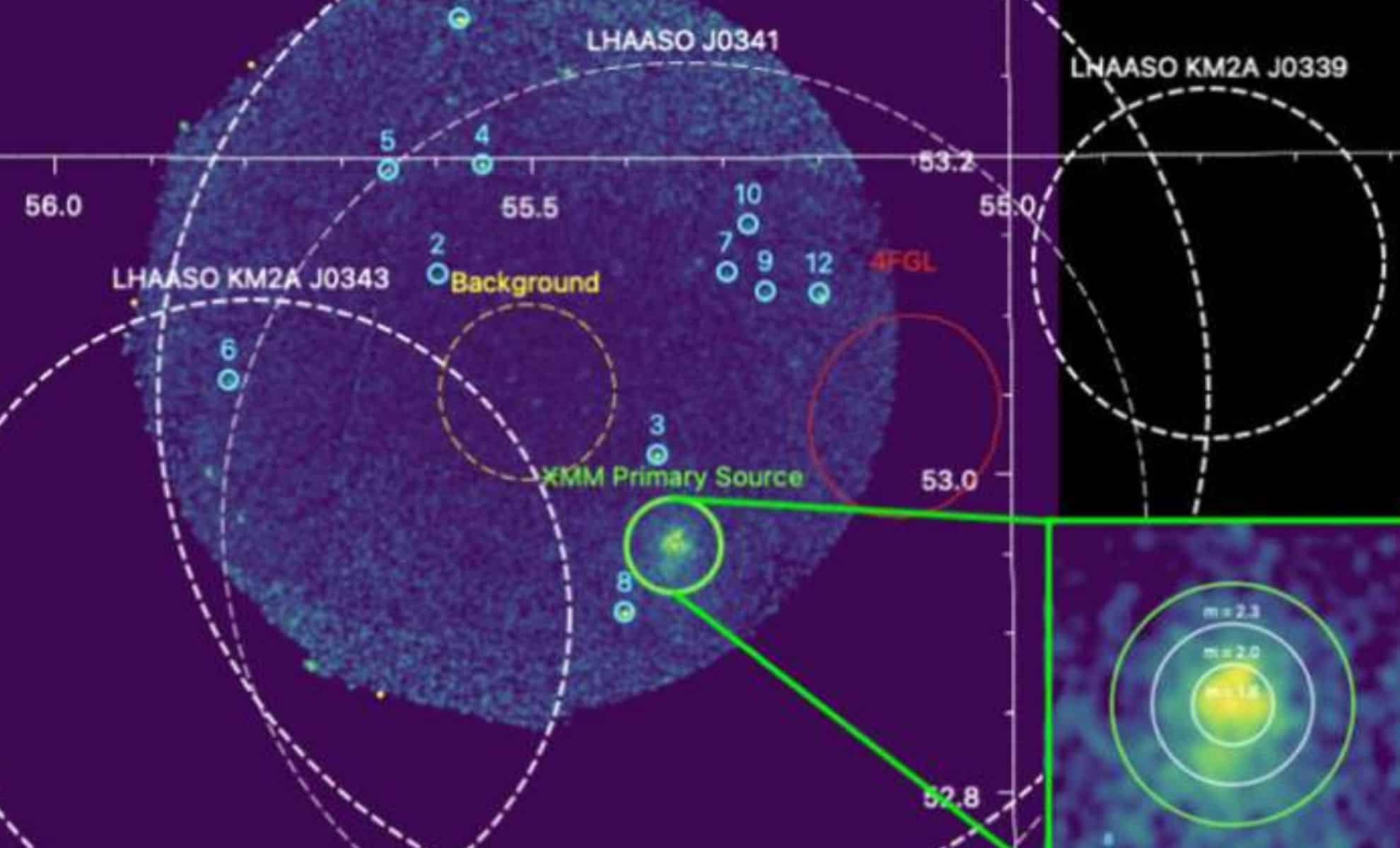
Astronomers have used XMM-Newton, Chandra, and NuSTAR space telescopes to investigate the nature of a newly-discovered very-high-energy source, 2FHL J1745.1–3035, and found that it may be a powerful pulsar wind nebula (PWN). The source, located near the Galactic center, exhibits hard gamma-ray spectrum and is a TeV emitter. Analysis of X-ray properties suggests that it is compact with extended emission, and its broadband X-ray spectrum is best-fitted with a broken power law model. If confirmed, this would be one of the hardest PWNe ever detected in X-rays and the hardest in gamma-rays.

astronomy2 years ago

Ghostly Cosmic Hand Unveiled by X-Ray Telescopes

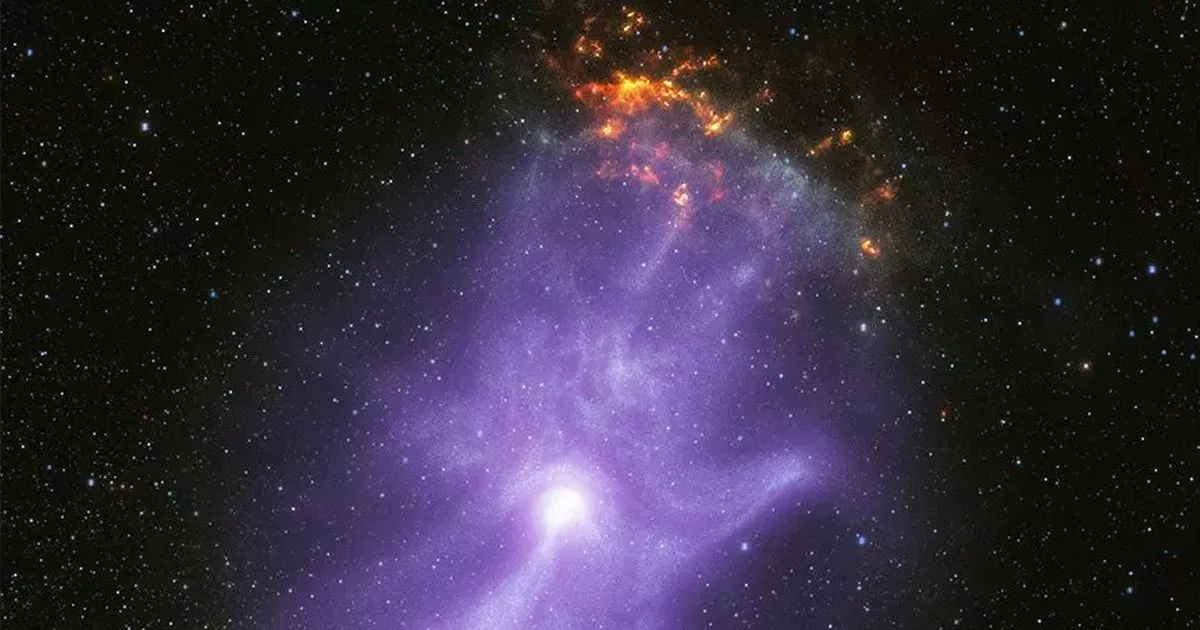
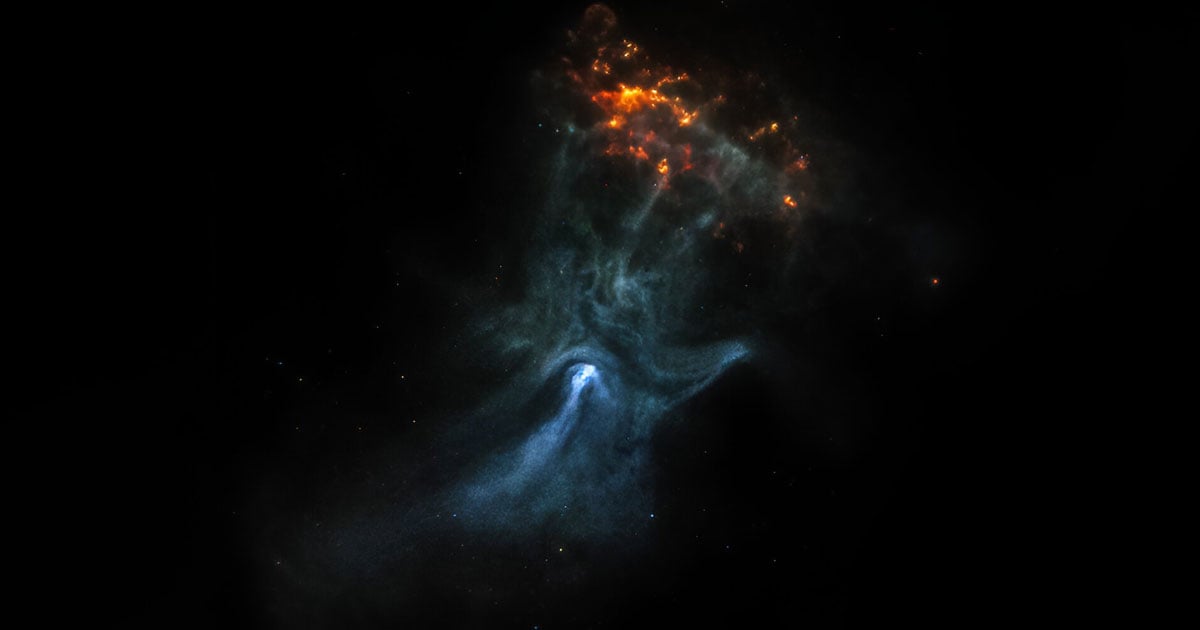
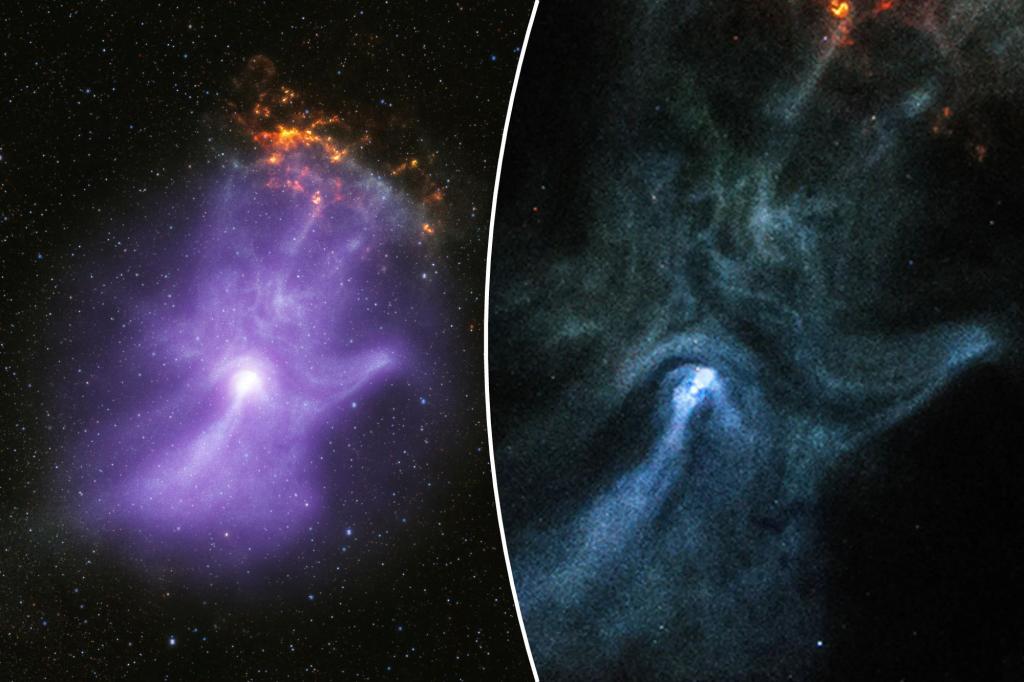
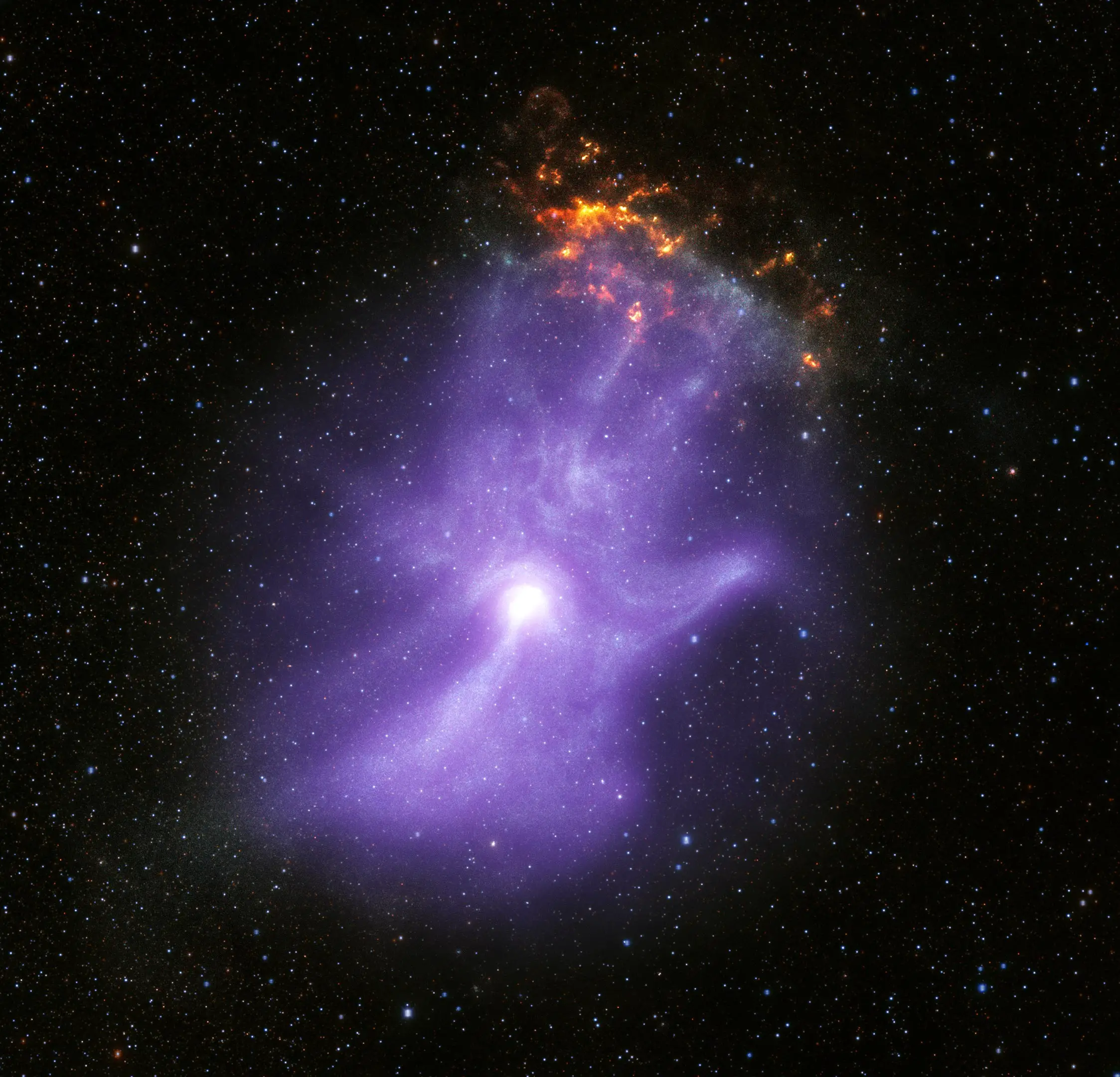
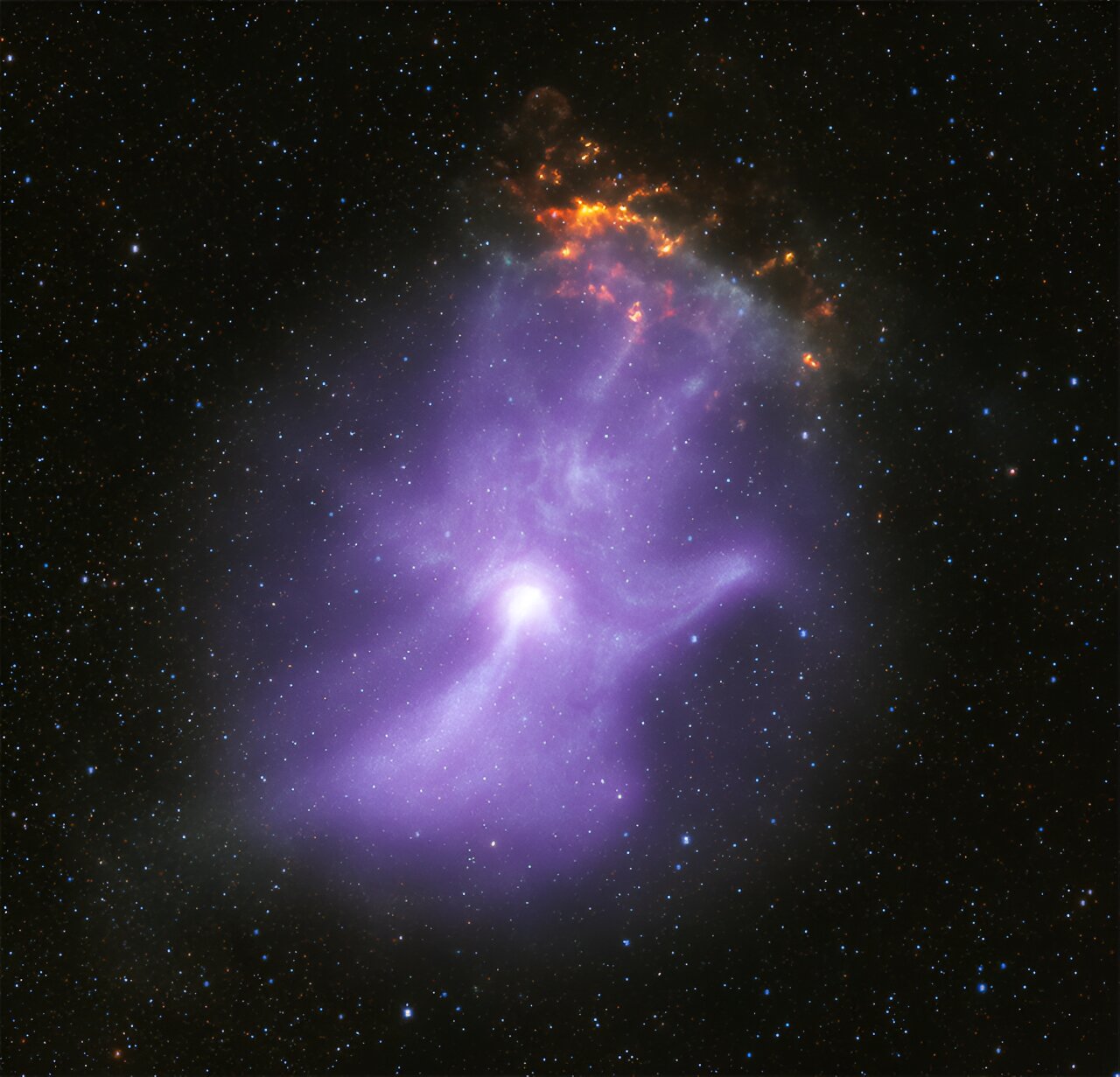
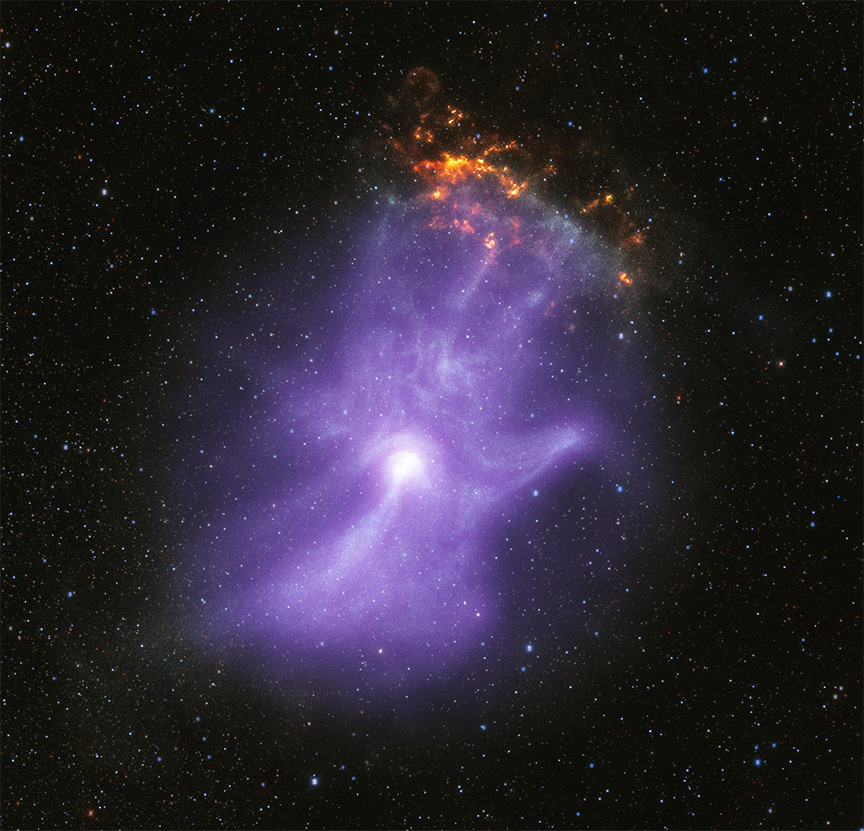
Astronomers using the Chandra X-ray Observatory and the Imaging X-ray Polarimetry Explorer (IXPE) have captured images of a ghostly hand-shaped pulsar wind nebula, known as MSH 15-52, located roughly 16,000 light-years away. The X-ray data reveals the magnetic field lines that shape the nebula, resembling the bones in a human hand. The observations also uncovered previously unknown X-ray jets contributing to the spread of material.

space2 years ago

"NASA Uncovers Ghostly Cosmic Hand and Bones in Haunting Images"

NASA has released haunting images of a giant bony hand-like structure swirling around the Milky Way, known as the "ghostly cosmic hand." The images captured by NASA's telescopes reveal the remnants of a star that collapsed 1,500 years ago, forming a neutron star called MSH 15-52. The hand-like structure is composed of plumes of particles of energized matter and anti-matter, fluctuating in an intense wind 16,000 light-years from Earth. The images provide insights into the magnetic field and behavior of pulsars, serving as particle accelerators. These eerie pictures come shortly after NASA shared images of a Picasso-esque face on Jupiter.

astronomy2 years ago

NASA Captures Eerie Image of Ghostly Cosmic Hand in Space

NASA's Imaging X-ray Polarimetry Explorer (IXPE) has captured an eerie image of a pulsar wind nebula resembling a ghostly skeleton hand floating in space, located 16,000 light-years away from Earth. The X-ray observation provides insights into the interaction between magnetic fields in pulsar wind nebulas and their surroundings, revealing the life history of energetic matter and antimatter particles around the pulsar. This Halloween-worthy image showcases the fascinating and spooky wonders of the universe.

space2 years ago

NASA Unveils Haunting Image of Ghostly Cosmic Hand in Outer Space

NASA has released stunning images of a pulsar wind nebula known as MSH 15-52, which resembles the "bones of a ghostly cosmic hand." These images, captured by NASA's telescopes, show a massive, four-fingered outstretched hand swirling around the Milky Way. The nebula is the remnants of a collapsed giant star that formed a neutron star 1,500 years ago. The images are helping scientists understand the behavior of pulsars and the magnetic field within the nebula.

space-science2 years ago

"NASA's X-Ray Telescopes Unveil the Eerie 'Ghostly Cosmic Hand' in Space"

NASA's Chandra and IXPE telescopes have provided groundbreaking insights into the magnetic "bones" of the hand-shaped pulsar wind nebula, MSH 15-52. By combining data from both telescopes, astronomers have obtained the first map of the magnetic field in the nebula, revealing high levels of X-ray polarization and a remarkably straight and uniform magnetic field. The IXPE data also show a bright X-ray jet directed from the pulsar to the "wrist" of the hand, with the polarization increasing as the magnetic field lines straighten. This research sheds light on the formation and dynamics of pulsar wind nebulae and offers a unique glimpse into extreme physics conditions.

space2 years ago

"NASA's X-ray Telescopes Unveil Supernova Secrets and Solve Ancient Cosmic Explosion Mystery"

NASA's X-ray telescopes, including the newly launched Imaging X-ray Polarimetry Explorer (IXPE), have observed a pulsar wind nebula called MSH 15-52, which resembles a human hand. The telescopes have revealed the magnetic field "bones" of this cosmic hand-shaped structure, providing insights into the behavior of a collapsed star and the injection of particles into space. The X-ray data show high levels of polarization in certain regions, indicating straight and uniform magnetic fields. These findings shed light on the formation of pulsars and their role as particle accelerators.

space2 years ago

"NASA's X-ray Telescopes Unveil Secrets of Ghostly Cosmic Hand and Historic Supernova Remnant"

NASA's Chandra X-ray Observatory and the Imaging X-ray Polarimetry Explorer (IXPE) have combined their imaging powers to reveal the magnetic field "bones" of a hand-shaped structure in space known as MSH 15-52, a pulsar wind nebula located 16,000 light-years from Earth. The IXPE data provides the first map of the magnetic field in the nebula, showing that regions with high polarization have straight and uniform magnetic fields, while turbulent regions exhibit low polarization. These findings shed light on the behavior of particles and antimatter around pulsars, providing insights into how pulsars can act as particle accelerators. Similar magnetic fields have also been detected in the Vela and Crab pulsar wind nebulae, suggesting their prevalence in these objects.

science-and-astronomy2 years ago

NASA's IXPE captures stunning new image of the Crab Nebula.

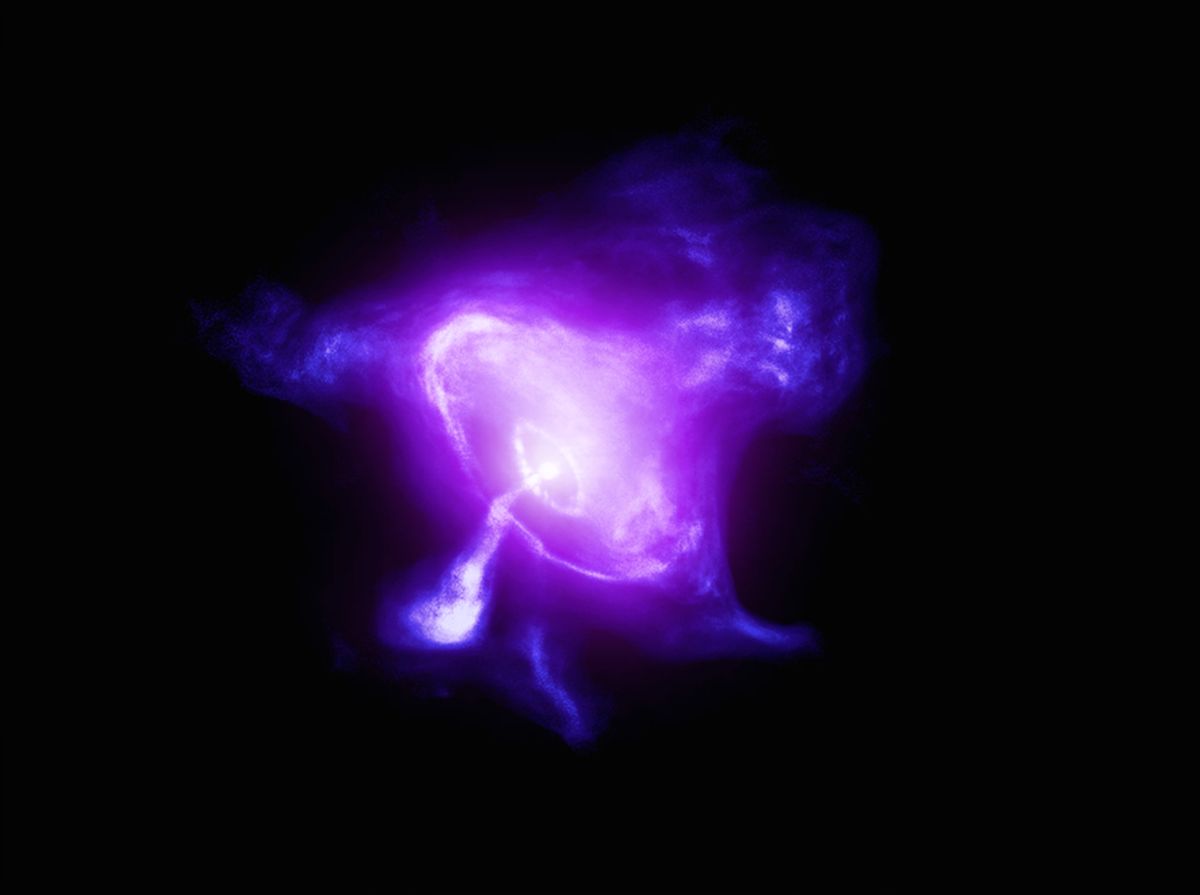
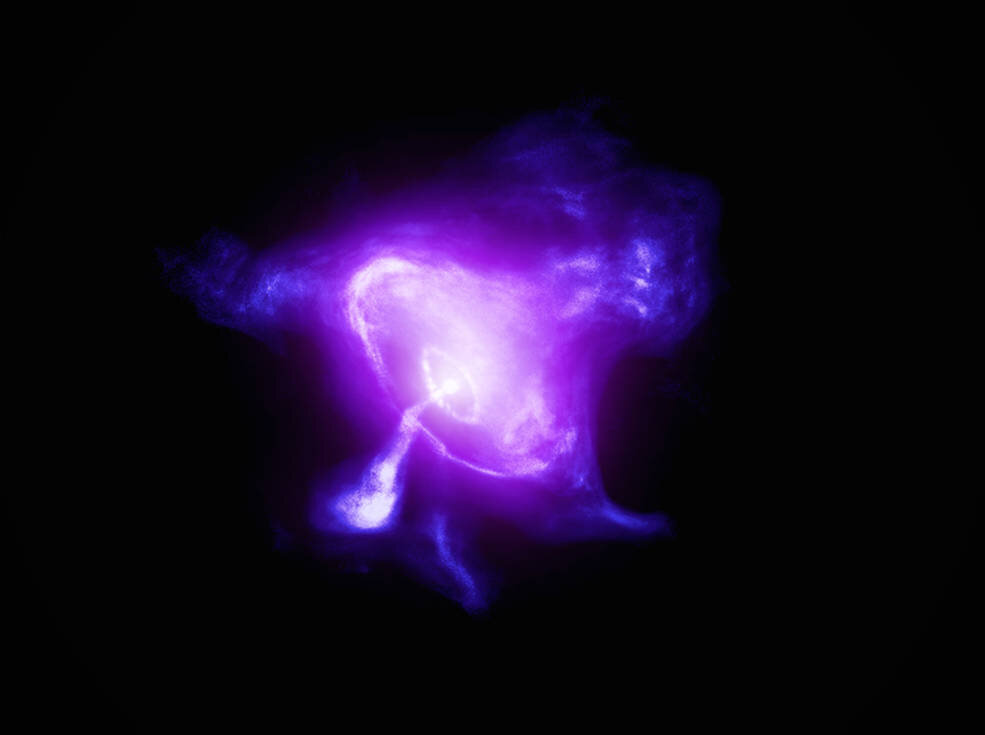
NASA's Imaging X-ray Polarimetry Explorer (IXPE) spacecraft has mapped the magnetic field of the Crab Nebula in greater detail than ever before, revealing unexpected patches and asymmetrical areas of turbulence. The Crab Nebula is the remnant of a massive supernova explosion that occurred in the year 1054 and left behind a dense object called the Crab Pulsar. The IXPE space telescope is designed to examine the polarization of cosmic X-rays, and by measuring the polarization of X-rays from the Crab Nebula, the researchers were able to map the direction of the magnetic field in different parts of the nebula.

astronomy2 years ago

Revolutionary Imaging X-ray Polarimetry Explorer captures unprecedented view of historic nebula.

NASA's Imaging X-ray Polarimetry Explorer (IXPE) has created a detailed map of the Crab Nebula's magnetic field, revealing more of its inner workings than ever before. The new results help resolve longstanding mysteries about the well-studied Crab Nebula and open new questions for future study. IXPE data show that the Crab Nebula's magnetic field resembles that of the Vela Pulsar Wind Nebula, which is also donut-shaped. But at the Crab, scientists were surprised that areas of magnetic field turbulence were more patchy and asymmetrical than expected.