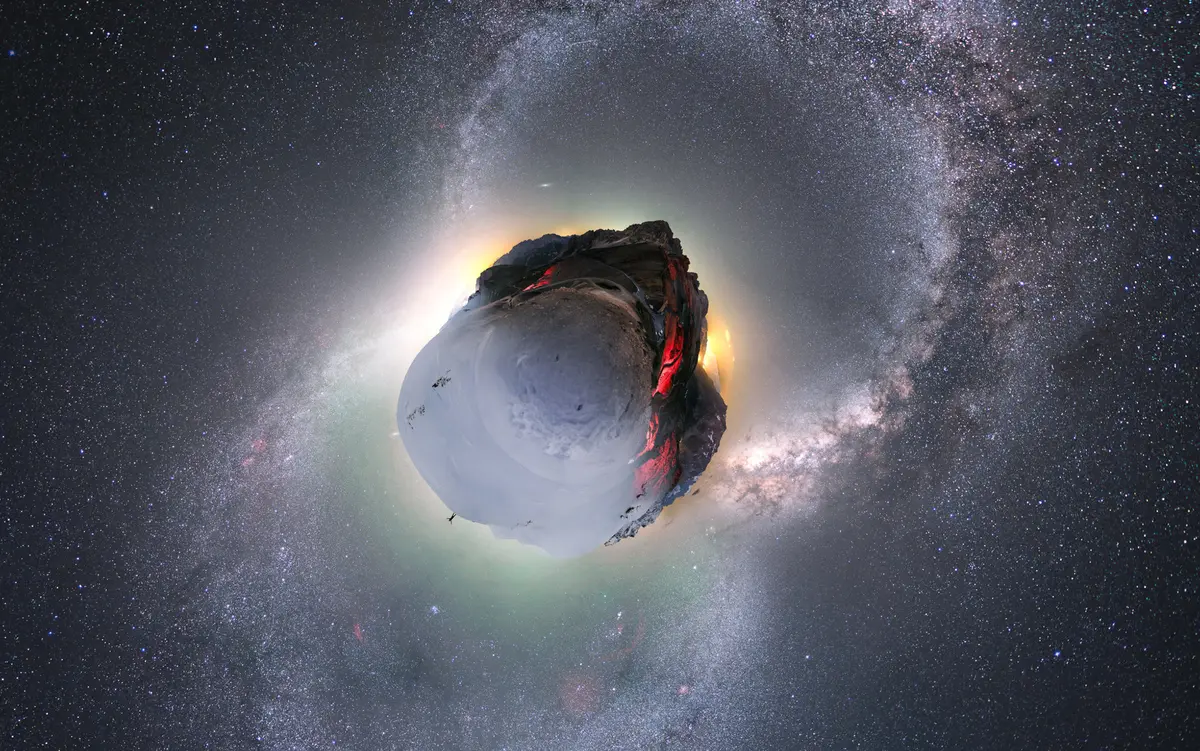
The article explores the evolving scientific understanding of the universe's origins, challenging the widely accepted Big Bang theory. Initially proposed by Georges Lemaître, the Big Bang suggests a fiery beginning to the universe, but recent philosophical and scientific insights, including the Malament-Manchak theorem, question whether we can ever truly know if time had a beginning. Despite advances in physics, such as Einstein's theories of relativity, the global structure of spacetime remains elusive, leaving the question of the universe's origin unresolved.
James DiFrisco from the Francis Crick Institute has been awarded the 2023 Popper Prize by the British Journal for the Philosophy of Science for his article on "Toward a Theory of Homology: Development and the De-coupling of Morphological and Molecular Evolution." The prize includes a £500 award, and his work focuses on the relationship between developmental and phylogenetic homology in light of current evidence from developmental and evolutionary genetics and genomics.
The question of whether we are in a sixth mass extinction is complex and lacks a universally agreed-on definition. While some scientists claim we are in a mass extinction due to the rapid rate of species loss, others disagree. Professor Alisa Bokulich of Boston University convened meetings to consider this question and concluded that we are not currently in a mass extinction, but we are in danger of reaching one soon. The spottiness of the fossil record and differing perspectives on measuring extinctions contribute to the debate. The paper provides ideas on how to improve comparisons between the current situation and past extinctions.