Tag

Orbits

All articles tagged with #orbits

astronomy1 year ago

"The Mystery of Non-Circular Orbits"

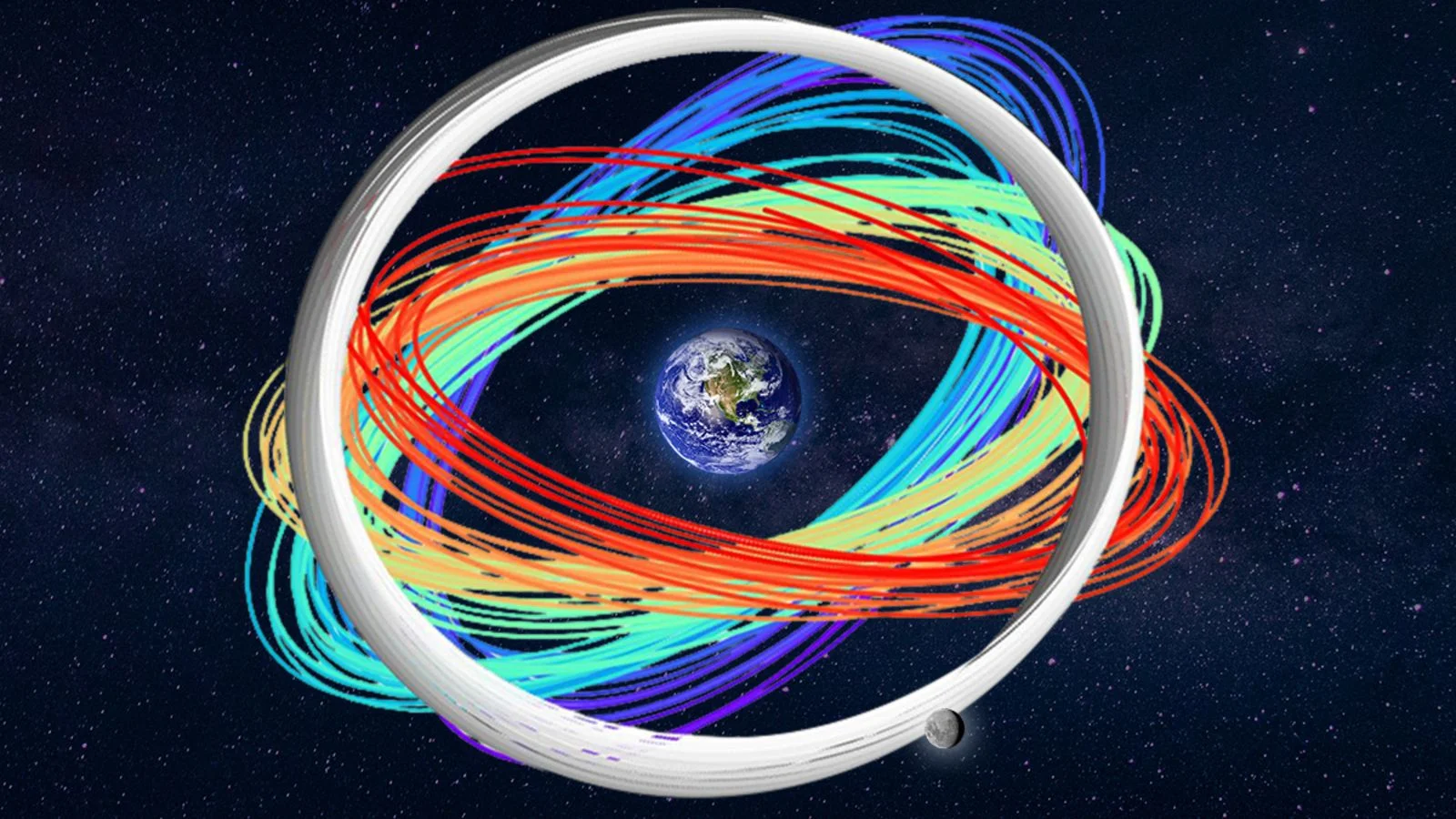
Not all celestial bodies orbit in perfect circles; orbits can take on various shapes due to the interplay of momentum and gravity. While planets and moons generally follow elliptical paths, comets and asteroids can have more complex trajectories, influenced by the gravitational pull of nearby objects. The dynamics of orbits can lead to phenomena such as quasi-satellites, where bodies are pulled into warped oval trajectories or even horseshoe-shaped orbits. These unusual orbits are unstable, but some, like the recently discovered quasi-satellite Kamo'oalewa, can persist for centuries despite the dynamic forces at work in space.

astronomy2 years ago

Unveiling Earth's Orbital Journey: A Fascinating Exploration of our Dynamic Solar System

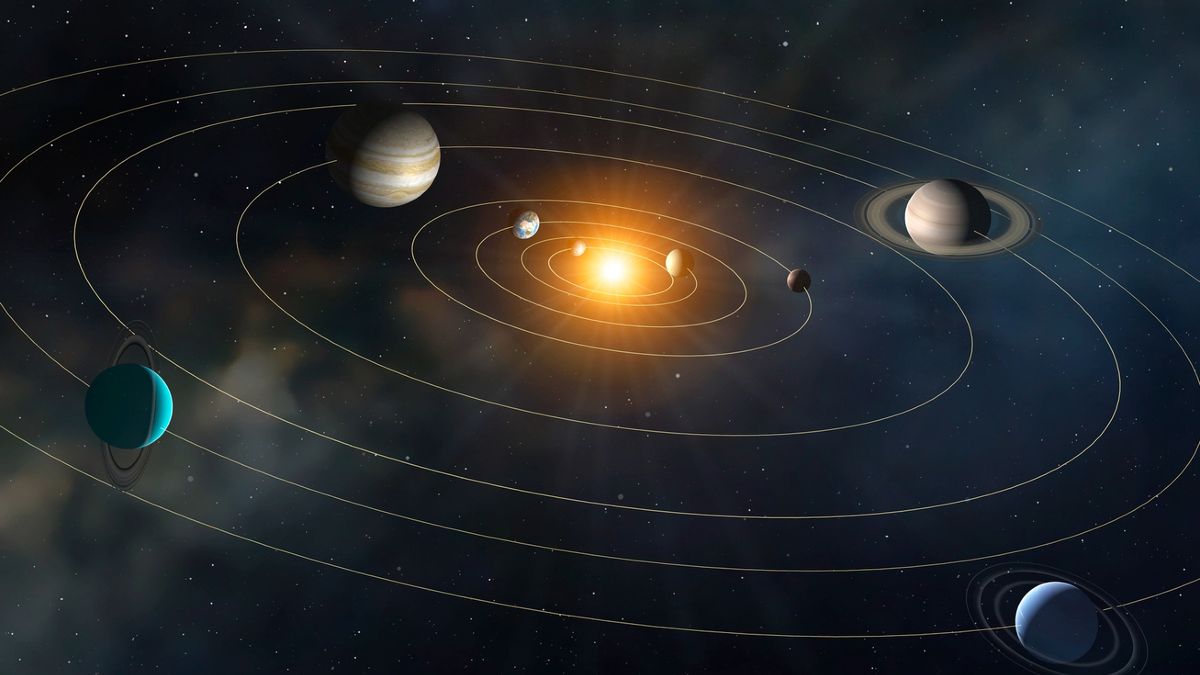
The planets in our solar system have been orbiting the sun for billions of years. While their orbits have remained largely stable, there was a period of instability during the early formation of the planets. Earth has completed roughly 4.5 billion trips around the sun since its creation. The number of orbits varies among the other planets due to their different orbital periods. For example, Mercury has completed around 18.7 billion orbits, while Neptune has completed only about 27.9 million orbits. In the future, the sun will expand and destroy Mercury, Venus, and Earth, potentially altering the orbits of the remaining planets.

astronomy2 years ago

Earth's Orbital Revolution: A Countless Journey Around the Sun

The planets in our solar system have been orbiting the sun for billions of years. While their orbits have remained largely stable, their number of trips around the sun varies. Earth, for example, has completed roughly 4.5 billion orbits since its formation. Mercury, with its shorter year, has completed around 18.7 billion orbits, while Neptune, with its longer year, has completed only about 27.9 million orbits. The other planets fall somewhere in between. However, in about 4.5 billion years, the sun will expand and destroy Mercury, Venus, and Earth, potentially altering the orbits of the remaining planets.

astronomy2 years ago

Earth's Orbital Revolution: A Countless Journey Around the Sun

The planets in our solar system have been orbiting the sun for billions of years. While Earth has completed roughly 4.5 billion trips around the sun, the number of orbits varies among the other planets. Mercury, with its 88-day orbit, has completed around 18.7 billion solar orbits, while Neptune, with its 60,190-day orbit, has managed only about 27.9 million trips. In the future, as the sun expands and becomes a red dwarf star, the orbits of the remaining planets will likely be majorly altered.

science-and-astronomy2 years ago

"Mathematicians Discover 12,000 Groundbreaking Solutions to the 'Unsolvable' 3-Body Problem"

Mathematicians have discovered 12,000 new solutions to the notoriously complex three-body problem, a puzzle in physics and mathematics that involves calculating stable orbits for three objects influenced by each other's gravity. These new solutions, found using a supercomputer, add to the hundreds of previously known scenarios. While their physical and astronomical relevance is yet to be determined, these solutions are of great theoretical interest and could potentially aid astronomers in understanding the cosmos if they prove to be stable over time.

science2 years ago

"Breakthrough: Mathematicians Solve 'Unsolvable' 3-Body Problem with 12,000 New Solutions"

Mathematicians have discovered 12,000 new solutions to the notoriously difficult three-body problem, a complex puzzle in physics and mathematics. The three-body problem involves calculating stable orbits for three objects that influence each other with gravity. The newly discovered orbits exhibit twisted and tangled patterns, with the objects spiraling towards each other before flinging apart and repeating the process. While these solutions are of great theoretical interest, their stability and relevance to real star systems are yet to be determined.

science2 years ago

"Breakthrough: Mathematicians Discover 12,000 Solutions to 'Unsolvable' 3-Body Problem"

Mathematicians have discovered 12,000 new solutions to the notoriously difficult three-body problem, a complex puzzle in physics and mathematics. These solutions, found using a supercomputer, add to the hundreds of previously known scenarios. While their physical and astronomical relevance is yet to be determined, the newfound orbits exhibit intricate spatial and temporal structures. However, some astronomers remain skeptical about their stability, as three-body systems often tend to break into a binary and an escaping third body. Nonetheless, these solutions are of great theoretical interest.

astronomy2 years ago

"Unveiling the Eternal Dance: Ancient Stars Persist in Milky Way's Core"

Researchers have discovered a population of ancient stars around the core of the Milky Way that are still shining after over 12.8 billion years. These stars have low metallicity, indicating that they formed a long time ago. Despite the chaotic nature of their orbits, these stars have spent most of their lives in the inner Milky Way, never straying beyond 10,000 light-years from the center. The findings challenge the notion that these stars are just passing through and provide insights into the early evolution of our galaxy.

science-and-astronomy2 years ago

The Catastrophic Effects of a Super-Earth on Our Solar System.

Simulations show that adding a super-Earth to our solar system would wreak havoc on the orbits of most planets, especially the inner four. Even the slightest changes in Jupiter's orbit have a profound and devastating effect on the delicately balanced orbits of other planets. Gas giants like Jupiter and Saturn were less severely affected by the additional planet. The study shows how important Jupiter is for the dynamics of the solar system and that even relatively small changes can make an enormous difference in the stability of our system.