Oil prices jumped after reports of the first attacks on Iran’s oil and gas facilities, with Brent crude up about 5% near $109 a barrel and WTI around $98, while European natural gas surged and U.S. gasoline prices hit their highest in roughly two and a half years as markets price in a longer disruption to flows through the Strait of Hormuz.
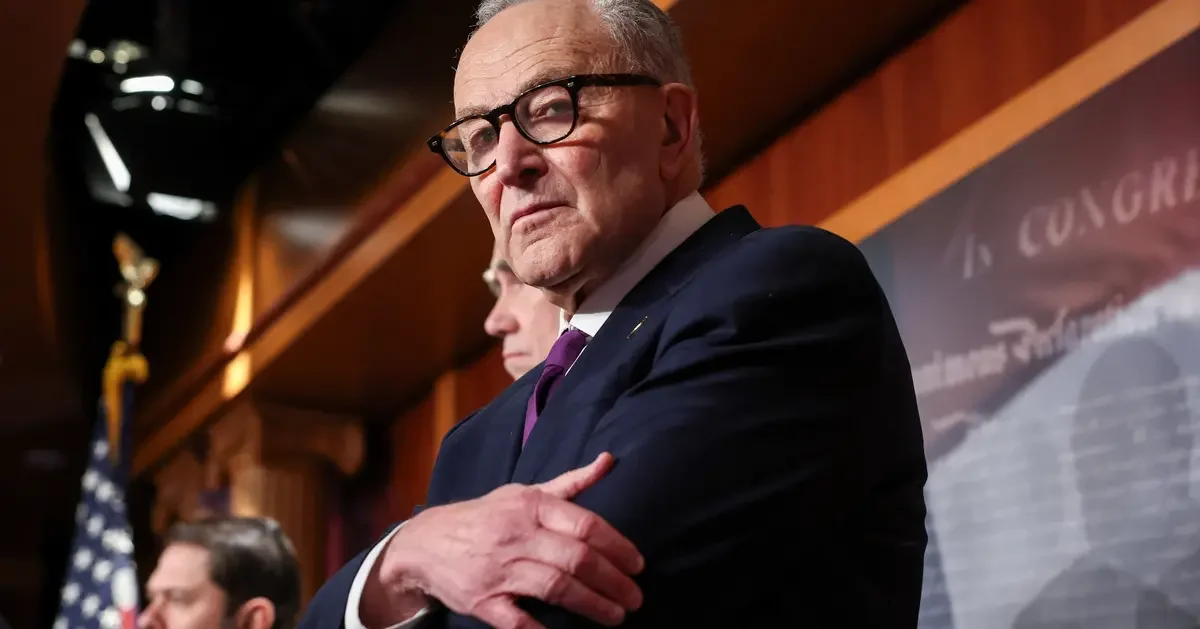
Democrats, led by Senate Minority Leader Chuck Schumer, say they’re prepared to defeat the GOP’s voting-ID bill as Republicans aim to move forward with the House-passed measure, triggering a lengthy debate and likely a 60-vote filibuster fight; options include attaching the bill to must-pass legislation like funding or surveillance reauthorization.
The Big Ten released its 2025-26 All-Big Ten teams and individual award winners. Michigan’s Yaxel Lendeborg was named Player of the Year by both coaches and media. Aday Mara earned Defensive Player of the Year, Keaton Wagler of Illinois was Freshman of the Year, and Braden Frager of Nebraska took Sixth Man of the Year. Fred Hoiberg (Nebraska) was Coach of the Year per the coaches, while Dusty May (Michigan) earned Coach of the Year honors from the media. Sharif Chambliss of Wisconsin won the Howard Moore Assistant Coach of the Year Award. Nineteen Sportsmanship Award honorees were recognized. The announcement includes First, Second, and Third Team selections, plus All-Freshman and All-Defensive teams, with unanimous selections highlighted in ALL CAPS as part of the presentation.
Palantir publicly enlists former employees to rejoin, using a Lord of the Rings–themed pitch that they’ll be on a plane day one and coding on meaningful deployments within hours. The outreach comes amid increased scrutiny of AI use in government and the military, and follows Palantir’s expanding government work (US Army contracts up to $10B, DHS $1B). The company hasn’t disclosed compensation details or how large a hiring push this represents, and it’s unclear if this signals a broader recruitment effort.
Minnesota lawmakers, with law enforcement and the Department of Commerce, introduced HF3642 to ban crypto ATMs that accept cash and debit cards after 70 fraud complaints totaling more than $540,000 in 2025, including a case where an elderly resident reportedly gave half her monthly income to scammers; supporters say refunds are limited (about 48% of complaints) and fraud remains a problem, while crypto platforms argue existing safeguards should suffice.
As Trump heads to the State of the Union, voters show waning trust in his handling of the economy despite boasting about the stock market, while Zelenskyy grows frustrated by stalled peace talks in year five of the Russia-Ukraine war; the piece also highlights Stephen Miller’s expanding remit in the White House.
The government is planning a reform of England’s SEND system, aiming to broaden inclusive mainstream support while grappling with funding shortfalls and a growing trust deficit around Education Health and Care Plans, with ministers pledging not to remove current entitlements as details are refined.
A reader asks how to cope with her husband’s increasingly rigid, rule-bound diet that has improved his health numbers but made meals nearly unbearable and shared eating nearly impossible. The columnist flags the risk of an eating-disorder mindset like orthorexia and recommends couples seek a registered dietitian together to reframe meals and consider practical compromises (e.g., flexible portions or individual cooking) so they can eat together without sacrificing health goals.
Democrats are pressuring a bipartisan digital assets bill to include ethics guardrails after a $500 million Abu Dhabi–backed investment in a Trump-linked crypto venture provoked fresh concerns, setting up a high-stakes clash with the White House and Republicans who want to move the bill forward. Speakers like Sen. Cory Booker and Sen. Adam Schiff say ethics provisions must apply to Trump as to any other federal employee, while Republicans signal willingness to negotiate but largely defer to the White House. The outcome hinges on securing Democratic votes and resolving a separate banking-crypto lobbying dispute as the bill’s fate heads to the Senate floor.
A CIPS survey warns that rising transport, energy and raw-material costs, along with soaring freight rates, could push up prices for computers, electronics and transport equipment in 2026 as volatility and cracks in global trade persist; 22% of respondents reported cost increases above 10% by end-2025, with Dell and Lenovo already raising prices.
The White House quickly backtracked from early characterizations of Alex Pretti as a domestic terrorist after video contradicted those claims, urging independent investigations and signaling a reevaluation of federal enforcement in Minnesota. Trump spoke with Gov. Walz to coordinate action, including pulling federal agents from Minnesota and appointing Tom Homan to oversee operations, underscoring mounting GOP scrutiny of ICE and border patrol tactics while officials avoid definitive blame until investigations conclude.
Researchers found female moths (Spodoptera littoralis) can hear ultrasonic sounds emitted by drought-stressed plants and use these cues to decide where to lay eggs. In experiments without real plants, moths preferred locations near a stress sound; when healthy plants were present, they avoided the stressed plants, showing context-based decision-making that integrates sound with smell.
Bruno Mars ticket prices are surging to roughly $500–$2,000 on Ticketmaster, sparking fan backlash. The piece argues the spike isn’t just Ticketmaster’s fault: artists now rely mainly on touring income as streaming payouts remain small and record labels take a cut. Higher venue costs, labor, gas, and inflation all contribute to the final price, with dynamic pricing amplifying costs when demand spikes. While some artists have intervened to curb resale, overall fans may need bigger budgets for live shows.