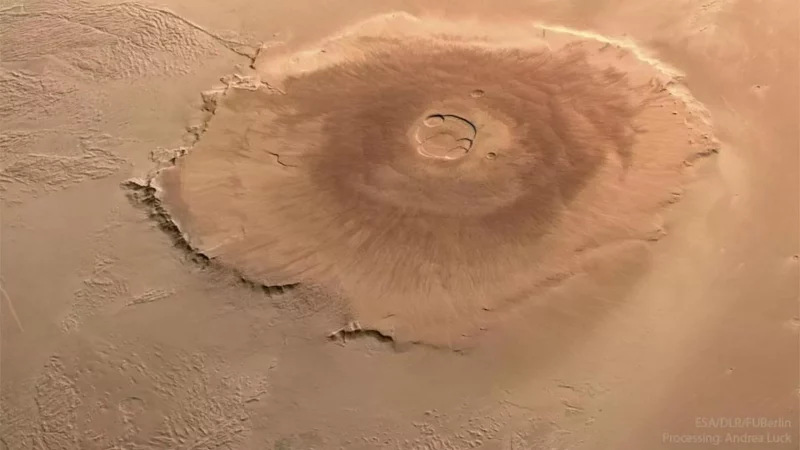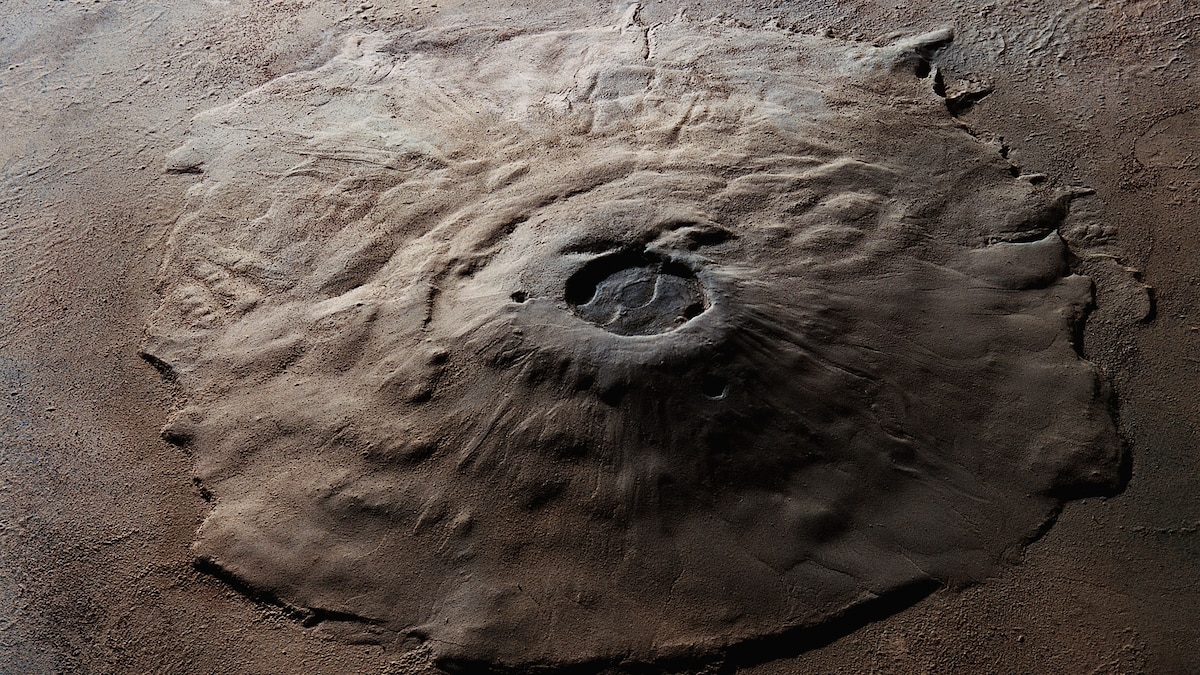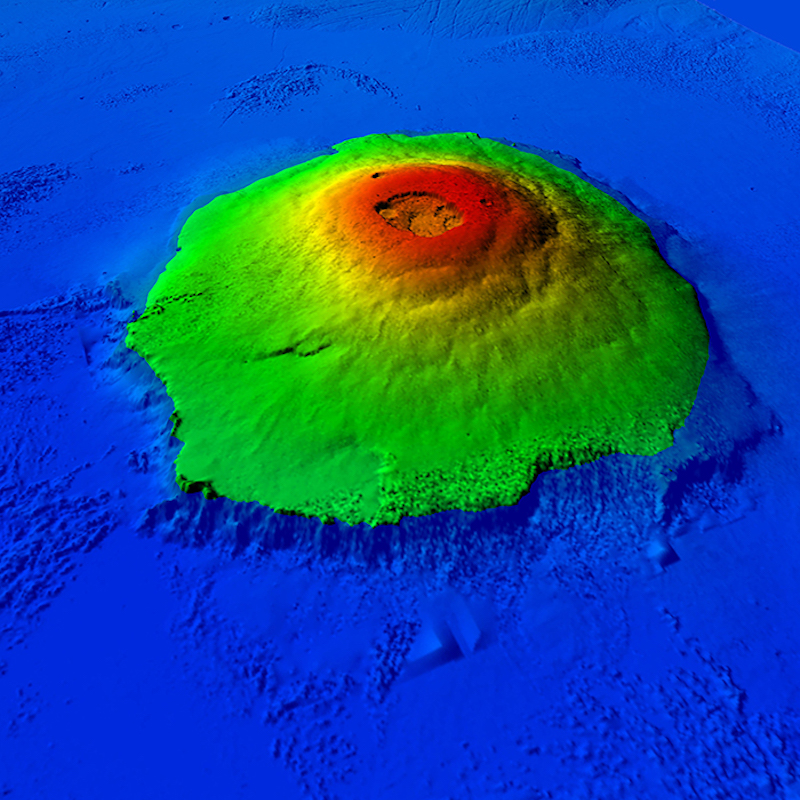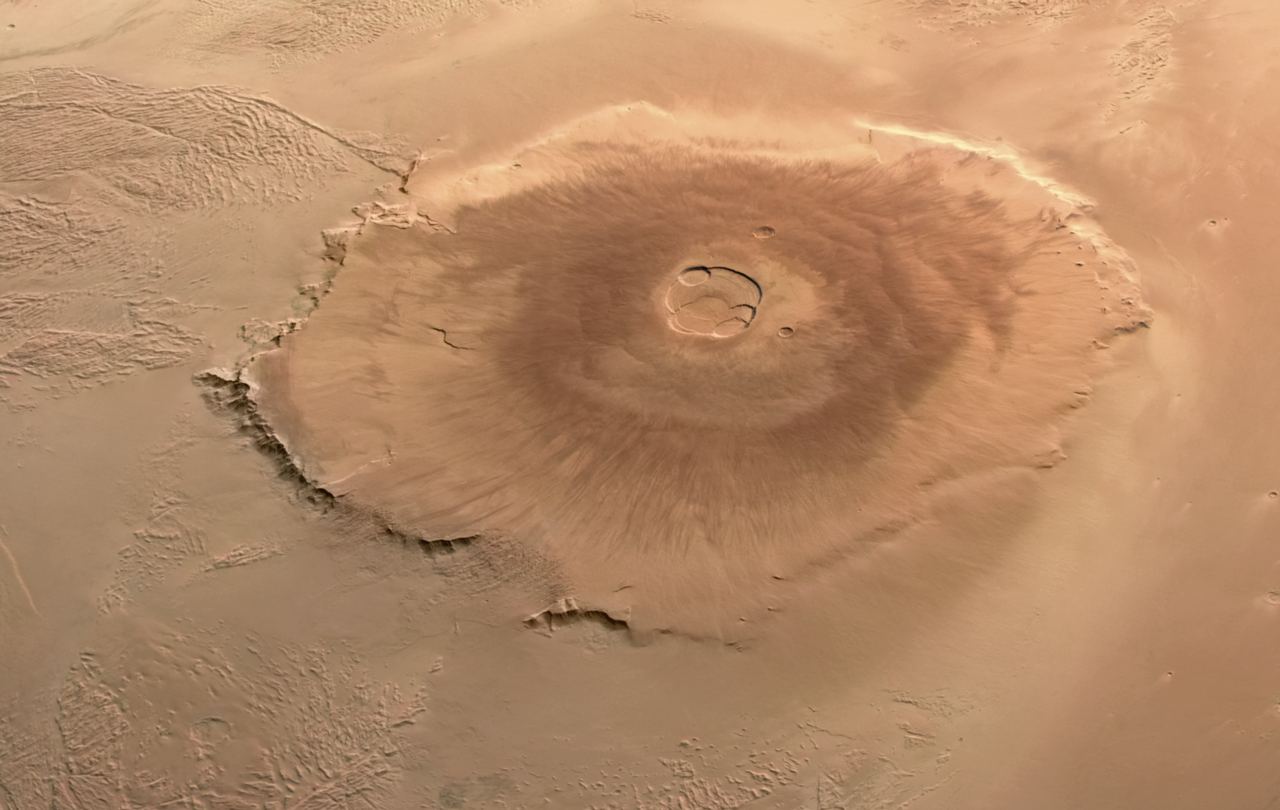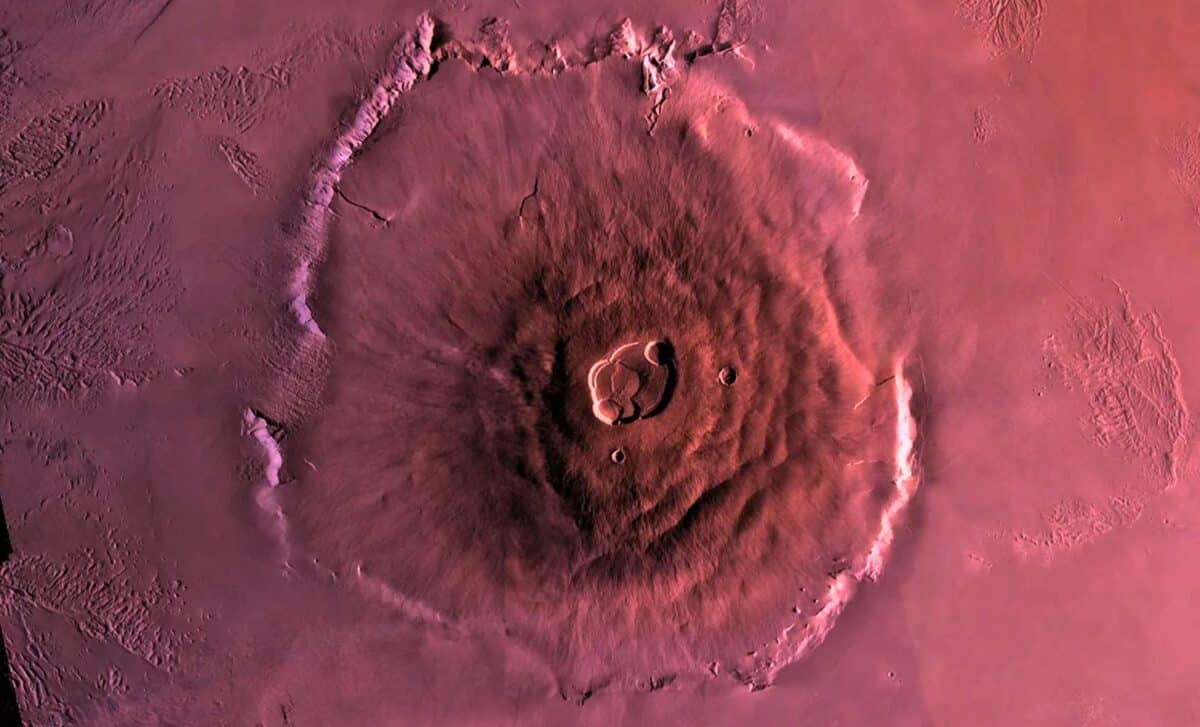
NASA's recent findings highlight Olympus Mons, the largest volcano in the Solar System located on Mars, which stands over 27 km high and spans an area larger than Poland. Its massive size results from Mars's lack of tectonic activity, allowing repeated lava flows to build up over millions of years. Although dormant since about 25 million years ago, recent discoveries of frost suggest potential future activity or water presence, keeping scientists intrigued about this geological marvel.
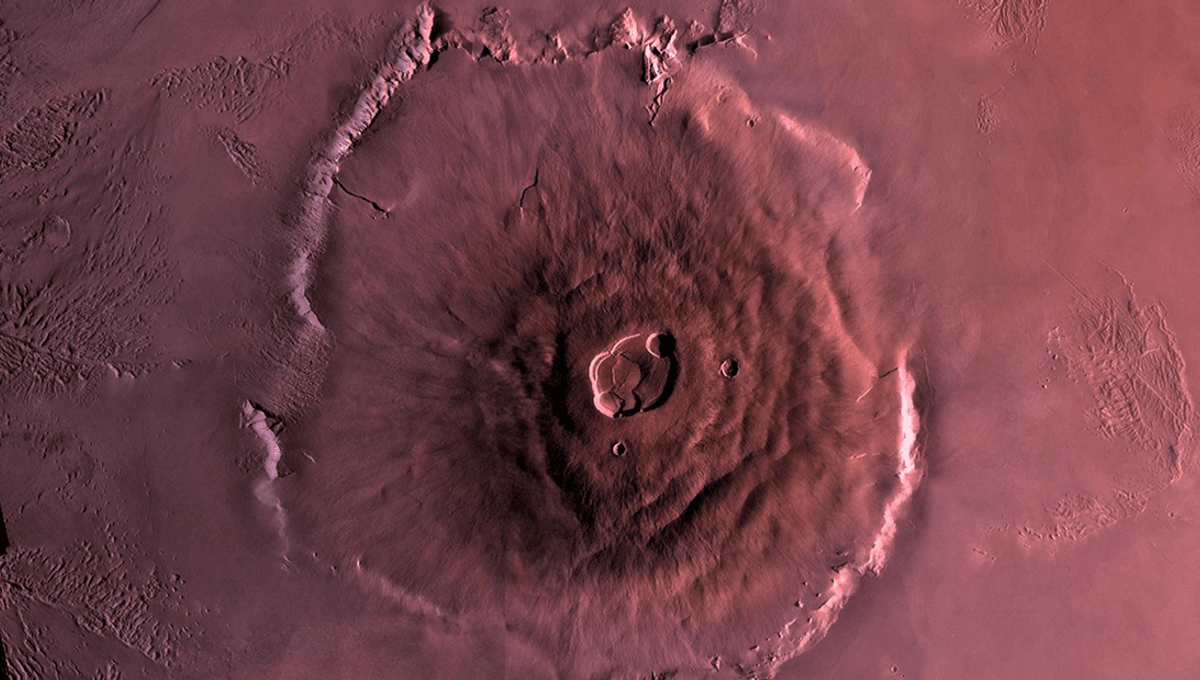
The tallest mountain in the Solar System is Olympus Mons on Mars, standing at 40 km high, surpassing Earth's Mount Everest, with other notable features including the equatorial ridge on Saturn's moon Iapetus. Olympus Mons is a massive shield volcano that may still be active and is a potential site for extraterrestrial life due to its water ice and heat sources.
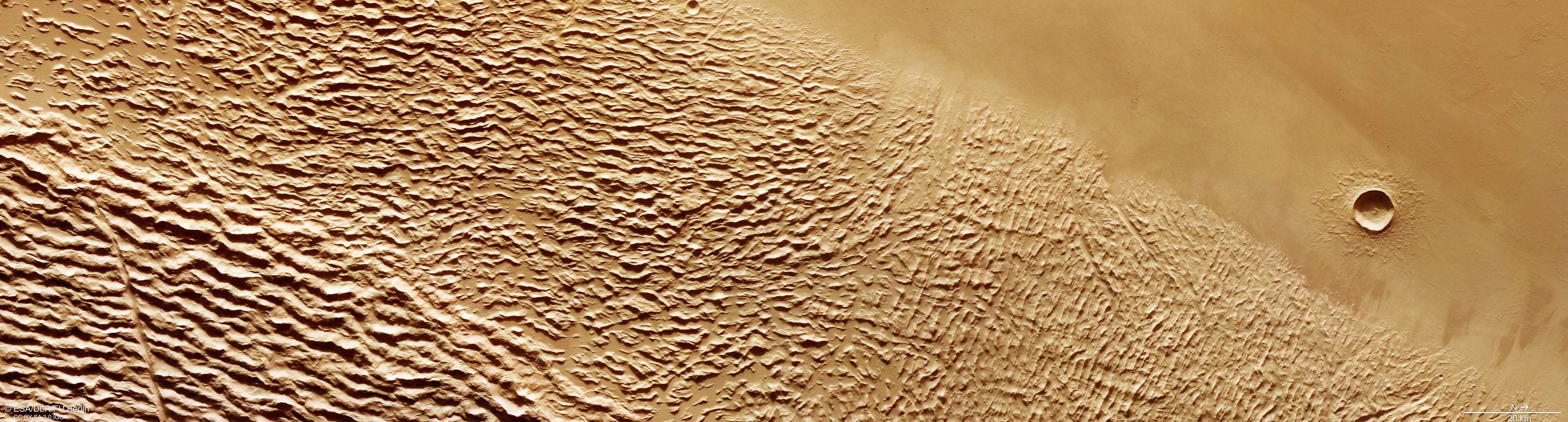
Astronomers have discovered massive landslides on the largest volcano in the solar system, Olympus Mons on Mars. These landslides, which occurred millions of years ago, were triggered by lava flows that melted ice and water, causing the rocky rim of the volcano to break off and partially slide away. The resulting geological feature, known as Lycus Sulci, is characterized by steep cliffs and a rough-textured aureole. Images from the European Space Agency's Mars Express spacecraft have provided insights into the formation of these landslides and the history of water on Mars.
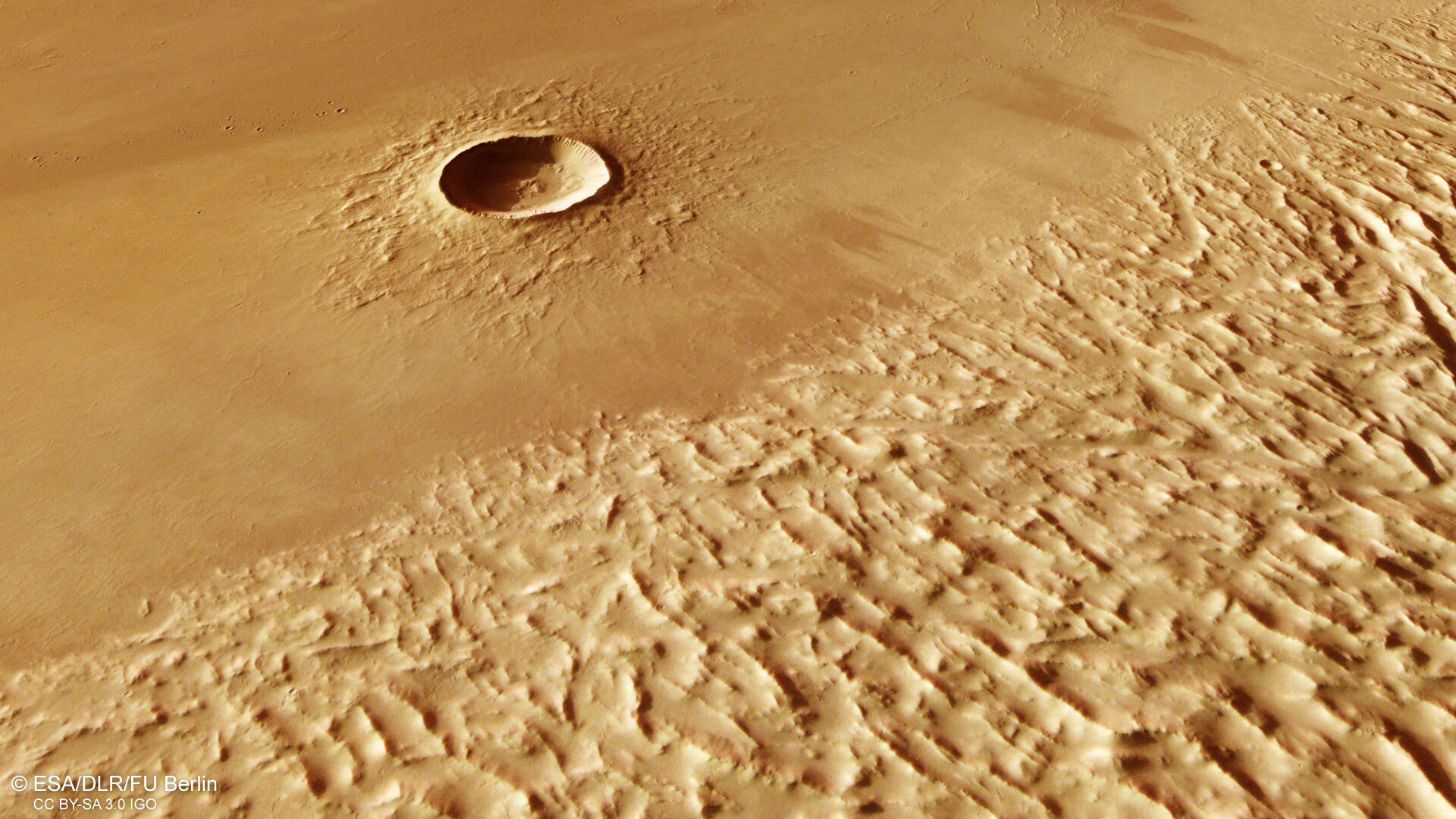
The European Space Agency's Mars Express spacecraft has captured images of the dramatic surroundings of Olympus Mons, the largest volcano in the Solar System. The images reveal a crumpled feature named Lycus Sulci, which is located on the edges of the volcano's aureole. The aureole tells the story of how Olympus Mons's lower flanks collapsed millions of years ago, triggering landslides that spread across the surrounding plains. These landslides became compressed and stretched as they moved away from the volcano, creating the characteristic wrinkles seen in the images. The images also show the immense proportions of Olympus Mons, with Yelwa Crater located over 1000 km away from the volcano's peak. Mars Express has been orbiting Mars since 2003, providing valuable insights into the planet's surface and atmosphere.
Scientists believe that Olympus Mons and Alba Mons, two volcanoes on Mars, were once volcanic islands in a past ocean on the red planet. Olympus Mons, the largest mountain in the solar system, is over 25,000m high and 601km wide. A study by France's National Center for Scientific Research suggests that the volcano was formed by lava flowing into a body of liquid water, making it an ancient volcanic island. Evidence of a past ocean on Mars is growing, and determining the age of Olympus Mons could provide insights into the planet's water history.
The massive Olympus Mons volcano on Mars may have once been an island in a Martian ocean, according to a new study. Researchers have identified an escarpment at the base of the volcano that resembles those found on volcanic islands on Earth. They suggest that Olympus Mons formed as a volcanic island approximately 3.8 billion years ago. However, other experts question this theory, proposing that the escarpments could have been formed by lava flows without encountering water. Further research and rock samples are needed to determine the true origin of these features and the existence of a Martian ocean in the past.
Researchers at the French National Centre for Scientific Research (CNRS) and Université Paris-Saclay have suggested that Mars' Olympus Mons, the largest volcano in the solar system, was once a volcanic island surrounded by an ancient northern ocean. The study found morphological similarities between Olympus Mons and volcanic islands on Earth, and identified an escarpment at the base of the volcano that is similar to those formed by lava flowing into surrounding ocean water. The researchers also found similar characteristics in another volcano, Alba Mons, suggesting that the ancient ocean covered much of Mars' northern hemisphere.
Olympus Mons, the tallest volcano in the Solar System located on Mars, could have been a massive volcanic island in an ancient Martian ocean, according to a recent study. Researchers analyzed features on the slopes of Olympus Mons and the elevated shorelines of the Tharsis Montes volcanic region, finding morphological similarities with volcanic islands on Earth. The study suggests that Olympus Mons and the surrounding region were formed during Mars' Hesperian Period, when the planet had a denser atmosphere, flowing water, and a warmer environment. Understanding the duration of Mars' water environment is crucial for astrobiology studies and determining the potential for the emergence of life on the planet.
Recent research suggests that Olympus Mons, the giant volcano on Mars, may have once been a volcanic island in a vast Martian ocean. Morphological similarities between Olympus Mons and active volcanic islands on Earth, as well as features on the northern flank of another Martian volcano, support the idea of a past ocean on Mars. Precise dating of volcanic rocks could provide valuable insights into the planet's climatic evolution.