Tag

Nustar

All articles tagged with #nustar

"NASA Telescopes Uncover Clues to Mysterious Radio Bursts"
astronomy1 year ago

"NASA Telescopes Uncover Clues to Mysterious Radio Bursts"

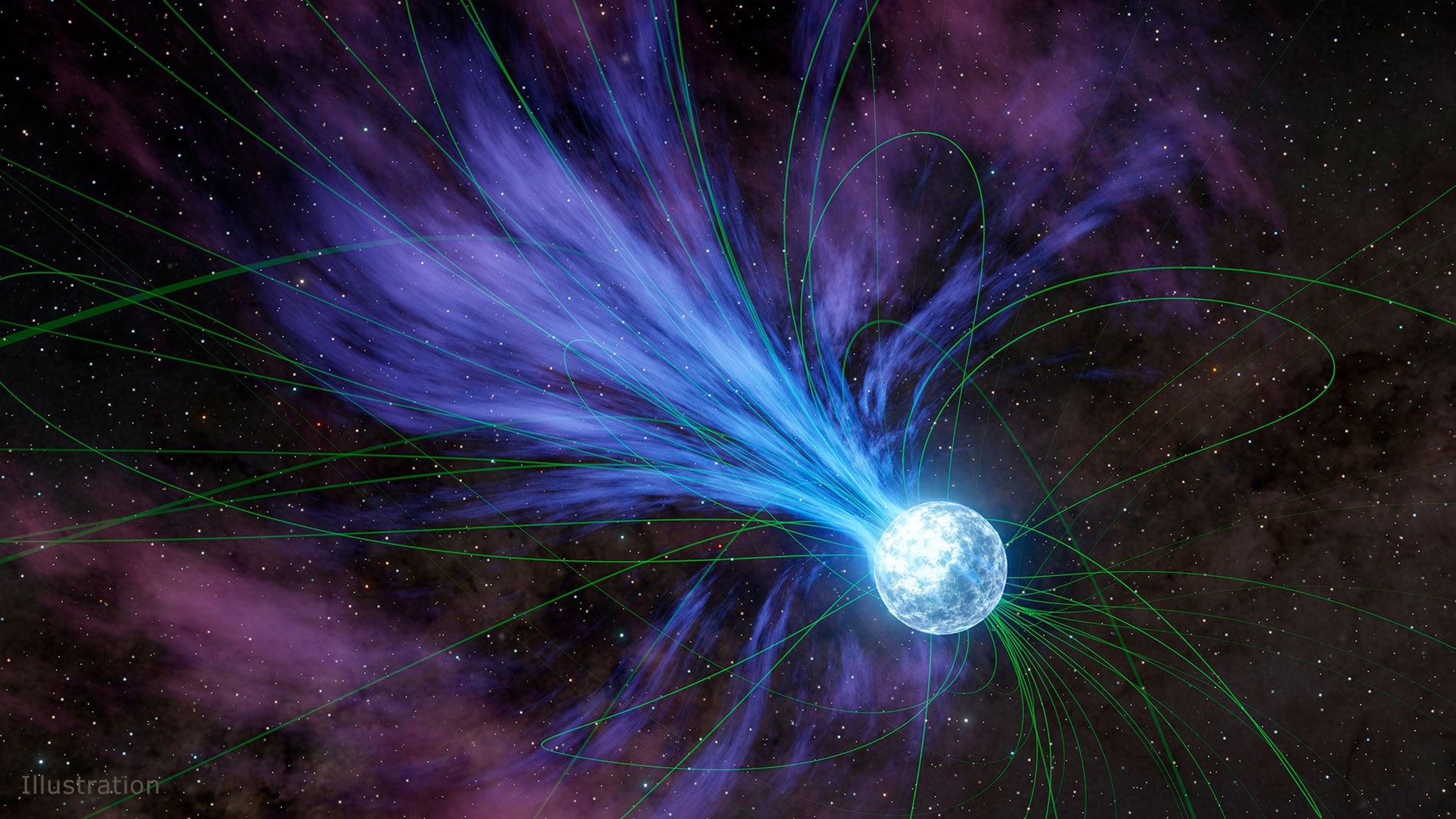
NASA's NICER and NuSTAR telescopes observed a fast radio burst from the magnetar SGR 1935+2154, providing valuable data on the phenomenon. The burst occurred between two periods of rapid rotational rate increase, followed by a surprising rapid decrease. The increase in high-energy light before the burst led to the telescopes' orientation towards the magnetar. Scientists believe the burst was caused by material eruption from the magnetar's interior, but the exact mechanism behind fast radio bursts remains uncertain. The findings were published in the journal Nature, shedding light on the nature of these mysterious cosmic events.

NuSTAR uncovers unique features of brightest gamma-ray burst.
astronomy2 years ago

NuSTAR uncovers unique features of brightest gamma-ray burst.

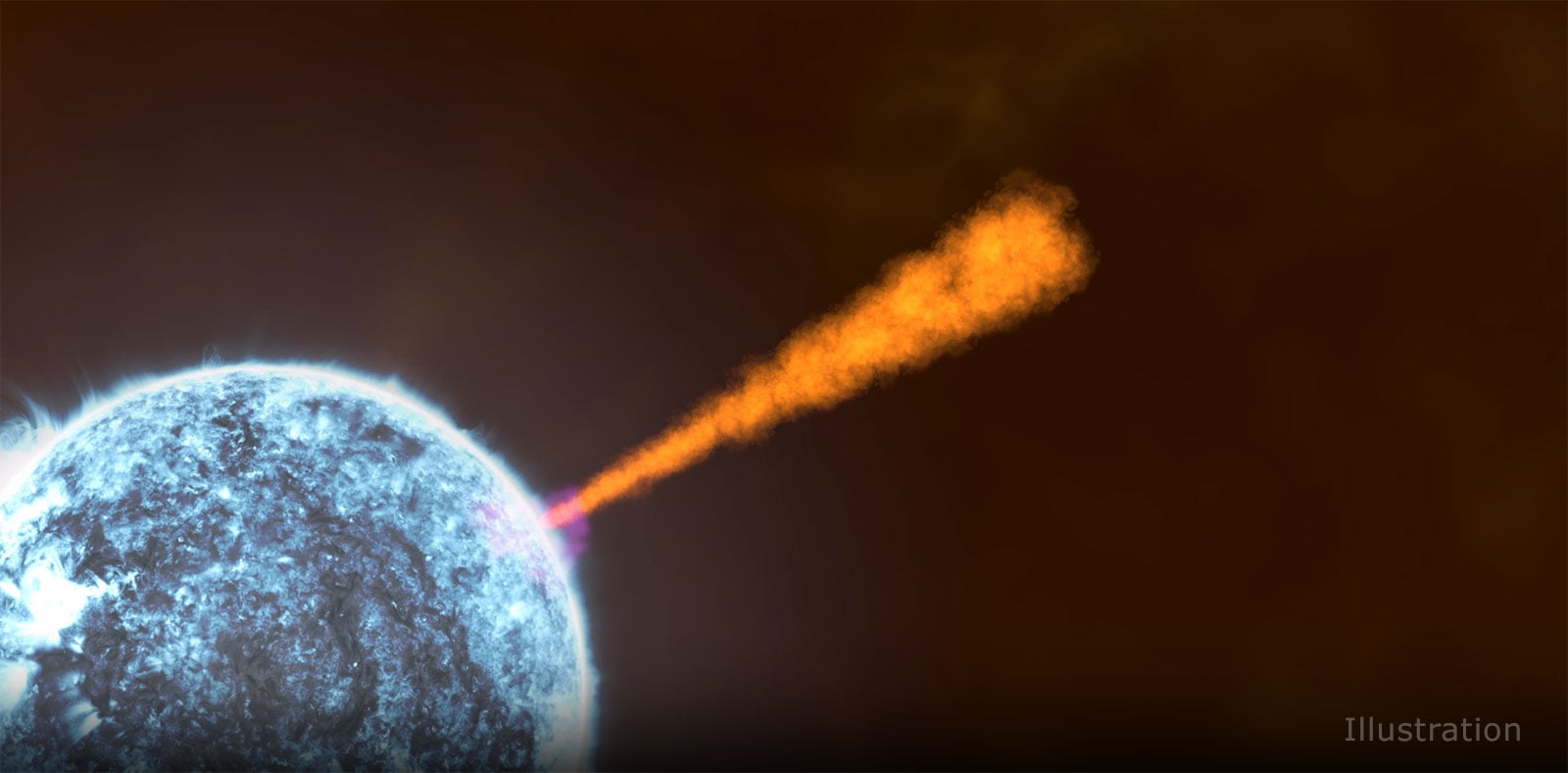
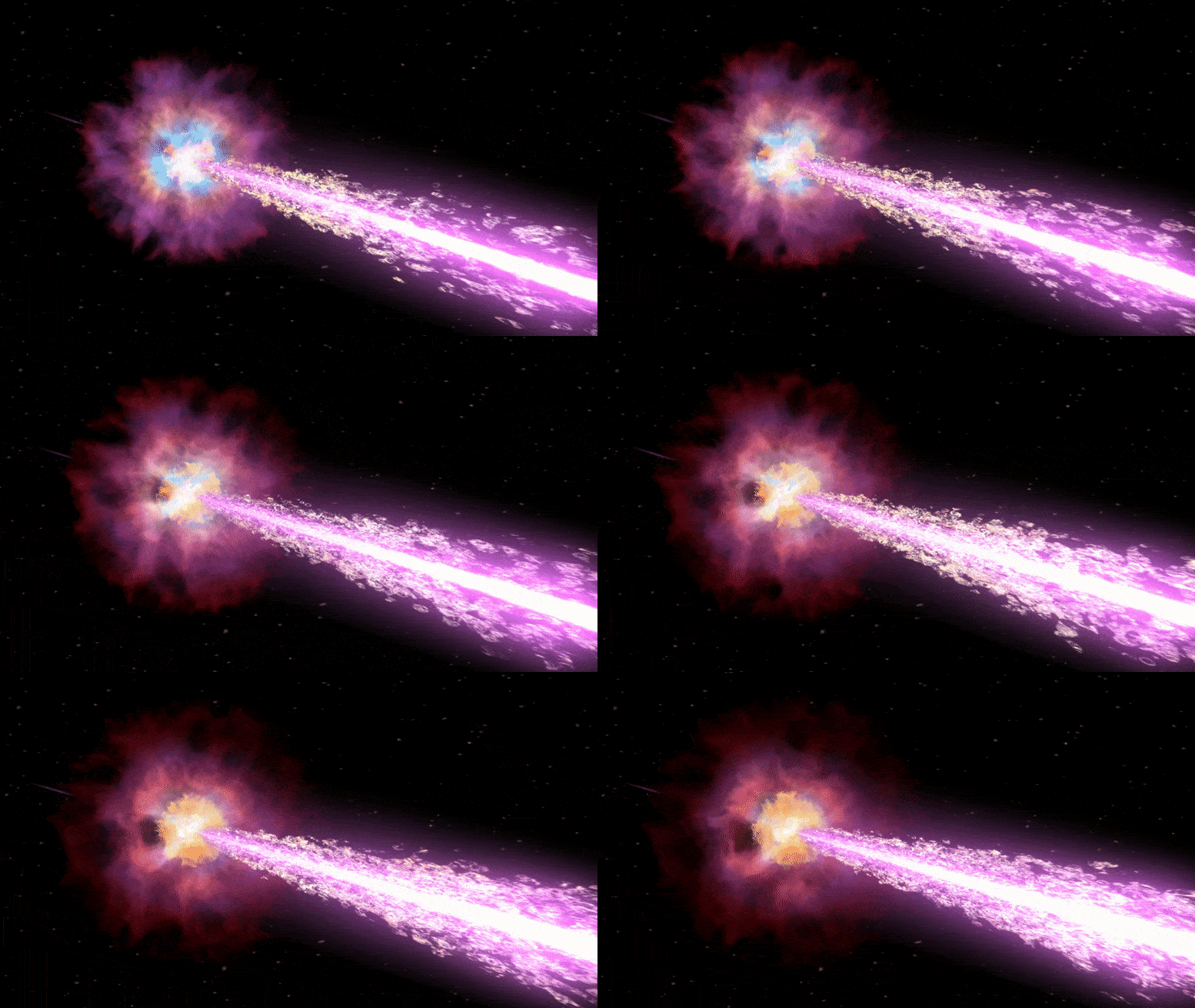
Scientists have used data from NASA's Nuclear Spectroscopic Telescope Array (NuSTAR) X-ray observatory to study the origins and characteristics of the brightest gamma-ray burst ever detected, named GRB 221009A. The burst was 70 times brighter than the previous record holder and far more energetic than any other gamma-ray burst ever detected. The team of scientists found that the jet of material in GRB 221009A was uniquely different than other gamma-ray burst jets, and the energy of the material within the jet varied as the distance from the jet’s core increased, a phenomenon never observed before. The physical characteristics of the progenitor star may have something to do with GRB 221009A’s unique characteristics.

NASA's NuSTAR Observes Strange Energy Jet in Record-Breaking Cosmic Explosion
astronomy2 years ago

NASA's NuSTAR Observes Strange Energy Jet in Record-Breaking Cosmic Explosion

NASA's NuSTAR X-ray telescope has provided new insights into the brightest and most energetic gamma-ray burst ever detected, known as GRB 221009A or BOAT. The burst had a unique jet structure with a narrow core, wider sides, and a variance in energy depending on distance from the core. The phenomena observed in the burst were documented by NuSTAR and multiple X-ray telescopes. Scientists think GRB 221009A represents the birth of a new black hole formed within the heart of a collapsing star.

NASA Reveals Secret of Ultra-Luminous X-Ray Sources Beyond Eddington Limit
astronomy2 years ago

NASA Reveals Secret of Ultra-Luminous X-Ray Sources Beyond Eddington Limit

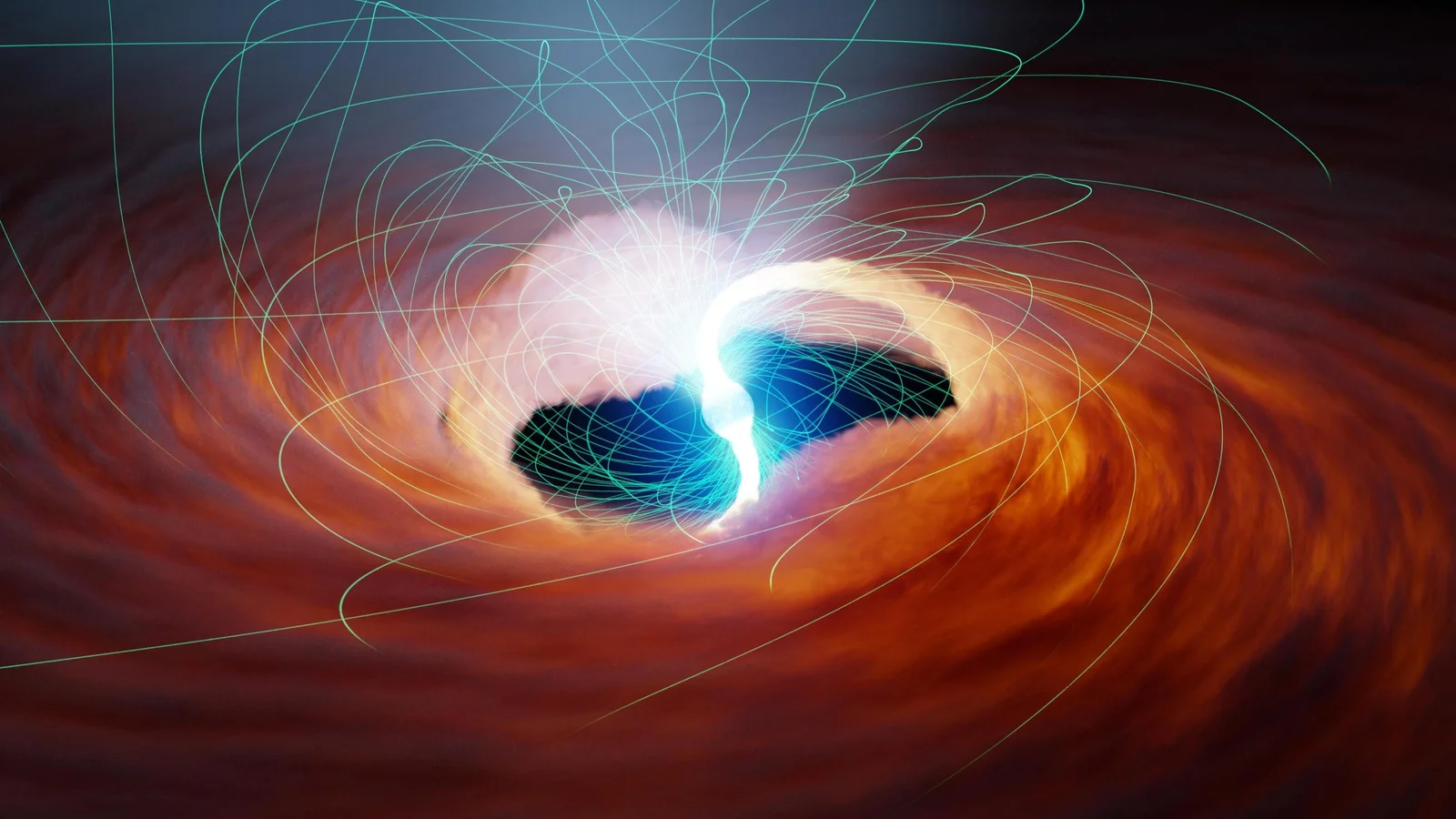
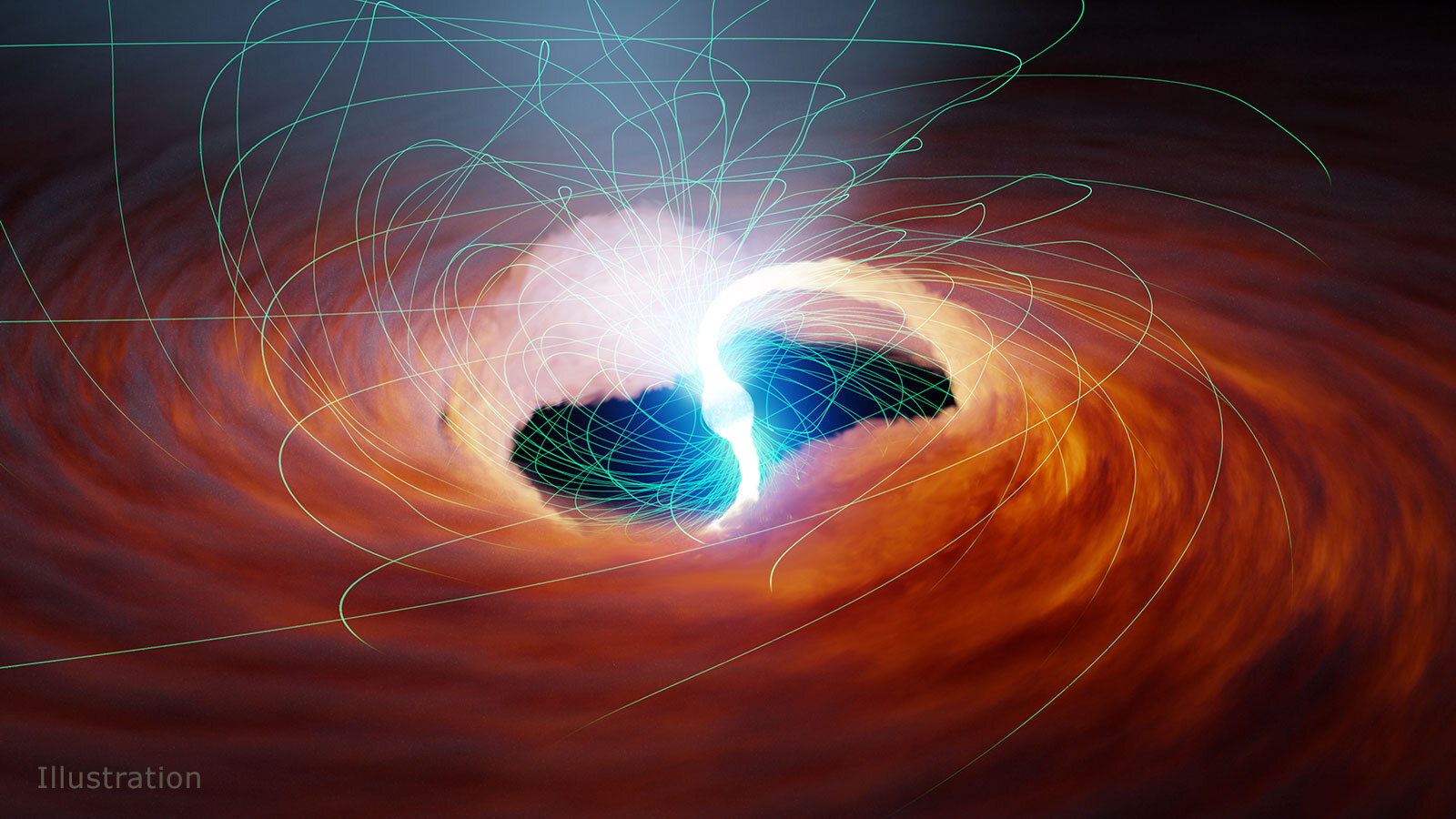
Ultra-luminous X-ray sources (ULXs) produce about 10 million times more energy than the Sun, regularly exceeding the Eddington limit by 100 to 500 times. A recent study published in The Astrophysical Journal utilized NASA’s Nuclear Spectroscopic Telescope Array (NuSTAR) to measure a ULX for the first time. Findings confirm that ULXs do indeed break the Eddington limit, potentially due to their strong magnetic fields.

Cracking the Mystery of Ultra-Luminous X-ray Sources with NASA Study
astronomy2 years ago

Cracking the Mystery of Ultra-Luminous X-ray Sources with NASA Study

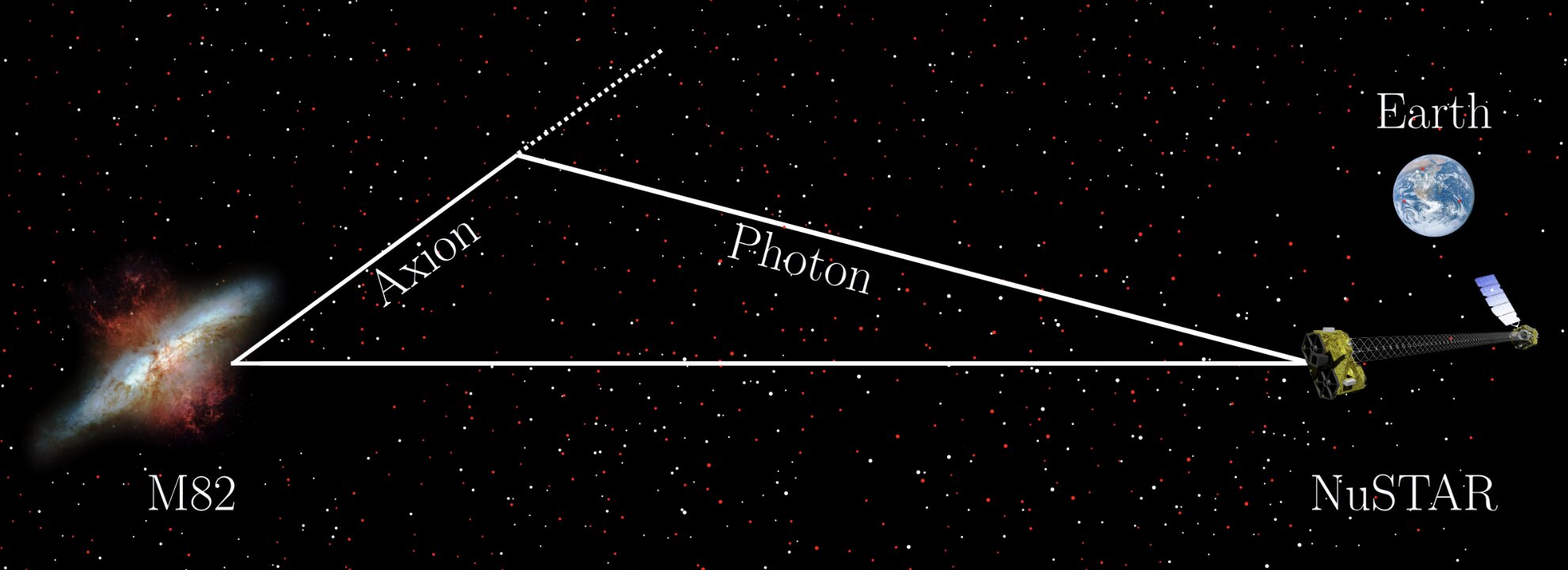
Ultra-luminous X-ray sources (ULXs) produce about 10 million times more energy than the sun, exceeding the Eddington limit, which puts a cap on how bright an object can be based on its mass. A recent study using NASA's Nuclear Spectroscopic Telescope Array (NuSTAR) confirms that ULXs break the Eddington limit, and suggests that strong magnetic fields may be responsible for this limit-breaking brightness. The study targeted a ULX called M82 X-2, which is stealing about 9 billion trillion tons of material per year from a neighboring star, and confirmed that it exceeds the Eddington limit.