Tag

Nanopores

All articles tagged with #nanopores

science4 months ago

Scientists Discover Pressure-Induced DNA Coils

Scientists have discovered that the twisting structures in DNA previously thought to be knots are actually coils called plectonemes, which form under stress and influence gene regulation. Using nanopores to study DNA behavior, they found that these coils can be distinguished from knots by their size and formation conditions, with implications for understanding DNA processes like transcription and replication.

science-and-technology2 years ago

"Nanopore-Electronic Hybrid Device Revolutionizes Disease Detection"

Researchers at UC Santa Cruz and MIT have developed a bioprotonic system that combines electronic components with biological components to detect biomolecules indicating the presence of human disease. The system utilizes a DNA nanopore, created through DNA origami, which acts as a channel for protons. The device translates the proton signal into an electronic signal, allowing researchers to detect the presence of biomolecules. The researchers demonstrated the system's potential for detecting B-type natriuretic peptide, an indicator of cardiac disease, and envision the device being able to detect multiple types of biomolecules in the future.

energy2 years ago

Unintentional Discovery: Harnessing Humidity for Renewable Energy

Researchers at the University of Massachusetts Amherst have accidentally discovered a way to generate electricity from the humidity in the air. By engineering materials with nanopores, they found that the dynamic interaction between air water and the porous interface creates a charging gradient, resulting in continuous electric output. The team has developed a small device that can generate enough electricity to light a single pixel on a large LED screen, and they plan to stack multiple layers to increase power. Commercialization efforts are underway, with a London-based startup seeking to bring the technology to market. While cost and scalability remain challenges, the potential for sustainable electricity generation from air humidity could be significant.

health2 years ago

Nanopores for Early Disease Detection

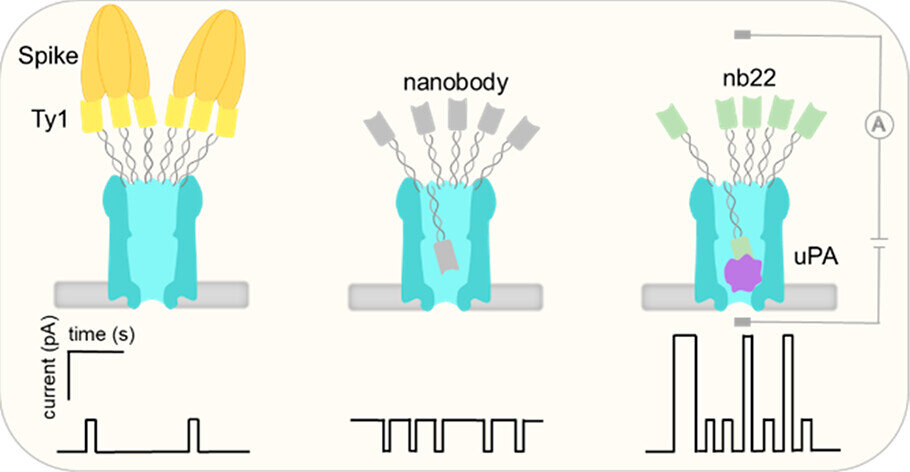
Researchers at Aarhus University and Groningen University have developed ClyA nanopores with nanobodies attached to them, which can detect specific proteins in complex biological fluids like blood without chemical labeling. The nanopores remained highly accurate and sensitive even when tested with complex samples like blood. This breakthrough could revolutionize medical diagnostics and lead to earlier interventions, improved treatment outcomes, and overall improved healthcare.

science-and-technology2 years ago

Revolutionary Electricity Harvesting Method Discovered by Scientists

Scientists at the University of Massachusetts Amherst have discovered a way to create electricity out of thin air using a process called the "generic Air-gen effect". The material used to extract electricity from the air needs to have nanopores less than 100 nanometers in diameter. The researchers are working on building a man-made cloud that can duplicate the process of lightning. This discovery could open a wide door for harvesting clean electricity from thin air and have profound effects on the future of renewable energy.

science-and-technology2 years ago

Generating Electricity from Thin Air: Scientists Discover New Method Using Any Material

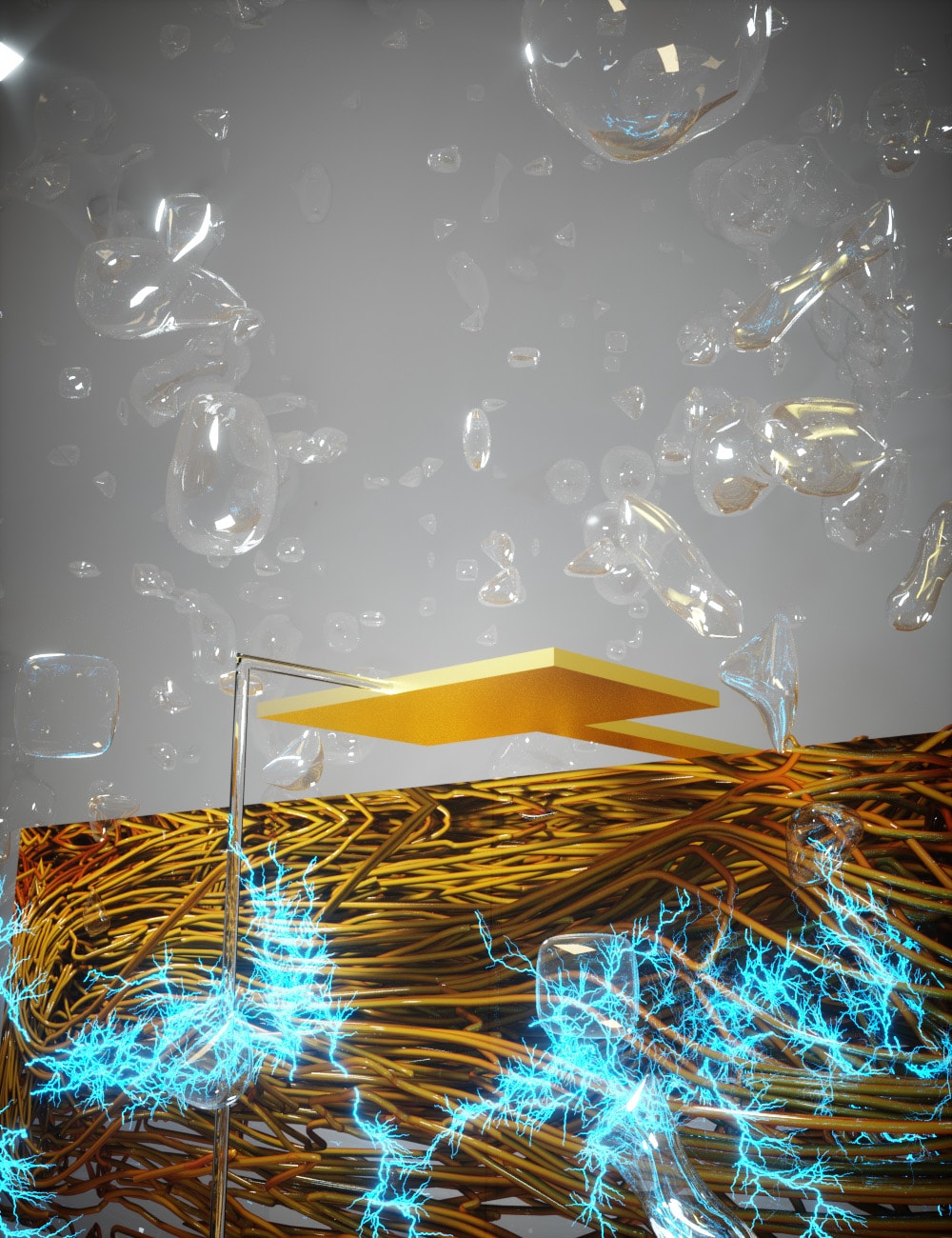
Scientists have discovered that nearly any material can be used to generate electricity from air humidity, using a device called an "Air-gen." The device, which is the size of a fingernail and thinner than a single hair, is dotted with tiny holes known as nanopores that allow water in the air to pass through and create a charge imbalance, effectively creating a battery that runs continuously. The Air-gen could potentially be embedded in wall paint, made at a larger scale in unused space in a city, or littered throughout an office's hard-to-get-to spaces, and could extract less from the environment than other renewable forms of energy.

science-and-technology2 years ago

Harvesting Clean Energy from Thin Air: Scientists' Latest Breakthrough

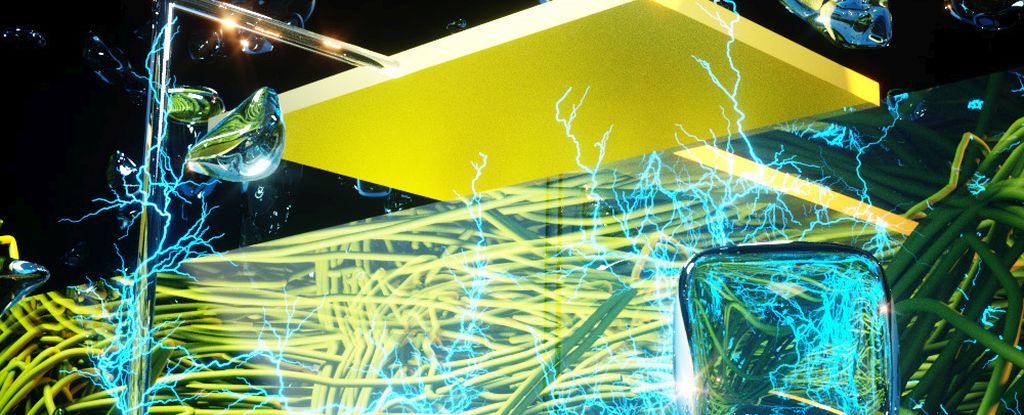
Engineers have discovered a way to create a device that continuously harvests energy from humid air using almost any material that is pocked with nanopores less than 100 nanometers in diameter. The material can harvest the electricity generated by microscopic water droplets in humid air, according to a team led by engineer Xiaomeng Liu of the University of Massachusetts Amherst. The generic Air-gen device is made from a thin film of material, such as cellulose, silk protein, or graphene oxide. The cellulose film the team tested had a spontaneous voltage output of 260 millivolts in the ambient environment, whereas a mobile phone requires a voltage output of around 5 volts.

science-and-technology2 years ago

"Harvesting Electricity from Thin Air: New Breakthroughs in Science"

Scientists have discovered a way to generate electricity from air humidity using nearly any material, including wood or silicon, as long as it can be smashed into small particles and remade with microscopic pores. The air-powered generator, known as an “Air-gen,” uses the energy from humidity, which is always present, rather than depending on the sun or wind. The device is dotted with tiny holes known as nanopores, which allow the water in the air to pass through in a way that creates a charge imbalance, effectively creating a battery that runs continuously. The team hopes to make the tool more efficient and develop a strategy to make the device bigger without blocking the humidity that can be captured.

science-and-technology2 years ago

"Extracting Electricity from Thin Air: The Latest Breakthroughs in Technology"

Researchers at the University of Massachusetts Amherst have developed a device called Air-gen that can extract electricity from humidity in the air using nanopores. The device can create enough electricity to power small sensors and has the potential to be scaled up for use as a clean energy source. The technology can be made from a variety of materials, including cellulose, and does not require mining. The authors envision the technology being used to augment wind and solar power and to provide clean electricity wherever it is needed.

energy2 years ago

Nanotechnology breakthrough generates clean electricity from thin air 24/7.

Engineers at the University of Massachusetts Amherst have discovered a way to continuously harvest electricity from humidity in the air using a device made of any material with nanopores smaller than 100 nanometers. The device creates a charge imbalance, like that in a cloud, by allowing water molecules to pass through the material, creating a battery that runs as long as there is humidity in the air. The technology could offer cost-effective and environment-adaptable fabrications, and since humidity is ever-present, the harvester would run 24/7, rain or shine, at night and whether or not the wind blows, solving one of the major problems of technologies like wind or solar.

science2 years ago

Unzipping DNA: A Glimpse into its Physics

A research team led by SISSA's Cristian Micheletti has accurately reconstructed the thermodynamics of the formation and rupture of the double-helix structure of DNA by studying how a DNA double helix unzips when translocated at high velocity through a nanopore. The team used a cluster of computers to simulate the process with different driving forces keeping track of the DNA's unzipping speed, a type of data that has rarely been studied despite being directly accessible in experiments. The technique adopted in the study is general, and thus the researchers expect to be able to extend it beyond DNA to other molecular systems that are still relatively unexplored.