Tag

Jameswebbspacetelescope

All articles tagged with #jameswebbspacetelescope

"Exploring the Enigmatic Cosmic Dark Ages: A Comprehensive Guide"
science-and-astronomy2 years ago

"Exploring the Enigmatic Cosmic Dark Ages: A Comprehensive Guide"

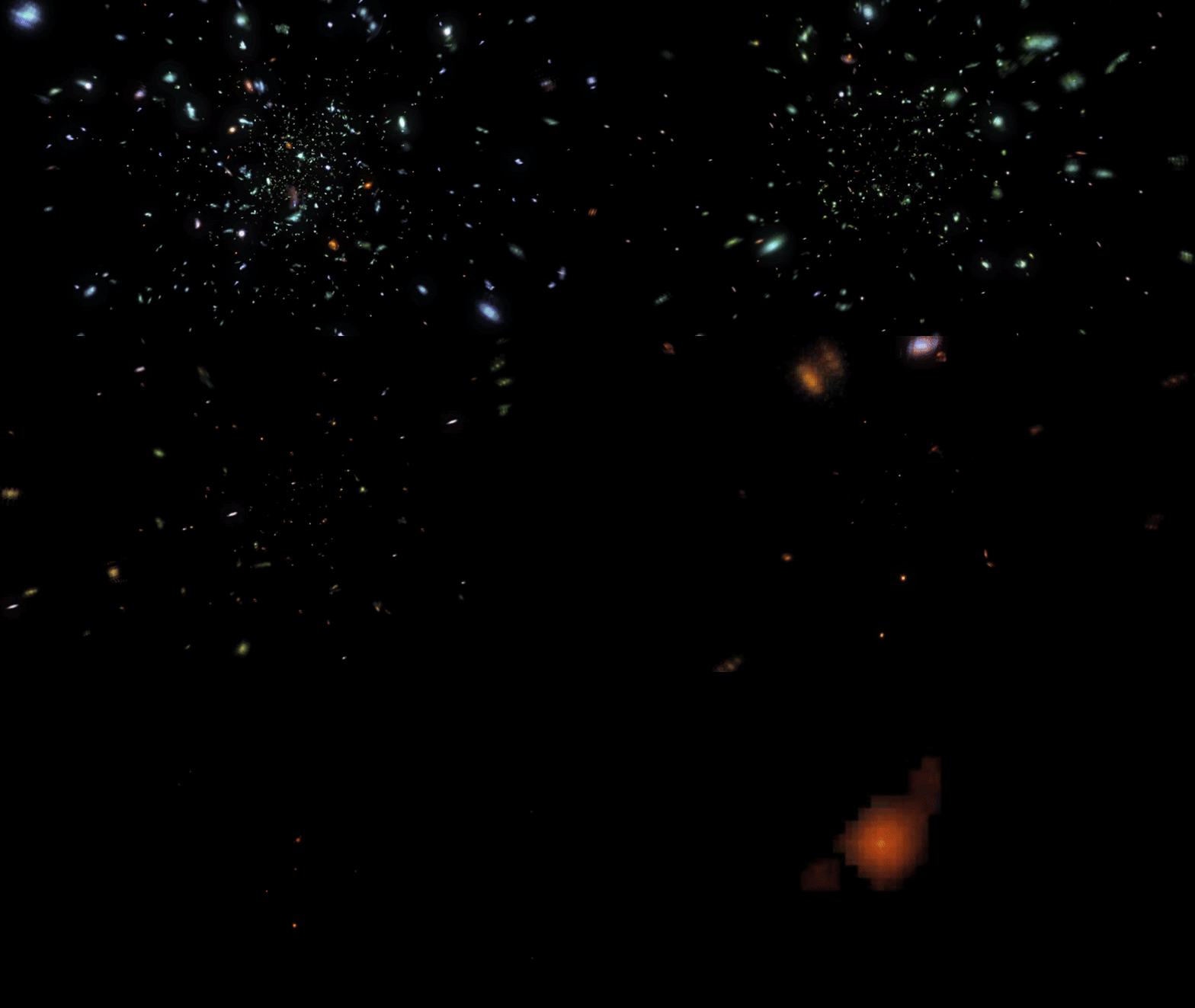
The cosmic dark ages is a period in the early universe, starting about 380,000 years after the Big Bang, characterized by a lack of light due to the absorption by neutral hydrogen gas. This era persisted until stars and galaxies formed, emitting ultraviolet light that reionized the hydrogen, making the universe transparent to light. The end of the cosmic dark ages is estimated to have occurred between 680 million and 1.1 billion years after the Big Bang. Recent observations, particularly from the James Webb Space Telescope, have provided new insights into this period, with the potential for future moon-based radio observatories to offer more detailed glimpses into this formative era of the universe.
"Early Cosmic Structures Resembled Bananas, Research Indicates"
science-and-technology2 years ago

"Early Cosmic Structures Resembled Bananas, Research Indicates"

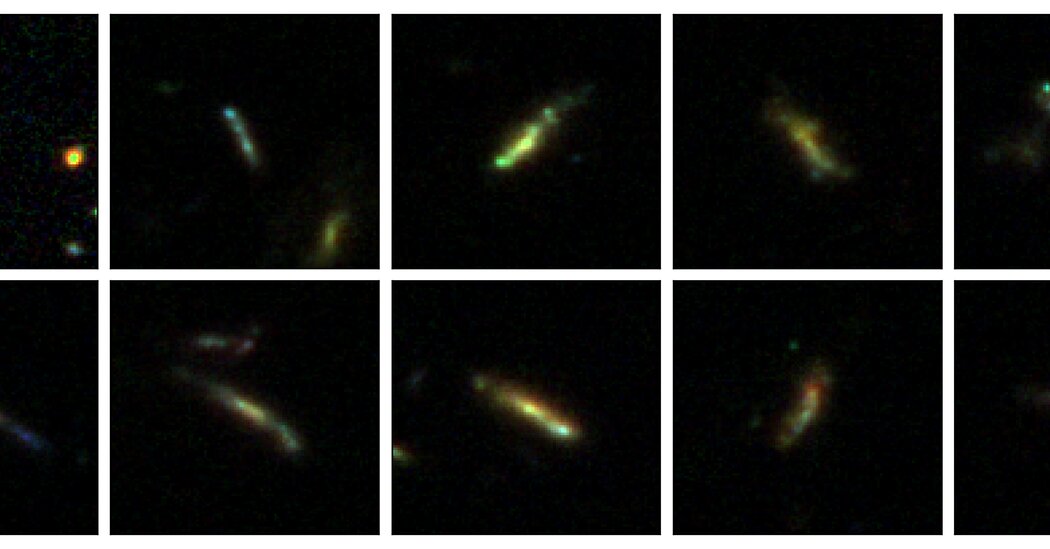
A new study analyzing images from the James Webb Space Telescope has revealed that galaxies in the early universe were elongated and shaped more like bananas, rather than the orbs and spidery discs we see today. This unexpected finding, which deviates from previous assumptions based on Hubble telescope observations, could significantly impact our understanding of galaxy formation and the role of dark matter. The research, led by Viraj Pandya of Columbia University, suggests a revision of the gravitational frameworks that describe how galaxies are born and evolve, and it may provide new insights into the enigmatic nature of dark matter.

"New Criteria for Detecting Life: Carbon-Lite Atmospheres on Exoplanets"
science-and-technology2 years ago

"New Criteria for Detecting Life: Carbon-Lite Atmospheres on Exoplanets"

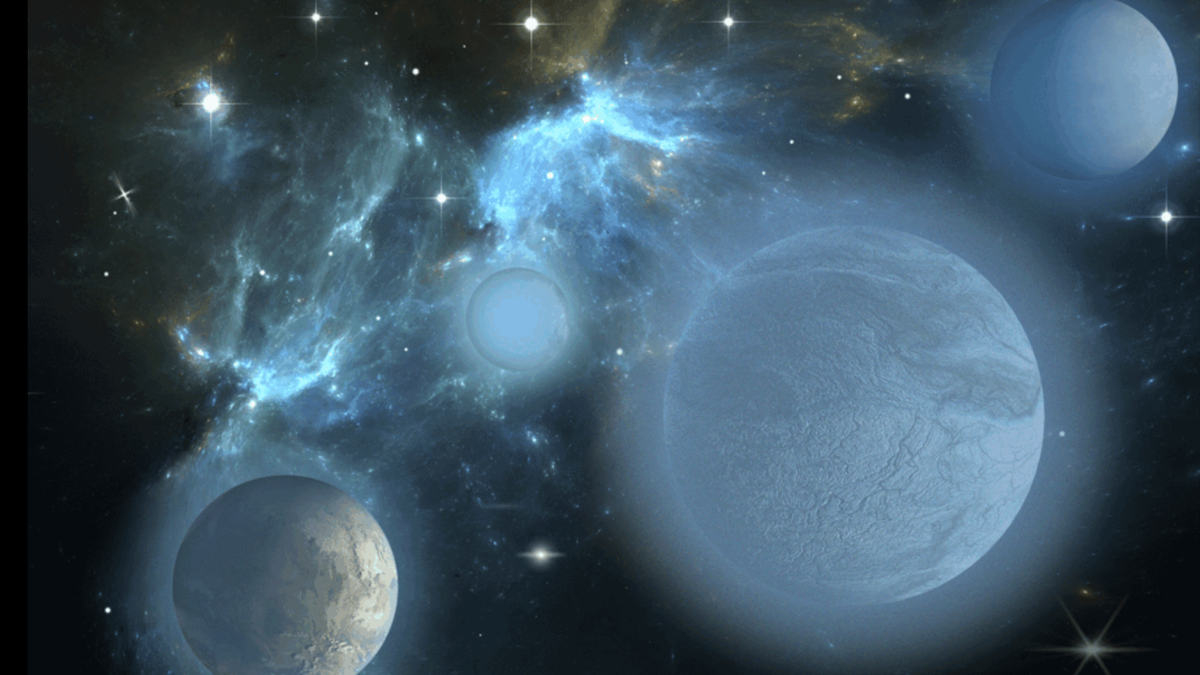
Scientists propose using the James Webb Space Telescope (JWST) to detect "carbon-lite" atmospheres on exoplanets as an indicator of liquid water and potential habitability. By comparing carbon dioxide levels in the atmospheres of planets within the same system, researchers can identify those with significant carbon depletion, suggesting active water cycles and possible oceans. Additionally, the presence of ozone could indicate not just habitability but also the existence of life. The TRAPPIST-1 system, with several Earth-like planets in the habitable zone, is a prime candidate for this research. The study, published in Nature Astronomy, offers a new roadmap for finding habitable and potentially inhabited exoplanets using JWST.

"Spiral Galaxies Abounded in the Early Cosmos, Studies Indicate"
science-and-technology2 years ago

"Spiral Galaxies Abounded in the Early Cosmos, Studies Indicate"

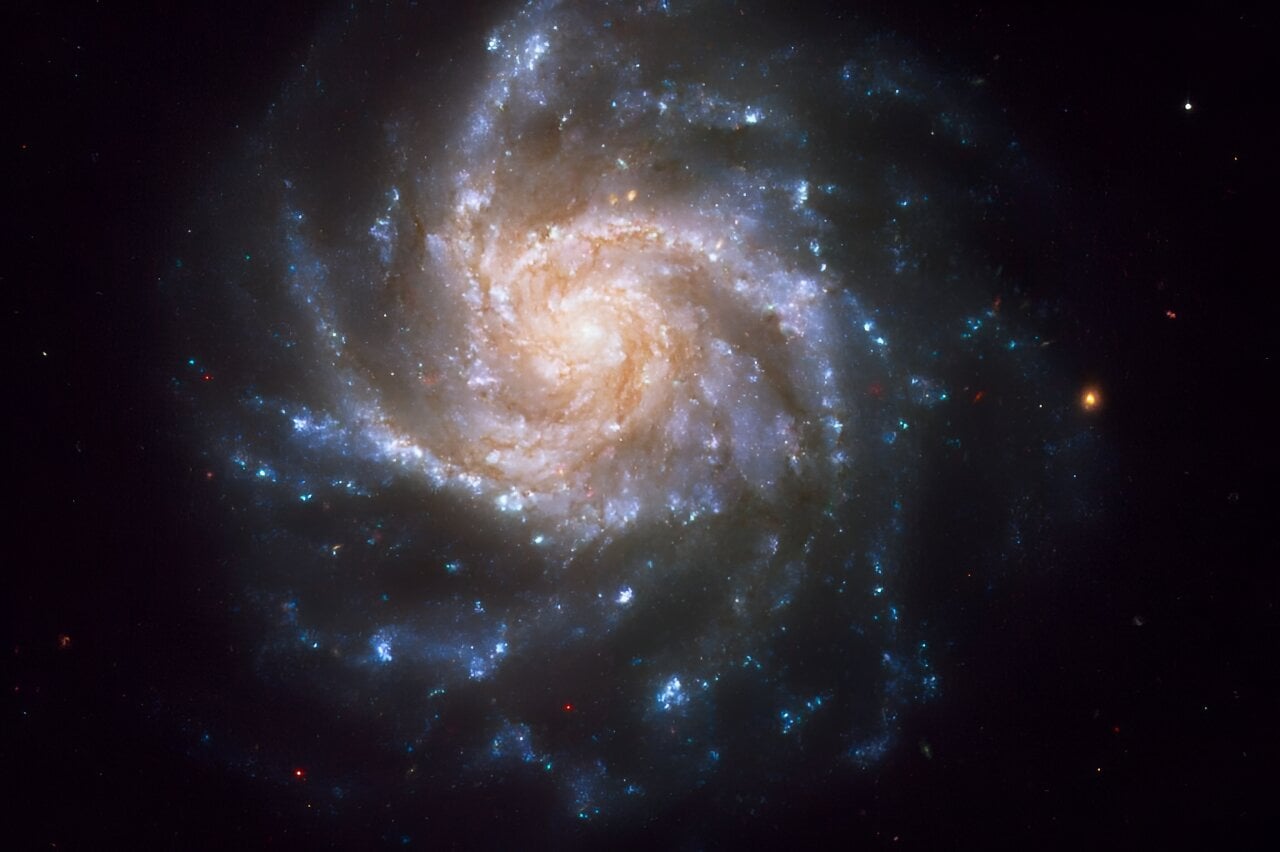
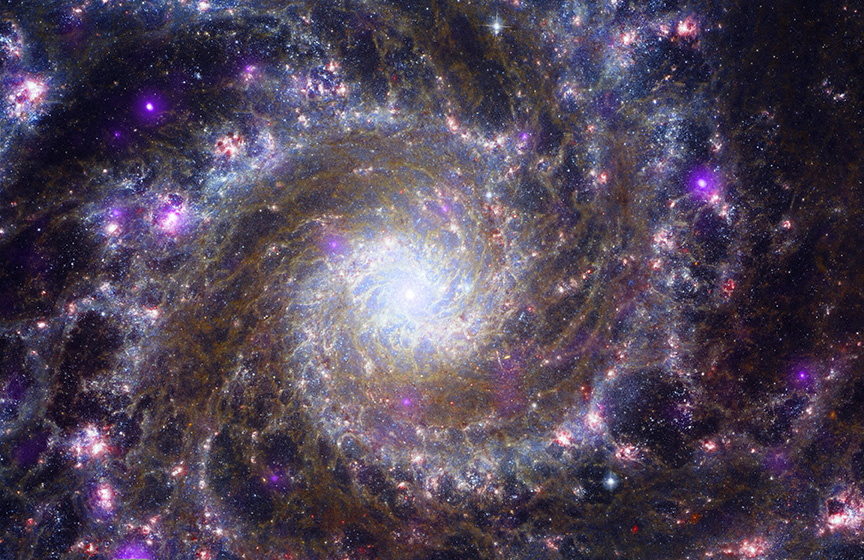
A new study using data from the James Webb Space Telescope has revealed that spiral galaxies were much more common in the early universe than previously thought. Researchers found that about a fifth of galaxies at redshift z=3, which corresponds to less than two billion years after the Big Bang, were spiral galaxies. This challenges the notion that spiral galaxies mainly form from mergers and collisions over time, suggesting that other factors contribute to their formation. The findings, which are based on observations from the Cosmic Evolution Early Release Science Survey (CEERS), indicate that many galaxies evolved into spirals much earlier than expected, and further research is needed to understand the underlying processes.

"2023's Top Space Milestones: Discoveries, Landings, and Economy Shakers"
science-and-technology2 years ago

"2023's Top Space Milestones: Discoveries, Landings, and Economy Shakers"

In 2023, significant advancements in space exploration have been made, including the detection of cosmic hum by the NANOGrav Observatory, which could aid in the search for dark matter. The James Webb Space Telescope is providing groundbreaking images and data, reshaping our understanding of the universe, from stellar nurseries to the smallest brown dwarfs. The OSIRIS-REx mission has gathered crucial information from the asteroid Bennu, which poses a potential threat to Earth. SpaceX's unique contract with NASA has allowed for rapid innovation and a high launch tempo. However, as space launch activities increase, concerns about their environmental impact are growing, prompting discussions on more sustainable space travel methods.

"2023's Most Stunning Space Vistas Captured by James Webb Telescope"
science-and-technology2 years ago

"2023's Most Stunning Space Vistas Captured by James Webb Telescope"

The James Webb Space Telescope (JWST) has been operational for two years and is providing unprecedented views of the universe, from detailed images of nearby celestial bodies to the earliest galaxies formed after the Big Bang. Scientists are surprised by the maturity of these early galaxies and the size of their central black holes, challenging existing theories. JWST's precise launch has extended its expected operational life to potentially over 20 years, allowing astronomers to plan long-term studies, such as "deep fields" to observe the faintest and most distant galaxies. While JWST captures stunning images, over 70% of its time is dedicated to spectroscopy, analyzing the composition and properties of celestial objects.

"Discovery of Farthest Molecules Sheds Light on Early Universe"
science-and-technology2 years ago

"Discovery of Farthest Molecules Sheds Light on Early Universe"

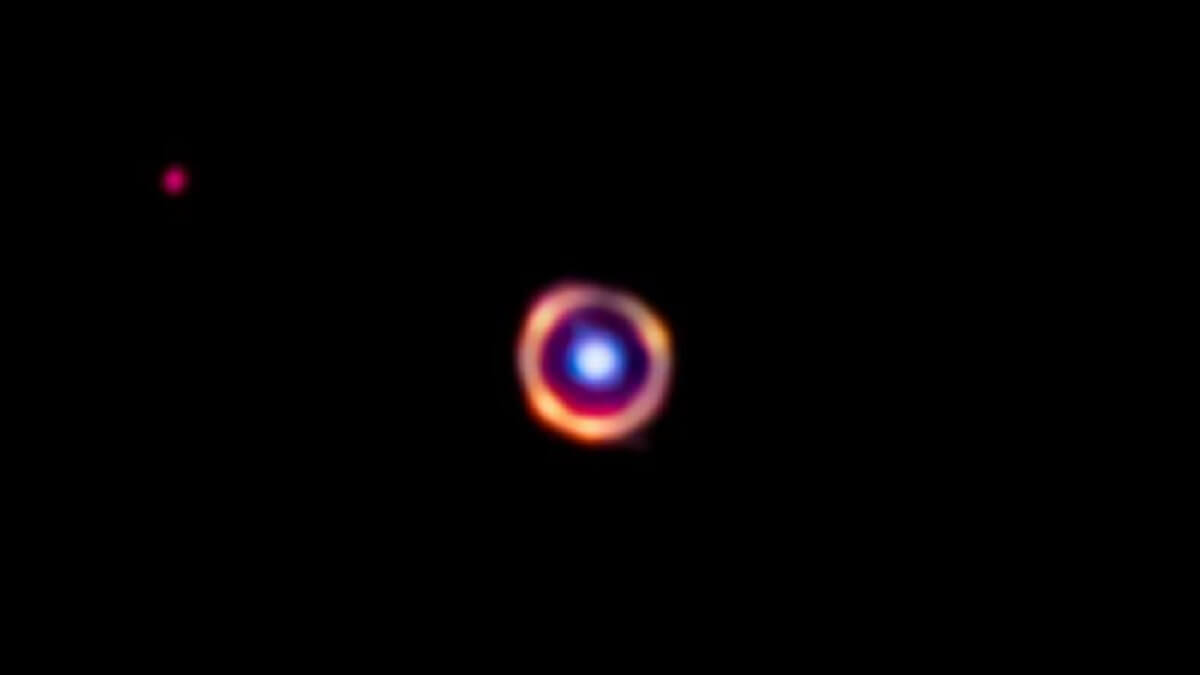
The James Webb Space Telescope has discovered the most distant molecules ever observed, 12 billion light-years away, in a galaxy from when the universe was only 10 percent of its current age. This was made possible by gravitational lensing, which magnified the light from the galaxy, allowing for detailed observation. The findings include large organic molecules similar to Earth's smog, challenging the assumption that such molecules always indicate star formation. This marks Webb's first detection of complex molecules in the early universe and suggests the potential for more discoveries about the composition of young galaxies.

"2023's Most Stunning James Webb Space Telescope Images: From Cosmic Cliffs to Pillars of Creation in 4K"
science-and-technology2 years ago

"2023's Most Stunning James Webb Space Telescope Images: From Cosmic Cliffs to Pillars of Creation in 4K"

NASA's James Webb Space Telescope has captured 13 groundbreaking images in 2023, offering new insights into the universe. Highlights include the most distant black hole ever detected, located 13.2 billion light-years away, and the Ring Nebula in unprecedented detail, revealing a secret star missed by Hubble. These images have advanced our understanding of star formation, galaxy evolution, and the early universe, while also raising new questions for astronomers.

"JWST Reveals Mysterious Rogue Planets Challenging Formation Theories in Orion"
science-and-technology2 years ago

"JWST Reveals Mysterious Rogue Planets Challenging Formation Theories in Orion"

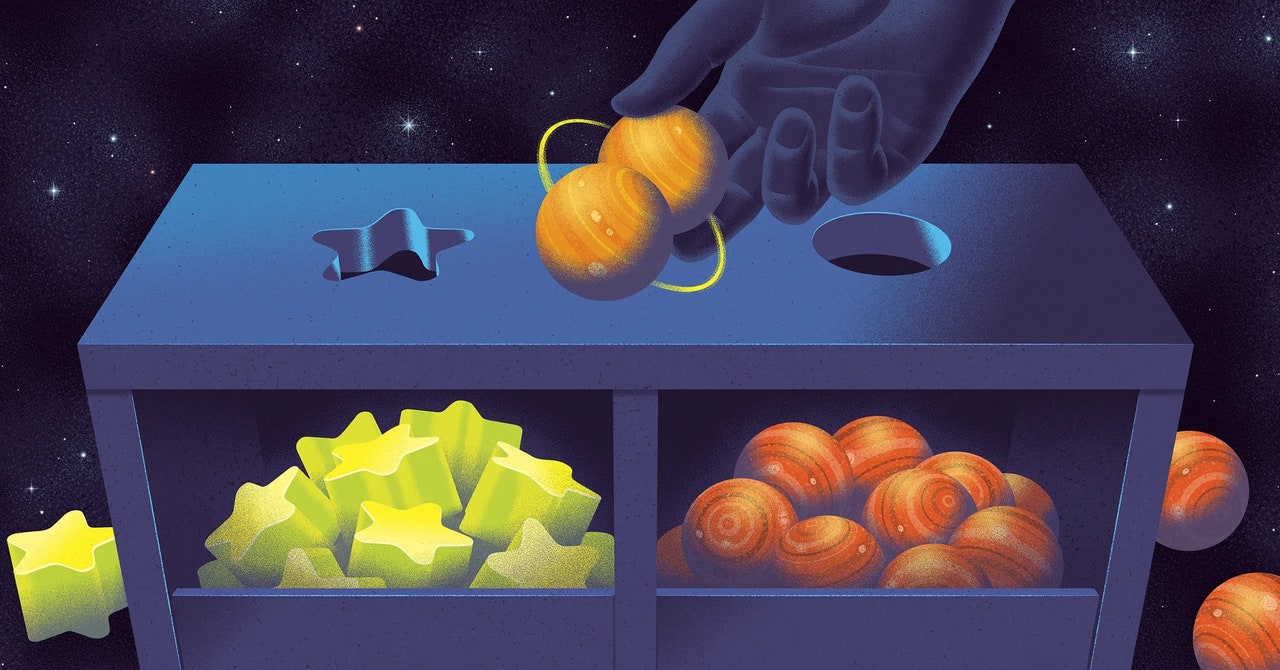
Astronomers using the James Webb Space Telescope have discovered over 500 dim, Jupiter-mass objects in the Orion nebula, blurring the line between planets and stars. These objects, some of which are pairs of worlds orbiting each other, challenge current theories of planet formation. The findings suggest that these "rogue" or "free-floating" planets could be ejected from their home systems in pairs, a process previously thought nearly impossible. This discovery opens up new questions about the formation of such objects and indicates that our galaxy may be filled with a vast number of untethered celestial bodies.

"James Webb Telescope Reveals Unprecedented New Year Glimpse of Uranus and Its Rings"
science-and-technology2 years ago

"James Webb Telescope Reveals Unprecedented New Year Glimpse of Uranus and Its Rings"

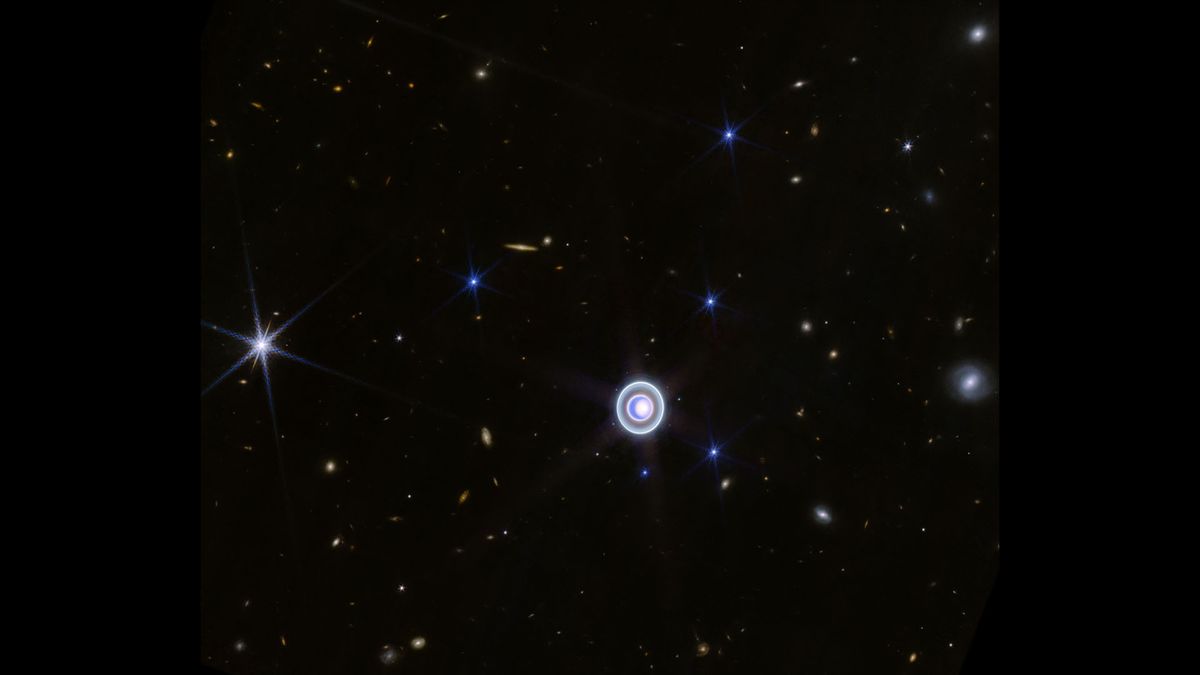
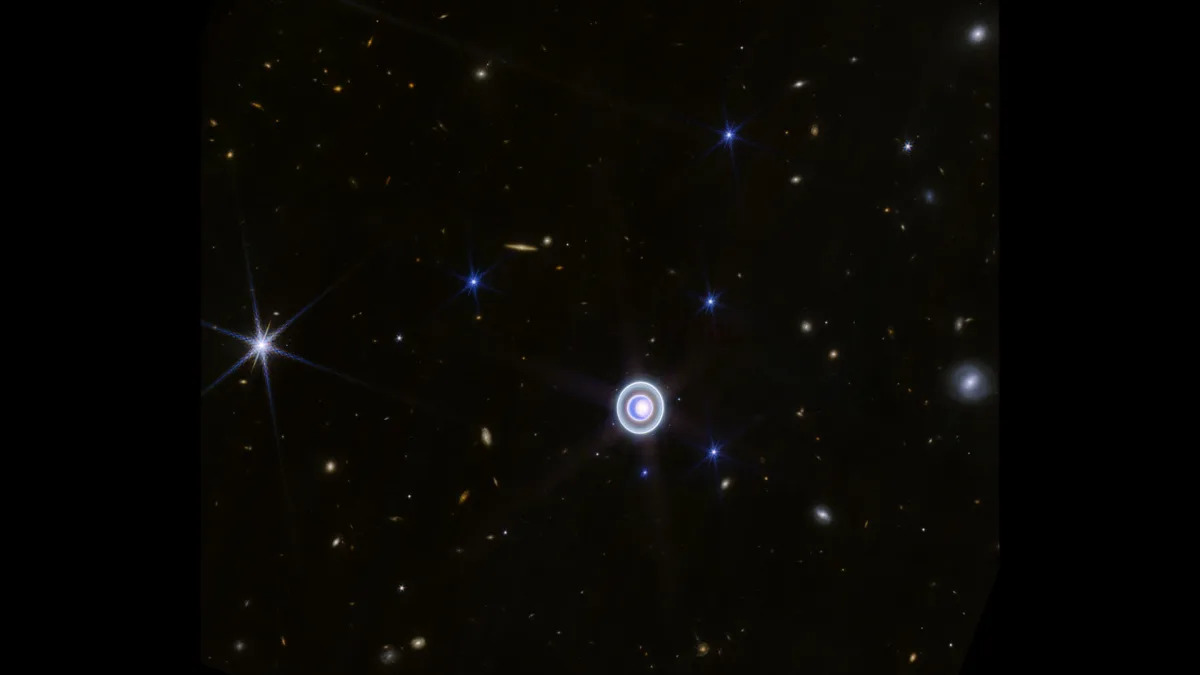
The James Webb Space Telescope captured a stunning image of Uranus, showcasing its rings, a polar ice cap, and 14 of its 27 moons in unprecedented detail. This image, taken on December 18, 2023, is significant as it reveals atmospheric features and a previously elusive "Zeta ring" around the ice giant. The photo also includes background stars and galaxies, providing a much more detailed view than the first close-up by Voyager 2 in 1986. The image helps scientists study Uranus' extreme seasons and meteorological phenomena, as the planet experiences a 21-year-long winter due to its 98-degree axial tilt.

"2023: A Year of Cosmic Wonders, from Alien Mysteries to Epic Space Milestones"
science-and-technology2 years ago

"2023: A Year of Cosmic Wonders, from Alien Mysteries to Epic Space Milestones"

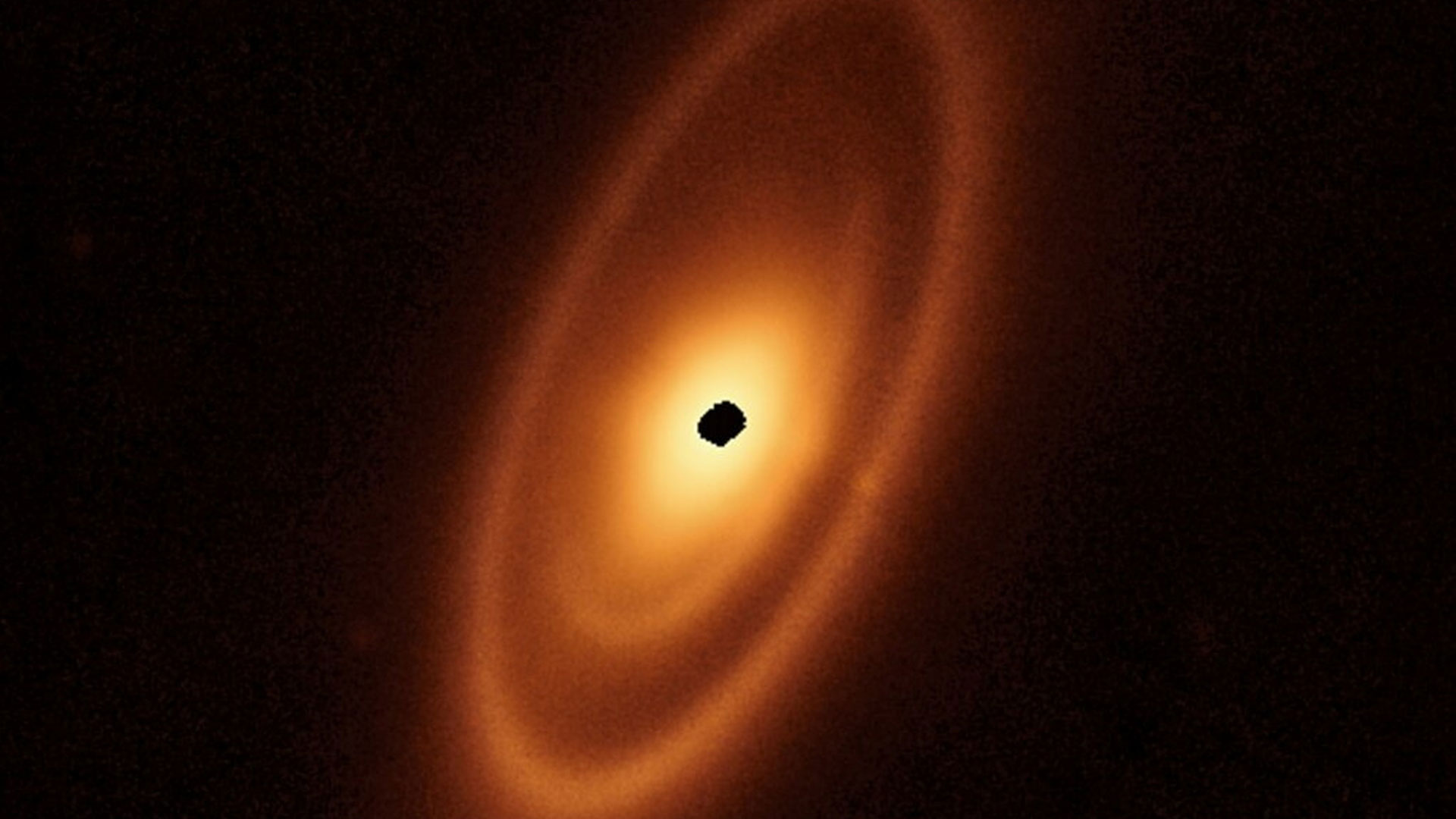
NASA's James Webb Space Telescope captured some of the most remarkable space images of 2023, including a detailed view of the rings around Uranus, a vibrant snapshot of the Milky Way's center where new stars are born, and the brightest supernova observed in the last 420 years, Supernova 1987A. Additionally, the telescope provided the first infrared images of asteroid belts around the star Fomalhaut and a deep space view of ancient galaxies forming a mega-cluster known as Pandora's Cluster. These images offer unprecedented insights into the cosmos, showcasing celestial phenomena and the dynamic processes within our universe.

"James Webb Telescope Captures Breathtaking New Year Image of Uranus' Rings"
science-and-technology2 years ago

"James Webb Telescope Captures Breathtaking New Year Image of Uranus' Rings"

The James Webb Space Telescope captured a stunning image of Uranus, showcasing the planet's rings, a polar ice cap, and 14 of its 27 moons. The photo, taken on December 18, 2023, is significant for revealing the elusive "Zeta ring" and providing a detailed view of atmospheric features, including a north polar cloud cap indicative of Uranus's extreme seasons due to its 98-degree axial tilt. The image also includes background stars and galaxies, enhancing our understanding of the ice giant and its environment.

"Webb Telescope Discovers Another Lensed Supernova in Far-Flung Galaxy"
science-and-technology2 years ago

"Webb Telescope Discovers Another Lensed Supernova in Far-Flung Galaxy"

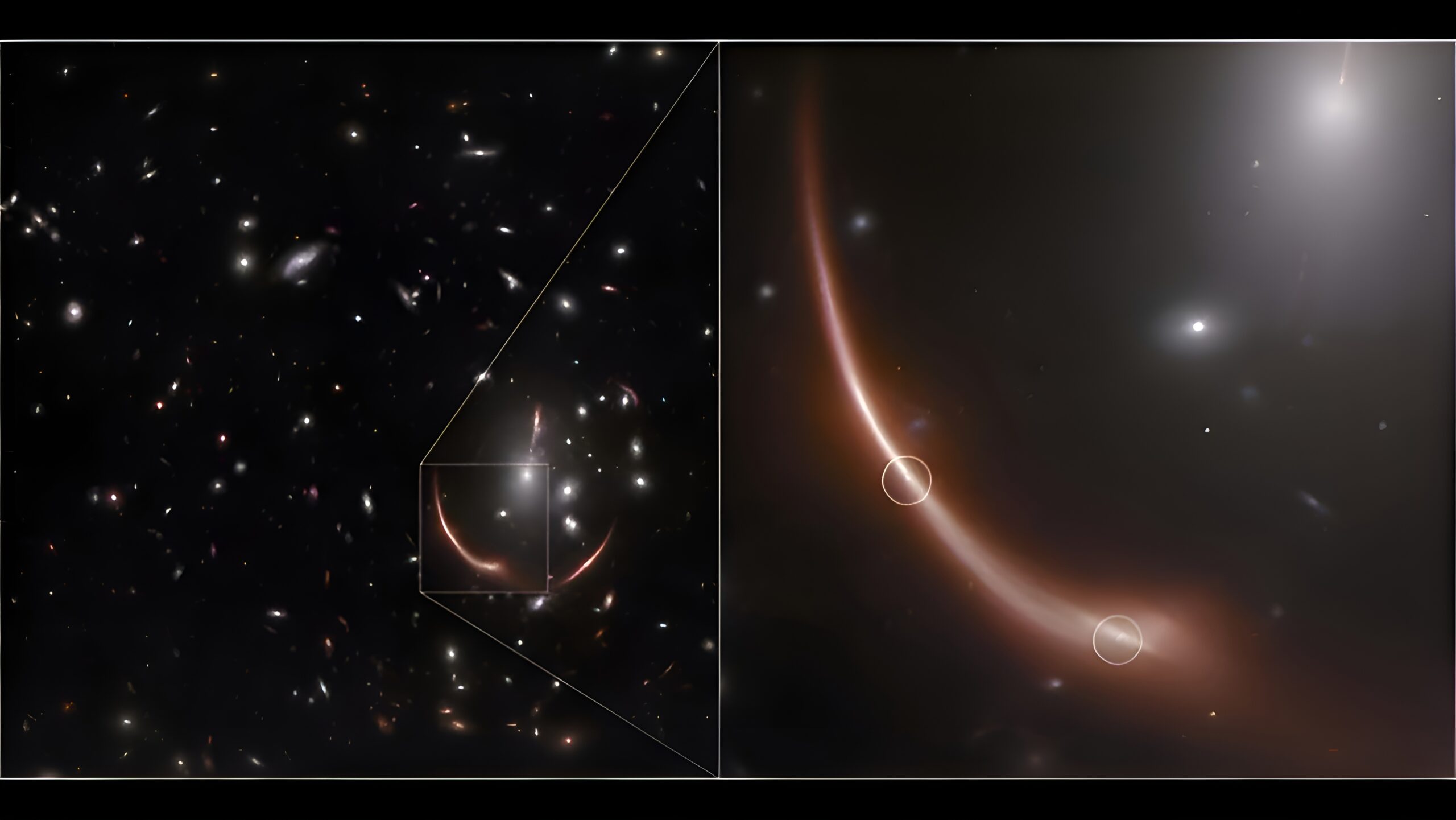
NASA's James Webb Space Telescope has detected a second lensed supernova in the distant galaxy MRG-M0138, thanks to the gravitational lensing effect of the galaxy cluster MACS J0138.0-2155. This rare event, following the first supernova named Requiem discovered in 2016, provides astronomers with a unique opportunity to study cosmic events and measure the universe's expansion rate, known as the Hubble constant. The newly discovered supernova, dubbed Supernova Encore, along with Requiem, represents the most distant pair of 'standard candle' supernovae ever found, which will help in obtaining a precise measurement of the Hubble constant when observed in infrared around 2035.

"NASA's Webb Telescope Reveals Stunning Clarity of Uranus' Rings and Moons"
science-and-technology2 years ago

"NASA's Webb Telescope Reveals Stunning Clarity of Uranus' Rings and Moons"

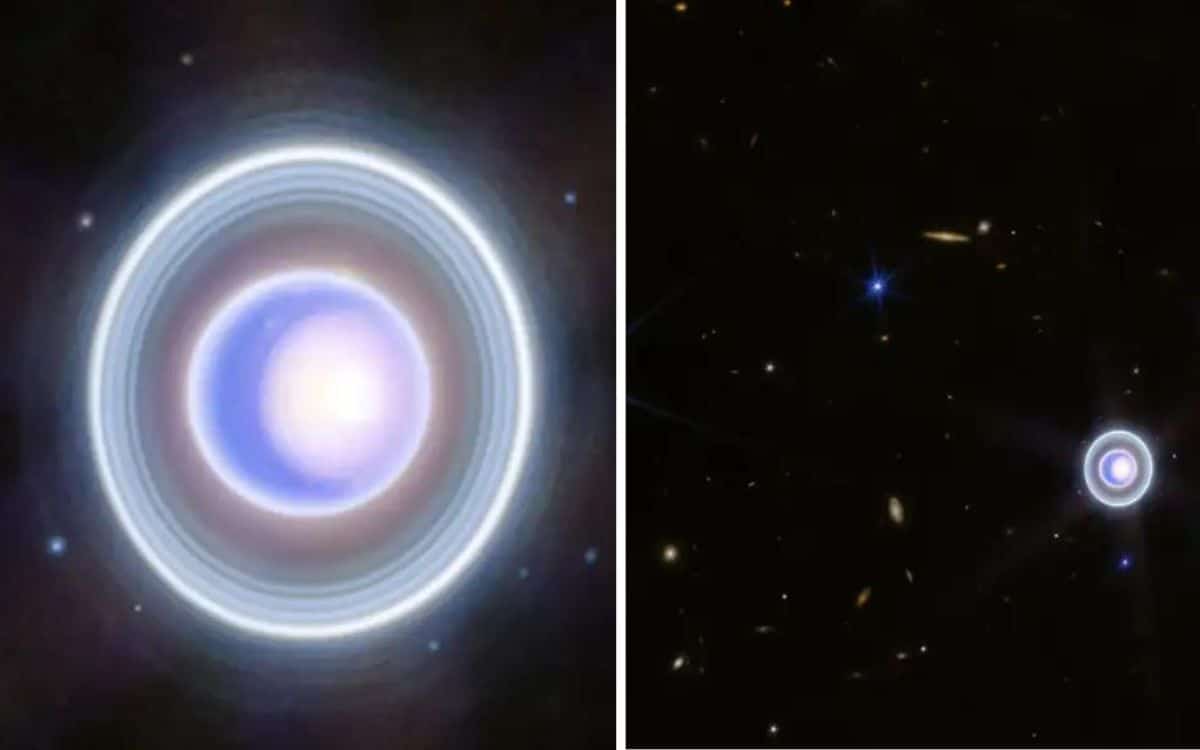
NASA's James Webb Space Telescope (JWST) has captured unprecedented images of Uranus, revealing its rings, moons, and atmospheric details like storms and a polar cap. The images showcase the planet's dynamic nature and provide valuable insights for future exploration and understanding of planetary formation and meteorology. The JWST's infrared capabilities allowed for detailed observation of Uranus's fast-moving features, including its elusive Zeta ring and 14 of its 27 moons. These findings contribute to the broader study of exoplanets and the ongoing renaissance in space exploration.

Rethinking the Nature of a Colossal Ancient Galaxy
science-and-technology2 years ago

Rethinking the Nature of a Colossal Ancient Galaxy

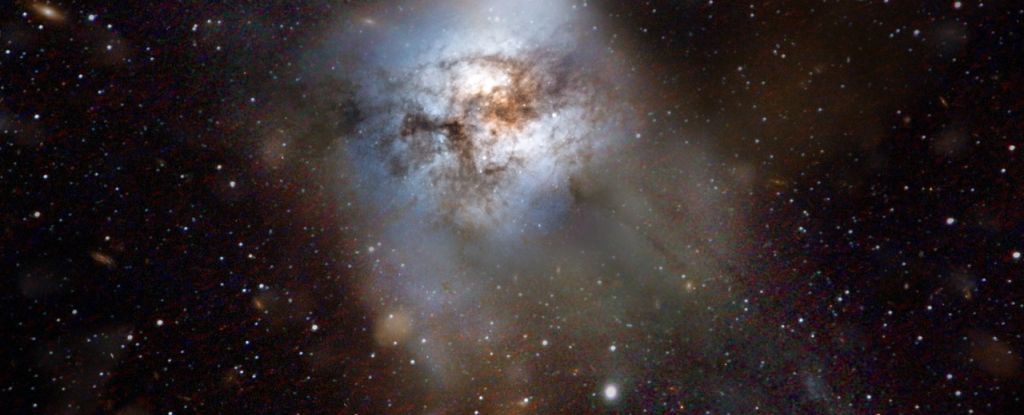
The James Webb Space Telescope (JWST) has revealed that HFLS3, previously thought to be a single galaxy with rampant star formation early in the Universe, is actually six galaxies in the midst of a massive collision. This discovery, led by Gareth Jones of the University of Oxford, challenges previous notions about the size and star formation rates of early galaxies and provides insight into galaxy interactions during the Cosmic Dawn. The findings, which show the galaxies are closely interacting and igniting new stars at a high rate, have been accepted for publication in Astronomy & Astrophysics and call for a reevaluation of similar cosmic objects.