Tag

Mini Brains

All articles tagged with #mini brains

science10 days ago

Breakthroughs in Alzheimer's Research: Reversal and Recovery Hope

This week in science features a promising Alzheimer's drug tested in mice, a new theory about the purpose of the Bayeux Tapestry, the discovery of three colliding galaxies, insights into lactose tolerance in South Asian populations, a theoretical model explaining particle mass through extra dimensions, and advances in understanding schizophrenia and bipolar disorder using lab-grown mini-brains.
science14 days ago

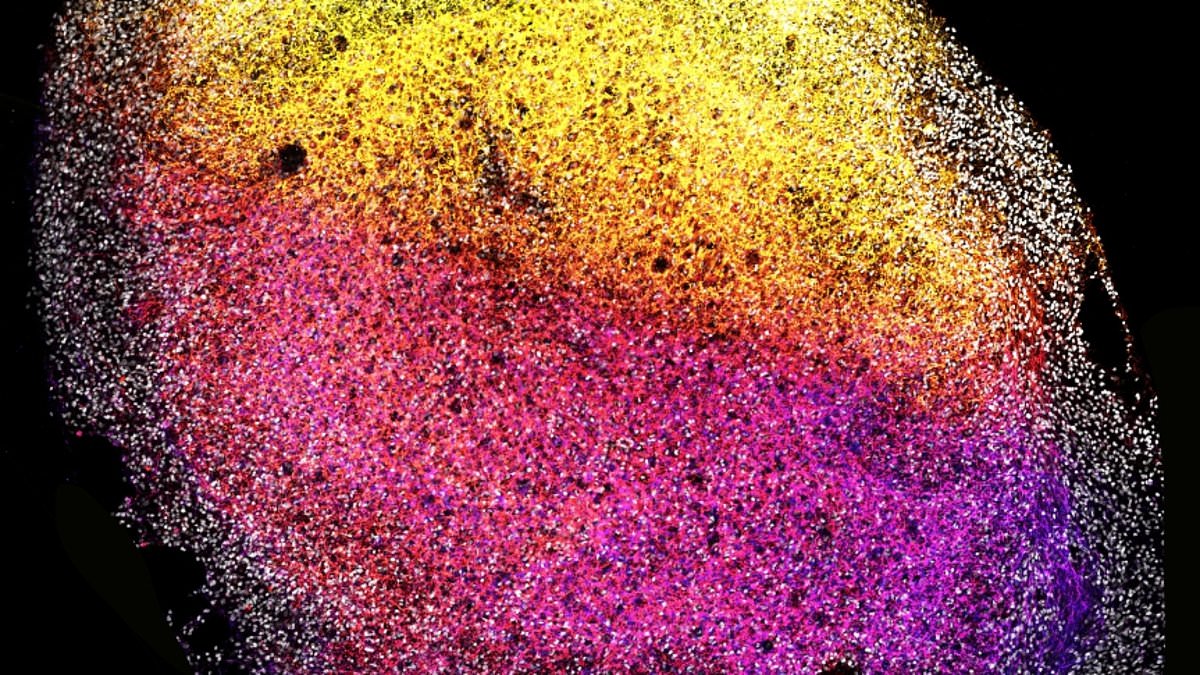
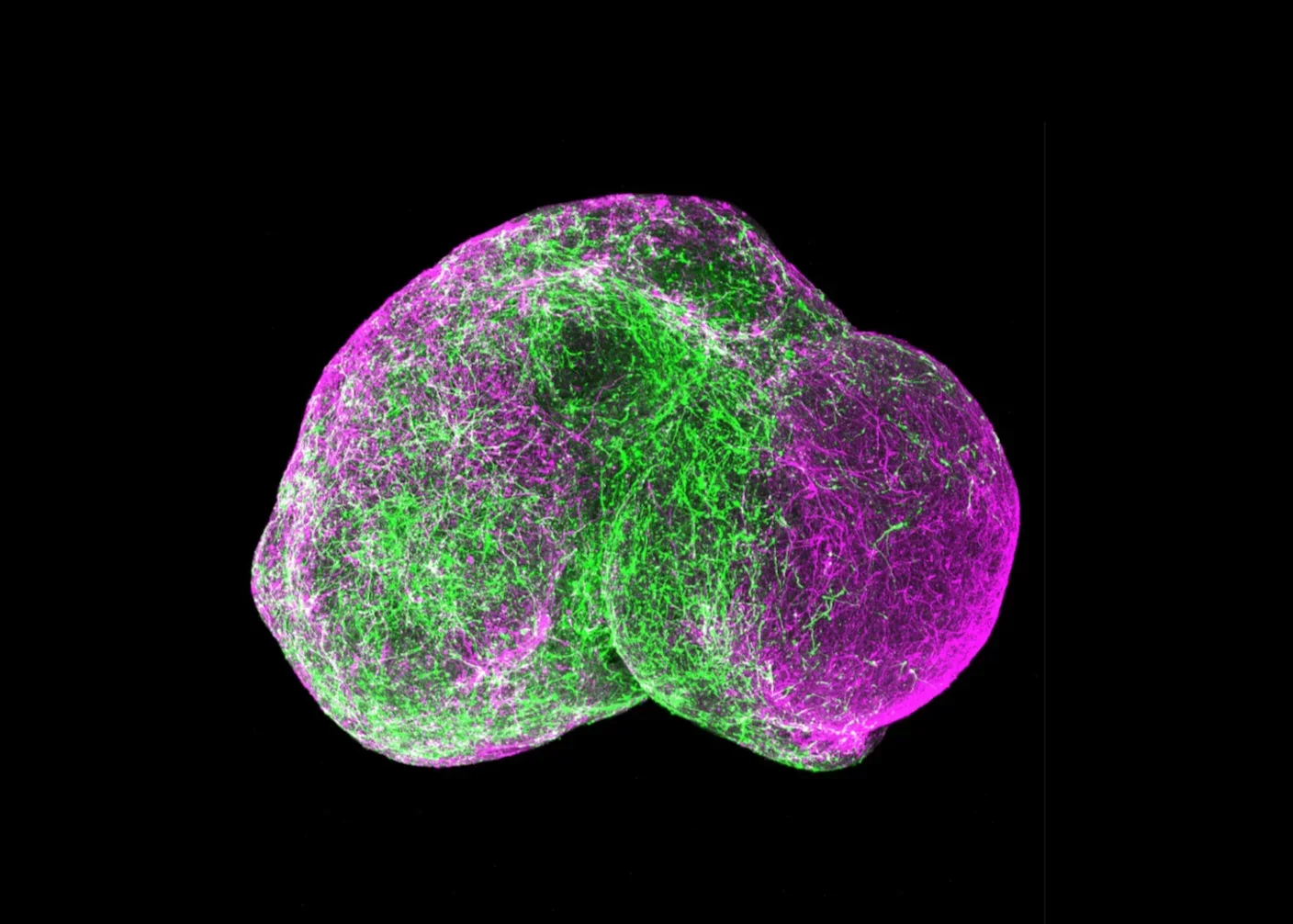
Mini-Brains Uncover Brain Signals Linked to Schizophrenia and Bipolar Disorder

Scientists at Johns Hopkins have used lab-grown 'mini-brains' or organoids to identify neural signatures associated with schizophrenia and bipolar disorder, achieving up to 92% accuracy in distinguishing these conditions through electrical activity patterns, which could lead to more objective diagnoses and targeted treatments in the future.

science19 days ago

Mini Brains Mimic Kindergarten Neural Wiring, Raising Ethical Questions

Scientists have developed complex brain organoids that mimic a kindergartner's neural wiring, raising ethical concerns about their potential to develop sensations or consciousness. Experts advocate for global regulation to oversee research, especially as these mini brains could lead to breakthroughs in treating neurological disorders, but also pose moral questions about their use and treatment.

science2 months ago

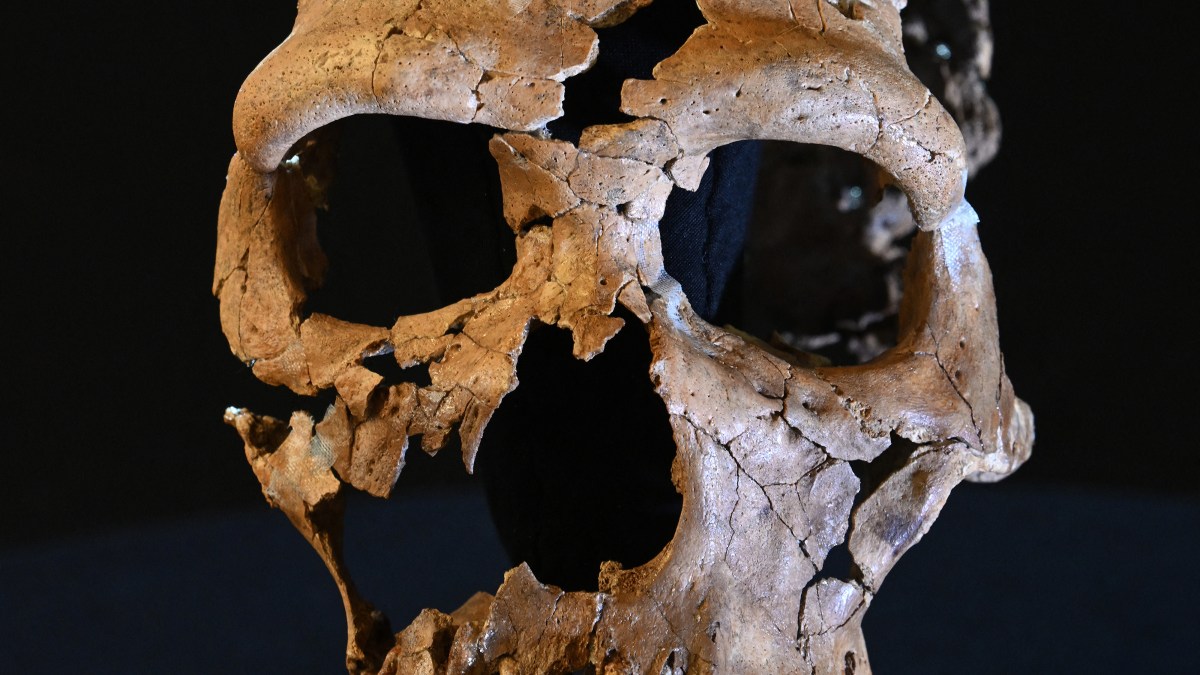
Ancient Lead Exposure and Its Role in Human Brain Evolution

Lab-grown mini-brains with Neanderthal and modern human genes suggest that intermittent lead exposure may have influenced brain development and survival differences between the species, potentially impacting language and social cohesion. The study highlights how environmental factors like lead pollution, present in ancient times, could have played a role in human evolution.

science2 years ago

"Revolutionizing Neuroscience: Mini-Brains Grown from Fetal Tissue Unlock New Frontier in Research"

Scientists have developed mini-brains using human fetal brain tissue, roughly the size of a grain of rice, in a breakthrough that could revolutionize neuroscience. The mini-brains were grown to model brain cancer and understand brain development, potentially leading to new insights and treatments for childhood brain cancer and neurodevelopmental diseases. This research could offer hope for the 4,000 children diagnosed with brain and spinal cord tumors in the U.S. each year.

neuroscience2 years ago

Uncovering the Neuronal Imbalance Origins of Autism Spectrum Disorder

Scientists have used organoids, or "mini-brains," to study the origins of autism spectrum disorder (ASD). By analyzing these miniature brain models, researchers discovered an imbalance of excitatory cortical neurons in the forebrains of individuals with ASD. This imbalance is believed to occur during early brain development in utero, shedding light on the genetic origins of autism. The study also identified specific genes, known as transcription factors, that play a crucial role in early brain development and are associated with the neuronal imbalance observed in ASD patients. This research builds upon previous studies and may contribute to prenatal genetic testing and potential prevention of ASD.