Tag

Lunar Outpost

All articles tagged with #lunar outpost

space1 year ago

SpaceX's Starship Secures Lunar Rover Delivery for NASA's Artemis Mission

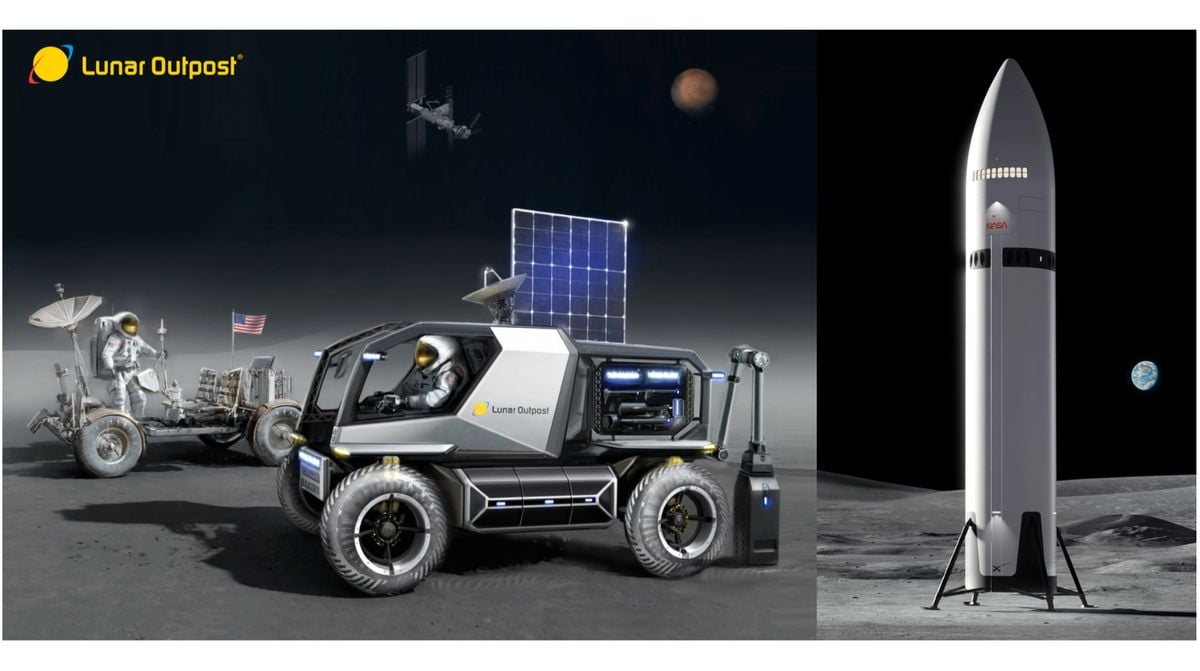
Lunar Outpost has selected SpaceX's Starship to launch and land its new moon rover, Eagle, on the lunar surface. This decision follows a successful suborbital test flight of Starship. The collaboration aims to support Lunar Outpost's mission of establishing a sustainable human presence in space. The Eagle rover is part of NASA's Lunar Terrain Vehicle (LTV) program, with three private teams, including Lunar Outpost, competing to develop a rover for NASA's Artemis missions. The winning team will conduct a test mission ahead of the Artemis 5 flight, scheduled for 2030.

technology1 year ago

SpaceX Secures Key Lunar Lander Contracts with NASA and Lunar Outpost

SpaceX has signed its second commercial contract to deliver a payload to the moon using its Starship lunar lander, this time with Lunar Outpost. The deal involves transporting Lunar Outpost's rover, Eagle, to the lunar surface by 2029. This follows Lunar Outpost's selection by NASA for the lunar terrain vehicle program, which could be worth up to $4.6 billion over 13 years. Despite uncertainties about the mission specifics and NASA's final selection, Lunar Outpost plans to continue developing its rover, supported by a recent Series A funding round.

space-exploration2 years ago

"Predicting the First Animals to Inhabit the Moon and Mars"

NASA plans to establish a permanent lunar outpost and explore Mars, prompting consideration of which animals could help sustain ecosystems in space. Insects, fish, water bears, and crustaceans are among the candidates due to their potential for pollination, food production, and resilience to extreme conditions. However, the impact of reduced gravity on animal development remains a significant challenge, with simpler animals like insects and crustaceans likely to be more robust in space habitats. Research and engineering challenges persist, but these animals could play crucial roles in supporting future human settlements beyond Earth.

space2 years ago

Italy's Minimalist Lunar Outpost Proposal for Artemis Mission

The Italian Space Agency (ASI) has announced plans to develop a lunar habitation module called the Multi-Purpose Habitat (MPH) in collaboration with Thales Alenia Space for NASA's Artemis program. The MPH will provide living and working space on the lunar surface, with its own power generation, life support, and communications systems. It could also serve as a shelter for astronauts awaiting rescue. While technical details are currently unavailable, the MPH may be based on existing space-proven designs, such as the Leonardo Permanent Multipurpose Module (PMM) of the International Space Station. The development of the MPH highlights international collaboration and the growing seriousness of the Artemis program in establishing a sustainable lunar colony.

space2 years ago

"Revolutionary Moon Habitat: A Cool and Versatile Space Solution"

The Italian Space Agency (ASI) and Thales Alenia Space have partnered to develop a multi-purpose habitat, named the Multi-Purpose Habitat (MPH), which aims to be the first permanent outpost on the Moon. The cylindrical habitat, powered by solar panels and equipped with articulated legs, is designed to provide a pressurized environment, life support, and protection from radiation and micrometeorite showers. While the project has passed NASA's Element Initiation Review, it still needs to complete NASA's Mission Concept Review to become part of the Artemis program.

space2 years ago

Artemis 4 Astronauts Prepare for Lunar Mission Aboard NASA's Gateway

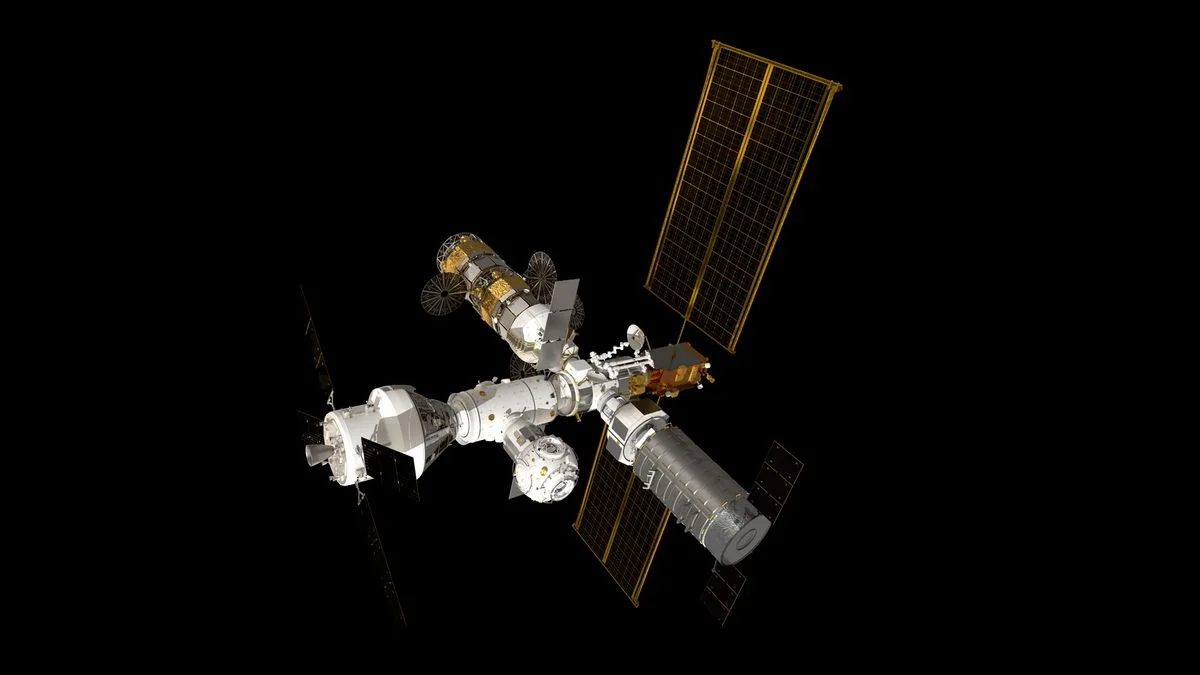
NASA's Artemis 4 mission, scheduled for 2028, will be the first to utilize the moon-orbiting Gateway space station as part of the agency's Artemis moon program. The astronauts of Artemis 4 will live and work in the small lunar outpost, while the first crewed mission to the station is expected to arrive in 2025 or 2026. The Gateway will serve as a compact home for astronauts and is being designed to operate autonomously for up to three years between missions. The European Space Agency (ESA) and Japan will provide a refueling module and a second habitat module for the lunar outpost, and European astronauts will have three flight opportunities to work on the outpost and land on the moon. Gateway's unique position around the moon will enable science experiments to study radiation risks and inform future long-term missions to the moon and Mars.