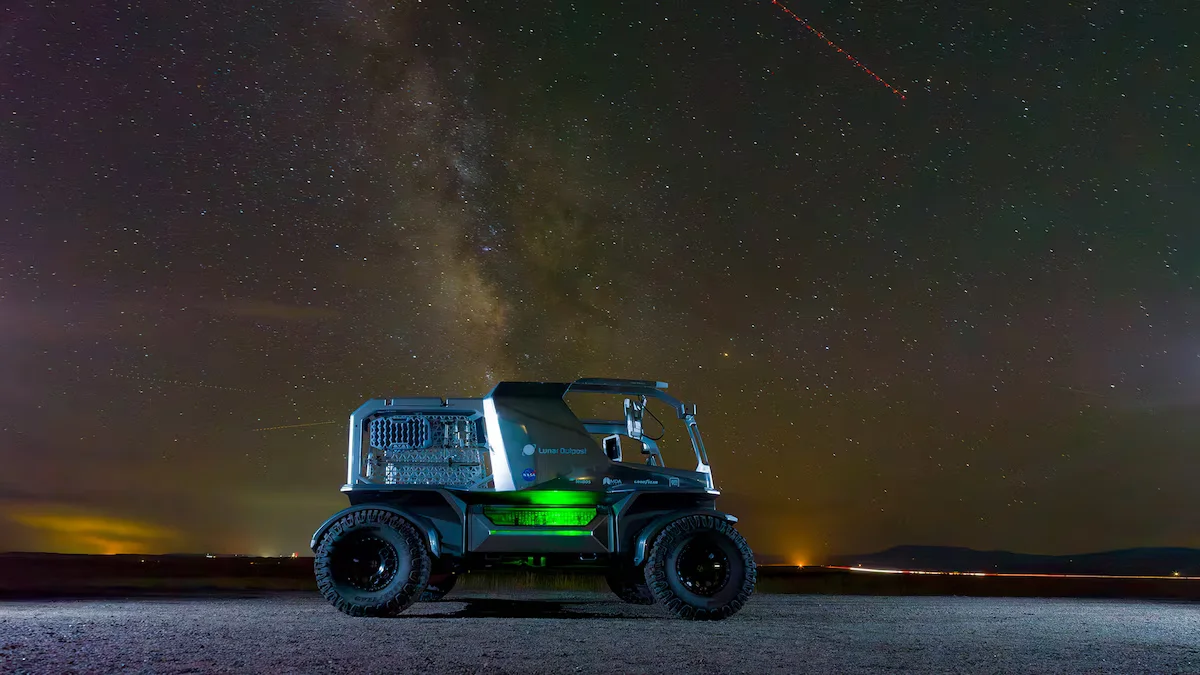
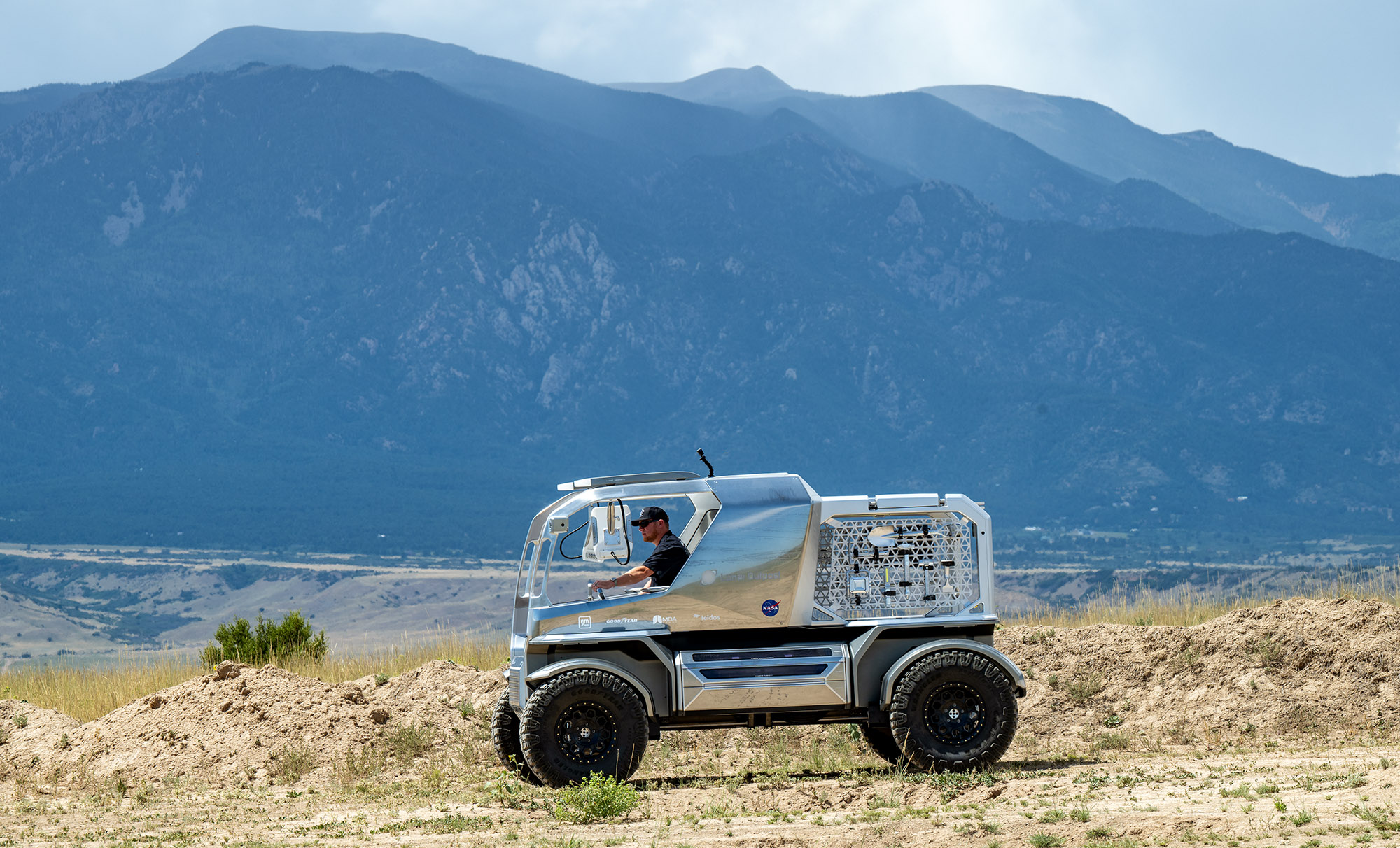
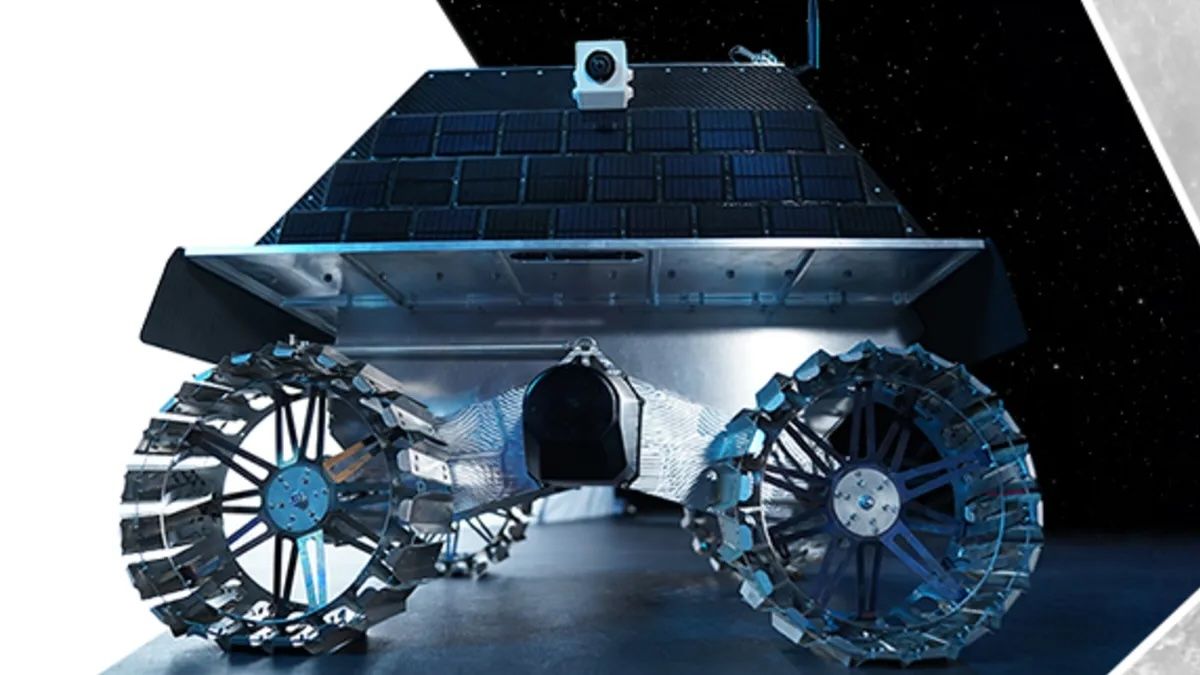
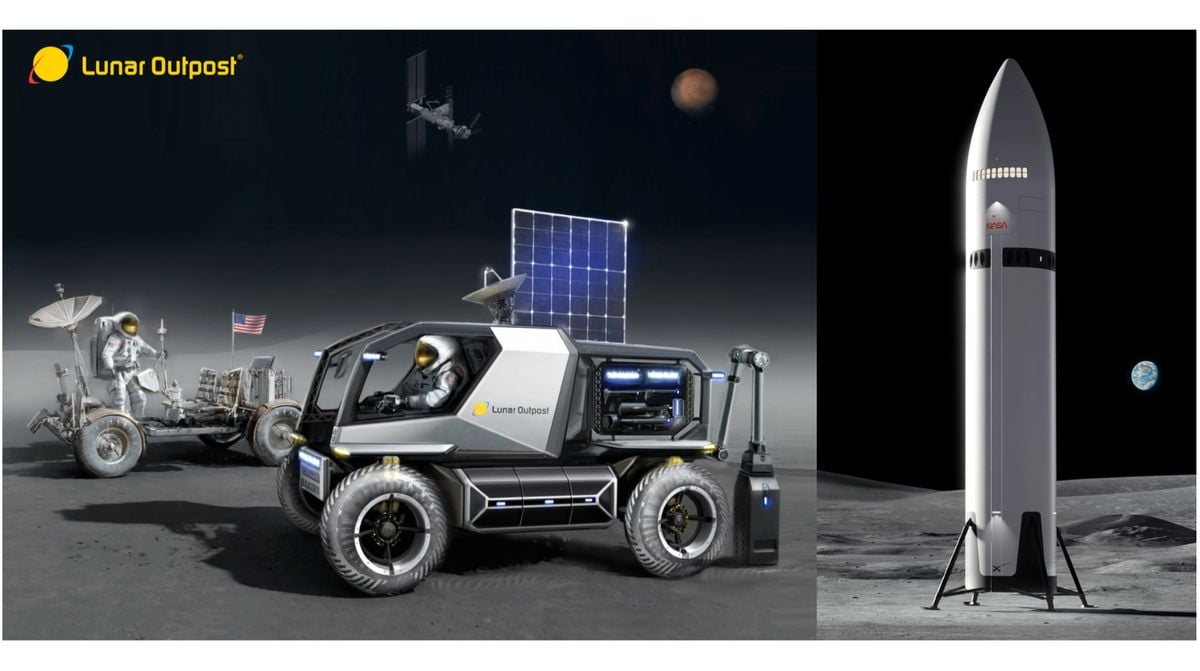
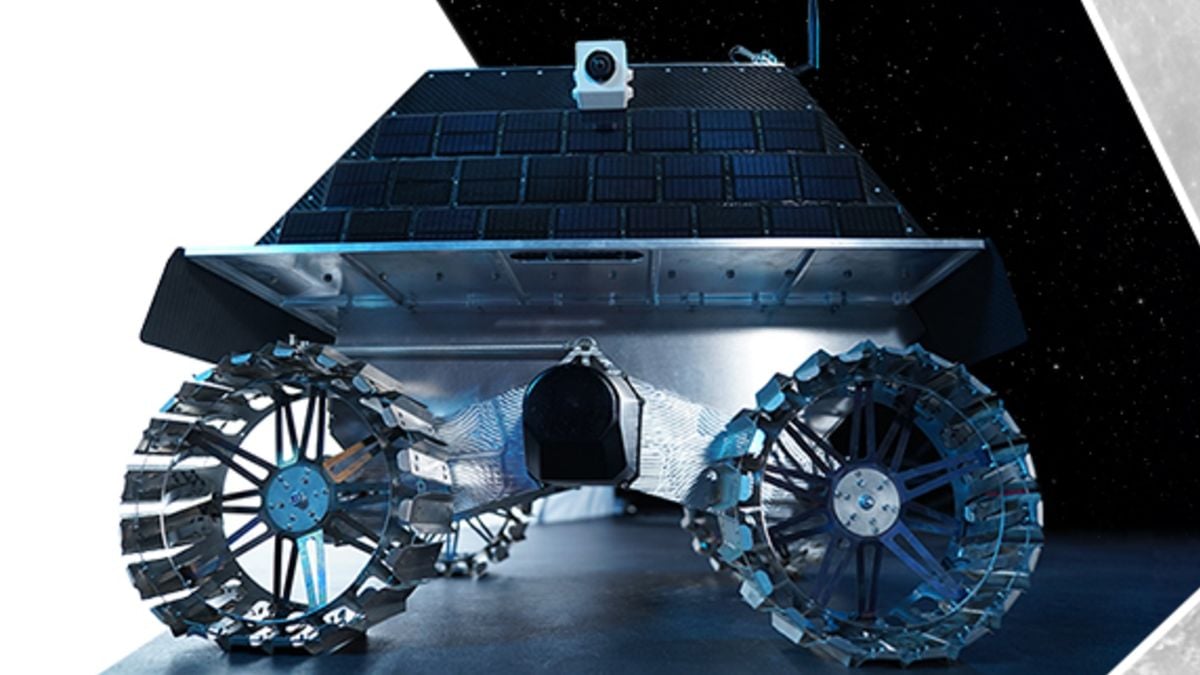
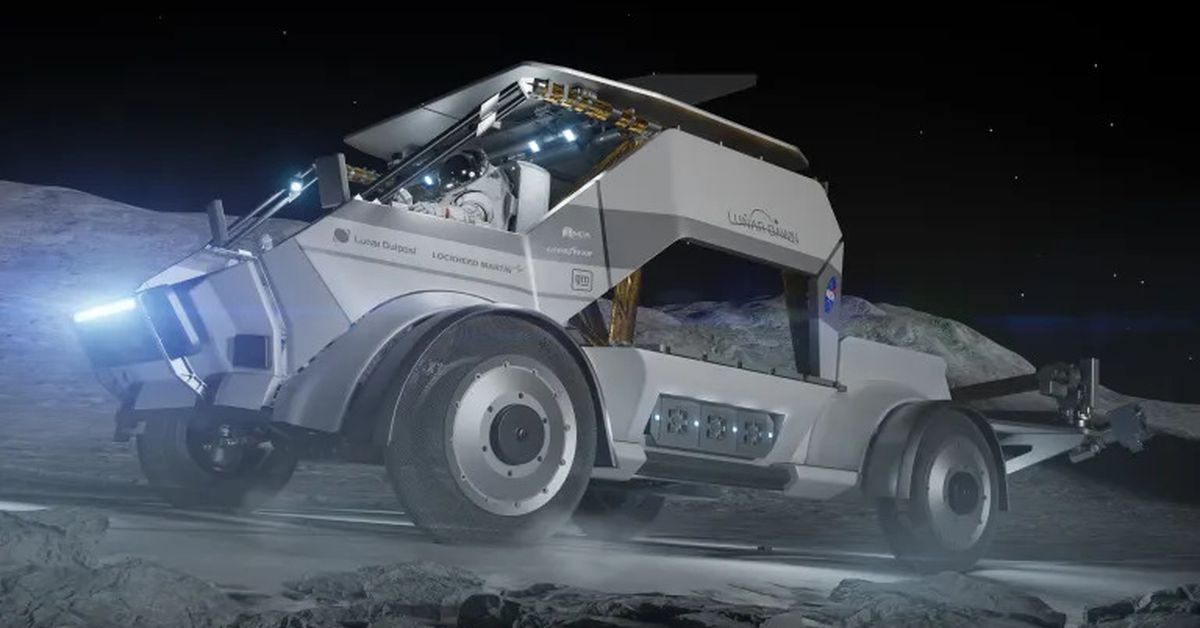
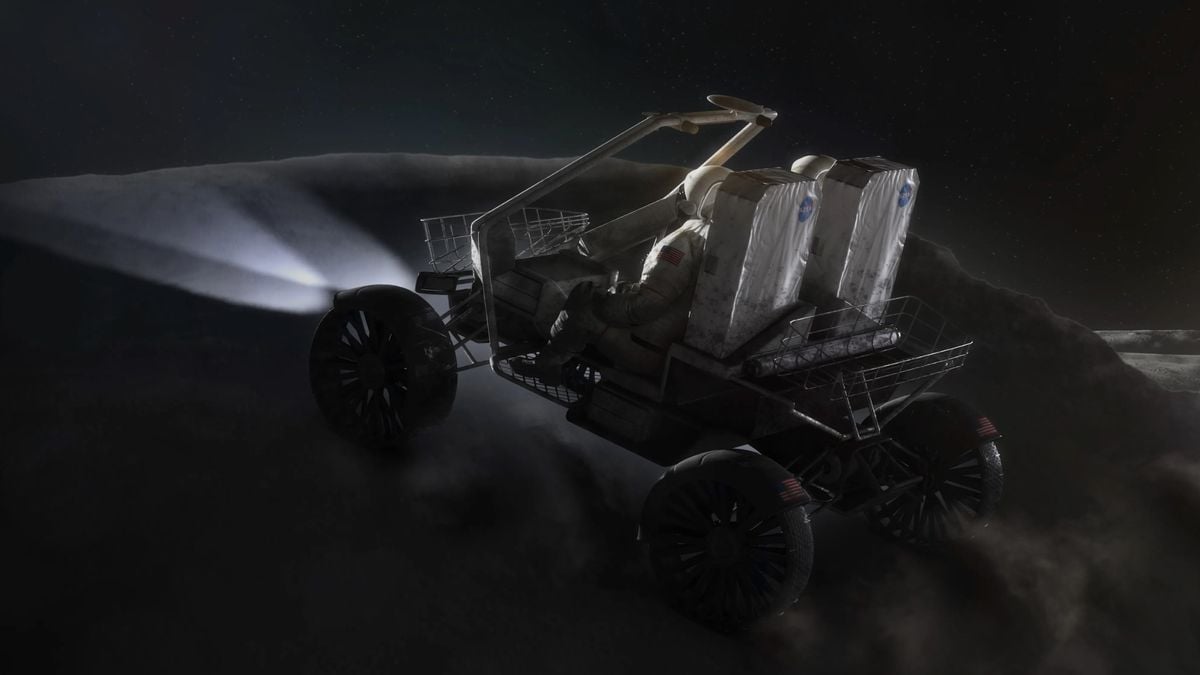
NASA is testing three innovative lunar vehicle prototypes from Lunar Outpost, Venturi Astrolab, and Intuitive Machines, each with unique designs and capabilities, to select the next-generation moon rover for Artemis missions, aiming to establish a sustainable lunar presence and facilitate future exploration and construction on the moon.
Lunar Outpost is developing a lunar terrain vehicle (LTV) called Eagle, designed for Artemis astronauts to explore the moon's surface, with ongoing testing and collaboration with NASA, including a payload on the upcoming 2026 moon mission, and advancements in autonomous and teleoperated lunar vehicle technology.
Lunar Outpost is testing a prototype lunar terrain vehicle in southern Colorado, competing for a NASA contract to provide mobility solutions for moon exploration as part of the Artemis program, with potential to support sustainable human presence on the moon by 2029.
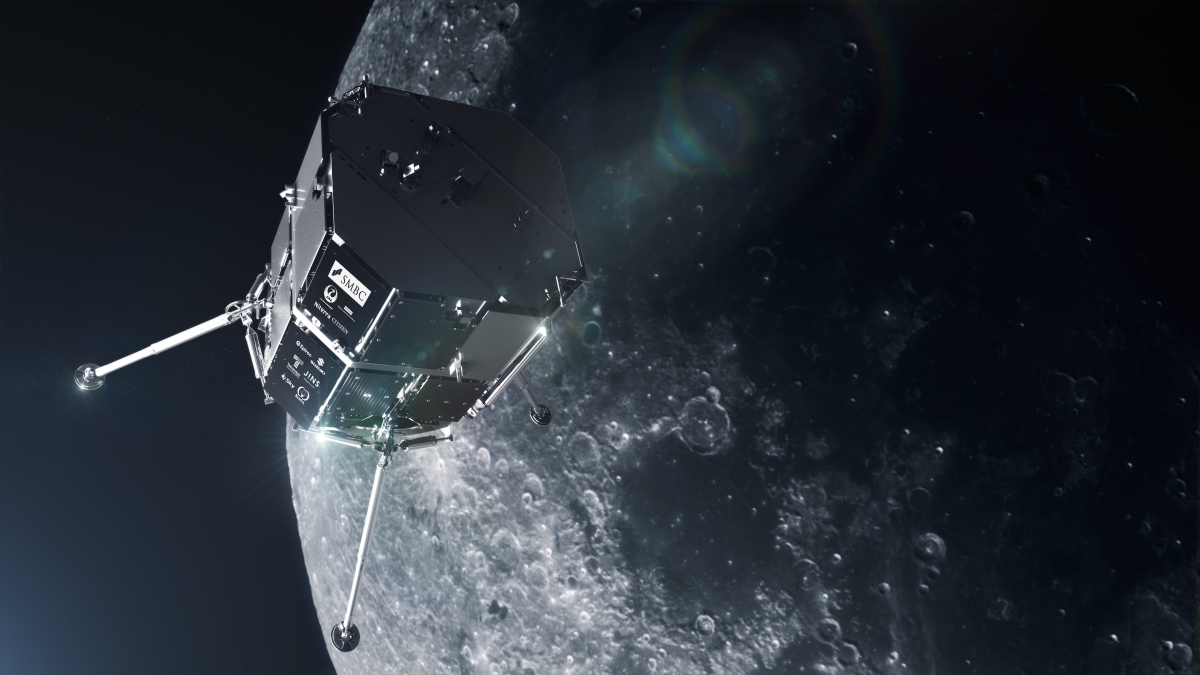
Europe's first lunar rover, Tenacious, aboard the Japanese HAKUTO-R lander, failed to land on the moon after losing contact, marking a setback for European and Japanese commercial lunar exploration efforts supported by Luxembourg and ESA, highlighting the challenges and ambitions of international space resource utilization.
The Canadian Space Agency is inviting the public to help name its first moon rover, set to launch no earlier than 2026 as part of a collaboration with NASA's Artemis program. The rover will explore the moon's south pole, searching for water ice and demonstrating new technologies. The public can vote on names like Athabasca, Courage, Glacier, and Pol-R until December 20. This initiative is part of Canada's broader lunar exploration efforts, including contributions like the Canadarm3 for NASA's Gateway space station.
Lunar Outpost has selected SpaceX's Starship to launch and land its new moon rover, Eagle, on the lunar surface. This decision follows a successful suborbital test flight of Starship. The collaboration aims to support Lunar Outpost's mission of establishing a sustainable human presence in space. The Eagle rover is part of NASA's Lunar Terrain Vehicle (LTV) program, with three private teams, including Lunar Outpost, competing to develop a rover for NASA's Artemis missions. The winning team will conduct a test mission ahead of the Artemis 5 flight, scheduled for 2030.
The Canadian Space Agency is inviting the public to help name its first moon rover, set to launch no earlier than 2026 as part of a collaboration with NASA's Artemis program. The rover will explore the moon's south pole, searching for water ice and demonstrating new technologies. The naming contest runs until December 20, with options like Athabasca, Courage, Glacier, and Pol-R. This initiative is part of Canada's broader lunar exploration efforts, including contributions like the Canadarm3 for NASA's Gateway space station.
NASA has selected three companies to develop crewed lunar rovers for the Artemis program, with the potential value of the contract reaching $4.6 billion. The companies, Intuitive Machines, Lunar Outpost, and Venturi Astrolab, will work on designing rovers capable of operating on the Moon's South Pole for a 10-year span. The rovers will be used to enhance lunar exploration and will also be available for commercial and international partners. Challenges include ensuring operability both with and without human control, establishing a reliable power system, and meeting specific NASA requirements. Additionally, NASA is also working on adding pressurized rovers, such as the Lunar Cruiser developed by Toyota, to support the crew during lunar missions.
NASA has chosen Intuitive Machines, Lunar Outpost, and Venturi Astrolab to develop a lunar terrain rover for its Artemis lunar explorations, with potential task orders totaling $4.6 billion over 13 years. The rover will be designed to help astronauts explore the Moon's south polar region, which is believed to contain frozen water. The companies must create vehicles capable of accommodating two astronauts, operating in extreme conditions, and featuring remote operation capabilities. This initiative is part of NASA's Artemis program, aiming to establish a sustainable presence near the Moon in preparation for human missions to Mars, with the Artemis III landing mission now planned for September 2026.
NASA will announce the company or companies selected to develop the rover for its Artemis program of lunar exploration today. The two-person Artemis rover, officially known as the Lunar Terrain Vehicle (LTV), will help astronauts explore the moon's south polar region and is planned to debut no earlier than Artemis 5 in 2030. The rover will be unpressurized, requiring astronauts to wear spacesuits while driving it, and will have a fair degree of autonomy to conduct science work between crewed Artemis missions.
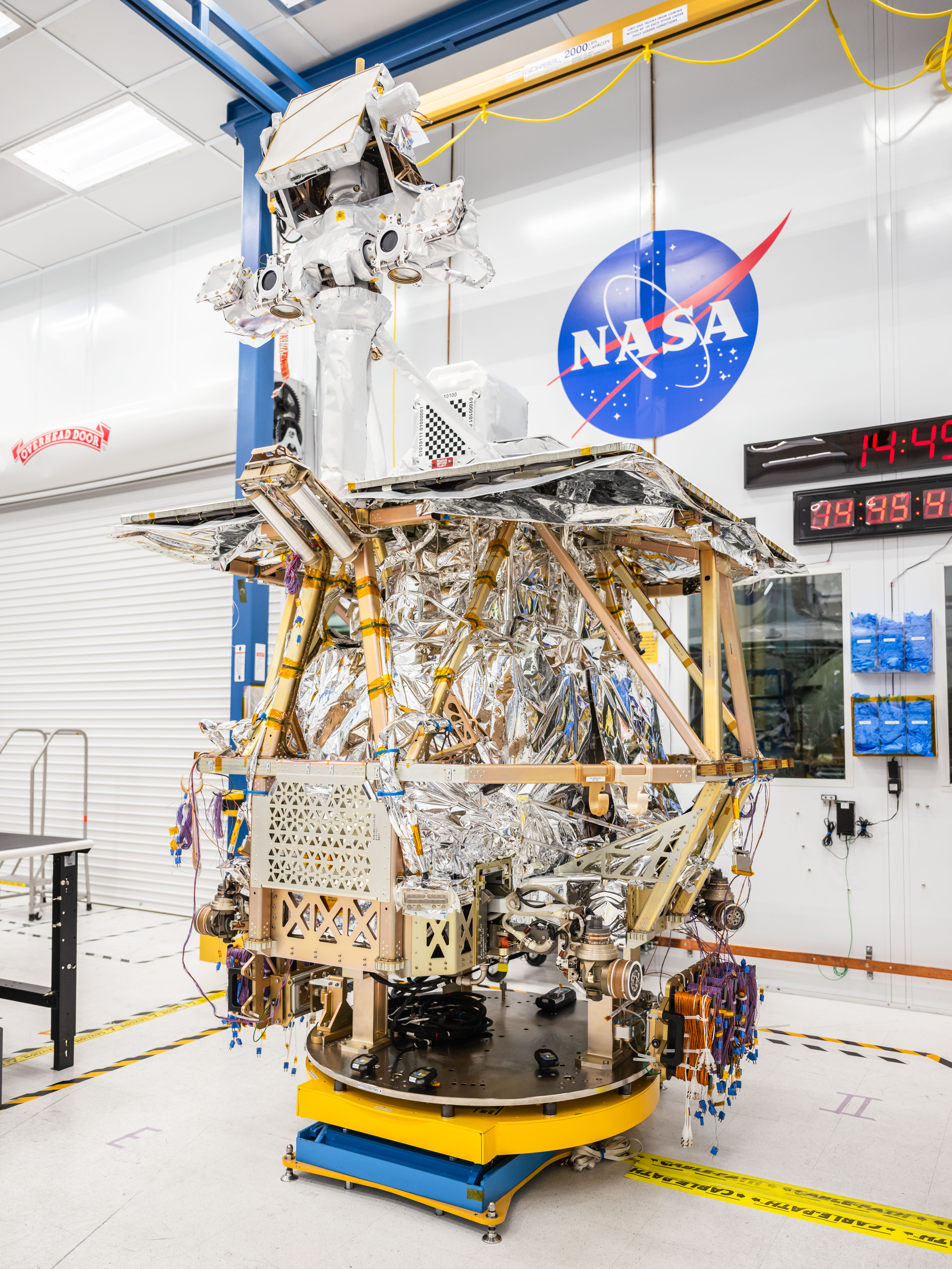
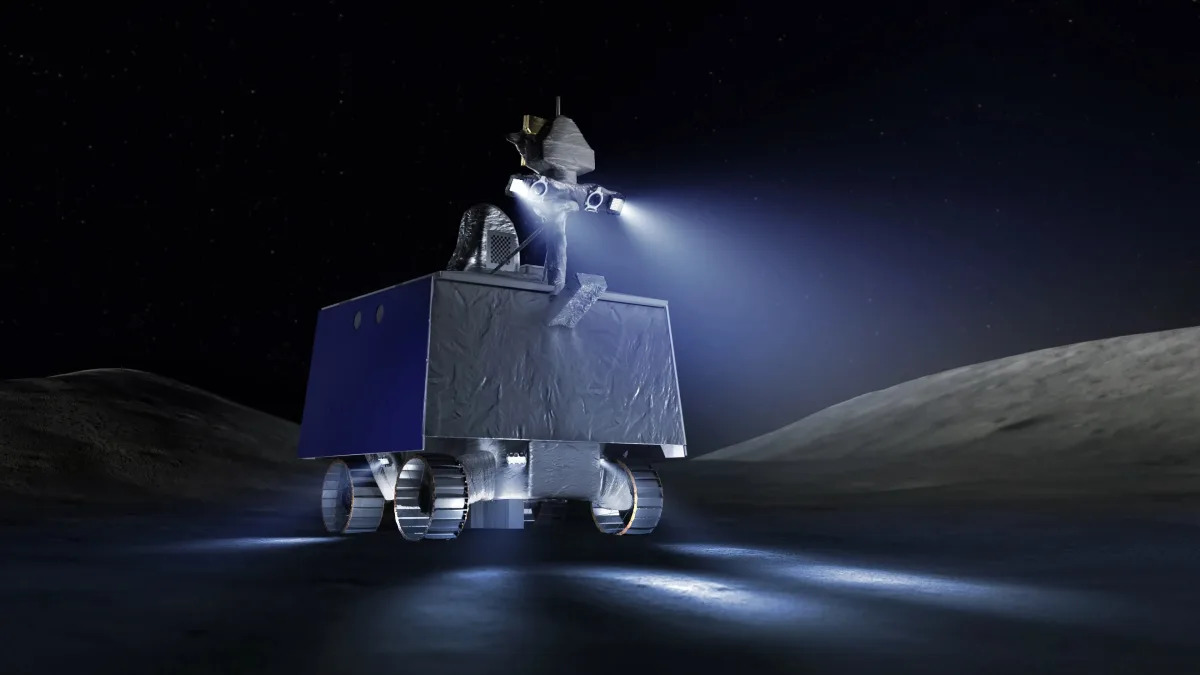
NASA's VIPER robotic moon rover has been equipped with a taller mast and a suite of instruments to aid in its exploration of the lunar South Pole. The mast, standing at approximately eight feet, features stereo navigation cameras, LED headlights, and antennas for data transmission. VIPER's mission is to investigate the origin of water and resources on the Moon, as well as the extreme lunar environment, in preparation for NASA's Artemis campaign. The rover will be the first planetary rover to have headlights, which will help reveal obstacles and terrain features in the Moon's challenging lighting conditions. VIPER is set to launch to the Moon aboard Astrobotic's Griffin lunar lander on a SpaceX Falcon Heavy rocket as part of NASA's Commercial Lunar Payload Services initiative.
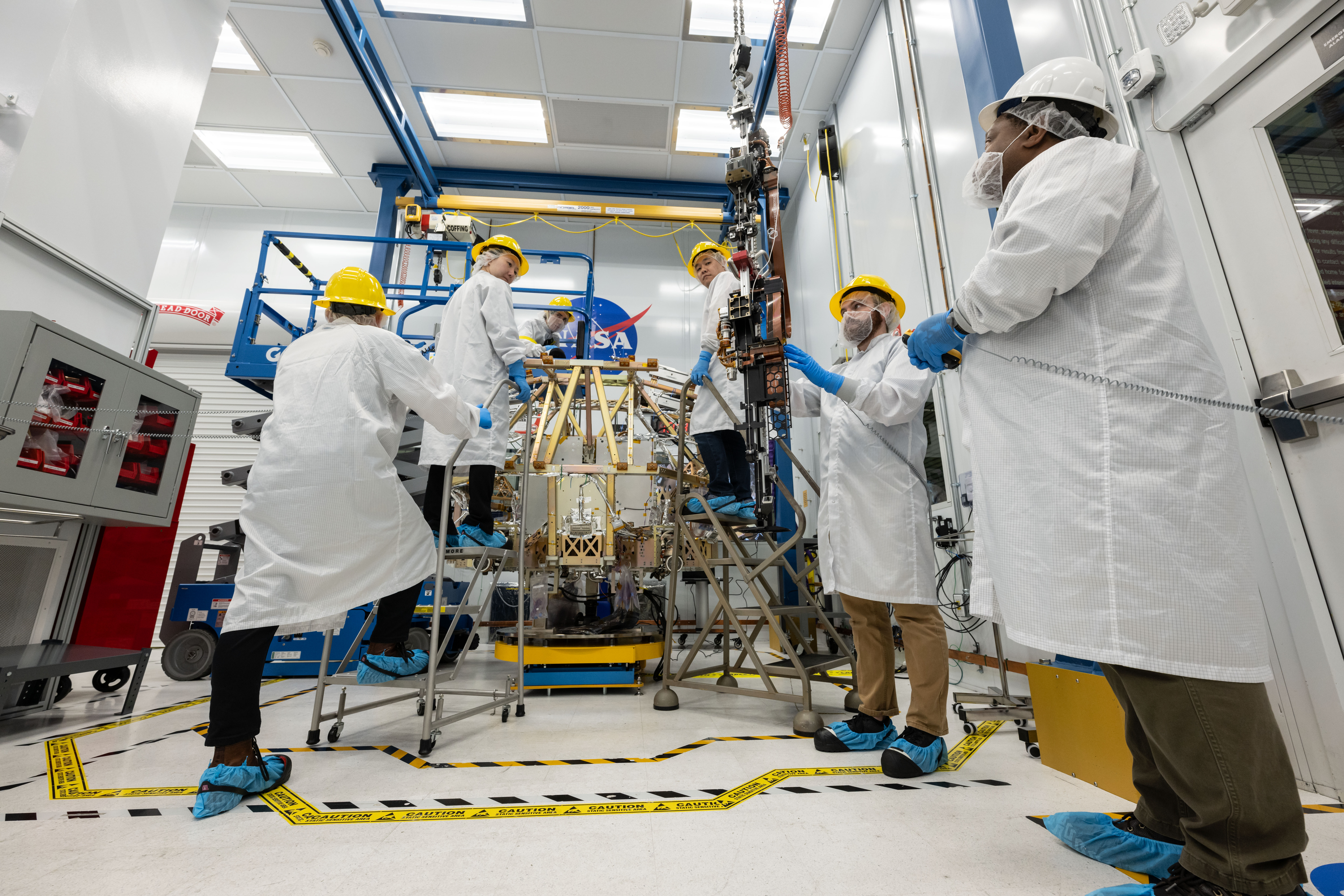
NASA's VIPER moon rover, set to launch later this year, has reached a major milestone with over 80% of its construction completed. The rover will land near the lunar south pole to search for water ice and resources to support future Artemis astronauts, spending 100 days collecting data and creating resource maps. VIPER will be the first-ever resource mapping mission on another celestial body, investigating permanently shadowed craters and extreme lunar environments. The team is conducting rigorous testing to ensure the rover's functionality in the challenging lunar conditions.
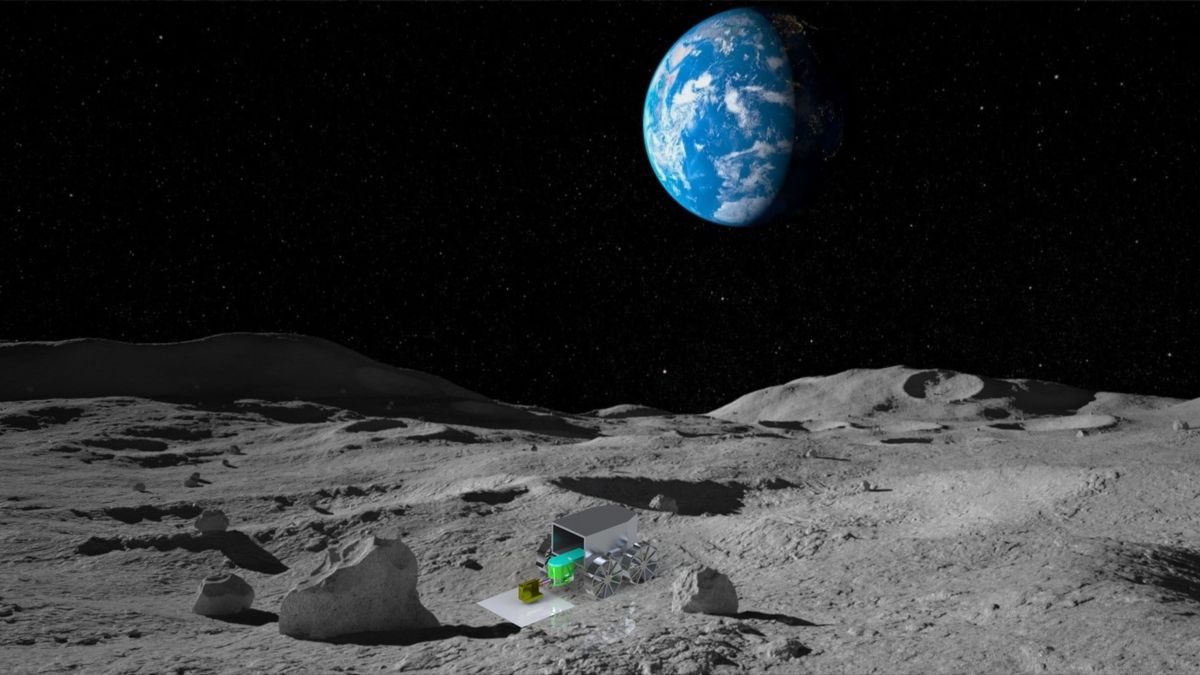
Australia's first lunar rover, named "Roo-ver," is set to launch to the moon as early as 2026 as part of NASA's Artemis program. The public is invited to help design the rover's Regolith Sample Acquisition Device, which will collect lunar soil samples for NASA's research on extracting oxygen from regolith. A naming competition resulted in "Roo-ver" being chosen, and a design challenge hosted by Freelancer.com and ELO2 is underway, with Phase 1 winners announced and Phase 2 currently accepting submissions. The rover is expected to land near the lunar south pole and spend 14 Earth days collecting samples.
NASA's VIPER rover has had its final science instrument, TRIDENT, integrated into its belly, marking a significant milestone in its preparation for a lunar mission. TRIDENT, designed to dig up soil from below the lunar surface using a rotary percussive drill, was successfully tested for its drilling capabilities. VIPER, set to launch to the Moon as part of NASA's Commercial Lunar Payload Services initiative, will use these instruments to study the origin of water and other resources on the Moon to support human exploration as part of NASA’s Artemis campaign.
NASA's VIPER moon rover, set to launch in 2024, is practicing leaving its lander in preparation for its mission to search for water ice on the moon's surface. Engineers at NASA's Johnson Space Center sent the prototype rover down a ramp in an indoor facility to simulate different exit strategies. The rover's main mission is to facilitate NASA's Artemis program, which aims to restart moon exploration with astronauts and establish a permanent settlement at the moon's south pole. The mission has been delayed two years from its initial target launch of 2022.