A new study reveals hundreds of glacial earthquakes in Antarctica, mainly near the Thwaites Glacier, caused by iceberg calving and possibly influenced by ocean conditions, highlighting potential risks for future sea level rise.
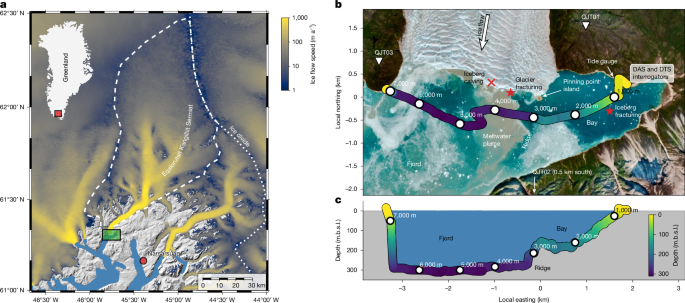
The article discusses how seafloor fibre sensing technology, specifically DAS and DTS, is used to study calving-driven fjord dynamics and ice-ocean interactions at Greenland's glaciers, revealing detailed processes such as fracturing, iceberg detachment, tsunamis, internal waves, and seafloor currents, which are crucial for understanding and modeling glacier mass loss and sea level rise.
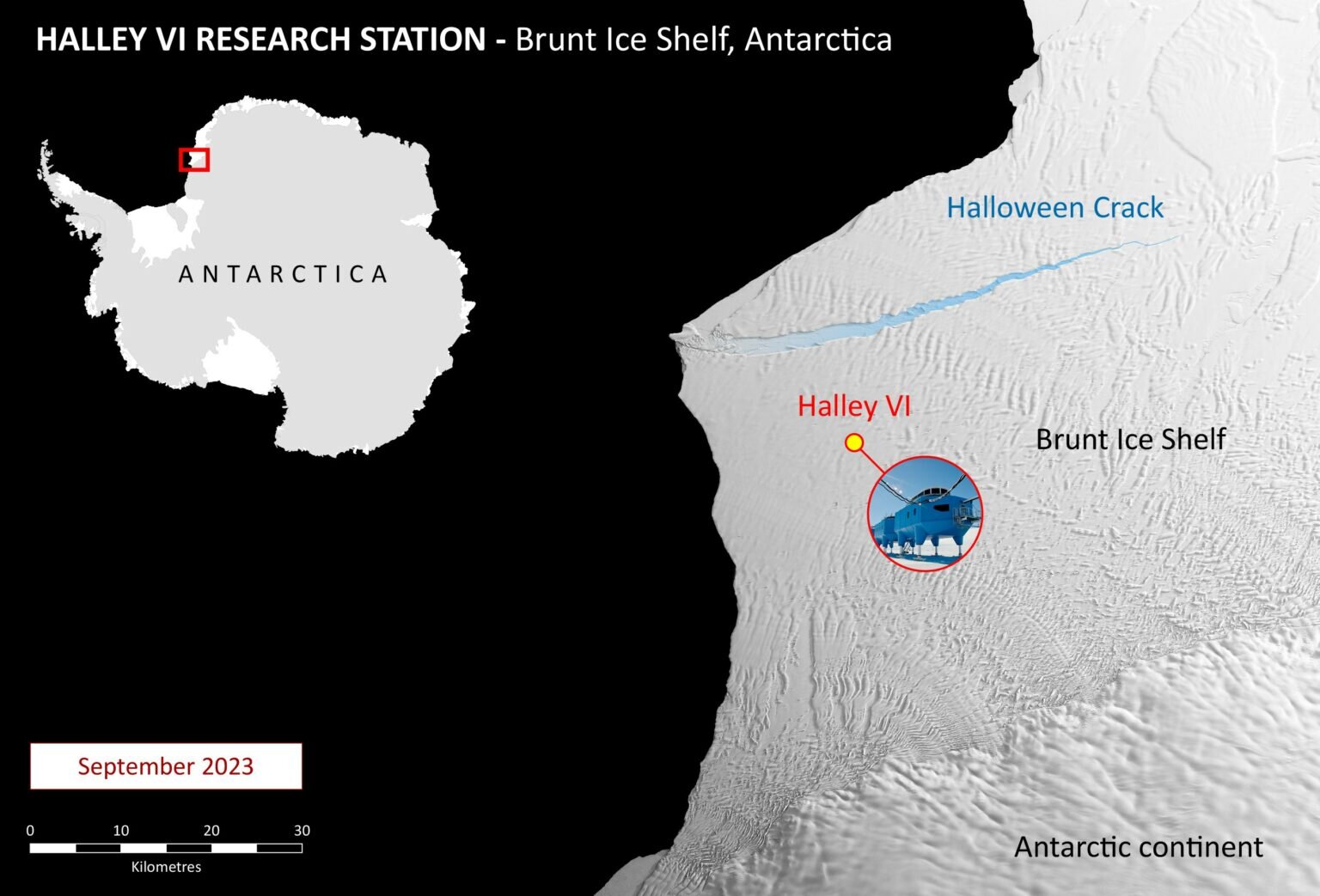
The Brunt Ice Shelf is moving faster after the calving of the A-81 iceberg, currently moving at approximately 4 meters a day towards the sea compared to its previous average of 1-2.5 meters a day. The acceleration is attributed to the loss of its connection with the seafloor in the McDonald Ice Rumples area, rather than climate change. Scientists at the British Antarctic Survey are closely monitoring the situation using GPS equipment and satellite data to ensure the safety of the Halley Research Station and maintain scientific operations.