Over 115,000 WatchGuard Firebox firewalls remain unpatched against a critical RCE vulnerability (CVE-2025-14733) that is actively exploited, prompting urgent patching and mitigation efforts by authorities like CISA to prevent widespread attacks.
NASA's Voyager probes have crossed the solar system's boundary, the heliopause, and discovered a mysterious 'firewall' region with extreme temperatures and unexpected magnetic field alignments, revealing new insights into the solar system's edge and our cosmic environment.
The article discusses the misconception of a 50,000°C 'firewall' in space, explaining through NASA's Voyager data that it is not a solid wall but a filter, providing insights into space phenomena.
The article discusses a common misconception about Voyager's discovery related to a 'firewall' at 50,000°C, clarifying that it is not actually a fire but a scientific phenomenon misunderstood by many.
NASA's Voyager spacecraft confirmed the existence of a charged particle firewall at the edge of the solar system, which acts as a protective barrier deflecting cosmic rays and marking the boundary of the Sun's influence, providing insights into space weather and planetary habitability.
Voyager-1 has provided new insights into heat, revealing extremely high temperatures up to 50,000°C without fire, challenging previous understanding of heat and fire in space environments.
Over 2,000 Palo Alto Networks devices have been compromised in a cyber attack exploiting newly disclosed vulnerabilities, CVE-2024-0012 and CVE-2024-9474, which allow authentication bypass and privilege escalation. The majority of infections are in the U.S. and India. Palo Alto Networks warns of escalating attacks and advises users to apply fixes and secure management interfaces. The company notes that the actual number of affected devices is smaller than reported, as most customers follow best practices.
Highly capable hackers are exploiting a zero-day vulnerability in Palo Alto Networks' firewall product, allowing them to execute malicious code with root privileges. The attacks, which have been ongoing for at least two weeks, are the latest in a series targeting firewalls, VPNs, and file-transfer appliances. The vulnerability, CVE-2024-3400, has earned the maximum severity rating of 10.0 and is present in multiple versions of PAN-OS firewalls. Security firm Volexity, which discovered the attacks, believes the hackers are likely backed by a nation-state and warns of potential mass exploitation as new threat groups learn of the vulnerability. Palo Alto Networks has yet to release a patch but is urging affected customers to follow workaround and mitigation guidance.
Palo Alto Networks warns of an actively exploited critical command injection vulnerability, tracked as CVE-2024-3400, in its PAN-OS firewall software, affecting specific versions and feature configurations. The company plans to release fixes by April 14, 2024, and has provided mitigation measures for impacted users. Threat researcher Yutaka Sejiyama reports 82,000 exposed devices online, with 40% in the United States. CISA has added CVE-2024-3400 to its Known Exploited Vulnerabilities catalog, setting the patching deadline for federal agencies to April 19, 2024.
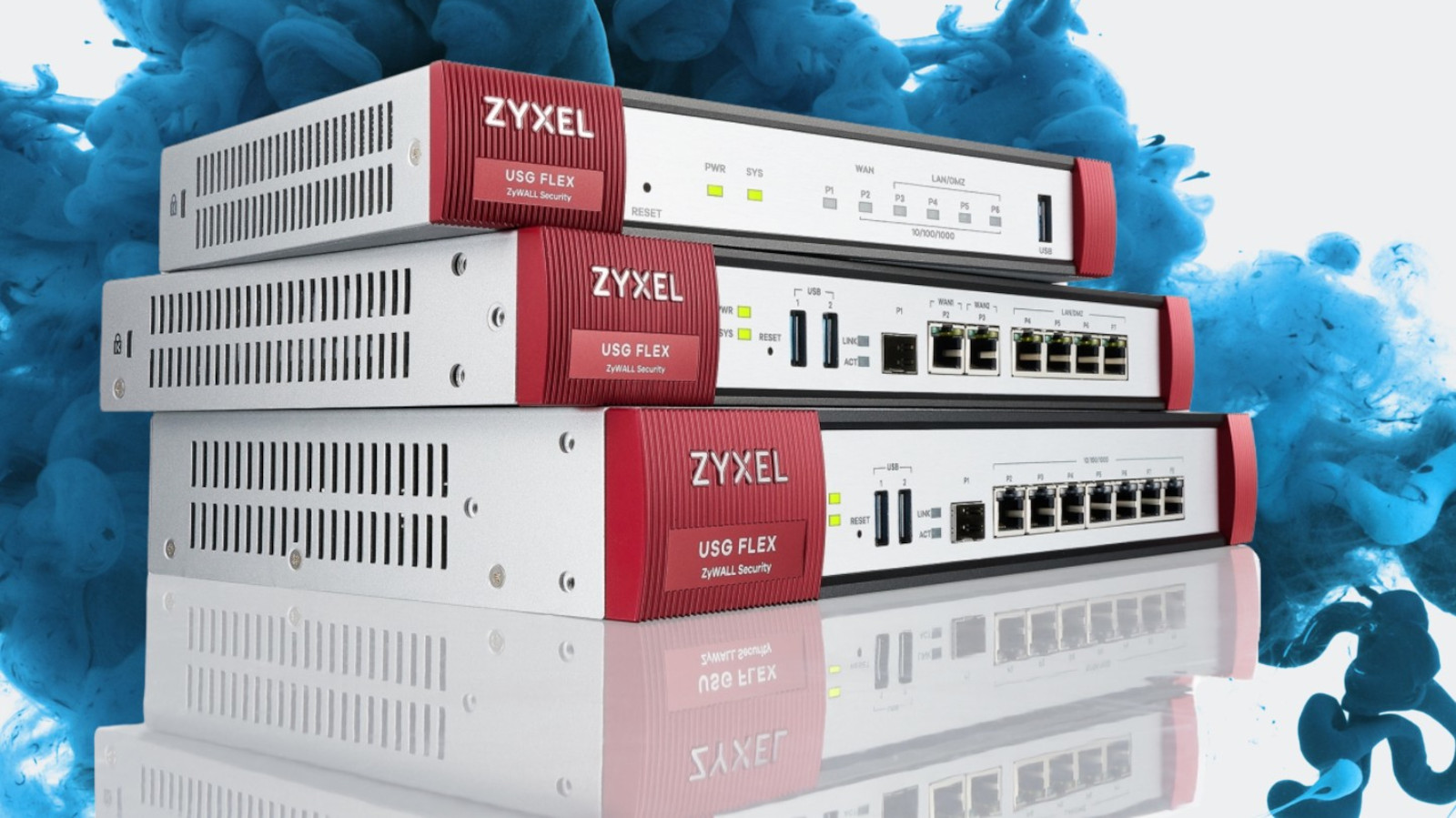
Zyxel has released software updates to address two critical security flaws affecting select firewall and VPN products that could be abused by remote attackers to achieve code execution. Both the flaws are buffer overflow vulnerabilities and are rated 9.8 out of 10 on the CVSS scoring system. The impacted devices include ATP, USG FLEX, USG FLEX50(W) / USG20(W)-VPN, VPN, and ZyWALL/USG. Security researchers from TRAPA Security and STAR Labs SG have been credited with discovering and reporting the flaws.
Zyxel has warned of two critical-severity vulnerabilities in several of its firewall and VPN products that could allow denial-of-service (DoS) and remote code execution on vulnerable devices. The buffer overflow issues affect devices running specific firmware versions and can be exploited without authentication. Zyxel has released patches for the affected products and advises users to install them as soon as possible. Small to medium-sized businesses use these devices to protect their networks and allow secure network access to remote or home-based workers.