President Joe Biden and Secretary of the U.S. Department of Energy Jennifer Granholm will announce seven regional "hydrogen hubs" eligible for up to $7 billion in federal funding. These hubs, funded by the Bipartisan Infrastructure Law, aim to develop the domestic hydrogen economy in the United States. Hydrogen is seen as a potential energy storage solution and a way to reduce greenhouse gas emissions in industries like long-haul trucking and aviation. The hubs will be located in regions with strengths in hydrogen development, such as the Appalachian, California, Gulf State, Heartland, Mid-Atlantic, Midwest, and Pacific Northwest. The funding is expected to catalyze $43 billion in private sector investment and create job opportunities. The hubs will use a combination of natural gas with carbon capture technology and renewable energy sources to produce hydrogen.
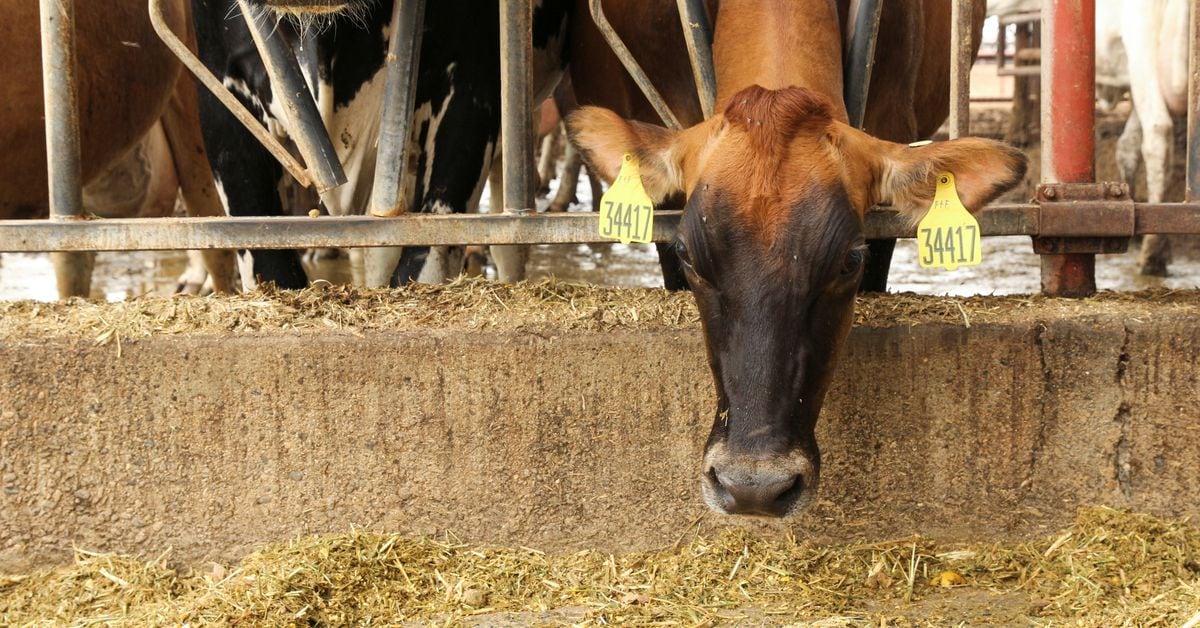
Canadian dairy farmer Ben Loewith is among the first to breed cows with a low-methane genetic trait, aiming to reduce methane emissions from cattle, which are a significant contributor to greenhouse gas emissions. The arrival of commercially available genetics for low-methane breeding could have a profound impact on global cattle emissions. However, some dairy industry officials remain skeptical, citing potential digestion problems. While additives can temporarily reduce methane production, the low-methane breeding approach offers a permanent and cumulative solution. The Canadian government is working to introduce offset credits for reducing methane emissions, and other countries and food companies are also taking steps to address the issue.
The US Department of Energy is investing $18.7 million in colleges and universities to help small manufacturers identify ways to cut costs by reducing waste and saving energy. The program, called Industrial Assessment Centers (IACs), will provide assessments that typically identify more than $130,000 in potential annual savings for small manufacturers. The assessments look at waste reduction, energy savings, improved productivity, and competitiveness. The Bipartisan Infrastructure Law includes $400 million in grants available to small manufacturers to make the necessary efficiency-enhancing and greenhouse gas-reducing investments.