Johnson & Johnson is expanding its operations in Wilson, North Carolina, with a multibillion-dollar investment to build a new factory that will produce cancer drugs, creating hundreds of new jobs. The state is supporting this growth with a $12 million program to train workers, highlighting North Carolina's appeal for life sciences companies and its focus on workforce development.
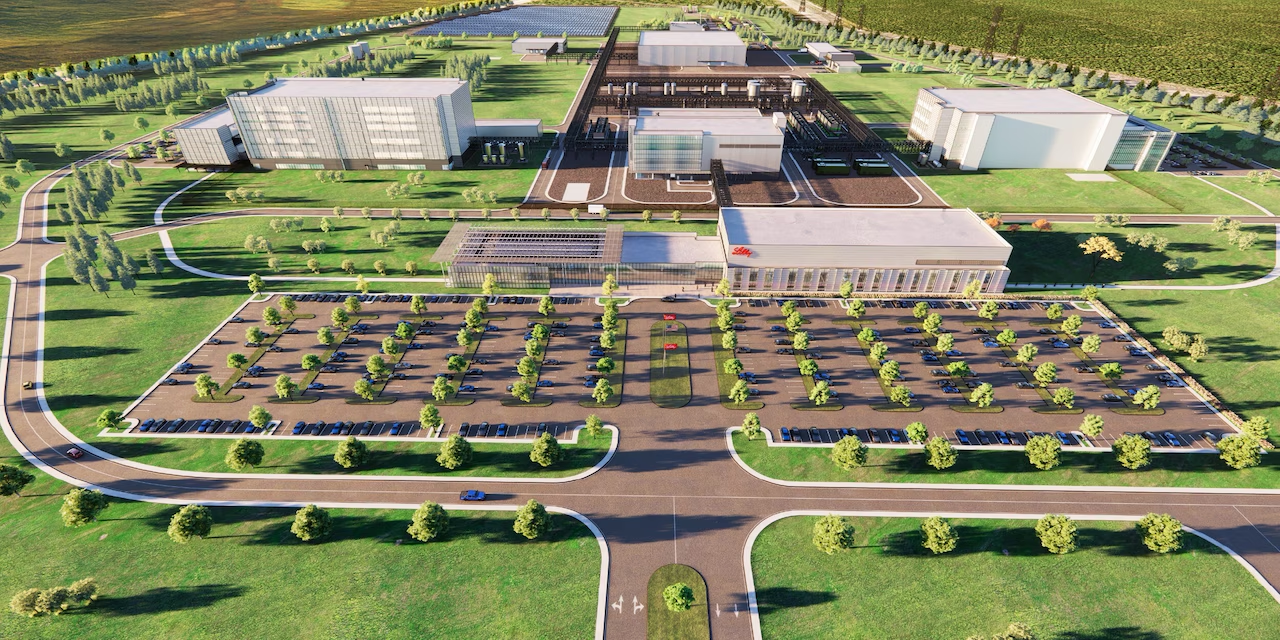
Huntsville's success in attracting Eli Lilly's new pharma plant highlights its growing economic strength and ability to win major projects, surpassing Birmingham, which struggles with translating research into commercial products. The article emphasizes the need for Birmingham to focus on effective economic development and regional collaboration, drawing lessons from Alabama's successful auto industry growth and past achievements like the Mercedes-Benz project.
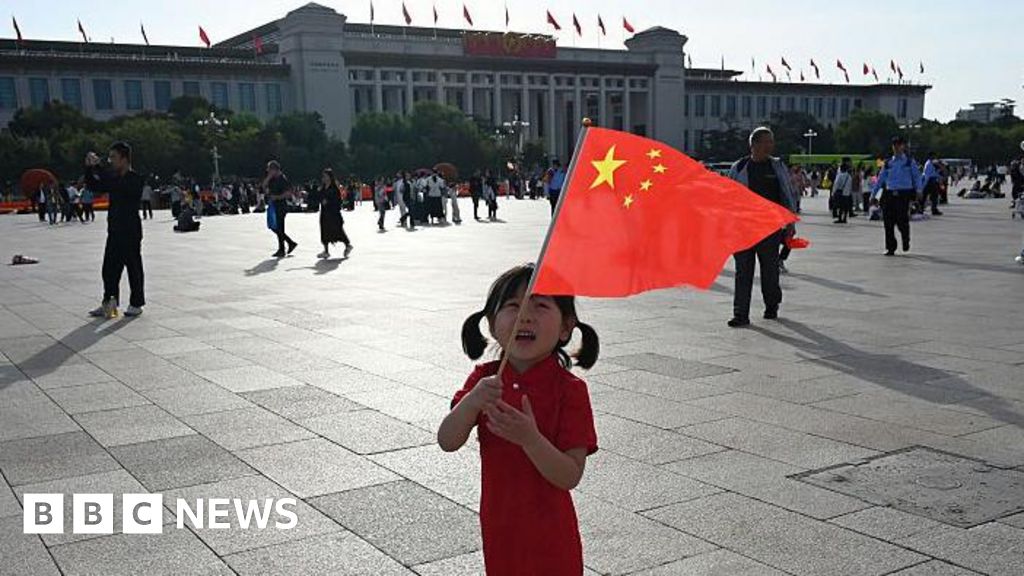
China has revised its foreign trade law to better protect national sovereignty, security, and development interests, while also strengthening intellectual property rights and supply chain stability, with the new law effective from March 2026.
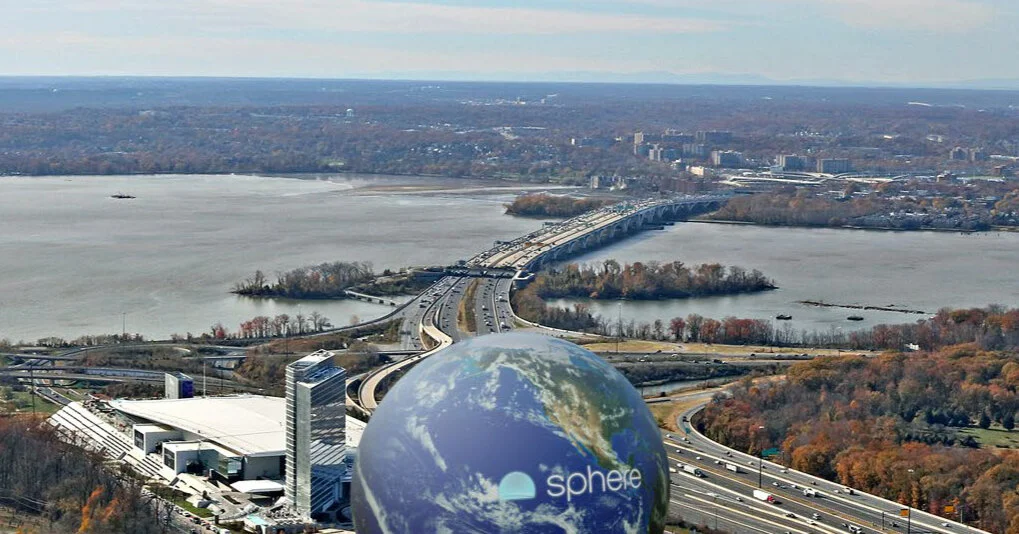
Montgomery County celebrates a significant economic boost with Samsung Biologics establishing its first US manufacturing site in Rockville, alongside major biotech investments like Astra-Zeneca and X-energy, and the development of the Viva White Oak project, which will create thousands of jobs and housing units.
The article critiques the portrayal of China's development model, emphasizing its political and social costs, and warns against the US adopting China's authoritarian approach, advocating instead for leveraging American values and strengths for sustainable growth.
A $112 million redevelopment project in Marion, Illinois, aimed at revitalizing a dying mall and boosting the local economy, faces challenges due to the financial troubles and foreclosure of one of the key developers, Jerry Barrass, which could impact the project's future plans. Despite these issues, local officials and remaining partners continue to push forward with the project, which includes entertainment venues, hotels, and attractions designed to attract tourists and create jobs.
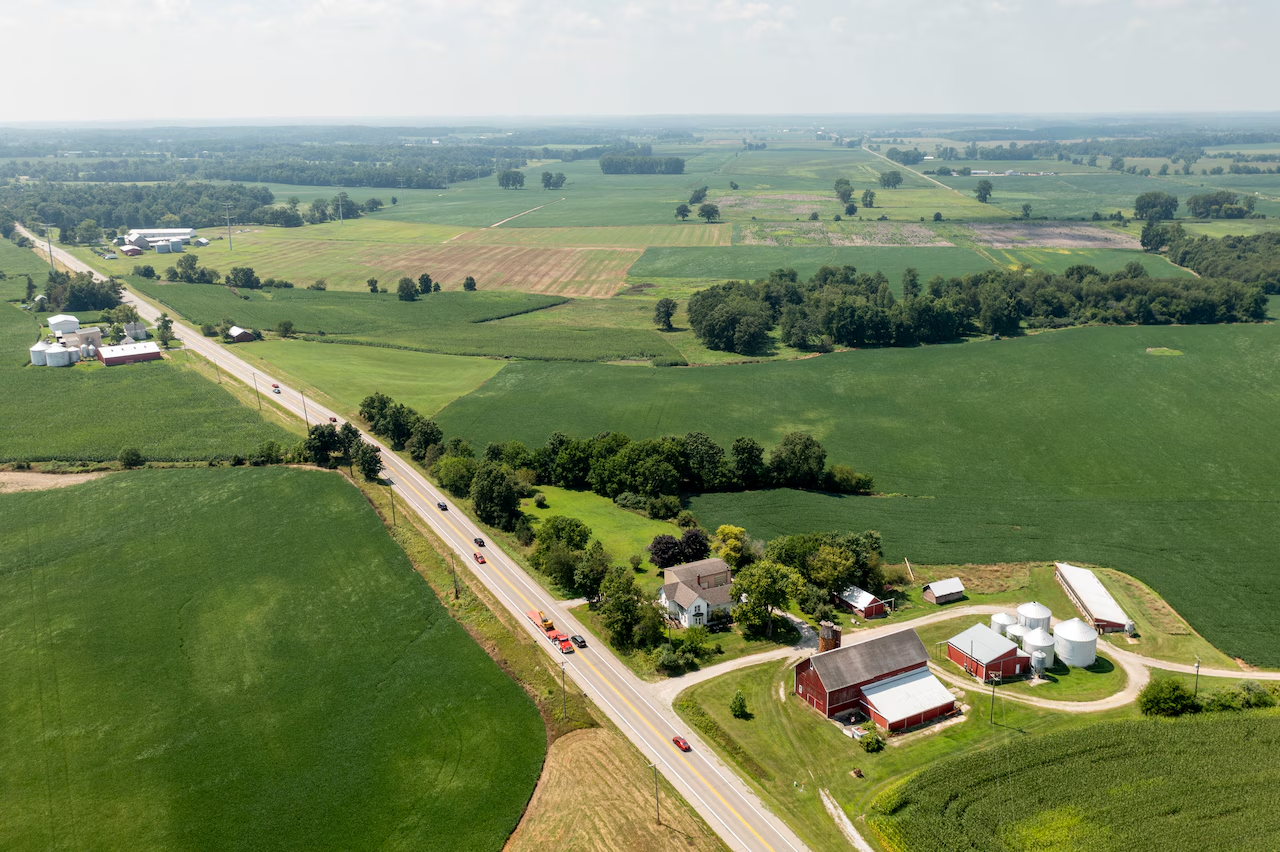
Residents in rural Washtenaw County are upset over a proposed large data center project backed by OpenAI, which Governor Gretchen Whitmer has praised as Michigan's largest economic project, sparking local controversy.
China's evolving Five Year Plans have significantly shaped its economic trajectory and global influence, from initiating market reforms in the 1980s to leading in green technology and aiming for technological self-sufficiency under Xi Jinping, with each plan impacting the world economy and geopolitics.
New Haven received a $50.5 million state grant to support the development of a new life sciences building, quantum computing initiatives, and pedestrian-friendly infrastructure, aiming to boost scientific research, job creation, and economic growth in the city.
Dan Wang's analysis highlights the contrasting governance styles of China and the US, emphasizing China's engineering-led approach and its successes in infrastructure and manufacturing, while noting the challenges faced by China such as youth unemployment and stagnation. He suggests that the US can learn from China's achievements and that both nations, despite their differences, share similar restless and imperfect qualities, offering mutual lessons for future cooperation and competition.
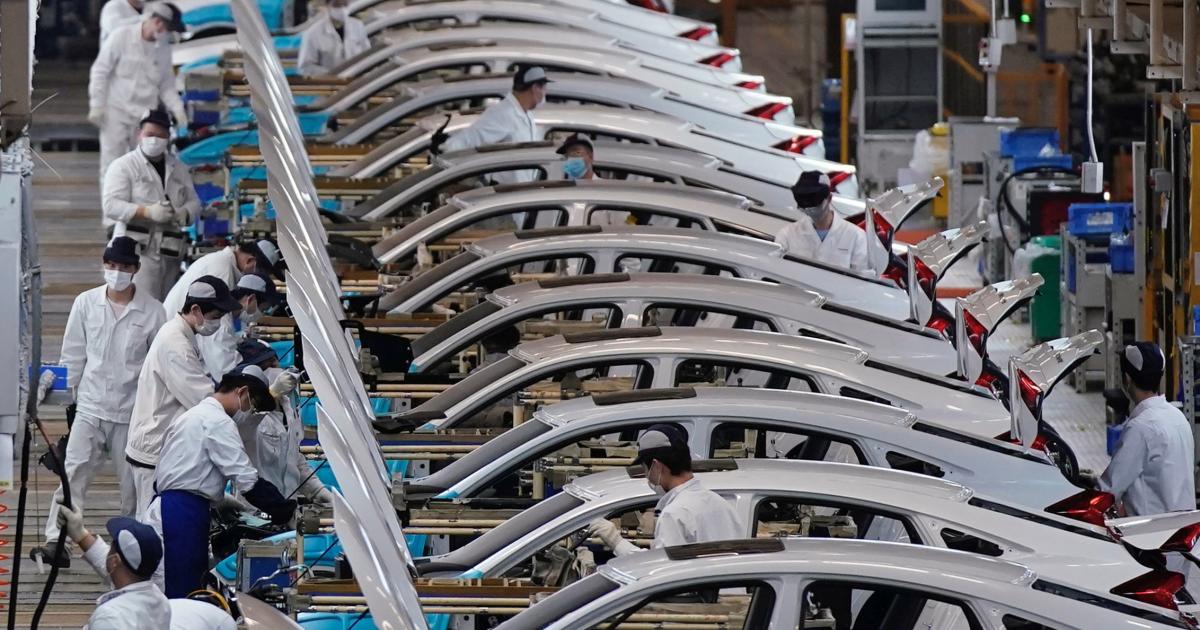
A major Hyundai electric vehicle factory in Georgia, part of Kemp's economic growth strategy, faces scrutiny and political fallout after a raid by immigration authorities, raising concerns about law compliance, incentives, and local community impacts.
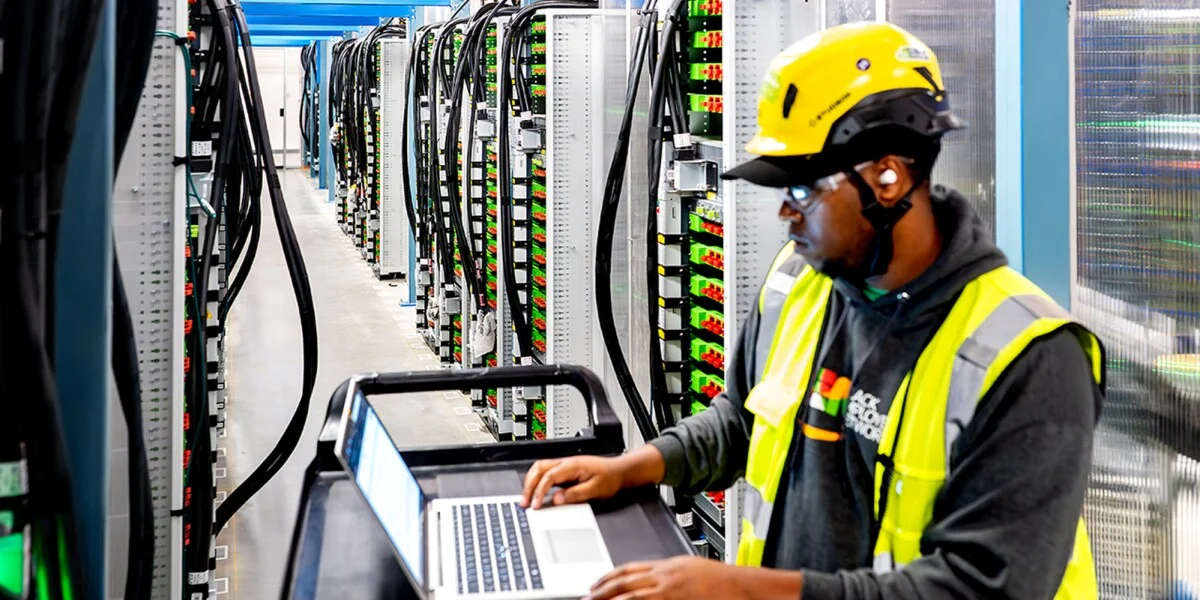
China has unveiled a ten-year plan to fully integrate AI into its economy by 2035, focusing on practical applications across various sectors, contrasting with the US's more speculative approach. The initiative aims to make AI a key driver of growth, with significant government backing and projects like the city of Xiong'an exemplifying this strategy. While the US leads in AI benchmarks and investment, China's pragmatic focus on immediate AI applications could reshape its economic landscape, though success remains uncertain.
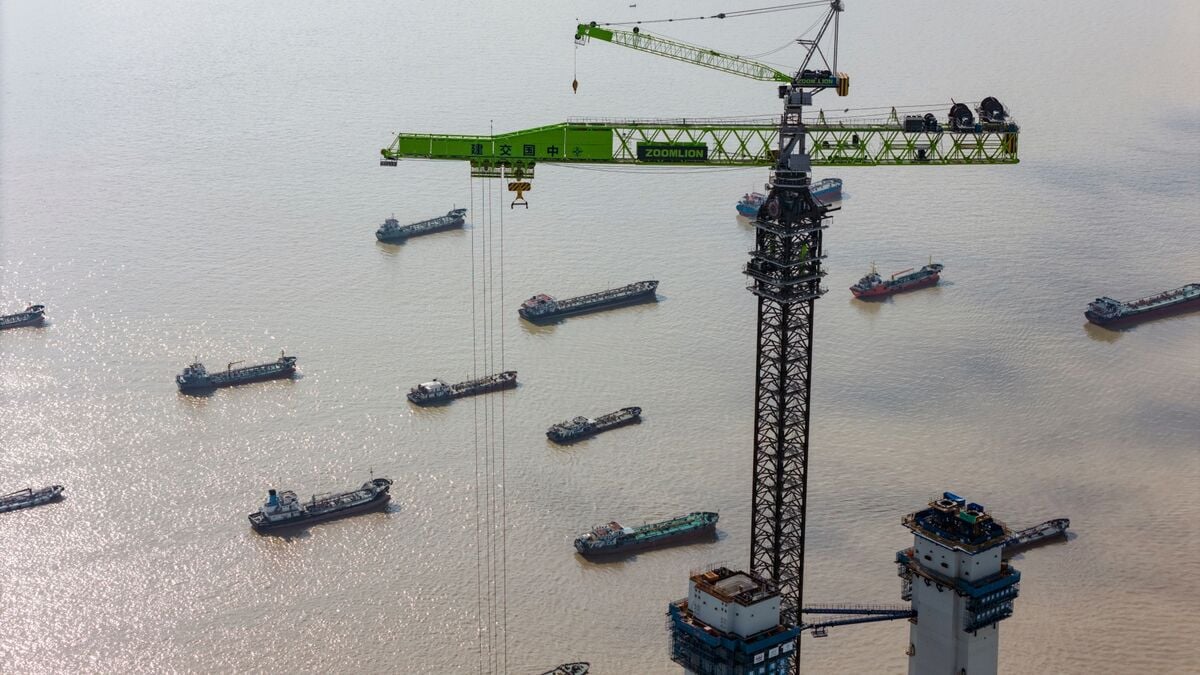
The article compares China's rapid and extensive building projects with America's decline in major construction, highlighting how China's engineering-driven approach contrasts with America's environmental concerns and slower development, emphasizing the importance of understanding this dynamic in the context of US-China relations.
Lynchburg's $8 million Riverfront Park Amphitheater project is ahead of schedule and expected to boost downtown businesses and attract larger acts, with completion anticipated in the next few months and opening by spring.
A new wave of gold mining interest in South Dakota's Black Hills, driven by high gold prices and recent policy changes, threatens to alter the region's landscape and sacred sites, sparking opposition from Native tribes and environmentalists concerned about ecological damage and cultural preservation.