Since 2018, the world's oceans have been absorbing record amounts of heat, with 2025 experiencing the highest heat absorption ever recorded, primarily due to climate change. This ongoing heat intake, equivalent to multiple atomic bombs, is a key indicator of global warming, affecting both surface and deep ocean temperatures, and will have long-lasting impacts on the planet.
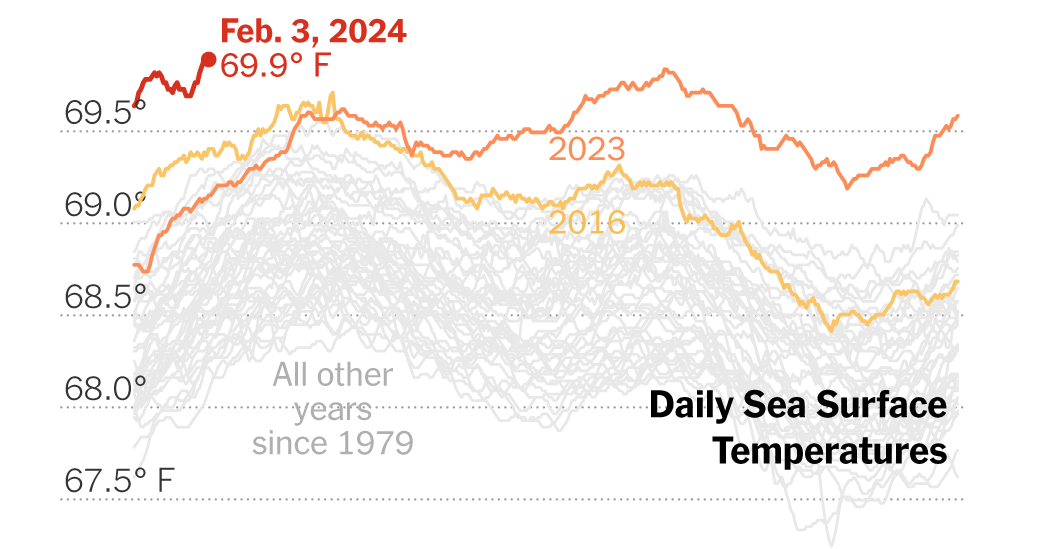
The Copernicus Climate Change Service reported that global temperatures in March hit a new high for the 10th consecutive month, averaging just over 14 degrees Celsius, 1.64 degrees Celsius warmer than the pre-industrial era. The 12-month period ending in March was the hottest ever recorded, with sea surface temperatures reaching the highest monthly value on record at 21.07 degrees Celsius. Despite the easing of the El Nino climate pattern, marine air temperatures remained unusually high, indicating ongoing environmental impact.
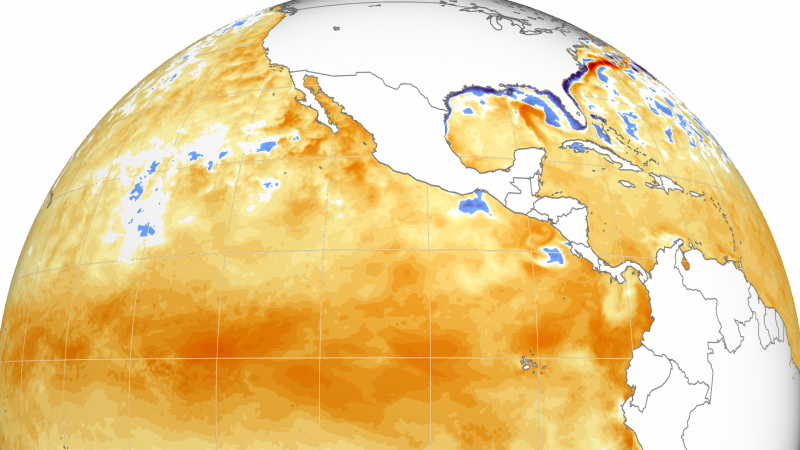
The current El Niño climate pattern has reached "historically strong" status, with its counterpart La Niña expected to develop later this year. El Niño's impacts on U.S. weather are forecasted to continue through April, bringing ongoing storminess across the southern U.S. and warmer temperatures in the northern U.S. The global temperatures in January 2024 were the warmest on record, and the transition to La Niña could potentially boost hurricane activity in the Atlantic Ocean later in the year.
January 2024 marked the eighth consecutive month of record-breaking global temperatures, with both land and sea experiencing unprecedented warmth. The European Union's climate monitor reported that it was the hottest January ever recorded, and sea surface temperatures surpassed previous records, indicating a continuation of the exceptional warmth that began in the summer of 2023. Scientists attribute this trend to human activities such as the burning of fossil fuels and deforestation, as well as the current El Niño weather cycle, which is releasing more ocean heat into the atmosphere.
The current El Niño is one of the strongest on record, labeled as a "super El Niño," but it has already peaked and is expected to weaken. Its influence on global weather, including warmer winters in the northern US and wetter conditions in the southern US, has been notable. El Niño has also impacted weather patterns in South America, Africa, Australia, and parts of Asia. As it transitions to a neutral phase and potentially to La Niña, there are implications for future weather patterns, including the possibility of a more active hurricane season.
While the United States experiences frigid temperatures, much of the rest of the world is unusually warm, a phenomenon attributed to climate change. The Arctic, warming three to four times faster than the rest of the planet, is influencing extreme weather patterns, such as the polar vortex, which is bringing icy conditions to the U.S. and warmer temperatures to other regions. Scientists link these events to Arctic Amplification and changing jet stream patterns, emphasizing the complex interactions within the climate system and the global impact of a warming planet.
A new study published in Nature Communications reveals that the Earth is experiencing an alarming increase in planet shaking due to intensifying ocean waves, which generate seismic waves. This increase in shaking correlates with rising global temperatures over the past four decades. Seismic activity is not solely caused by earthquakes but also by phenomena like erupting volcanoes, explosions, and meteor strikes. The incessant thrum of ocean waves, known as the global microseism, is the most pervasive background signal picked up by seismographs. The increase in planet shaking highlights the need to address climate change urgently and take action to mitigate its effects.
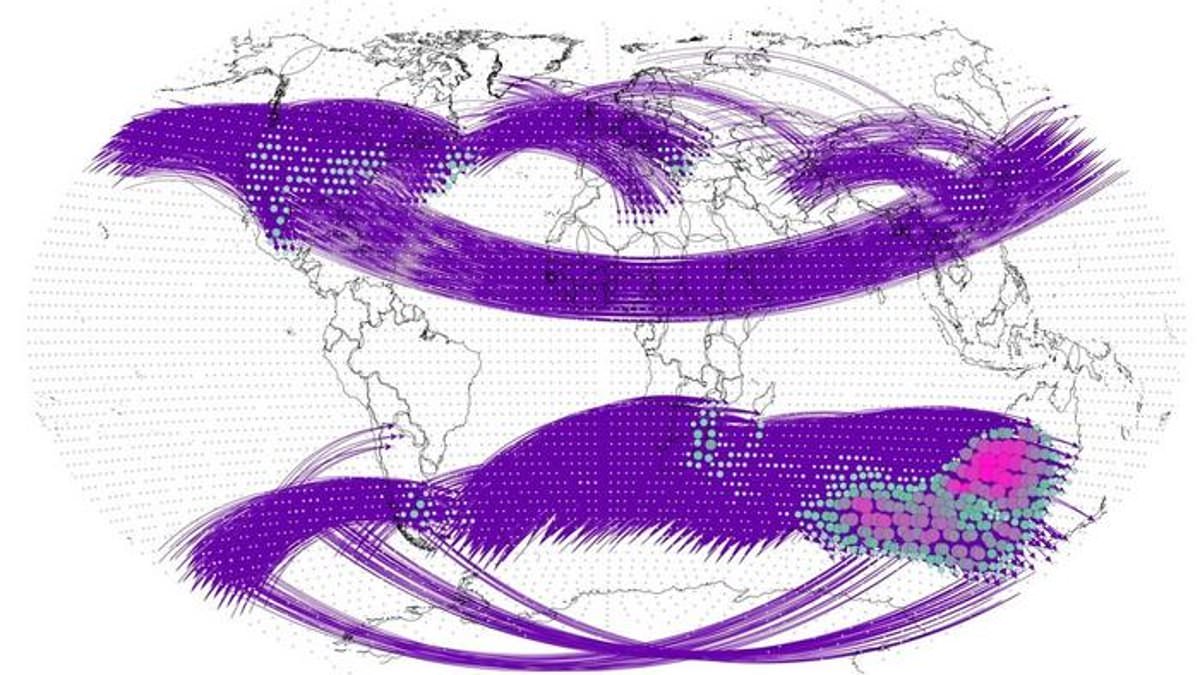
Certain areas of the world are identified as "hotspots" for interlinked extreme weather events, known as teleconnections, which can have a domino effect on a global scale. Researchers from Beijing Normal University have used a climate network analysis method to identify regions significantly affected by these interconnected events, such as southeastern Australia and South Africa. The impact of teleconnections has been increasing, particularly in the Southern Hemisphere, possibly due to climate change and human activities. The findings aim to help predict and address future climate challenges. Additionally, a separate study warns that rising global temperatures could make the US East Coast and Middle America unlivable by 2100, leading to increased health risks and fatalities.
Scientists are considering the idea of using moon dust as a potential geoengineering solution to combat rising global temperatures. The concept involves creating a dust cloud between the Sun and the Earth to reduce the energy input into the Earth from the Sun. However, there are significant challenges, including the massive amount of dust required and the logistical effort of launching it into space. Additionally, there are concerns about the potential unintended consequences of such a solution, including changes to sunlight distribution and climate patterns. Comprehensive studies and international cooperation are necessary to assess the feasibility and potential risks of using moon dust as a geoengineering method.
The world is experiencing exceptionally high temperatures due to a combination of factors. These include the ongoing El Niño, falling pollution levels, increasing solar activity, water vapor from a volcanic eruption, and weather systems aligning to heat land surfaces. However, the main reason for the spike in global temperatures is human-caused climate change. The record-high rate of greenhouse gas emissions is accelerating global warming. To prevent further extreme temperatures and damaging events, urgent action is needed to achieve net-zero emissions.
This summer has seen a series of alarming climate events, including record-breaking temperatures, heat domes, and devastating wildfires. Global temperatures continue to rise, with July 2023 being the hottest month on record. The loss of Antarctic sea ice and soaring sea surface temperatures are also concerning. The effects of El Niño are expected to exacerbate these trends in the coming years. Urgent action is needed to reduce carbon emissions and mitigate the impacts of climate change.
Antarctic sea ice, which normally grows every year, is at record lows due to rising global temperatures. The decrease in sea ice has significant implications, including disrupting ocean currents and weather patterns, increasing sea level rise, and impacting wildlife such as penguins, seals, whales, and krill that rely on the ice.
The Southwest United States is experiencing a prolonged heat wave, with temperatures forecasted to reach triple digits and potentially become the longest heat wave on record. Global average temperatures have also been setting records, with last week seeing four consecutive days of record-breaking or tied temperatures. Climate change and the El Niño climate pattern are contributing to the severity and frequency of heat waves. Heat index values could exceed 110 degrees in parts of southern Florida, South Texas, and desert regions. Extreme heat poses a significant risk to vulnerable populations, and heat-related illnesses have been on the rise. Other regions around the world, including China, Japan, northern Africa, and southern Europe, are also experiencing record-breaking heat. Additionally, the waters around Florida are significantly warmer than usual, which can impact hurricane formation and marine ecosystems.
Global temperatures have reached record-breaking levels for the fourth consecutive day, likely making them the highest in at least 100,000 years, according to scientists. The global average daily temperature on Thursday was 17.23 degrees Celsius (63.01 degrees Fahrenheit), surpassing the previous record set in 2016. While the records are based on data sets dating back to the mid-20th century, scientists believe these temperatures are the warmest the planet has experienced in a much longer time period. The combination of El Niño and the human-caused climate crisis is driving temperatures higher, emphasizing the urgent need to reduce fossil fuel consumption.
Monday was recorded as the hottest day on Earth, with an average temperature of 62.6 degrees Fahrenheit, surpassing the previous record set last year. This measurement, taken by U.S. meteorologists, is yet to be confirmed by other sources but could be surpassed as the summer progresses. The global average temperature is expected to continue rising due to the onset of an El Nino weather phenomenon and ongoing human activity, such as the burning of fossil fuels.