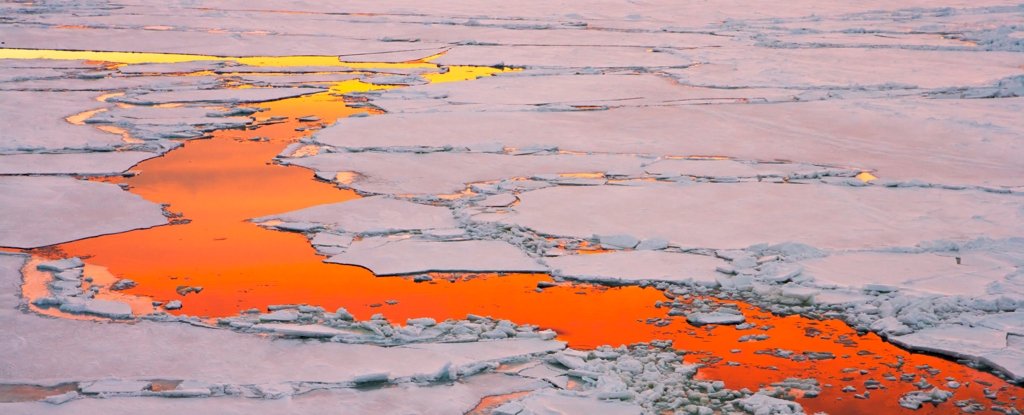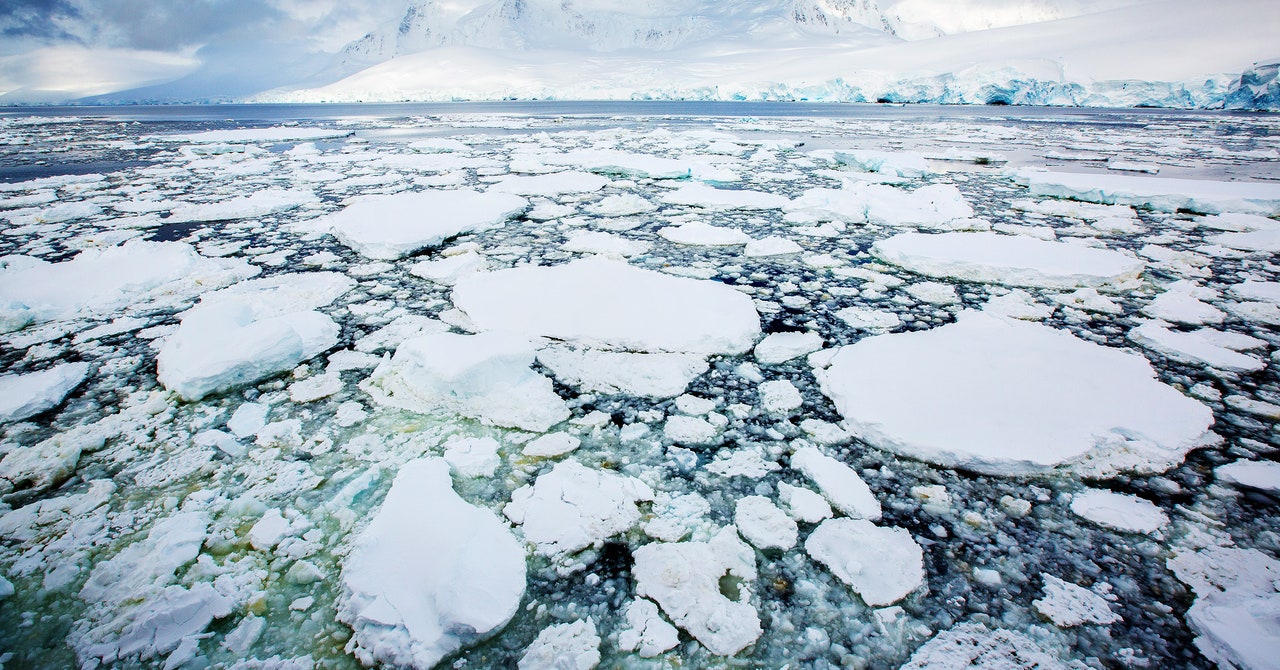
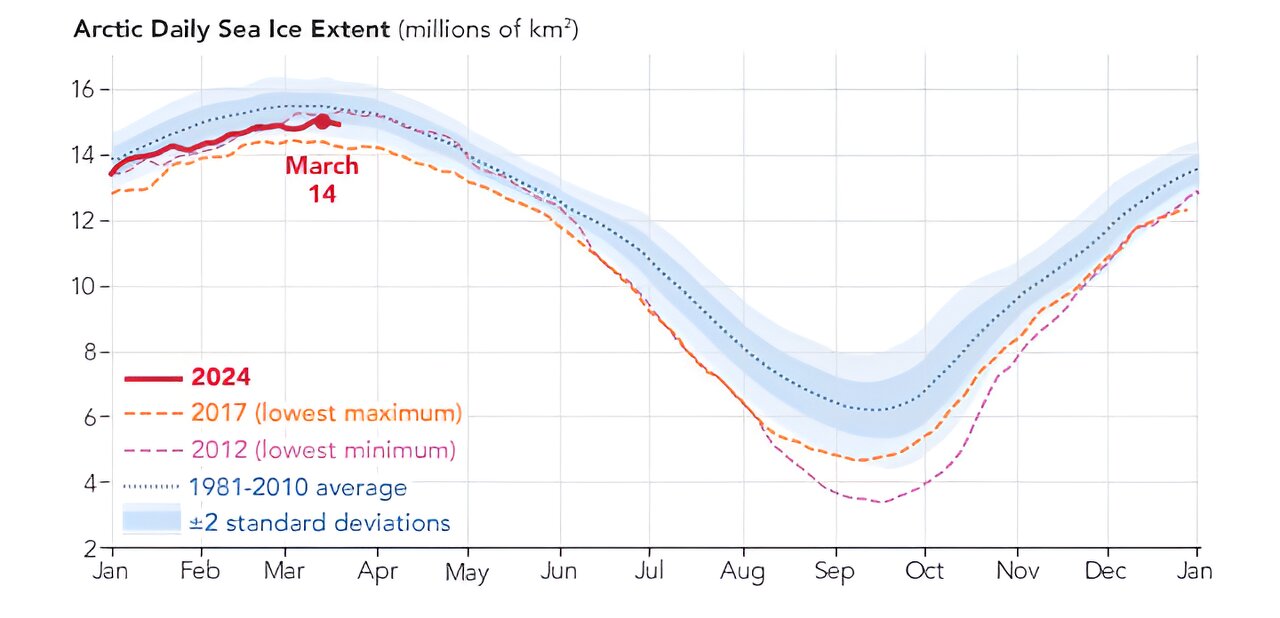
Antarctic sea ice has been at near-record-low levels for months, with the 2024 minimum extent tying with 2022 for the second-lowest in the 46-year satellite record. The director of the US National Snow and Ice Data Centre (NSIDC) suggests that more warm ocean water reaching the surface may be affecting the sea ice, leading to a potential "new regime" in the Antarctic. Meanwhile, Arctic sea ice reached its maximum extent for the year, peaking at 15.01m square kilometres on 14 March, which was 640,000km2 smaller than the 1981-2010 average maximum. Despite this, the relatively high winter peak is a reminder of the need to account for weather variability when discussing Arctic climate change.
Antarctic sea ice has reached near-historic lows for the third consecutive year, indicating a long-term shift likely due to global climate change, while the Arctic Ocean continues its 46-year trend of declining ice coverage. The loss of sea ice at both poles has significant implications for the exchange of heat and moisture between the ocean and atmosphere, contributing to a vicious cycle of rising temperatures. Thinner ice and declining coverage make the Earth more susceptible to solar heating, with potential long-term consequences for the planet's climate.
Antarctic sea ice reached a record low this winter, according to the U.S. National Snow and Ice Data Center (NSIDC). This has raised concerns among scientists about the impact of climate change on the southern pole. The decrease in sea ice can have severe consequences for animals like penguins and also contribute to global warming by reducing the amount of sunlight reflected back into space. The extent of Antarctic sea ice peaked on September 10 at 16.96 million square kilometers, the lowest winter maximum since satellite records began in 1979. The NSIDC will release a full analysis next month, but preliminary figures indicate an extreme record-breaking year.
A study conducted by the University of Washington provides insights into how sea-ice algae and other single-celled organisms adapt to seasonal changes in temperature and salinity in the Antarctic. These microbes, which form the base of the food web and play a crucial role in carbon storage and cloud formation, produce cryoprotectants and adjust the concentration of salt-like organic molecules to survive fluctuating environments. The research also suggests that the production of omega-3 fatty acids may decline in lower-salinity environments, potentially impacting the marine ecosystem. The study highlights the need to understand how these organisms will respond to future climate change.
Antarctic sea ice, which normally grows every year, is at record lows due to rising global temperatures. The decrease in sea ice has significant implications, including disrupting ocean currents and weather patterns, increasing sea level rise, and impacting wildlife such as penguins, seals, whales, and krill that rely on the ice.
The Arctic sea ice has been declining over the past five decades, while Antarctic sea ice has experienced fluctuations. The rate of global sea level rise has increased from 0.06 inches per year in the 20th century to 0.14 inches per year from 2006-2015. Earth's climate has been in an Icehouse state for the past 3 million years, characterized by alternating glacial and interglacial periods. During the early Eocene, there were no polar ice caps, and average global temperatures were significantly higher than today.
Antarctic sea ice has reached its lowest point since official records began 45 years ago, with July's coverage well below normal levels. The extent of winter sea ice is now missing about 2.6 million square kilometers, almost four times the size of Texas. This extreme event surpasses previous record lows and is now 6.4 standard deviations away from the 1991-2020 mean. The cause of this unprecedented sea ice melt is still unclear, but the climate crisis is likely a major factor. Scientists are concerned that further ice melt could trigger positive feedback loops, impacting ocean circulation and coastal ice shelves. Without more research, the future of Antarctic sea ice remains uncertain.
Scientists are alarmed by a series of climate records being broken, including the hottest day on record, the hottest June globally, extreme marine heatwaves, and record-low Antarctic sea ice. These events, which are occurring earlier than expected, are attributed to global warming from burning fossil fuels and the influence of the first El Niño since 2018. The average global ocean temperature has also reached record levels, with particular concern over extreme heat in the North Atlantic. While the exact link to climate change is complex, the impact on marine ecosystems is significant. The reduction in Antarctic sea ice is also at record lows, raising questions about the pace of change and the potential worst-case scenarios. Despite these alarming records, scientists emphasize that there is still time to secure a livable future.
Last week was the hottest ever recorded globally, with unprecedented high sea surface temperatures and record low Antarctic sea ice coverage, according to the World Meteorological Organization (WMO). The WMO warns that climate change and the developing El Niño system will continue to push temperatures higher. The high ocean temperatures in the North Atlantic are of great concern, as they could contribute to extreme weather events and impact regions like West Africa. The WMO emphasizes the need for urgent action to address climate change.
Climate records are being broken at an alarming rate, with soaring temperatures, unusually hot oceans, record high levels of carbon pollution, and record low levels of Antarctic sea ice. Scientists are concerned that this could be a sign of a planet warming much more rapidly than expected. The world is already 1.2 degrees Celsius warmer than it was in preindustrial times, and the next five years are predicted to be the hottest on record.
Antarctic sea ice has hit record lows, with levels falling below average every day so far in 2023. The current extent is about 1.8 million square kilometers below the average for this time of year, and scientists are concerned about an enduring pattern. Losing sea ice won't add to sea levels, but it plays a critical role in protecting Antarctica's colossal ice shelves from deteriorating. The loss of sea ice will also affect the efficiency with which the oceans distribute energy, ultimately affecting the global climate. It's unclear whether this year's record low is due to natural variability or climate change.