An 80-year-old man considering fathering a child with his younger partner sought medical advice on potential health risks. Dr. Keith Roach and fertility experts highlight that while men can father children at an advanced age, there are increased risks of genetic mutations and health conditions such as Down syndrome and autism in children. Additionally, older fathers may face challenges with fertility due to decreased sperm quality and lower testosterone levels. The life expectancy of an 80-year-old also raises concerns about the father's ability to be present in the child's life long-term.
An 80-year-old man inquires about the risks of fathering a child at his age, expressing concerns about genetic defects and his ability to be present in the child's life. Dr. Roach explains that older fathers face increased risks of genetic conditions and birth defects in their children, such as Down syndrome and autism spectrum disorders. Additionally, the life expectancy of an 80-year-old man suggests he may not live to see his child reach their 10th birthday, which could negatively impact the child's well-being.
Reproductive technology startup Orchid has launched a new genetic test that allows couples undergoing in vitro fertilization (IVF) to identify genetic risks in embryos before pregnancy begins. The test, which sequences over 99% of an embryo's genome, can detect birth defects, neurodevelopmental disorders, chromosomal abnormalities, and pediatric and adult-onset cancers. Orchid's test costs an additional $2,500 per embryo sequenced and is currently available at IVF clinics in major cities. The company aims to make the test more accessible and affordable in the future. The test provides couples with more control and confidence in the IVF process, potentially redefining reproduction.
Scientists have identified gene variants associated with the risk of developing cannabis use disorder, a condition characterized by tolerance to cannabis and difficulty in cutting back despite negative consequences. The study analyzed the genomes of over 1 million individuals, including those of European, African, East Asian, and mixed ancestries, and found key genetic hotspots associated with the disorder. These hotspots were often located near genes related to neurons and the brain's reward system, suggesting a role for dopamine receptors in addiction. The study also revealed links between cannabis use disorder and smoking cigarettes, substance dependence, PTSD symptoms, and a potential genetic link to lung cancer. Further research is needed to understand these associations fully.
Scientists have identified gene variants associated with the risk of developing cannabis use disorder, a condition characterized by tolerance and dependence on cannabis. The study analyzed the genomes of over 1 million individuals, finding key genetic hotspots related to neurons and the brain's reward system. The research also revealed links between cannabis use disorder and smoking cigarettes, substance dependence, PTSD symptoms, and a potential genetic link to lung cancer. The study highlights the need for diverse genomic research and further investigation into the relationship between cannabis use disorder and schizophrenia.
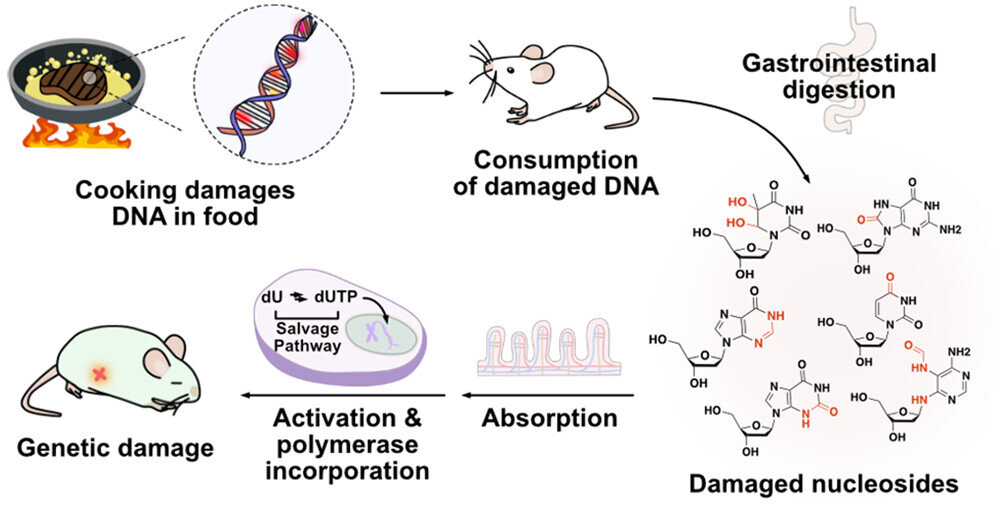
A study by Stanford scientists and their collaborators at the National Institute of Standards and Technology, the University of Maryland, and Colorado State University reveals that components of heat-marred DNA can be absorbed during digestion and incorporated into the DNA of the consumer, potentially triggering genetic mutations that may eventually lead to cancer and other diseases. The study only observed heat-damaged DNA component uptake and increased DNA injury in lab-grown cells and mice, but the findings could have important implications for dietary choices and public health.