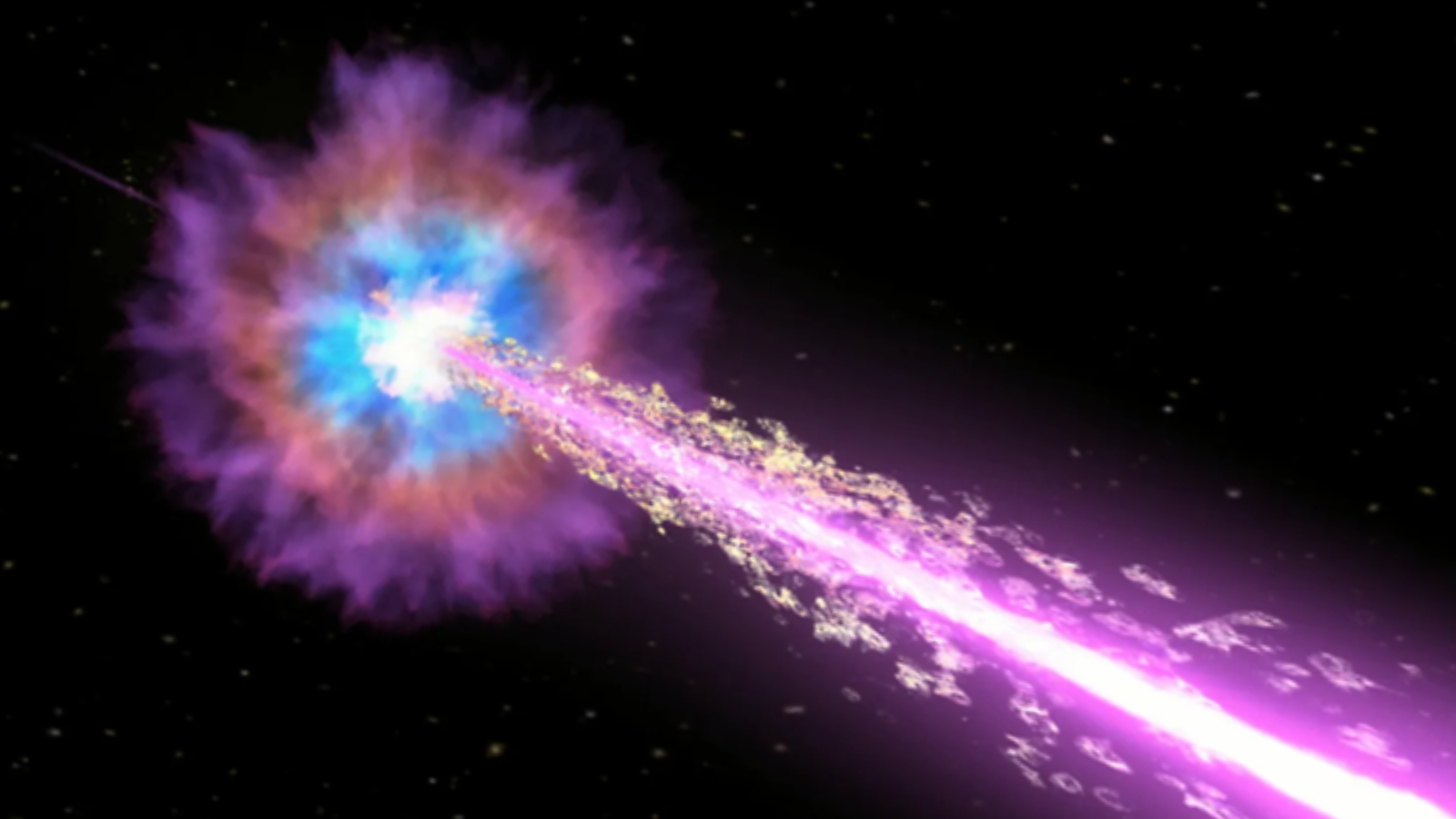
Astronomers have traced a mysterious class of cosmic explosions called Fast X-ray Transients (FXTs) back to their source, revealing an event that occurred 12 billion years ago, providing new insights into stellar death and the early universe, and demonstrating the capabilities of the Einstein Probe telescope.
Scientists have identified the source of mysterious cosmic signals called fast X-ray transients (FXTs), which are linked to 'failed' jets during certain supernovae, suggesting that many massive star explosions may not produce the powerful gamma ray bursts previously thought to be typical. This discovery was made possible by observations of a nearby FXT, EP 250108a, revealing that in some cases, jets are trapped by stellar remnants, leading to weaker emissions and altering our understanding of star death processes.
Scientists have identified the source of mysterious cosmic signals called fast X-ray transients (FXTs), which are linked to 'failed' jets during certain supernovae, suggesting that many massive star explosions may not produce the powerful gamma ray bursts previously thought to be typical. This discovery was made possible by observations of a nearby FXT, EP 250108a, revealing that in some cases, the star's own remains trap the jet, leading to weaker emissions and altering our understanding of stellar death processes.
Astronomers have traced a powerful X-ray blast to a massive star that survived a supernova, revealing insights into 'failed' gamma-ray bursts and the death of large stars, using observations from the Einstein Probe and other telescopes, which could reshape understanding of stellar explosions.