President Trump announced a deal with EMD Serono to significantly reduce the cost of fertility drugs, making IVF treatments more accessible and affordable for American families, with discounts ranging from 42% to 79% expected to start in early 2026.

Scientists have for the first time filmed the dynamic process of human embryo implantation in a lab setting, providing new insights into early development and potential improvements in fertility treatments.
Megan Worthington and her husband in Bountiful are raising funds through a GoFundMe campaign to afford IVF treatments, which are costly and often not covered by insurance. The couple, like many others across the U.S., faces emotional and financial challenges in their quest to have a child, with the average IVF cost ranging from $15,000 to $30,000. Despite these hurdles, the desire to become parents remains strong, and they are exploring various options, including fundraising and adoption.
A study suggests that menstrual cycle rhythms are likely governed by the body's internal clock, with a weak but significant association with the Moon's orbital period hinting at a more fundamental biology once reliant on the timing of the tides. The research team found evidence of 'phase jumps' in menstrual phases, indicating an adaptation to the body's internal clock. While the study suggests the main mechanism behind menstrual timing is the body's internal clock, there is a weak but statistically significant relationship between menstrual and lunar cycles, which varied depending on geography. The results could lead to potential fertility treatments, and understanding how genes regulate the menstrual cycle is key to understanding its chronobiology.
After the Alabama Supreme Court ruled that frozen embryos should be considered "extrauterine children" under state law, several fertility clinics in the state suspended I.V.F. treatments, causing setbacks for couples like Leelee and Austin Ray, who had been trying to have a baby for six years. The ruling disrupted expensive, physically and emotionally taxing fertility treatments, and may soon be repeated in other states as anti-abortion forces push to redefine the beginning of life.
The anti-abortion movement has long aimed to restrict access to birth control, viewing it as encouraging sex outside of marriage and weakening families. While there is no proposed legislation to ban contraception, anti-abortion leaders have been quietly laying the groundwork to curtail access for decades. They aim to blur the line between birth control and abortion, with some Republican lawmakers and religious groups endorsing the idea that birth control is a form of abortion. Secular "wellness" influencers have also joined in, spreading misinformation about the risks of hormonal birth control. As the national debate over reproductive rights continues, attention to efforts to expand or restrict access to birth control will be crucial.
The Alabama state legislature overwhelmingly passed bills protecting patients and medical professionals from civil and criminal liability for in vitro fertilization treatments, following a state Supreme Court ruling that embryos are considered children. The move aims to reassure IVF advocates and providers, with national implications prompting support for IVF protections from both Republicans and Democrats. The legislation now moves to the opposite chamber for review, with efforts to expedite approval and reach the governor's desk.
A Senate Republican blocked a Democrat-led effort to pass legislation protecting access to IVF nationwide, following a recent Alabama Supreme Court ruling that classified frozen embryos as children under state law. The bill, known as the Access to Family Building Act, aims to preempt state restrictions on fertility treatments, but was objected to by Sen. Cindy Hyde-Smith, a Mississippi Republican. The issue has become a point of contention between Democrats and Republicans, with Democrats tying it to the battle over abortion access and Republicans facing pressure due to the unpopularity of restricting IVF.
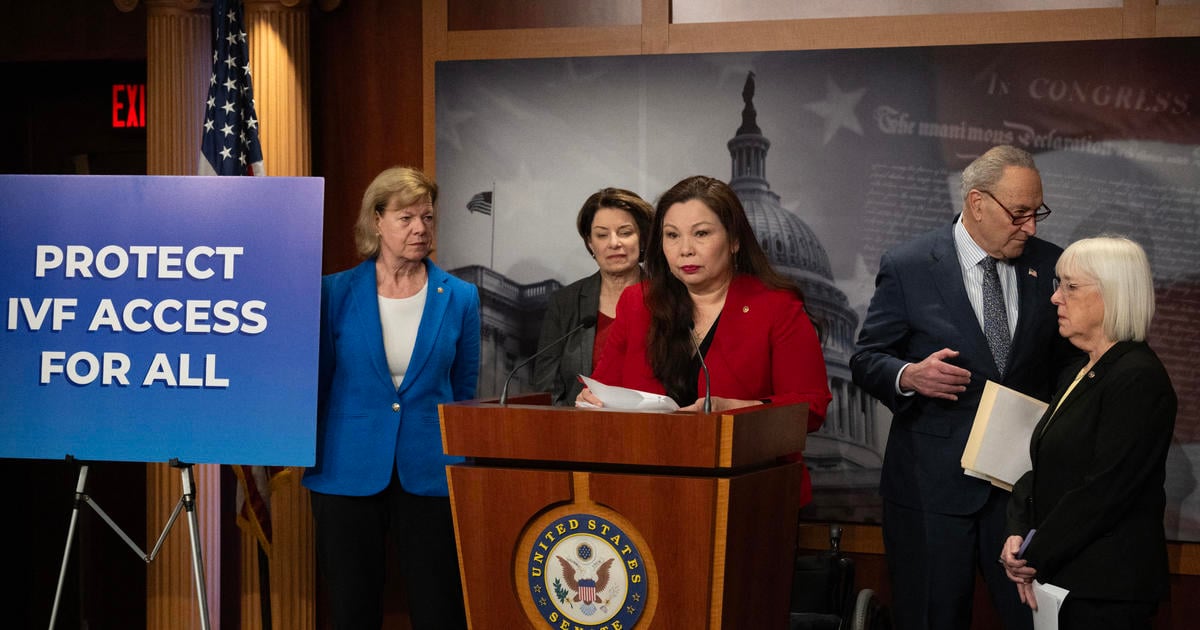
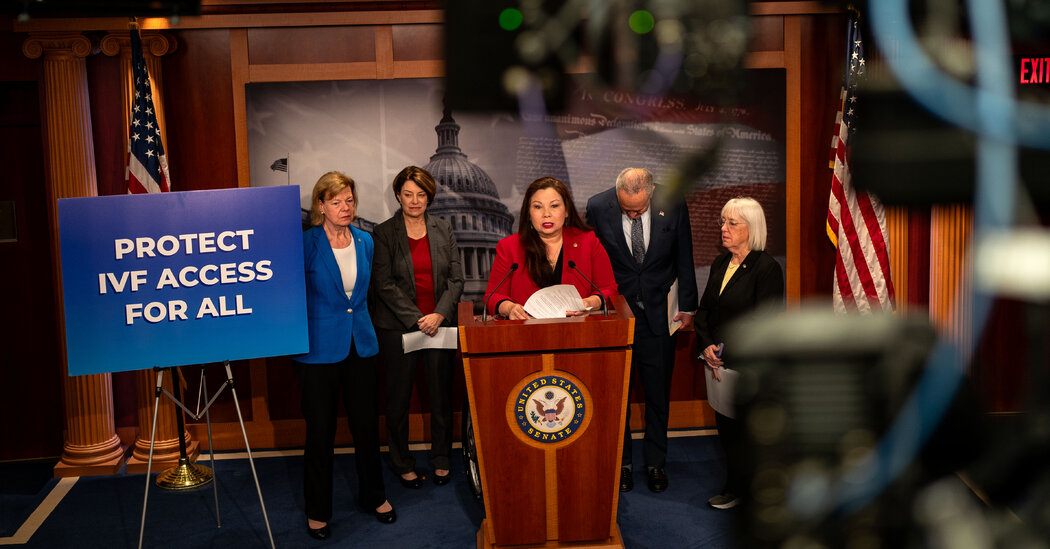
Senate Republicans are poised to block a bill that would establish federal protections for in vitro fertilization and other fertility treatments following a ruling by the Alabama Supreme Court that frozen embryos should be considered children. Democrats, led by Senator Tammy Duckworth, are challenging Republicans on their support for IVF, highlighting divisions within the GOP on the issue and aiming to point out their hypocrisy in light of their previous legislation declaring life begins at fertilization.
The Alabama Supreme Court's ruling that frozen embryos should be considered children has sparked a political divide among Republicans, with some distancing themselves from the decision and others supporting fertility treatments while opposing abortion. Former President Donald Trump broke with some anti-abortion groups by urging the Alabama Legislature to preserve access to IVF, while Democratic leaders seized on the ruling to mobilize voters. The decision has reignited debates over abortion and reproductive medical care, with Republicans attempting to navigate a delicate balance between supporting fertility treatments and appeasing their conservative Christian allies.
An Alabama Supreme Court ruling declaring frozen embryos as children has caused a political rift among Republicans, with some distancing themselves from the decision and expressing support for in vitro fertilization (I.V.F.) treatments, while others plan to push bills declaring life begins at conception. The ruling has opened a new front in election-year abortion battles, with Democrats vowing to tie Republicans to the controversial decision.
The Alabama Supreme Court's ruling that frozen embryos are considered children has led the state's largest hospital to pause its IVF services over fears of criminal prosecution. The decision has raised concerns about the legality of certain aspects of IVF and could impact fertility treatments in Alabama and beyond. The ruling ties into the US abortion debate and may influence legislation and lawsuits in other states, potentially affecting US politics as well.
A major Alabama hospital has halted in vitro fertilization (IVF) treatments following a state court ruling that considers frozen embryos as the legal equivalent of children, raising concerns about potential criminal charges or punitive damages for patients and doctors. The ruling by the all-Republican Alabama Supreme Court has sparked worries about the future of IVF treatments in the state and the unintended consequences of extreme anti-abortion laws, prompting patients and providers to seek legal advice and raising questions about the freezing, donation, or destruction of embryos. The decision, based on anti-abortion language added to the Alabama Constitution, has left patients pursuing IVF treatment uncertain about the impact on their futures and has ignited a complex ethical, medical, and legal dilemma.
The Alabama Supreme Court ruled that frozen embryos can be considered children under state law, a decision that could have significant implications for fertility treatments. The ruling, issued in wrongful death cases involving destroyed embryos, cited anti-abortion language in the Alabama Constitution and has sparked concerns about the future of IVF and embryo freezing in the state. Critics warn that the decision could limit access to modern healthcare, while supporters view it as a victory for protecting the rights of the unborn.
The Alabama Supreme Court has ruled that frozen embryos can be considered children under state law, a decision that has sparked concerns about its impact on fertility treatments and the freezing of embryos, which were previously considered property. The ruling, based on anti-abortion language in the Alabama Constitution, has raised questions about the future of IVF and the ability to freeze, donate, or destroy unused embryos, prompting a pause in IVF treatments at one Alabama clinic. Critics warn that treating frozen embryos as children could limit access to modern healthcare, while supporters of the decision argue for the protection of the rights of the unborn child.