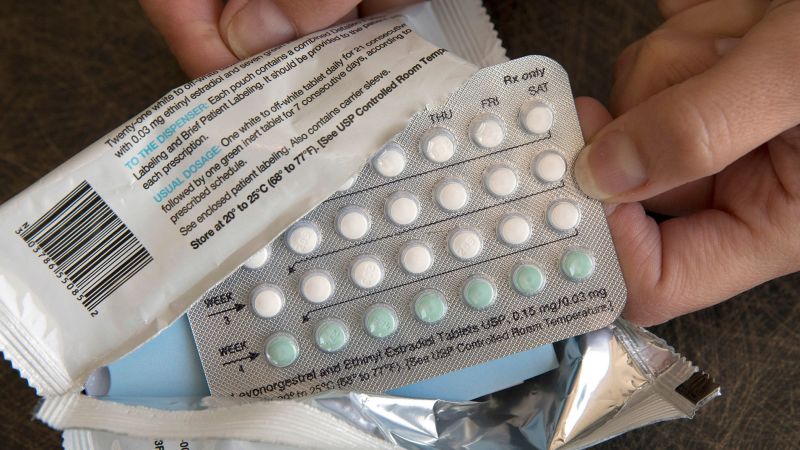
Health authorities warn about increased risks of suicidal thoughts and potential contraception failures associated with GLP-1 drugs like Ozempic and Mounjaro, which are used for diabetes and weight loss. While these drugs are generally effective, they may impact hormone absorption, reducing contraceptive efficacy, especially oral contraceptives. Patients should consult their doctors if experiencing mood changes or suicidal thoughts and consider alternative contraception methods if on GLP-1 medications. Use during pregnancy is not recommended due to potential risks.

New guidelines from the American College of Obstetricians and Gynecologists aim to improve pain management for women receiving IUDs by emphasizing better communication, pain relief options like topical lidocaine, and patient autonomy, addressing the historical lack of standardized care and helping women have a more comfortable experience with this highly effective contraceptive method.
Women using weight-loss injections like Wegovy and Mounjaro are advised to stop if trying for a baby, pregnant, or breastfeeding due to unknown risks to the fetus. Experts highlight concerns over safe use, especially as many women acquire these drugs without proper medical guidance, risking unintended pregnancies and potential harm. The UK regulator recommends contraception during and after treatment, but access issues complicate safe practices.
The CDC's small team responsible for contraception guidelines was eliminated, raising concerns among healthcare providers about the loss of a trusted resource that offers critical, up-to-date recommendations for women's reproductive health, especially for patients with specific conditions like Sickle Cell Disease. This move is seen as a setback for medical practice and women's autonomy, with fears that outdated information could impact patient care and decision-making.
Senate Republicans blocked the Right to Contraception Act, which aimed to codify nationwide access to contraception, with only two GOP senators voting in favor. The Biden campaign responded by highlighting the 39 senators who opposed the bill, framing it as a critical issue ahead of the election. Senate Majority Leader Chuck Schumer emphasized the importance of reproductive freedoms, while Republicans argued the legislation was unnecessary.
Lawrence O'Donnell discusses how former President Trump is losing support and influence, particularly in relation to recent GOP actions and Senate votes, including blocking the right to contraception.
Senate Republicans blocked the Right to Contraception Act, which aimed to guarantee nationwide access to contraceptives, failing to achieve the 60 votes needed for a full Senate vote. All opposition came from Republicans, with only two moderate Republicans, Lisa Murkowski and Susan Collins, voting in favor. Senate Majority Leader Chuck Schumer criticized Republicans for not supporting the bill, while Republicans argued it was a political stunt tied to abortion rights.
Senate Republicans blocked the Right to Contraception Act, a Democrat-led bill aimed at guaranteeing nationwide access to contraceptives. The bill failed to advance in a procedural vote, with most Republicans dismissing it as unnecessary and overly broad. GOP Senators Murkowski and Collins supported the bill, while Schumer's procedural move allows for future reconsideration. The vote is part of a broader Democratic effort to highlight reproductive health issues following the Supreme Court's overturning of Roe v. Wade. Republicans have introduced their own bills on IVF and contraception, arguing that Democrats are misrepresenting their stance.
Senate Republicans blocked a bill to codify nationwide access to contraception, a move Democrats initiated to highlight GOP opposition to an issue supported by the majority of Americans. Only two Republicans, Senators Lisa Murkowski and Susan Collins, voted to advance the legislation, leaving Democrats nine votes short of the 60 needed. The effort follows concerns raised after the Supreme Court overturned Roe v. Wade, with Democrats aiming to protect reproductive health options amid fears of further restrictions.
A Democratic-led effort to pass the Right to Contraception Act in the Senate failed to advance due to Republican opposition, with the vote falling short at 51-39. The bill aimed to codify the right to contraception in federal law, highlighting reproductive rights ahead of the November elections. Senate Majority Leader Chuck Schumer and President Biden criticized the opposition, while some Republicans argued the bill was unnecessary and a scare tactic. The vote is part of a broader Democratic push to spotlight reproductive rights issues.
Senate Republicans blocked a Democratic bill aimed at protecting access to contraception, labeling it a political stunt. The vote fell short of the 60 needed to advance, reflecting the Senate's current partisan divide. Democrats are focusing on reproductive rights as a key election issue, especially after the Supreme Court's overturning of Roe v. Wade. President Biden criticized the GOP's opposition, while some Republicans argued the bill was unnecessary and lacked religious liberty protections. A similar vote on in vitro fertilization access is expected to face the same fate.
Senate Republicans blocked the Right to Contraception Act, a Democratic-led bill aimed at ensuring federal access to contraception, with a 51-39 vote falling short of the 60 needed to overcome a filibuster. The bill, supported by two Republican senators, was seen by Democrats as a necessary measure to protect reproductive rights, especially after the Supreme Court's recent decisions. Republicans criticized the bill as unnecessary and a partisan stunt, arguing that contraception is already protected and the bill could lead to broader implications, including on abortion medication.
A combination hormonal topical gel for male birth control has shown promise in early-stage clinical trials by effectively suppressing sperm production in a shorter time frame. The Phase 2b trial, involving 222 men, demonstrated that 86% of participants achieved the desired low sperm count by Week 15. The gel, developed by the Population Council and the National Institutes of Health, offers a potential new contraceptive method for men, marking a significant milestone in reproductive health.
House Democrats are pushing a discharge petition to force a vote on the Right to Contraception Act, aiming to put Republicans on record regarding contraceptive protections ahead of the November elections. This move coincides with Senate Democrats' efforts to pass similar legislation and highlights the broader battle over reproductive rights following the overturning of Roe v. Wade.
A new birth control gel for men, NES/T, shows promising results in a phase 2 trial, effectively reducing sperm counts with minimal side effects. Applied daily to the shoulders, the gel combines nestorone and testosterone to block sperm production while maintaining stable hormone levels. Researchers are optimistic about its potential, with plans for further trials and possible market release by the end of the decade.