Tag

Eye Diseases

All articles tagged with #eye diseases

healthtech1 year ago

"AI-Enhanced Imaging Revolutionizes Retinal Analysis with 100X Speed and Superior Quality"

Researchers at the National Institutes of Health have utilized artificial intelligence (AI) to significantly improve the speed and quality of retinal cell imaging, making it 100 times faster and enhancing image contrast 3.5-fold. By integrating AI with adaptive optics optical coherence tomography (AO-OCT), they have developed a deep learning algorithm called P-GAN, which successfully de-speckles images of the retinal pigment epithelium (RPE) cells, reducing imaging acquisition and processing time by about 100-fold. This advancement provides a better tool for evaluating age-related macular degeneration (AMD) and other retinal diseases, potentially revolutionizing clinical imaging and research in the field.

health1 year ago

"Identifying Early Signs of Common Eye Diseases"

Recognizing early signs of eye diseases is crucial for maintaining overall eye health. Symptoms such as changes in iris color, crossed eyes, dark spots in the field of vision, difficulty focusing, double vision, dry eyes, cloudy vision, and excess discharge or tearing could indicate various underlying conditions like macular degeneration, retinal detachment, refractive errors, and infections. Seeking prompt medical attention and regular eye exams are essential for early detection and appropriate treatment.

health1 year ago

"Gut Bacteria's Role in Vision Loss: A Surprising Connection to Eye Health"

A study has linked gut bacteria to genetic mutations causing blindness, specifically in cases of the Crumbs homolog 1 (CRB1) gene associated with Leber congenital amaurosis and retinitis pigmentosa. The mutation compromises the body's defenses, allowing harmful gut bacteria to enter the eye and trigger sight loss. Treating the bacteria with antimicrobial agents prevented blindness in mouse models, suggesting a potential avenue for treatment, with implications for transforming treatment for CRB1-associated eye diseases and the possibility of targeting gut bacteria to prevent blindness in affected individuals.

health1 year ago

"Gut Bacteria's Impact on Vision Loss: Unveiling the Surprising Connection"

A new study suggests a surprising link between gut bacteria and vision loss in certain eye diseases, particularly those caused by mutations in the CRB1 gene. Researchers found that gut bacteria were present in damaged areas of the eyes of mice with CRB1 mutations, leading to retinal damage and potential vision loss. Treatment with antibiotics reduced retinal damage in mouse models, indicating a possible avenue for future treatments. The findings could have implications for understanding and treating a broader spectrum of eye conditions, although further research is needed to confirm the mechanism in humans.

health1 year ago

"Gut Bacteria's Role in Inherited Eye Diseases Revealed"

Research suggests that gut bacteria may play a role in causing some genetic eye diseases, prompting hopes that antibiotics could be used to treat these conditions. A study found that mutations in the CRB1 gene weaken protective barriers around the eye and the colon, leading to distorted cell layers in the retina. Treating mutant mice with antibiotics reduced eye damage, raising the possibility of similar treatments for people with CRB1 mutations. However, some experts caution that the results may not directly translate to humans and that genetic changes caused by CRB1 could still be harmful, even in the absence of bacteria.

health2 years ago

"Senior Eye Diseases Increase Fall Risk"

A study conducted in England and published in JAMA Ophthalmology found that older adults with cataracts, age-related macular degeneration (AMD), or glaucoma are more likely to experience falls and fractures. The risk for both was highest among people with glaucoma, followed by those with cataracts and then AMD. The study suggests that all three eye diseases are important risk factors for falls and fractures, warranting improved advice, access, and referrals to fall prevention services for older people with eye disease.

health2 years ago

"Stay Active, Keep Your Vision Sharp: The Link Between Exercise and Eye Health"

Regular exercise can benefit your eye health by preventing eye diseases such as age-related macular degeneration, cataracts, diabetic retinopathy, and glaucoma. It can also improve eye comfort by promoting stronger tear film production, reducing dryness, inflammation, and corneal disease. Even minimal exercise, such as 150 minutes of moderate-intensity aerobic exercise per week, can have positive effects. Other tips include creating a schedule, finding a workout partner, protecting your eyes with sunglasses and eyewear, avoiding smoking, checking family history of eye disease, and scheduling regular eye exams. Exercise not only improves eye health but also contributes to better mental health, sleep, and overall longevity.

health2 years ago

"Revolutionary Gene Therapy Eyedrops Offer Hope for Restoring Vision to Millions"

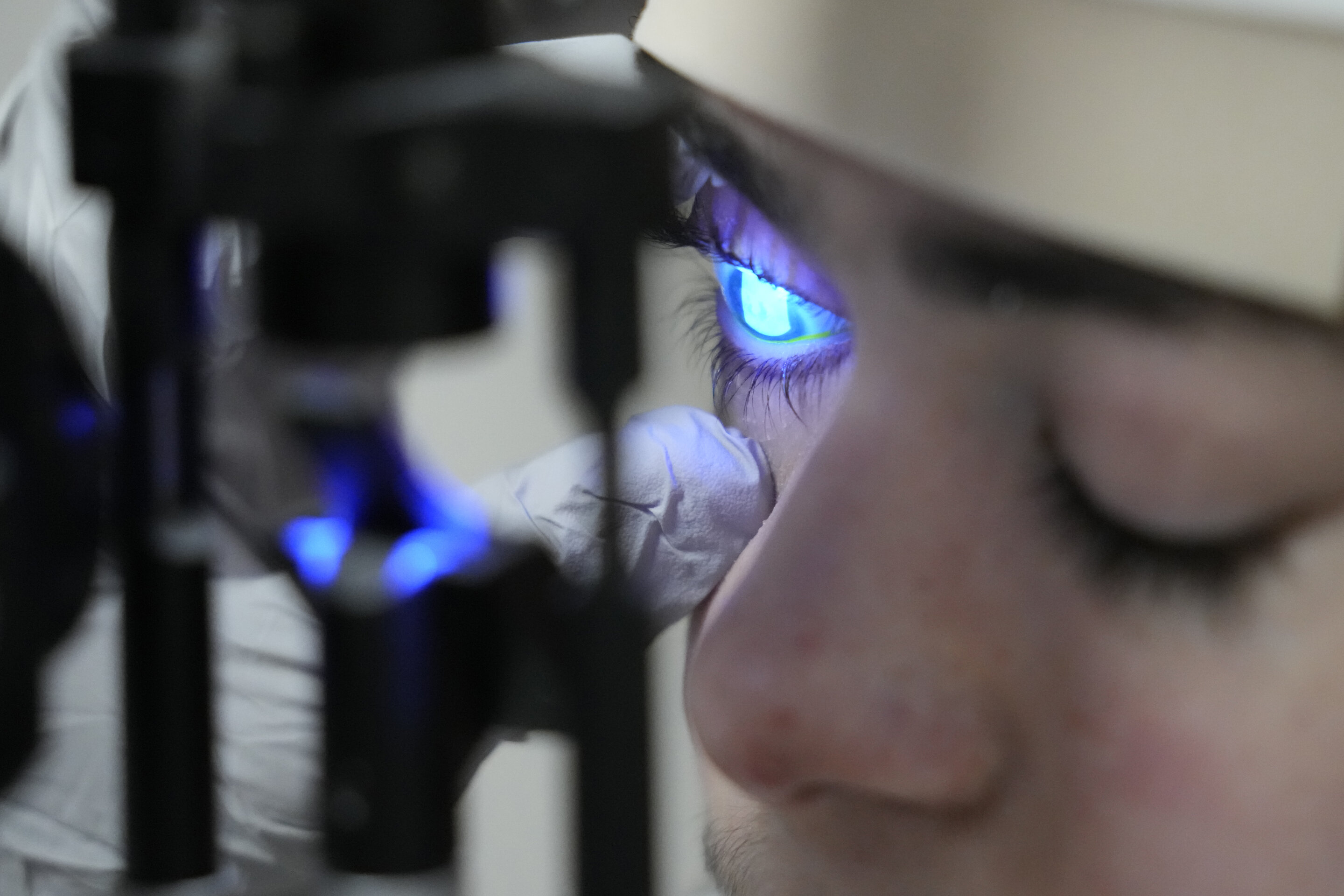
Gene therapy eyedrops have successfully restored the sight of a 14-year-old boy with dystrophic epidermolysis bullosa, a rare genetic condition that causes blisters in the eyes. The treatment, called Vyjuvek, uses an inactivated herpes simplex virus to deliver working copies of the gene responsible for producing collagen 7, which holds together the skin and corneas. After two years of testing and approvals, the boy's vision significantly improved, and similar therapies could potentially help millions of people with other eye diseases. The gene therapy eyedrops have the potential to be adapted for various conditions, offering hope for future patients.

health2 years ago

"Revolutionary Gene Therapy Eyedrops Offer Hope for Restoring Vision to Millions"

Gene therapy given through eyedrops has successfully restored the sight of a 14-year-old boy with dystrophic epidermolysis bullosa, a rare genetic condition that causes blisters in the eyes. The treatment, called Vyjuvek, uses an inactivated herpes simplex virus to deliver working copies of the gene responsible for producing collagen 7, which holds together both skin and corneas. The therapy not only helped the boy, but also opened the door to potential treatments for millions of people with other eye diseases. The gene therapy eyedrops could be adapted to treat various conditions by changing the gene delivered by the virus, offering hope for future patients.