The European Central Bank's digital euro project is approaching a critical decision point with a decisive vote expected in 2026, marking a significant step in the development of a central bank digital currency in Europe.
Christine Lagarde's salary is reported to be 50% higher than what the European Central Bank has officially disclosed, raising questions about transparency and disclosure practices.
Bulgaria has officially adopted the euro, with the Bulgarian central bank's governor joining the ECB Governing Council. While the transition is underway, Bulgarians can still use levs until June 30, with public opinion divided on the move. Bulgaria has been an EU member since 2007 and sees benefits from membership.
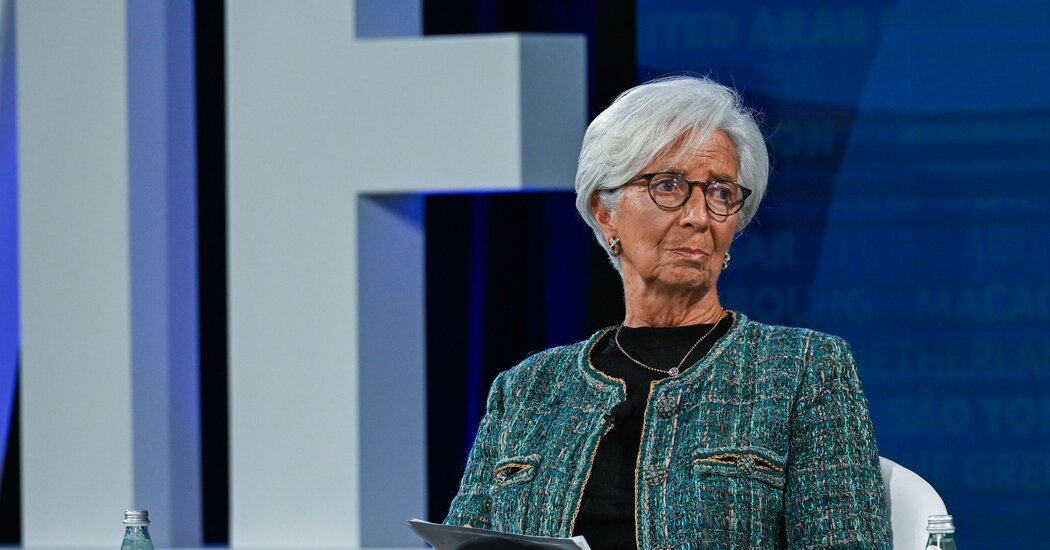
European Central Bank President Lagarde suggests the global economy has not yet felt the full impact of tariffs and highlights technological advancements, especially AI, as major transformative forces. She also views the US-China trade tensions as partly posturing, emphasizing the need for dialogue despite current hostilities.
The European Central Bank has kept interest rates steady amid economic uncertainty and ongoing trade disputes with the US, with policymakers cautious about further rate cuts until more clarity on trade agreements and economic forecasts emerge.
The European Central Bank has cut interest rates by 25 basis points to 2% and lowered its inflation expectations below the 2% target, amid a stronger euro, lower energy costs, and sluggish economic growth, as geopolitical tensions and US tariffs pose economic uncertainties.
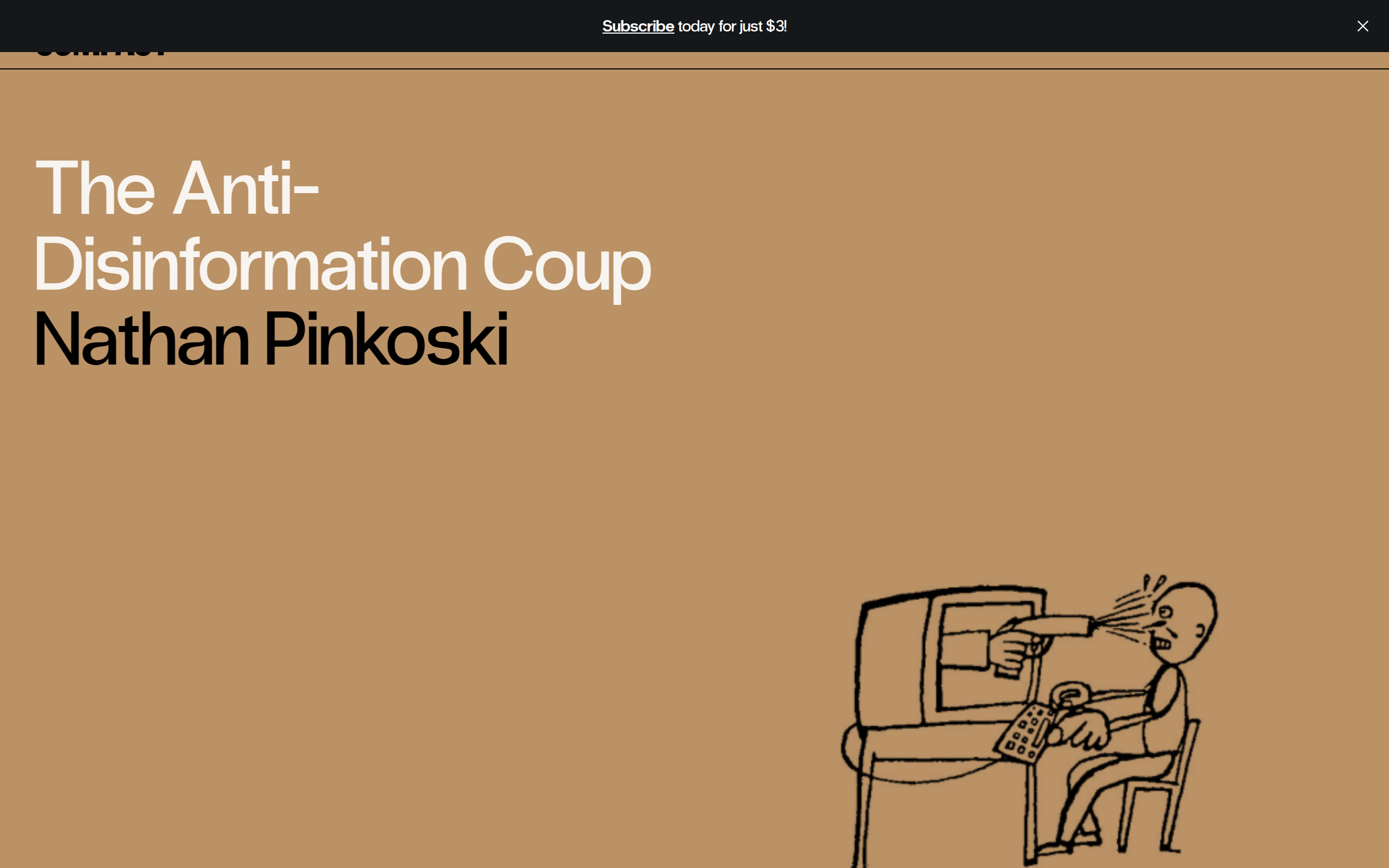
The Romanian constitutional court annulled the results of the first round of the presidential election and canceled the second round, citing alleged Russian interference through social media. This decision, praised by Western governments, reflects the growing influence of the anti-disinformation paradigm, which prioritizes combating misinformation over traditional democratic processes. The situation draws parallels to the Eurozone crisis, where the European Central Bank prioritized stability over national sovereignty, highlighting tensions between anti-disinformation efforts and postwar liberal democracy.
Stefan Berger, a German MEP and critic of the digital euro project, has resigned from leading the European Parliament's work on the initiative to avoid suspicions of deliberately delaying the legislation. The digital euro aims to enhance eurozone payments and reduce reliance on foreign providers, but faces resistance, particularly from German banks and citizens concerned about its impact on savings and privacy. Berger's resignation opens the way for a new leader to advance the project, with potential candidates including former Spanish central banker Fernando Navarrete Rojas.
European markets saw slight declines as investors awaited the European Central Bank's (ECB) final monetary policy decision of the year, with expectations of a 25-basis-point rate cut. The Swiss National Bank surprised with a 50-basis-point cut amid inflation challenges and a strong franc. Meanwhile, U.S. inflation data aligned with forecasts, and traders anticipate a Federal Reserve rate cut next week. Brunello Cucinelli shares rose despite a retail sector slump, while Inditex shares fell following disappointing results.
The European Central Bank (ECB) is expected to announce a 25-basis-point interest rate cut at its final meeting of 2024, bringing the deposit facility rate to 3%. This decision comes amid persistent core and services inflation, despite headline inflation nearing the ECB's 2% target. Economists anticipate a lively debate over the rate cut size, with a focus on macroeconomic projections and potential shifts in ECB's policy language. The ECB's gradual rate cuts aim to support economic growth in 2025, as analysts predict continued easing until September 2025.
The European Central Bank (ECB) is facing challenges as political crises in France and Germany overshadow its policy decisions. Despite the turmoil, the ECB is expected to cut interest rates, but the uncertainty complicates fiscal policy forecasts. France's President Macron is seeking a new budget after a failed deficit reduction plan, while Germany prepares for elections following the collapse of its coalition government. These developments raise concerns about fiscal policy and economic growth in the eurozone's largest economies.
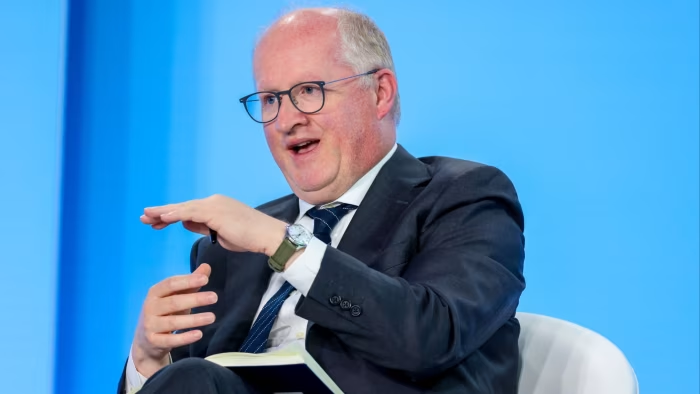
The European Central Bank (ECB) plans to shift away from its crisis-era strategy of relying heavily on short-term economic data to guide interest rate decisions, as inflation in the Eurozone has significantly decreased. ECB Chief Economist Philip Lane indicated that future monetary policy should focus on upcoming risks rather than past data, once inflation aligns with the ECB's 2% target. This transition is expected to occur over the next year, with the ECB potentially adjusting its approach at its December policy meeting. The move aims to maintain inflation at a sustainable level while considering new economic shocks.
Eurozone inflation rose to 2.3% in November, meeting expectations and surpassing the European Central Bank's 2% target. Core inflation remained steady at 2.7%, driven by persistent services inflation. The ECB is expected to implement a 25-basis-point interest rate cut in December, marking its fourth reduction this year, as speculation of a larger cut has diminished. The decision will be influenced by upcoming economic projections and potential global impacts, including U.S. trade policies under President Trump.
The European Central Bank has cut its key interest rate by a quarter-point to 3.75%, ahead of the U.S. Federal Reserve, as global central banks lean towards lowering borrowing costs. ECB President Christine Lagarde indicated that future rate cuts would depend on inflation trends, which remain above the 2% target. Analysts expect the ECB to hold rates steady in July, awaiting further inflation data. The move contrasts with the Fed's approach, which is also expected to cut rates later this year.