Tag

Epigenetic Clocks

All articles tagged with #epigenetic clocks

health1 year ago

"Pregnancy Linked to Accelerated Biological Aging, Study Finds"

A new study suggests that young women who have been pregnant may experience accelerated biological aging compared to those who have never been pregnant, with the age gap appearing to widen in those who have had multiple pregnancies. The research, conducted in the Philippines, used epigenetic clocks to assess biological age and found that each pregnancy was associated with about 4 to 4.5 months of biological aging. The study's findings may have been influenced by factors such as access to nutrition and healthcare, and more research is needed to understand the impact of pregnancy on aging. The study could potentially inform future treatments to prevent or reverse accelerated aging related to pregnancy.

health-and-science1 year ago

"Pregnancy Accelerates Biological Aging in Mothers, Study Shows"

A study by Columbia University Mailman School of Public Health suggests that each pregnancy during early adulthood can add two to three months to a woman's biological ageing process, as determined by studying their 'epigenetic clocks'. This effect was not observed in men, indicating that there is something specific about pregnancy or breastfeeding that accelerates biological ageing. The study, published in the Proceedings of the National Academy of Sciences, focused on young women in late adolescence and highlights the potential long-term impacts of pregnancy on women's health, emphasizing the importance of supporting new parents, especially young mothers.

health-and-science1 year ago

"Revolutionizing Aging: The Impact of Epigenetic Clocks on Measuring Age"

Researchers at Brigham and Women’s Hospital have developed a new DNA clock, called CausAge, DamAge, and AdaptAge, that can more accurately predict biological aging and the effectiveness of anti-aging treatments by distinguishing between genetic factors that accelerate or decelerate the aging process. The clocks are based on DNA methylation, a process closely linked to aging, and were validated using data from large cohorts, showing correlations with health outcomes and longevity. This breakthrough may lead to better quantification of biological age and evaluation of aging interventions.

health-and-science2 years ago

"The Role of Immune Cells in Biological Aging"

Scientists are using epigenetic clocks to measure biological age, a true marker of health, but the role of the immune system in this process is not fully understood. A new study by Dartmouth Cancer Center scientists reveals how different immune cells affect epigenetic clocks, shedding light on the relationship between immune cell composition and biological age. This research has significant implications for aging insights, health interventions, and targeted cancer treatments, potentially revolutionizing precision medicine and cancer treatment.

health2 years ago

The Reliability of Biological Age Testing: A Critical Analysis

Scientists are working on quantifying a person's "biological age" by examining their cellular health instead of their chronological age. Some companies offer direct-to-consumer blood tests that analyze epigenetic changes to calculate biological age, but experts caution that these tests are not yet reliable for individuals and are more suited for research purposes. The results can vary between different tests and it is unclear how to interpret or reverse the biological age. Other companies offer blood marker tests as a proxy for biological age, but their accuracy in tracking biological age is still debated. While the concept is intriguing, experts advise caution in interpreting and relying on these tests.

aging-and-cellular-biology2 years ago

Unveiling the Link Between Aging and Epigenetic Clocks

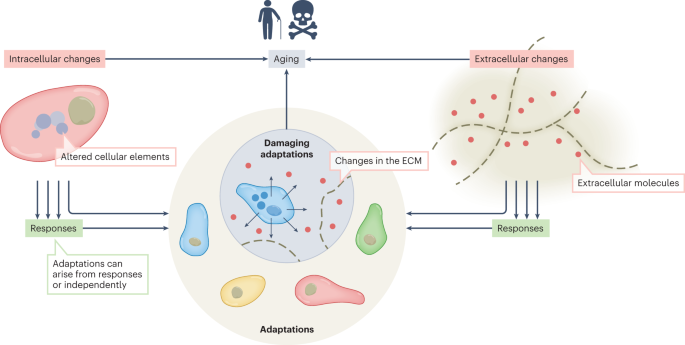
This article explores the concept of adaptation in aging, focusing on cellular senescence, epigenetic clocks, and stem cell alterations. It discusses the role of programmed cell death, DNA damage response, and wound healing in the aging process. The authors highlight the importance of senescent cells and their clearance, as well as the interplay between senescent cells and immune surveillance. The article also discusses the impact of oxidative stress, collagen fragmentation, and changes in extracellular matrix components on aging. Overall, the article provides insights into the mechanisms underlying adaptation and cellular changes during aging.

health2 years ago

The Link Between Depression, Urban Deprivation, and Biological Aging.

Depressive symptoms and living in deprived urban neighborhoods were found to be independently associated with accelerated biological aging, according to a new study. The research utilized DNA methylation-based epigenetic clocks to estimate biological age and found premature aging in individuals facing these circumstances. The study also found a connection between higher neighborhood deprivation and an increased risk of death. The influence of depression on premature aging seemed unrelated to neighborhood deprivation, suggesting different underlying mechanisms.