Recent scientific evidence suggests that psychopathy is more likely to be innate, linked to structural differences in the brain and genetic factors, rather than solely caused by environmental influences, although both may play a role.
A Chinese eye-tracking study found that individuals with depression focus more on threatening and neutral images than healthy controls, indicating an abnormal attentional bias towards negative and ambiguous content, which may reinforce depressive symptoms.
A new study using stereotactic electroencephalography (sEEG) sheds light on how individuals with treatment-resistant depression (TRD) process emotions differently due to abnormalities in the amygdala and prefrontal cortex, revealing heightened responses to negative stimuli and weakened responses to positive ones. Deep brain stimulation (DBS) shows promise in correcting these neural discrepancies, offering potential as a treatment method that could improve both positive and negative emotional processing in TRD patients.
A recent study explores how testosterone, particularly in transgender boys undergoing hormone therapy, influences the processing of emotional cues from caregivers and peers during adolescence. Using functional magnetic resonance imaging (fMRI), researchers found that testosterone therapy appears to recalibrate the neural response to emotional cues, reducing the impact of negative familial cues while heightening sensitivity to peer emotions. These findings shed light on the differential impact of testosterone on the brain's processing of emotional cues and its role in the social reorientation process during adolescence.
A study conducted in China has found that individuals with social anxiety disorder process facial expressions differently depending on the emotional context. The research, which focused on the early stages of facial expression processing, revealed that people with social anxiety exhibit distinct patterns in event-related alpha power when exposed to negative contextual cues paired with angry facial expressions and positive contexts paired with neutral expressions. The study highlights the importance of accurate emotional interpretation in social interactions and suggests that understanding the interplay between social anxiety, language context, and facial expression processing could lead to targeted therapeutic strategies. However, the study's findings may be limited to a specific population and static facial expressions, and further research is needed to explore dynamic expressions and cross-cultural differences.
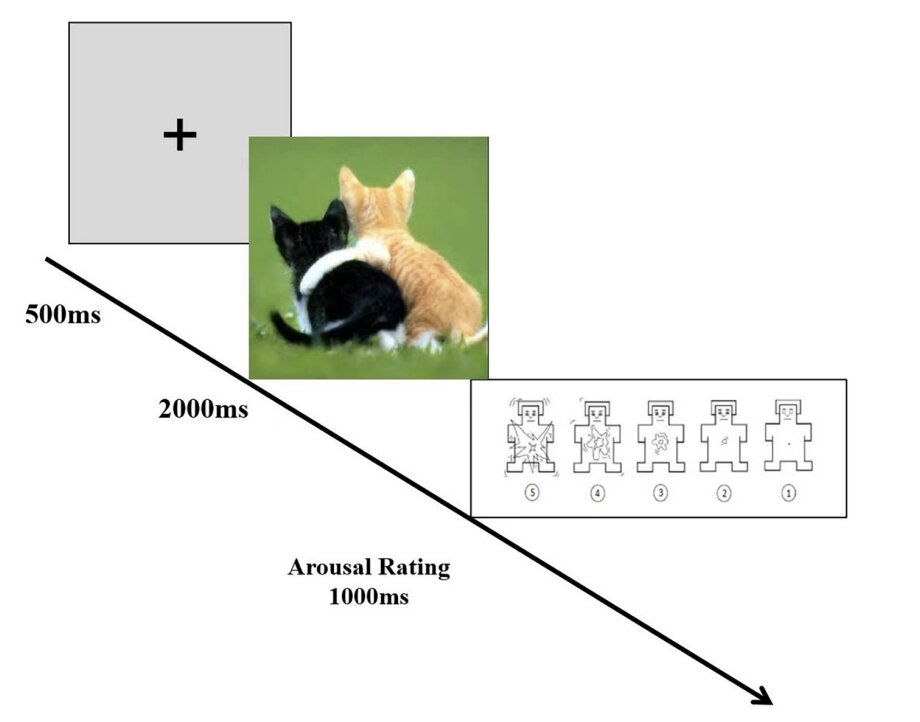
A study conducted by researchers at Shenzhen University in China suggests that mindfulness meditation may help mitigate the adverse effects of fatigue on emotional processing. The study involved 145 participants who were randomly assigned to either a mindfulness meditation group or a resting group. The researchers measured event-related potentials (ERPs) in the participants' brains while they completed an image processing task. The results showed that participants in the mindfulness meditation group had improved responsiveness to emotional stimuli compared to those in the resting group, indicating that mindfulness meditation may offset the negative association between fatigue and emotional processing. Further research is needed to explore this topic using different methods and measures of fatigue.
Individuals with higher levels of psychopathic traits have difficulty recognizing and resonating with emotions conveyed through music, according to a study published in Cognition and Emotion. The research team conducted two experiments with a total of 771 participants and found that individuals with psychopathic traits had lower accuracy in identifying the emotional content of music clips and reported lower emotional responses to the clips. The study has important implications for using music in therapeutic interventions and highlights the need for further research to understand better the emotional deficits associated with psychopathy.
Blind people have a better ability to sense their own heartbeat than sighted people, according to a new study. Researchers found that blind individuals scored an average accuracy of 0.78, while the sighted individuals registered 0.63 on average. This suggests that brain plasticity following blindness leads to superior ability in sensing signals from the heart, which has implications for the study of bodily awareness and emotional processing in blind individuals. The study also points to the versatility of the brain in general.
Blind individuals have a heightened ability to sense their own heartbeat compared to sighted individuals, according to a study by researchers at Karolinska Institutet in Sweden and Jagiellonian University in Poland. The study suggests that blindness leads to a heightened ability to feel signals from inside the body. The researchers will continue to study how blind individuals perceive their own bodies and examine if structural changes in the visual cortex may explain the increased ability to sense signals from the inside of the body.