Sir David Attenborough, at 99 years old, explores London's hidden wildlife in a personal BBC documentary, highlighting the importance of urban green spaces and rewilding efforts, with scenes of foxes, beavers, and other city creatures, emphasizing nature's role in urban happiness.
Sir David Attenborough became the oldest Daytime Emmy winner at age 99 for his documentary 'Secret Lives of Orangutans,' breaking the previous record held by Dick Van Dyke. The film, which showcases orangutans in Sumatra, also won two other awards at the 52nd Daytime Emmys in Pasadena, California.
Sir David Attenborough, at 99 years old, set a record as the oldest Daytime Emmy winner for his role as host of Netflix’s 'Secret Lives of Orangutans,' surpassing Dick Van Dyke's previous record. The awards also recognized performances from 'General Hospital,' 'The Young and the Restless,' and other daytime dramas.
David Attenborough's film 'Ocean' highlights the beauty and vulnerability of marine life, exposing destructive practices like bottom trawling and emphasizing the urgent need for ocean protection, with hopeful signs of recovery through marine reserves and conservation efforts.
Sir David Attenborough shared a near-drowning experience while testing a scuba helmet in the 1950s and discussed the current state of ocean health with Prince William, emphasizing the urgent need for awareness and action to protect marine life, as highlighted in his new documentary Ocean.
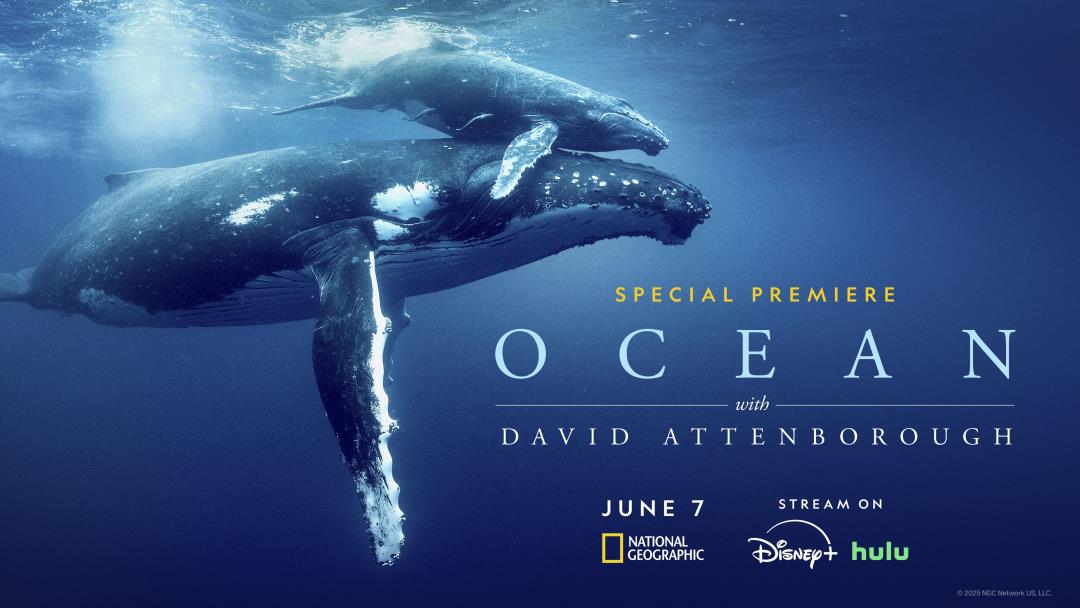
David Attenborough expressed his horror at human damage to the deep ocean floor during a conversation with Prince William, highlighting the need for increased awareness and action to protect ocean ecosystems, as showcased in his new documentary 'Ocean with David Attenborough' released on World Oceans Day.
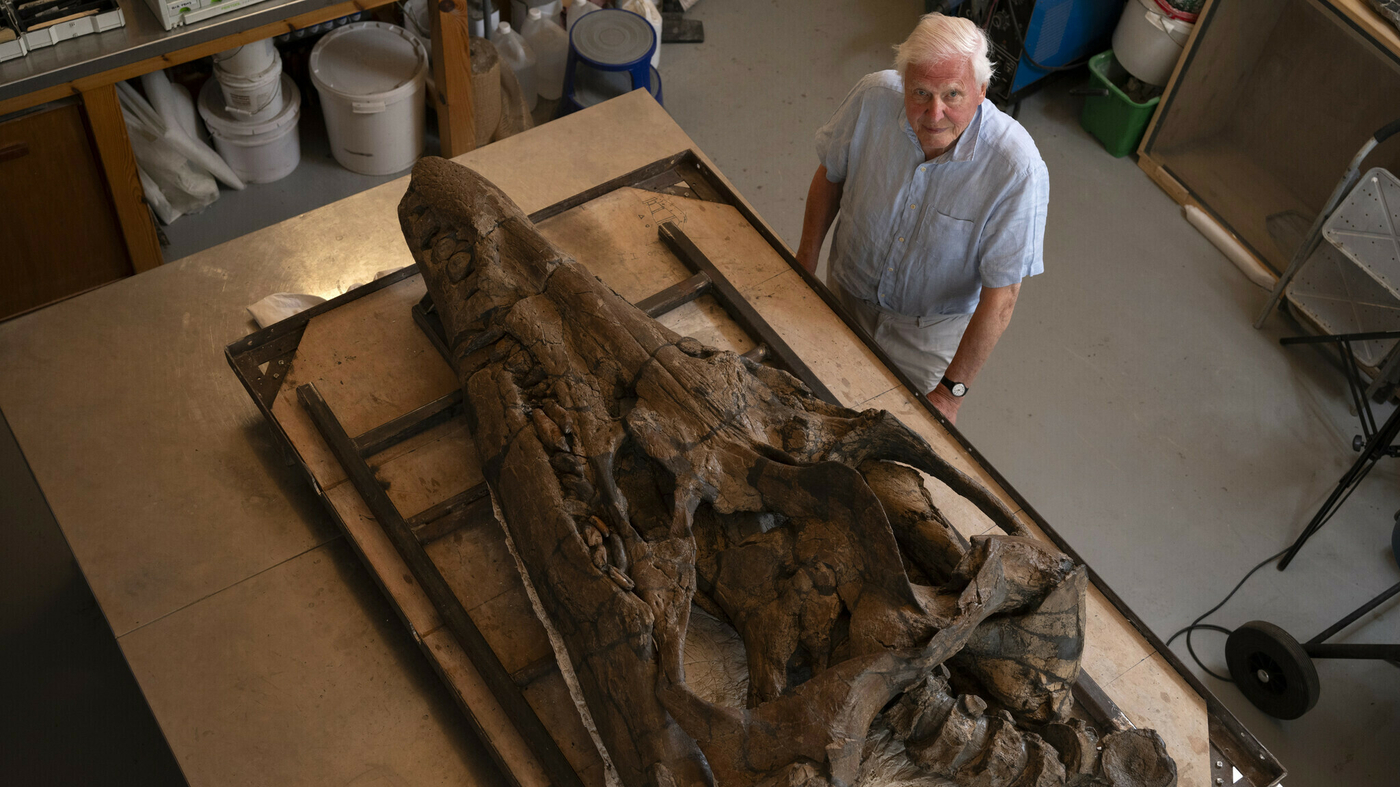
Researchers have reconstructed a 30-foot Jurassic pliosaur, a large marine reptile, after excavating its enormous fossilized skull from a U.K. cliff face. The discovery and reconstruction are featured in a new documentary, "Attenborough and the Jurassic Sea Monster," airing on PBS. The pliosaur, a top predator of the Jurassic period, had massive jaws with razor-sharp teeth and lived in warm, shallow seas. The fossilized skull, one of the largest and most complete ever found, was excavated from a cliff face in a challenging three-week operation. Experts at Imperial College London reconstructed the pliosaur's movement using a robotic prototype, and further scientific research is underway to learn more about this extinct animal. Paleontologists are now planning the next phase of excavation to recover the rest of the fossilized body before it is lost to erosion.
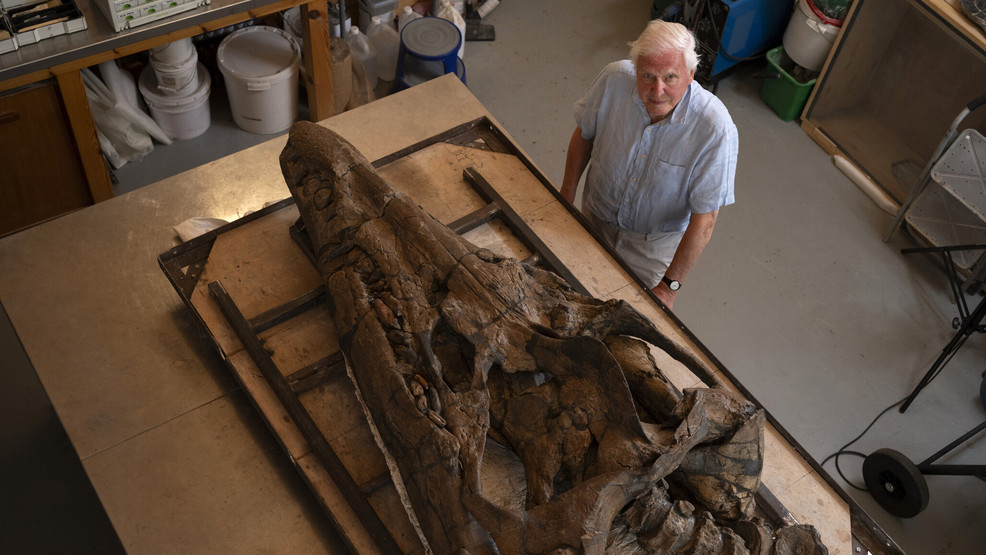
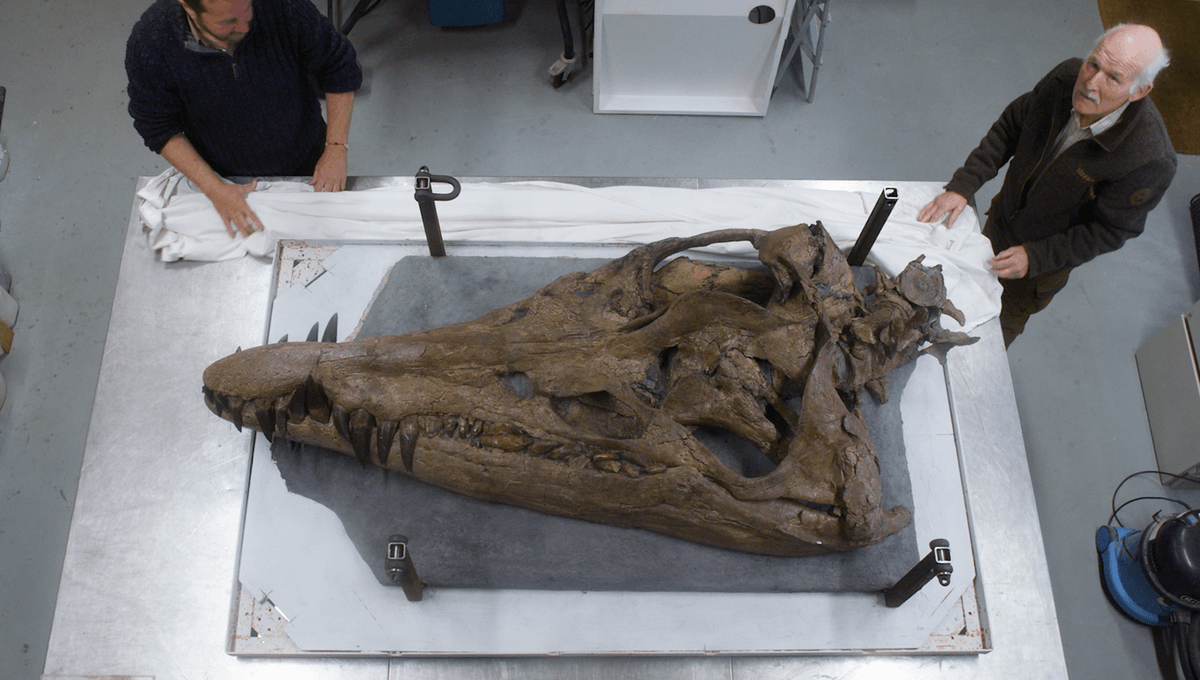
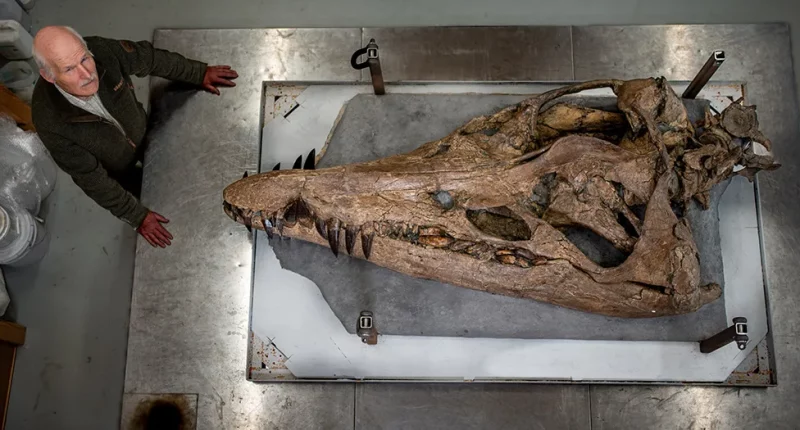
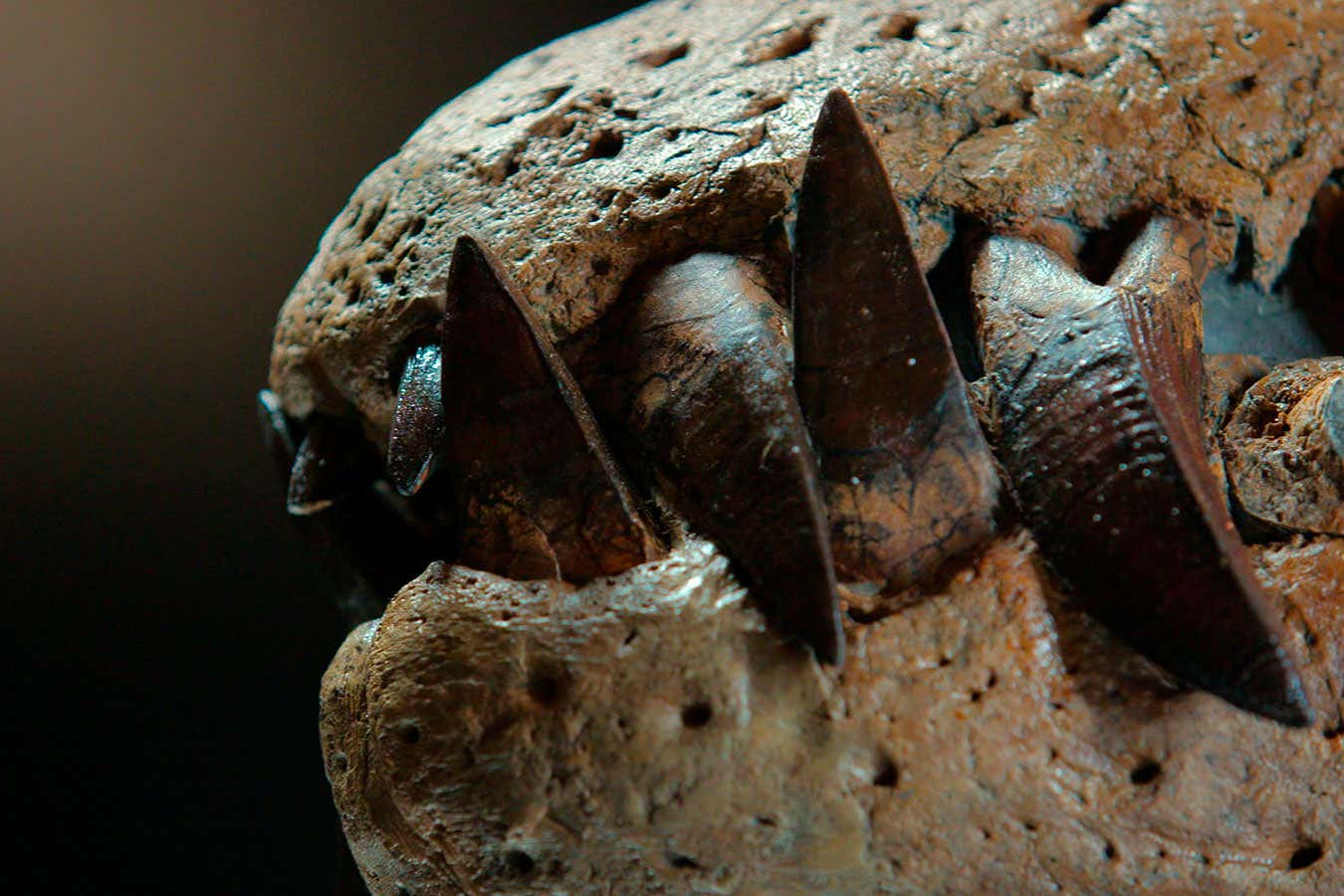
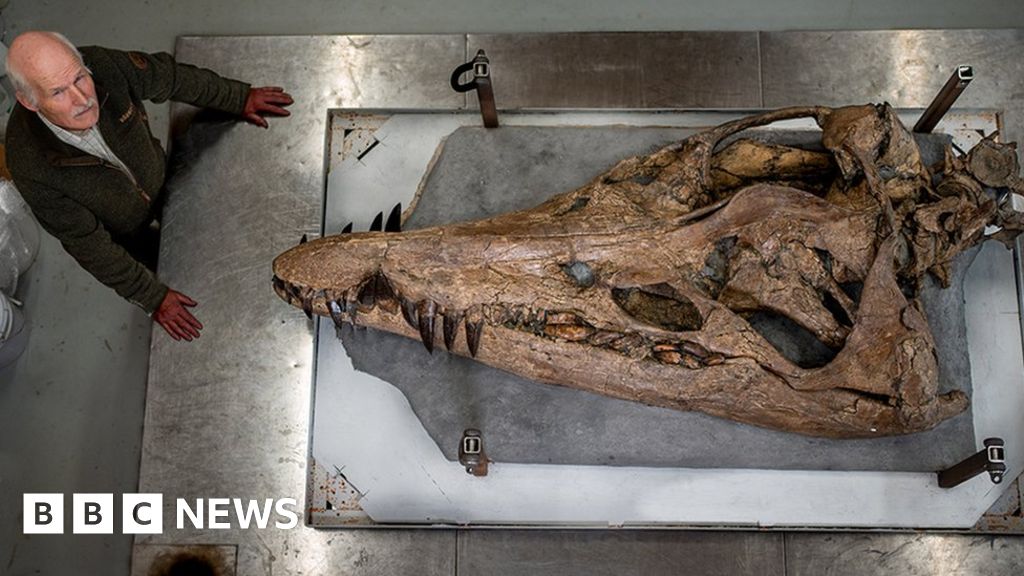
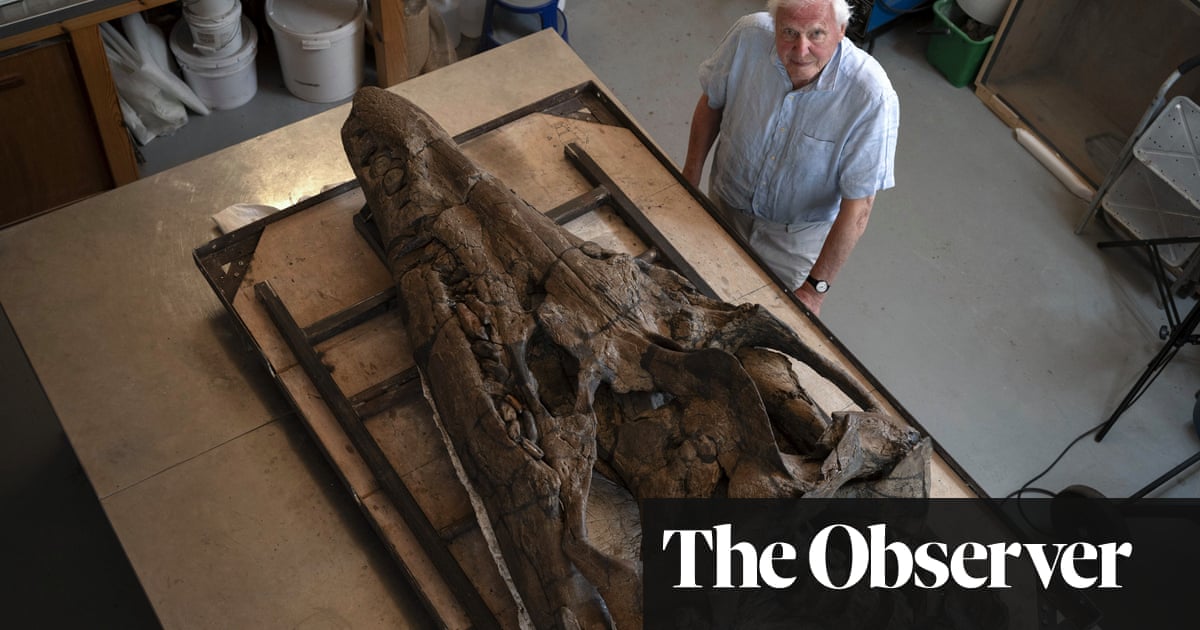
The largely intact skull of a pliosaur, a ferocious marine reptile that lived 150 million years ago, has been discovered on England's Jurassic Coast. Measuring 6 feet and equipped with 130 teeth, the skull is believed to have belonged to an underwater T-rex-like creature capable of killing in a single bite. The fossil, one of the most detailed ever found, will be displayed in a museum next year, while scientists believe the rest of the animal is still waiting to be discovered in the cliffs. The discovery will be featured in a BBC documentary with David Attenborough.
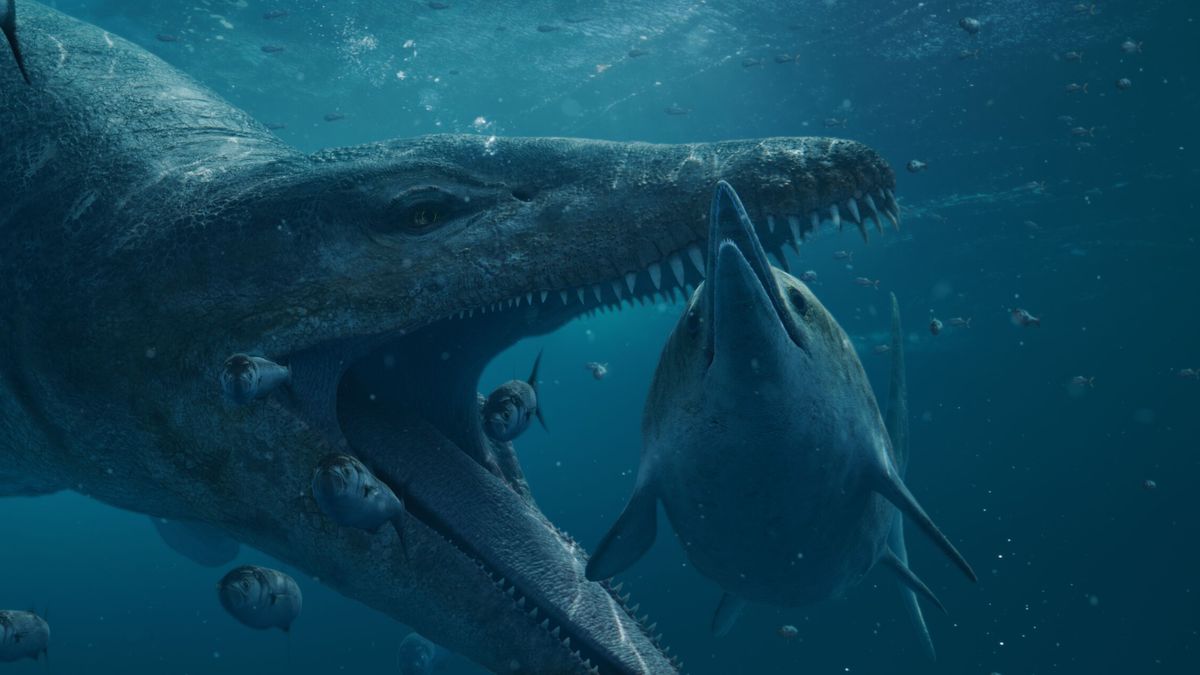
The giant skull of a 150-million-year-old predatory marine reptile, possibly a new species, has been discovered along the Jurassic Coast in the UK. Fossil enthusiasts found the snout, leading to a retrieval mission to uncover the rest of the creature. The skull, measuring 2 meters in length, will be featured in a new documentary called "Attenborough and the Giant Sea Monster." Pliosaurs, like this apex predator, were among the largest marine predators in history, using their enormous teeth to prey on creatures such as ichthyosaurs. The skull will eventually be displayed at the Etches Collection Museum in Dorset.
A fossil enthusiast discovered a two-meter-long pliosaur skull with 130 teeth in the cliffs of Dorset, England. The skull, believed to be 150 million years old, was found by Phil Jacobs on the beach at Kimmeridge Bay and was excavated with the help of fossil expert Steve Etches. The rare find, which will be featured in a David Attenborough documentary, is in remarkably good condition and is attracting scientists from around the world. The pliosaur, an apex predator of the Jurassic period, was larger and more ferocious than a T-Rex.
Scientists have discovered a mostly intact skull of a pliosaur, a giant and deadly sea reptile that lived millions of years ago off the coast of England. The six-foot-long skull reveals the massive size and powerful bite of the creature, which had 130 teeth and was compared to an underwater T. rex. The fossil will be featured in a BBC One special hosted by David Attenborough and will be displayed in a museum. However, there are concerns that the rest of the fossil may be lost due to erosion.
Fossil hunters have discovered what is believed to be the most complete Jurassic pliosaur skull ever found on the Jurassic Coast in Dorset, UK. The fossil, which is likely a new species, features a large sagittal crest that may indicate sexual dimorphism and suggests the animal was a juvenile. CT scans reveal sensory pits connected to blood vessels and nerves, enhancing understanding of pliosaurs' hunting abilities. The skull will be displayed to the public next year and featured in a David Attenborough documentary.
The skull of a remarkably well-preserved pliosaur, a massive marine reptile that lived 150 million years ago, has been discovered on Dorset's Jurassic Coast. Measuring 2 meters long and featuring 130 razor-sharp teeth, this fossil provides valuable insights into the anatomy and predatory behavior of these ancient creatures. The pliosaur, dubbed an "underwater T. Rex," was an apex predator that likely preyed on other marine reptiles, including its own kind. The discovery was made by local paleontologist Steve Etches, and the skull will be showcased in a David Attenborough program on New Year's Day.
A new David Attenborough documentary will showcase the risky mission to extract the skull of a newly discovered species of pliosaur, known as the "T rex of the seas," from a treacherous cliff face on England's Jurassic coastline. The skull, almost 2 meters long, belonged to one of the most ferocious Jurassic predators that lived 150 million years ago. The operation involved abseiling down the cliff, drilling into the rock, and working against the clock to prevent the fossilized remains from falling into the sea. The documentary will reveal the creature's remarkable features, including razor-sharp teeth and wing-like flippers, and highlight the groundbreaking scientific techniques used to study the fossil.
Researchers on an expedition in Papua New Guinea's Cyclops Mountains rediscovered Attenborough's long-beaked echidna, a species thought to be extinct. The echidna, named after David Attenborough, was captured on camera for the first time in over 60 years. This discovery is crucial for preserving the unique evolutionary history of monotremes, a group of egg-laying mammals. The echidna is classified as critically endangered, highlighting the need for conservation efforts in its Indonesian habitat. The expedition also uncovered new insect species, frog species, and a land-dwelling shrimp, emphasizing the region's biodiversity. The echidna has become a symbol for conservation in the Cyclops Mountains, and its rediscovery brings hope for protecting the area from deforestation.